
How Are Deep Drawn Brass Stampings Manufactured for Precision and Reliable Performance?
Deep drawn brass stampings are widely used in electrical components, plumbing fittings, automotive accessories, lighting products, and precision hardware. By transforming flat brass sheets into hollow, three-dimensional components through controlled forming operations, deep drawing creates seamless structures with consistent geometry and excellent material utilization.
However, producing reliable deep drawn brass components requires careful attention to brass alloy selection, material thickness, drawing depth, tooling design, lubrication, dimensional tolerances, and surface finishing. Poor process control can result in wrinkles, cracks, uneven walls, scratches, and dimensional inconsistencies. This guide explains the deep drawing process, its advantages, material considerations, quality control methods, and purchasing factors to help manufacturers and buyers make informed decisions. It also introduces the manufacturing capabilities of Nuote Metals Technology Co.,Ltd. for custom deep drawn brass stamping projects.
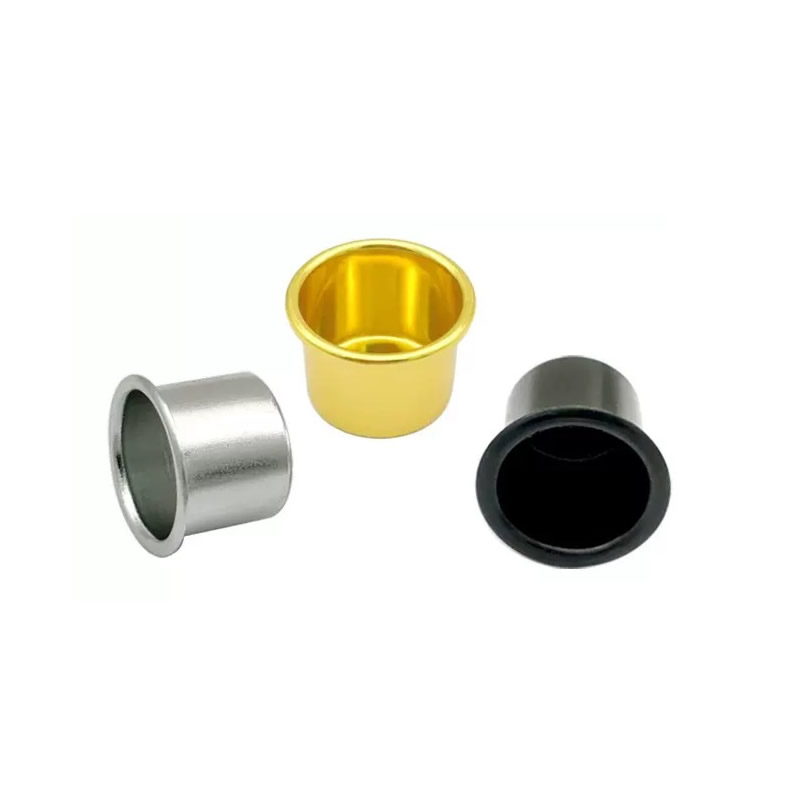
Table of Contents
- Understanding Deep Drawn Brass Stampings
- How Does the Deep Drawing Process Work?
- Why Is Brass Suitable for Deep Drawing?
- Key Manufacturing Advantages
- Important Design and Engineering Considerations
- Common Materials and Surface Finishes
- Applications Across Different Industries
- Quality Control and Inspection Standards
- Common Deep Drawing Defects and Solutions
- How to Choose a Reliable Deep Drawn Brass Stamping Manufacturer
- Frequently Asked Questions
- Conclusion and Custom Manufacturing Support
1. Understanding Deep Drawn Brass Stampings
Deep drawn brass stampings are metal components manufactured by forming flat brass sheets or blanks into hollow shapes using a punch and die. The process stretches and draws the material into a cavity, creating products such as cups, sleeves, cylindrical housings, caps, covers, and other customized metal components.
Unlike conventional flat stamping, which mainly involves cutting, punching, and bending sheet metal, deep drawing creates greater part depth. The material flows into the die cavity under controlled pressure, allowing manufacturers to produce three-dimensional shapes from a single piece of metal.
Brass is a copper-zinc alloy valued for its formability, corrosion resistance, electrical conductivity, and attractive appearance. These characteristics make it a practical material for manufacturing components that require both functional performance and a clean surface finish.
What Makes Deep Drawn Components Different?
The main distinction is their seamless construction. A deep drawn brass component can be formed from one continuous blank rather than assembling several separate pieces through welding or joining.
This one-piece structure can reduce the number of assembly operations and eliminate potential leakage or failure points associated with certain joined constructions. It also provides a consistent appearance for components where surface quality is important.
Key manufacturing principle: Deep drawing is not simply pressing a sheet into a hollow shape. It requires controlled material flow, suitable die geometry, and carefully managed forming pressure to achieve the required depth without cracking or excessive thinning.
2. How Does the Deep Drawing Process Work?
The production of deep drawn brass stampings involves several coordinated manufacturing stages. Each stage influences the final component's dimensions, surface condition, and structural consistency.
Step 1: Material Selection and Preparation
The process begins with selecting a suitable brass alloy and sheet thickness. The material must have sufficient ductility to withstand deformation without tearing.
Before production, the brass sheet or coil should be checked for thickness consistency, surface defects, material condition, and relevant mechanical properties.
Step 2: Blanking the Brass Sheet
A blanking die cuts the flat brass material into circular or specially shaped blanks. The blank dimensions are calculated according to the finished component's geometry, forming depth, and material allowance.
Accurate blanking helps ensure stable material flow during the drawing operation.
Step 3: Positioning and Clamping
The blank is placed between the die and blank holder. The blank holder applies controlled pressure to prevent unwanted material movement and reduce the risk of wrinkling.
Too much pressure can restrict material flow and cause tearing, while insufficient pressure may allow the material to wrinkle.
Step 4: Punching and Deep Drawing
The punch moves into the die cavity and gradually forms the brass blank into the required hollow shape. The material flows over the die radius and around the punch while undergoing plastic deformation.
Depending on the required depth and geometry, the component may need several drawing stages rather than being formed in one operation.
Step 5: Redrawing and Intermediate Processing
For deeper components, redrawing operations may be required to reduce the diameter and increase the part depth. Intermediate annealing may also be necessary when the material has undergone significant work hardening.
The number of stages depends on alloy properties, thickness, draw ratio, tooling design, and dimensional requirements.
Step 6: Trimming and Secondary Operations
After drawing, excess material around the opening may be removed through trimming. Additional processes such as piercing, flanging, coining, polishing, or forming can be used to achieve the final design.
Step 7: Surface Treatment and Final Inspection
Depending on the application, components may undergo cleaning, polishing, or electroplating. Final inspection checks the dimensions, appearance, and other specified characteristics before packaging and shipment.
| Manufacturing Stage | Main Operation | Quality Focus |
|---|---|---|
| Material Preparation | Brass alloy and sheet selection | Material grade and thickness |
| Blanking | Cutting the initial blank | Blank dimensions and edge quality |
| Drawing | Forming the hollow structure | Wall condition and forming stability |
| Redrawing | Increasing depth or reducing diameter | Dimensional accuracy and material integrity |
| Trimming | Removing excess material | Edge quality and final height |
| Finishing | Cleaning, polishing, or plating | Surface appearance and coating quality |
| Inspection | Dimensional and visual checks | Compliance with drawing requirements |
3. Why Is Brass Suitable for Deep Drawing?
Material selection has a direct influence on manufacturing efficiency and final component performance. Brass is frequently considered for deep drawn stampings because its mechanical and physical properties can support a wide range of forming applications.
Good Formability
Suitable brass grades can undergo substantial plastic deformation during drawing. This allows manufacturers to create cylindrical, cup-shaped, and other hollow components with controlled forming operations.
However, not all brass alloys have identical forming characteristics. Alloy composition, temper, grain structure, and thickness must be considered when choosing the material.
Corrosion Resistance
Brass offers useful corrosion resistance in many ordinary environments. This makes it suitable for selected plumbing accessories, electrical hardware, decorative products, and other applications where surface durability is important.
For aggressive chemical or marine environments, the specific alloy and operating conditions should be evaluated carefully.
Electrical and Thermal Conductivity
As a copper-based alloy, brass provides electrical and thermal conductivity. These properties make it useful for selected electrical housings, connector components, terminals, and other functional metal parts.
Attractive Appearance
The natural yellow-gold appearance of brass makes it suitable for decorative hardware and visible product components. Polishing and plating can further modify the appearance according to customer requirements.
Machining and Secondary Processing Compatibility
Deep drawn brass parts can undergo additional operations such as drilling, tapping, piercing, trimming, and surface finishing when required by the final application.
Formability
Suitable brass grades can be shaped into complex hollow profiles.
Conductivity
Useful electrical and thermal properties for selected functional components.
Appearance
Natural brass color provides an attractive metallic finish.
Corrosion Resistance
Suitable for many indoor and general industrial environments.
4. Key Manufacturing Advantages of Deep Drawn Brass Stampings
Deep drawing provides several practical benefits for manufacturers looking to produce hollow brass components in repeatable quantities.
4.1 Seamless One-Piece Construction
Deep drawing forms the main body from a single blank. This reduces the need for welding or joining separate sheet metal sections and can improve structural continuity.
For parts that require a smooth internal surface or a continuous outer wall, this construction can be particularly valuable.
4.2 Consistent Production Dimensions
Once the tooling and process parameters are properly established, deep drawing can produce large quantities of components with repeatable dimensions.
This consistency is important for products that must fit into assemblies, housings, or mechanical systems.
4.3 Efficient Material Utilization
The forming process transforms a flat blank into a three-dimensional component without removing as much material as some machining operations. This can improve material utilization, although the actual scrap rate depends on blank layout and part geometry.
4.4 Suitable for High-Volume Manufacturing
Deep drawing can be integrated into progressive or multi-stage production systems. Once the tooling has been developed and validated, automated production can support high-volume orders with consistent output.
4.5 Reduced Assembly Requirements
Producing a hollow part as one piece may eliminate certain welding, fastening, or joining operations. This can simplify manufacturing workflows and reduce assembly-related costs.
4.6 Flexible Surface Finishing
Deep drawn brass components can receive different finishing treatments according to functional and aesthetic requirements. This allows the same basic component design to serve different product markets.
5. Important Design and Engineering Considerations
Successful deep drawing begins with a design that matches the forming characteristics of the selected brass material. Parts that appear simple in a CAD model may require careful engineering to avoid manufacturing defects.
5.1 Drawing Depth and Draw Ratio
The draw ratio is commonly evaluated by comparing the initial blank diameter with the punch diameter used in the drawing operation.
Draw Ratio = Initial Blank Diameter ÷ Punch Diameter
A higher draw ratio generally indicates a more demanding forming operation. The allowable value depends on the brass alloy, temper, sheet thickness, lubrication, die geometry, and process conditions.
When the required depth is too large for a single drawing operation, multiple drawing stages may be necessary to reduce forming stress and prevent material failure.
5.2 Material Thickness
Material thickness affects component strength, forming force, and final dimensions. Excessively thin material may increase the risk of tearing or wrinkling, while thicker material may require greater press capacity and more demanding tooling.
Designers should specify the nominal thickness and allowable variation clearly in the engineering drawing.
5.3 Corner Radius and Die Geometry
Punch and die radii influence how the brass flows during forming. Sharp corners can concentrate stress and increase the likelihood of cracking.
Appropriate radii help distribute deformation more smoothly and improve the consistency of the formed part.
5.4 Wall Thickness Distribution
Although deep drawing can produce relatively uniform walls, thickness is not necessarily identical throughout the entire component. Material thinning or thickening may occur in different regions depending on the forming geometry and material flow.
For applications requiring tight wall thickness limits, the drawing should identify critical measurement locations and allowable variations.
5.5 Dimensional Tolerances
Important dimensions may include outer diameter, inner diameter, overall height, wall thickness, concentricity, and opening geometry.
Extremely tight tolerances may require additional calibration, trimming, or secondary machining operations. Tolerances should be assigned according to actual functional requirements rather than making every dimension unnecessarily restrictive.
| Design Factor | Potential Manufacturing Risk | Recommended Consideration |
|---|---|---|
| Excessive Drawing Depth | Cracking or excessive thinning | Consider multi-stage drawing. |
| Sharp Corner Radius | Localized stress concentration | Optimize punch and die radii. |
| Insufficient Blank Holder Pressure | Wrinkling | Adjust material holding conditions. |
| Excessive Blank Holder Pressure | Restricted material flow and tearing | Optimize clamping pressure. |
| Unsuitable Material Temper | Inconsistent forming behavior | Confirm alloy and temper specifications. |
| Poor Lubrication | Surface scratches and forming defects | Use compatible forming lubricants. |
6. Common Materials and Surface Finishes
The brass alloy and finishing treatment should be selected according to the part's mechanical requirements, corrosion exposure, conductivity needs, and appearance expectations.
Common Brass Material Options
- C26000 Brass: Also known as cartridge brass, it is widely used for sheet forming and applications requiring good ductility.
- C26800 Brass: A yellow brass alloy commonly considered for stamped and formed components, depending on the required temper and application.
- Other Copper-Zinc Alloys: Additional brass grades may be considered according to specific strength, conductivity, corrosion, and forming requirements.
The correct material should be confirmed through the relevant material specification and mechanical property requirements. Buyers should avoid selecting an alloy based solely on its color or general name.
Common Surface Treatments
| Surface Treatment | Main Characteristics | Typical Applications |
|---|---|---|
| Natural Brass | Original metallic brass appearance | Decorative hardware and electrical components |
| Zinc Plating | Provides a protective metallic coating in suitable environments | Hardware and industrial components |
| Nickel Plating | Offers a bright metallic finish and improved surface protection | Connectors and decorative components |
| Gold Plating | Provides an attractive finish and may support specific electrical contact requirements | Electronic and decorative components |
| Silver Plating | Provides high electrical conductivity and a bright finish | Selected electrical and electronic parts |
| Polishing | Improves surface smoothness and visual appearance | Lighting and decorative products |
Before choosing a finish, buyers should consider coating thickness, adhesion, corrosion exposure, electrical requirements, and applicable environmental regulations. Surface treatment should also be compatible with the base brass alloy.
Material and coating reminder: Plating performance depends on pretreatment, coating thickness, bath chemistry, and process control. The manufacturer should confirm the available finishing process and provide relevant documentation when required.
7. Applications of Deep Drawn Brass Stampings Across Different Industries
Deep drawn brass components are used in industries where hollow metal structures, dimensional consistency, conductivity, and attractive finishes are required.
7.1 Electrical and Electronics Industry
Electrical equipment manufacturers use brass components in selected connector housings, terminal covers, contact structures, and protective shells.
Brass's electrical conductivity and formability make it useful for components that require a combination of mechanical shape and electrical functionality.
7.2 Automotive Industry
Automotive applications may include selected connector housings, sensor covers, small protective caps, and decorative metal components.
Parts used in vehicles must be evaluated against vibration, temperature, corrosion, and dimensional requirements relevant to their installation location.
7.3 Plumbing and Fluid Fittings
Brass is widely used in plumbing-related hardware because of its useful corrosion resistance and machinability. Deep drawn brass parts can be considered for selected sleeves, covers, caps, and fitting components.
For pressure-containing applications, the finished part must be validated against the required pressure, sealing, and applicable regulatory standards.
7.4 Lighting and Decorative Hardware
Deep drawn brass caps and shells can be used in lamp components, decorative covers, furniture accessories, and other products where the metallic appearance contributes to product design.
7.5 Musical Instruments
Selected musical instrument components require shaped brass parts with controlled dimensions and smooth surfaces. Deep drawing can provide suitable hollow components for specific instrument assemblies.
7.6 Mechanical Equipment and Consumer Products
Deep drawn brass components may also be used in small equipment housings, protective caps, mechanical accessories, and customized product enclosures.
Application advantage: When a product requires a hollow brass component without a welded seam, deep drawing can offer an efficient manufacturing approach. The final process should still be evaluated according to the component's functional requirements and production volume.
8. Quality Control and Inspection for Deep Drawn Brass Stampings
Consistent quality is essential for custom metal components, particularly when parts are produced in large quantities and must fit precisely into customer assemblies.
A complete quality control process should cover incoming materials, tooling conditions, forming operations, surface treatment, and finished product inspection.
8.1 Incoming Material Inspection
Before production, the brass sheet or coil should be checked against the specified material grade and thickness. Relevant material certificates and mechanical property information can help verify consistency between supplied materials and the engineering requirements.
8.2 In-Process Dimensional Inspection
During forming, operators should monitor critical dimensions such as diameter, height, and wall condition. Regular checks can identify process variation before large quantities of defective parts are produced.
8.3 Surface Quality Inspection
Visual inspection helps identify scratches, dents, cracks, wrinkles, burrs, discoloration, and other appearance-related defects.
8.4 Dimensional Measurement
Depending on the component geometry and tolerances, inspection equipment may include:
- Digital calipers and micrometers.
- Height gauges and thickness gauges.
- Pin gauges and plug gauges.
- Optical measuring equipment.
- Custom inspection fixtures.
8.5 Final Inspection and Documentation
Finished products should be checked against approved drawings and customer specifications. Inspection reports, material documentation, and batch identification can help improve production traceability.
| Inspection Item | Inspection Purpose | Typical Method |
|---|---|---|
| Material Grade | Confirm material specification | Material certificate review |
| Thickness | Verify sheet and wall thickness | Micrometer or thickness gauge |
| Diameter | Confirm dimensional fit | Caliper or optical measurement |
| Height | Check forming depth | Height gauge |
| Surface Condition | Identify cracks, scratches, and dents | Visual inspection |
| Plating Quality | Check coating appearance and requirements | Visual and specified coating tests |
| Packaging | Prevent transportation damage | Final packaging inspection |
9. Common Deep Drawing Defects and Practical Solutions
Deep drawing involves significant material deformation. Without suitable process control, defects may affect product dimensions, surface appearance, and mechanical performance.
Wrinkling
Cause: Excessive compressive stress or insufficient blank holder pressure may cause the material to buckle.
Solution: Adjust blank holder pressure, optimize die clearance, and review blank dimensions.
Cracking and Tearing
Cause: Excessive drawing force, unsuitable material temper, sharp die radii, or insufficient lubrication can create localized material failure.
Solution: Review alloy selection, forming stages, tooling geometry, and lubrication conditions.
Uneven Wall Thickness
Cause: Material flow and deformation are not distributed evenly throughout the component.
Solution: Optimize tooling design and drawing parameters. Identify critical thickness locations during the design stage.
Surface Scratches
Cause: Contaminated tooling, rough die surfaces, metal particles, or insufficient lubrication can damage the brass surface.
Solution: Maintain clean tooling, inspect contact surfaces, and use appropriate forming lubricants.
Dimensional Variation
Cause: Tool wear, material thickness variation, springback, and inconsistent forming conditions may affect the finished dimensions.
Solution: Monitor critical dimensions, maintain tooling, and establish stable production parameters.
Surface Plating Defects
Cause: Inadequate pretreatment, contamination, or inconsistent plating conditions may result in uneven coating or poor adhesion.
Solution: Improve cleaning and pretreatment procedures and verify coating parameters.
10. How to Choose a Reliable Deep Drawn Brass Stamping Manufacturer
Selecting the right manufacturer can influence tooling costs, production stability, product quality, and delivery schedules. Buyers should evaluate both manufacturing capabilities and the supplier's ability to understand the specific application.
10.1 Review Deep Drawing Experience
Ask whether the manufacturer has experience producing hollow brass components with similar diameters, depths, thicknesses, and geometries.
Experience with comparable products can help reduce design risks and improve the accuracy of manufacturing recommendations.
10.2 Evaluate Tooling and Production Capabilities
Check the manufacturer's available stamping equipment, tooling capabilities, and ability to perform multiple drawing operations. A supplier should be able to explain how the proposed production method will achieve the required geometry.
10.3 Confirm Material and Finishing Options
Discuss available brass grades, thicknesses, surface treatments, and material documentation. Confirm that the selected material can achieve the required forming depth and final mechanical properties.
10.4 Understand Quality Inspection Procedures
Ask about incoming material inspection, in-process checks, final inspection, and batch traceability. For demanding applications, buyers may also request first-article inspection reports and relevant test records.
10.5 Request Samples Before Mass Production
Sample evaluation is an important step in custom metal stamping projects. It allows buyers to verify dimensions, assembly fit, material characteristics, and surface quality before approving full production.
Why Work with Nuote Metals Technology Co.,Ltd.?
Nuote Metals Technology Co.,Ltd. is a metal component manufacturer based in Dongguan, China, providing deep drawn brass stampings and other customized metal parts.
The company's deep drawn brass stamping capabilities focus on forming brass sheets into hollow components such as cups, tubes, covers, and customized shapes. Its manufacturing process uses stamping and drawing operations to produce one-piece components according to customer requirements.
According to its published product specifications, the deep drawn brass stamping offering includes:
- Material: Brass.
- Manufacturing Process: Progressive stamping.
- Surface Treatments: Clean finish, zinc, nickel, gold, and silver plating options.
- Published Tolerance: ±0.05 mm.
- Compliance: RoHS compliant as specified for the product.
- Inspection: Production inspection and finished-product quality checks.
Nuote Metals also emphasizes sample approval before mass production, helping customers evaluate product dimensions and appearance before confirming larger orders.
Information to Prepare Before Requesting a Quotation
- 2D engineering drawing or 3D CAD file.
- Required brass alloy and material thickness.
- Outer diameter, inner diameter, and overall height.
- Required drawing depth and wall thickness.
- Dimensional tolerance and critical measurement points.
- Surface finish and plating requirements.
- Application environment and functional requirements.
- Estimated annual demand and order quantity.
- Packaging and delivery requirements.
Providing complete technical information allows the manufacturer to evaluate the forming process, tooling requirements, and production feasibility more accurately.
11. Frequently Asked Questions About Deep Drawn Brass Stampings
Q1. What are deep drawn brass stampings?
Deep drawn brass stampings are hollow metal components produced by forming flat brass sheets into three-dimensional shapes using a punch and die. Common products include brass cups, sleeves, caps, covers, and customized housings.
Q2. What is the difference between deep drawing and conventional stamping?
Conventional stamping often focuses on cutting, punching, and bending sheet metal. Deep drawing uses controlled material flow to create deeper hollow structures from a flat blank, making it suitable for seamless cup-shaped and cylindrical components.
Q3. Why is brass commonly used for deep drawn components?
Brass offers good formability in suitable alloy conditions, useful corrosion resistance, electrical conductivity, and an attractive metallic appearance. These properties make it suitable for various electrical, plumbing, decorative, and mechanical applications.
Q4. Which brass grades are suitable for deep drawing?
C26000 and C26800 are examples of brass alloys considered for formed components. The final choice depends on the required depth, material thickness, mechanical properties, surface finish, and application conditions.
Q5. Can deep drawn brass stampings be customized?
Yes. Customization can include dimensions, drawing depth, wall thickness, opening shape, material grade, and surface treatment. Buyers should provide engineering drawings or samples so the manufacturer can assess feasibility.
Q6. What surface treatments are available for brass stamping parts?
Common options include natural brass finishing, polishing, zinc plating, nickel plating, gold plating, and silver plating. The appropriate treatment depends on appearance, corrosion protection, conductivity, and application requirements.
Q7. What causes cracks during the deep drawing process?
Cracking can result from excessive forming stress, unsuitable material temper, insufficient lubrication, sharp die radii, or excessive drawing depth in a single operation. Proper material selection and multi-stage drawing can help reduce these risks.
Q8. How is the dimensional accuracy of deep drawn brass parts controlled?
Dimensional accuracy is controlled through tooling design, stable forming conditions, material consistency, and regular inspection. Important dimensions such as diameter, height, wall thickness, and concentricity should be checked against the approved engineering drawing.
Q9. Are deep drawn brass components suitable for high-volume production?
Yes. Once the tooling and production parameters are validated, deep drawing can support repeatable, high-volume manufacturing. The actual production efficiency depends on component complexity, number of forming stages, tooling design, and order quantity.
Q10. What is the typical tolerance for deep drawn brass stampings?
Tolerance depends on the part geometry, material thickness, tooling, and manufacturing process. Nuote Metals lists ±0.05 mm for its published deep drawn brass stamping product. Buyers should confirm the tolerance for each critical dimension during technical review.
Q11. Can deep drawn brass stampings be used in electrical applications?
Yes. Brass's electrical conductivity and formability make it suitable for selected connector housings, terminal covers, and other electrical components. Specific electrical performance requirements should be confirmed for each application.
Q12. What information is needed to order custom deep drawn brass stampings?
Provide the component drawing, material grade, thickness, dimensions, tolerances, surface finish, expected order quantity, and application requirements. Sample approval is also recommended before mass production.
12. Conclusion: Achieving Better Results with Precision Deep Drawing
Deep drawn brass stampings provide an effective manufacturing solution for producing hollow, seamless metal components with controlled geometry and attractive surface finishes. By transforming flat brass sheets into functional three-dimensional structures, deep drawing can reduce assembly requirements, support repeatable production, and improve material utilization for suitable component designs.
However, successful manufacturing depends on more than the stamping machine itself. Brass alloy selection, material temper, drawing depth, tooling geometry, lubrication, wall thickness, and inspection procedures all influence the final result.
For product designers, purchasing managers, and industrial manufacturers, working with an experienced metal stamping supplier can help improve design feasibility, control manufacturing risks, and achieve consistent production quality.
Nuote Metals Technology Co.,Ltd. provides deep drawn brass stamping solutions for customers requiring customized metal components. From material selection and forming operations to surface treatment and final inspection, clear communication of technical requirements is essential for developing a reliable product.
Looking for a Reliable Deep Drawn Brass Stampings Manufacturer?
Nuote Metals Technology Co.,Ltd. specializes in customized metal components, including deep drawn brass stampings designed for different industrial and commercial applications.
Whether you need brass cups, cylindrical housings, metal caps, electrical components, or other customized hollow brass parts, our team can help evaluate your drawings and manufacturing requirements.
Have a new project or need a dependable custom stamping supplier? Contact us today with your drawings, material specifications, and quantity requirements. Let's work together to develop a precision brass stamping solution that meets your production needs.
Contact Us for a Custom QuoteSend Inquiry



X
We use cookies to offer you a better browsing experience, analyze site traffic and personalize content. By using this site, you agree to our use of cookies.
Privacy Policy