
Metal Stamping vs Die Casting for Thin-Walled Parts: When Do Sheet Metal Stamping Parts Win on Cost and Lead Time?
The Wall-Thickness Threshold That Favors Stamping
The first question is not cost. It is whether the geometry can be produced at all—and on thin walls, stamping is usually the only feasible process.
Where Die Casting Stops and Stamping Begins
Die casting pushes molten metal into a steel cavity. Thin sections cool faster than the metal can flow, so aluminium die casting holds a practical minimum wall of roughly 1.0–1.5 mm, and zinc can reach 0.6–0.8 mm only on small features. Below those limits, castings develop cold shuts, incomplete fill, or porosity.
Sheet metal stamping parts have no melt-flow constraint. A sheet metal stamping part can be produced from 0.2 mm to 3.0 mm sheet as a matter of routine. The limitation is not flow—it is handling and springback.
| Wall Thickness | Die Casting | Sheet Metal Stamping |
|---|---|---|
| 0.2–0.5 mm | Not feasible | Routine |
| 0.5–0.8 mm | Zinc only, small features | Routine |
| 0.8–1.5 mm | Aluminium at the limit | Routine |
| 1.5–3.0 mm | Comfortable | Routine, thicker gauges available |
| Over 3.0 mm | Comfortable | Different process (forging, machining) |
If the drawing calls for 0.6 mm aluminium walls, stamping is not the cheaper option—it is the only option.
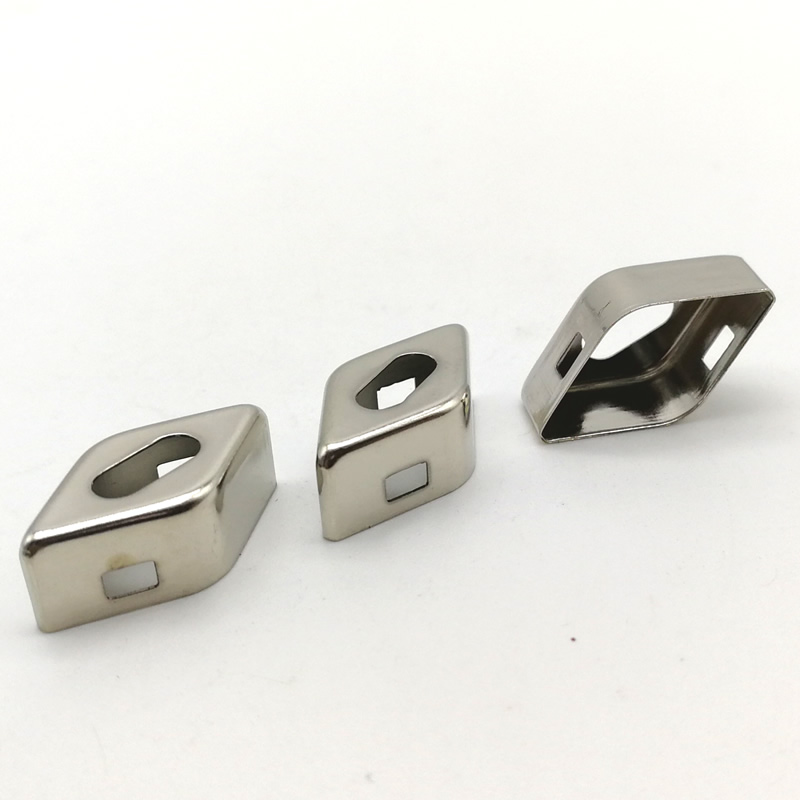
Why Stamping Wins on Tooling Cost and Crossover Volume
Both processes have high fixed tooling cost and low variable cost. For stamping, the fixed cost is lower and the crossover volume is higher—which means metal stamping parts stays economical across a wider range of production volumes.
Tooling Cost Comparison
| Cost Element | Die Casting | Sheet Metal Stamping |
|---|---|---|
| Tooling type | Steel cavity die, ejector system, thermal control | Progressive or transfer stamping die |
| Typical tooling cost | Higher | Lower for comparable part size |
| Tooling lead time | Longer—cavity machining, heat treatment, trial shots | Shorter—die components machined and assembled |
| Design revision cost | High—cavity welding or re-cutting | Moderate—inserts can be replaced |
The tooling gap is the reason volume matters. A casting tool amortised over 5,000 parts adds a large per-unit penalty. A stamping die amortised over the same volume is far more forgiving.
Per-Unit Cost Crossover
| Annual Volume | Lower-Cost Process | Reason |
|---|---|---|
| Under 10,000 | Sheet metal stamping | Casting tooling cannot be amortised |
| 10,000–50,000 | Stamping, if wall is under 1.5 mm | Casting still carries tooling penalty |
| 50,000–200,000 | Depends on geometry | Casting begins to compete |
| Over 200,000 | Die casting often wins | Tooling amortisation favors casting |
For simple geometry with no secondary operations, a sheet metal stamping part can remain competitive well above 200,000 pieces, because stamping cycle times are short and material utilisation can be optimized with nesting.
Lead Time — Where Stamping Has a Structural Advantage
Tooling lead time often decides the process for development programs, even when per-unit cost favors casting. Stamping is structurally faster here.
The Lead-Time Gap
| Stage | Die Casting | Sheet Metal Stamping |
|---|---|---|
| Tooling design | Longer—thermal and flow analysis required | Shorter—blank and die layout |
| Tooling fabrication | Longer—cavity machining, polishing, heat treatment | Shorter—die components machined and fitted |
| First articles | Trial shots, X-ray or CT for porosity | First-piece dimensional inspection |
| Production ramp | Parameter tuning, scrap stabilization | Die tryout, minor adjustment |
For a new part introduction, the gap is measured in weeks. If the program is schedule-driven, stamping is often the only way to hit the launch date.
Design Change Flexibility
A casting cavity is difficult to modify. Adding a boss or changing a wall may require cavity welding or re-cutting—and requalification. A stamping die can often accommodate minor geometry changes through insert replacement or die adjustment. For a product still in development, that flexibility has real value.
Where Sheet Metal Stamping Parts Win
Thin Walls Below the Casting Limit
Below roughly 1.0 mm in aluminium or 0.6 mm in zinc, stamping is the only feasible process—not a cost comparison.
Low-to-Medium Volume Programs
Under 50,000 pieces annually, casting tooling amortisation usually makes stamping the lower total cost, even when the isolated per-unit casting cost looks lower.
Schedule-Driven Development
When the launch date is fixed and the tooling budget cannot absorb a long casting cycle, a sheet metal stamping part delivers first articles faster.
Parts Requiring High Ductility
Sheet metal stamping parts retains the grain direction and ductility of the parent coil. Castings are isotropic but can contain porosity that reduces elongation. For parts that must bend or absorb impact, stamped sheet is often the better material state.
When Die Casting Is Genuinely the Better Choice
Stamping is our process, but we do not quote it for parts that are not stamping applications.
Complex 3D Geometry with Integrated Features
A casting can integrate bosses, ribs, mounting pads, and draft angles in a single shot. A stamping would require multiple operations, welding, or secondary machining to achieve the same geometry—and the secondary operations can erase the cost advantage.
High-Volume Production Above the Crossover
Above roughly 200,000 pieces annually, casting tooling is fully amortised and the per-unit advantage becomes decisive—provided the wall is within the casting range.
Thick Sections and Mass Distribution
Parts with walls above 3 mm and variable section thickness are casting territory. Stamping cannot produce a locally thick section without a separate operation.
Two Cases Where the Process Choice Was Reversed
Instrument Chassis — Casting Quoted, Stamping Delivered
Problem: A laboratory instrument maker specified a die-cast aluminium chassis with 1.2 mm walls. The volume was 8,000 units per year. Two casting suppliers quoted tooling that could not be amortised at that volume, and the lead time was twelve weeks.
Our change: We reviewed the geometry and confirmed that the chassis could be redesigned as a sheet metal stamping part—0.8 mm aluminium, progressive die, with tabs and self-clinching fasteners replacing the cast bosses. Tooling cost dropped substantially, and first articles arrived in three weeks.
Result: The customer launched on schedule. The per-unit cost at 8,000 pieces was lower than the casting quote, and the 0.8 mm wall was thinner than the casting could have achieved.
Pump Housing — Stamping Quoted, Casting Correct
Problem: A pump manufacturer asked us to quote a sheet metal stamping part for a housing with internal flow channels and mounting bosses. The wall was 2.5 mm.
Our review: The geometry required internal channels and bosses that would need to be welded or machined into a stamped shell. The secondary operations would have exceeded the cost of casting.
Our recommendation: We advised the customer to proceed with die casting. The part was a genuine casting geometry, and the volume—120,000 pieces per year—supported the tooling investment. We declined the stamping quote and explained why.
Result: The customer avoided a costly mistake. They later returned with a different part that was a correct stamping application.
Metal Stamping vs Die Casting – FAQ
Q1: At what wall thickness does die casting become uncompetitive?
Below roughly 1.0 mm in aluminium and 0.6 mm in zinc. These are practical flow limits, not cost thresholds. Below them, the molten metal cannot fill the cavity before solidifying, and the casting develops cold shuts or incomplete fill. A sheet metal stamping part has no melt-flow constraint and can be produced from 0.2 mm sheet routinely. If your drawing calls for 0.5 mm aluminium walls, the process decision is already made—stamping is the only feasible route.
Q2: What volume makes die casting cheaper than stamping?
There is no fixed number, but the crossover usually sits between 50,000 and 200,000 pieces annually. The variable is tooling amortisation. Casting tooling is typically more expensive and takes longer to build than stamping tooling, so the per-unit penalty at low volume is larger. Once the casting tool is amortised, the per-unit cost can drop below stamping—especially for complex geometry that would require multiple stamping operations. For simple geometry, a sheet metal stamping part can remain competitive well above 200,000 pieces. The only reliable answer is a quoted comparison at your actual volume.
Q3: Why is stamping lead time shorter than casting lead time?
The tooling cycle is shorter and the first-article process is simpler. A casting tool requires cavity machining, polishing, heat treatment, and trial shots with X-ray or CT inspection for porosity. A stamping die requires die components to be machined and fitted, followed by die tryout and first-piece dimensional inspection. The difference is typically measured in weeks. For a schedule-driven program, that gap often decides the process. A sheet metal stamping part also accommodates minor design changes through insert replacement, while a casting cavity change may require welding or re-cutting.
Q4: Can a part designed for die casting be converted to stamping?
Sometimes, but it requires a design review, not just a quote. Castings integrate bosses, ribs, and variable wall sections in a single shot. A stamped equivalent may need tabs, self-clinching fasteners, or welded sub-assemblies to replace those features. If the secondary operations are extensive, the conversion may not save money. At Nuote Metals, we review the drawing before quoting and tell you when a part is a genuine stamping application and when it is not. We have declined stamping quotes for parts that were correctly specified as castings.
Send Inquiry



X
We use cookies to offer you a better browsing experience, analyze site traffic and personalize content. By using this site, you agree to our use of cookies.
Privacy Policy