
Should You Choose 304 or 316 Stainless Steel Eyelets for Your Application?
A hole in a piece of fabric, leather, or thin metal is a weak point. The material around it stretches, frays, or tears under load. An eyelet reinforces that hole – but only if the eyelet itself survives the environment.
Stainless steel eyelets are specified when the alternative will not last. Brass tarnishes and dezincifies in salt. Plated steel rusts once the coating scratches. Aluminium pits in alkaline conditions. Stainless steel offers a permanent solution: the chromium oxide layer is self‑repairing. Scratch it, and the oxide reforms.
At Nuote Metals, we manufacture stainless steel eyelets in three configurations and two primary grades. Here is what you need to know to specify correctly.
Standard, Spur, or Shoulder – Which Configuration?
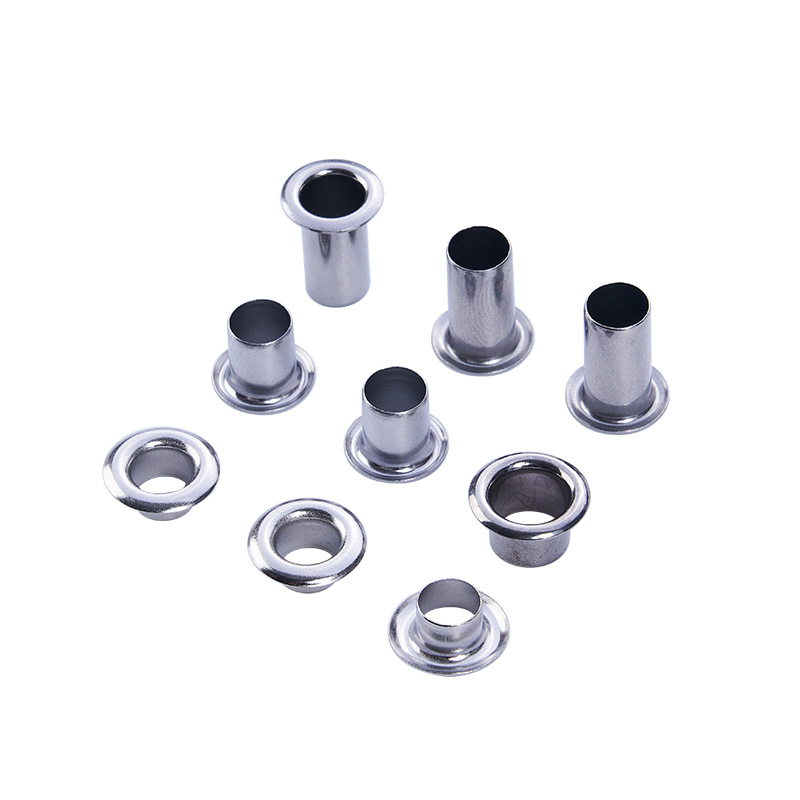
Stainless steel eyelets are not all the same. The underside of the flange and the barrel profile determine how the eyelet behaves in your material.
| Type | Configuration | Best For |
|---|---|---|
| Standard | One‑piece, flat or rolled flange | General hole reinforcement: canvas, banners, upholstery |
| Spur | Sharp teeth (spurs) on the underside of the flange | Leather, marine covers, tarpaulins – where pull‑out resistance is critical |
| Shoulder / Stepped | Barrel with a stepped profile | Multi‑layer materials or applications requiring a spacer between layers |
Stainless steel is harder and stronger than brass – much more resistant to deformation under heavy loads. But that same hardness means these eyelets require more careful installation and proper tooling. A standard eyelet works for most textile applications. Spur eyelets are essential for anything that moves or vibrates – the teeth bite into the material and prevent rotation. Shoulder types are niche: use them only when you need a controlled gap between layers.
304 vs. 316 – The Grade Decision
This is the single most important specification decision for stainless steel eyelets. The choice determines how long the eyelet lasts in your environment.
The table below shows the real differences – not marketing claims.
| Property | 304 Stainless | 316 Stainless (Marine Grade) |
|---|---|---|
| Chromium | 18–20% | 16–18% |
| Nickel | 8–10.5% | 10–14% |
| Molybdenum | 0% | 2–3% |
| PREN (pitting resistance) | 18–20 | 25–30 |
| Salt spray test (ASTM B117) | 200–400 hrs to pitting | 1,000+ hrs to pitting |
| Cost (relative) | 1x | 1.35x – 1.5x |
| Best for | Indoor, fresh water, mild outdoor | Saltwater, coastal, chemical exposure |
304 stainless steel is our standard for most outdoor and industrial applications. The chromium in stainless steel forms an invisible, self‑repairing oxide layer that prevents rust – even after scratches or abrasion.
316 stainless steel contains 2–3% molybdenum, which provides exceptional resistance to chloride‑induced corrosion. According to NACE International, 316 can handle chloride levels five times stronger than what would damage 304 before breaking down.
Our rule: If your product will never see salt, 304 is sufficient and economical. If there is any chance of chloride exposure – road de‑icing salts, coastal fog, swimming pool chemicals, marine environments – upgrade to 316. The added cost pays for itself in avoided warranty claims.
The Three Failure Modes We See Most Often
Over years of supplying stainless steel eyelets, we have identified three predictable failure patterns. Knowing them helps you avoid them.
Chloride Pitting (304 in Marine Environments)
Small rust‑like pits appear on the flange and barrel after 6–12 months of coastal use. The cause is straightforward: 304 stainless steel contains no molybdenum. Chloride ions from salt spray break down the passive oxide layer locally.
Our solution: For any application within 5 km of saltwater, we require 316 stainless steel. The pitting resistance equivalent number (PREN) increases from 18–20 (304) to 25–30 (316).
Cracked Rolls During Setting
The hollow barrel splits instead of curling smoothly. This happens when the material work‑hardens from excessive setting force or a burred hole edge. Stainless steel work‑hardens faster than brass or aluminium.
Our solution: We provide setting force charts for each diameter. For a 5 mm stainless steel eyelet, optimal force is 1,800–2,200 N – 40% higher than brass but with a shorter stroke to avoid cold working.
Galvanic Corrosion Against Aluminium
Rapid corrosion of the aluminium sheet around the stainless steel eyelet. Stainless steel is cathodic (noble), aluminium is anodic (active). In wet conditions, the aluminium corrodes preferentially.
Our solution: We apply a nylon or PET insulating washer between the stainless steel eyelet and the aluminium surface. For high‑temperature environments, we supply tin‑plated stainless steel eyelets, which reduce the galvanic potential difference.
Technical Specifications – The Numbers
Every batch of stainless steel eyelets from Nuote Metals meets these parameters.
Dimensional Tolerances
| Parameter | Range | Tolerance |
|---|---|---|
| Shank (barrel) outside diameter | 0.8 mm – 10 mm | ±0.05 mm |
| Flange outside diameter | Custom | ±0.10 mm |
| Barrel length (under flange) | 2 mm – 15 mm (material‑stack dependent) | ±0.10 mm |
| Material thickness (sheet) | 0.4 mm – 1.5 mm | ±0.03 mm |
| Concentricity (barrel to flange) | ≤ 0.1 mm TIR | 100% visual inspection |
For precision electronics or medical device applications, we can tighten shank diameter tolerance to ±0.02 mm.
Available Finishes
| Finish | Process | Properties |
|---|---|---|
| Mill (as‑stamped) | No additional treatment | Original matte silver finish |
| Passivated | Acid bath removes free iron | Maximises corrosion resistance – standard for medical and marine orders |
| Electropolished | Reverse plating | Ultra‑smooth, highest corrosion resistance – pharmaceutical, semiconductor |
| Mechanically polished | Buffing | Bright, reflective surface – architectural visible |
Passivation is included at no extra charge for stainless steel eyelets. It removes free iron from the surface and maximises the chromium oxide layer.
All finishes are RoHS compliant.
Two Real Applications from Our Customers
Marine Canvas and Boat Covers (316 Stainless Steel)
A Florida boat cover manufacturer was using brass eyelets. They tarnished within months and stained the canvas. We supplied 316 stainless steel spur eyelets with matching spur washers. The result: three years of continuous saltwater exposure – no corrosion, no pull‑out, no staining. The spurs grip the canvas, preventing rotation under wind stress.
Glass Oil Dispenser Pour Spout (304 Stainless Steel)
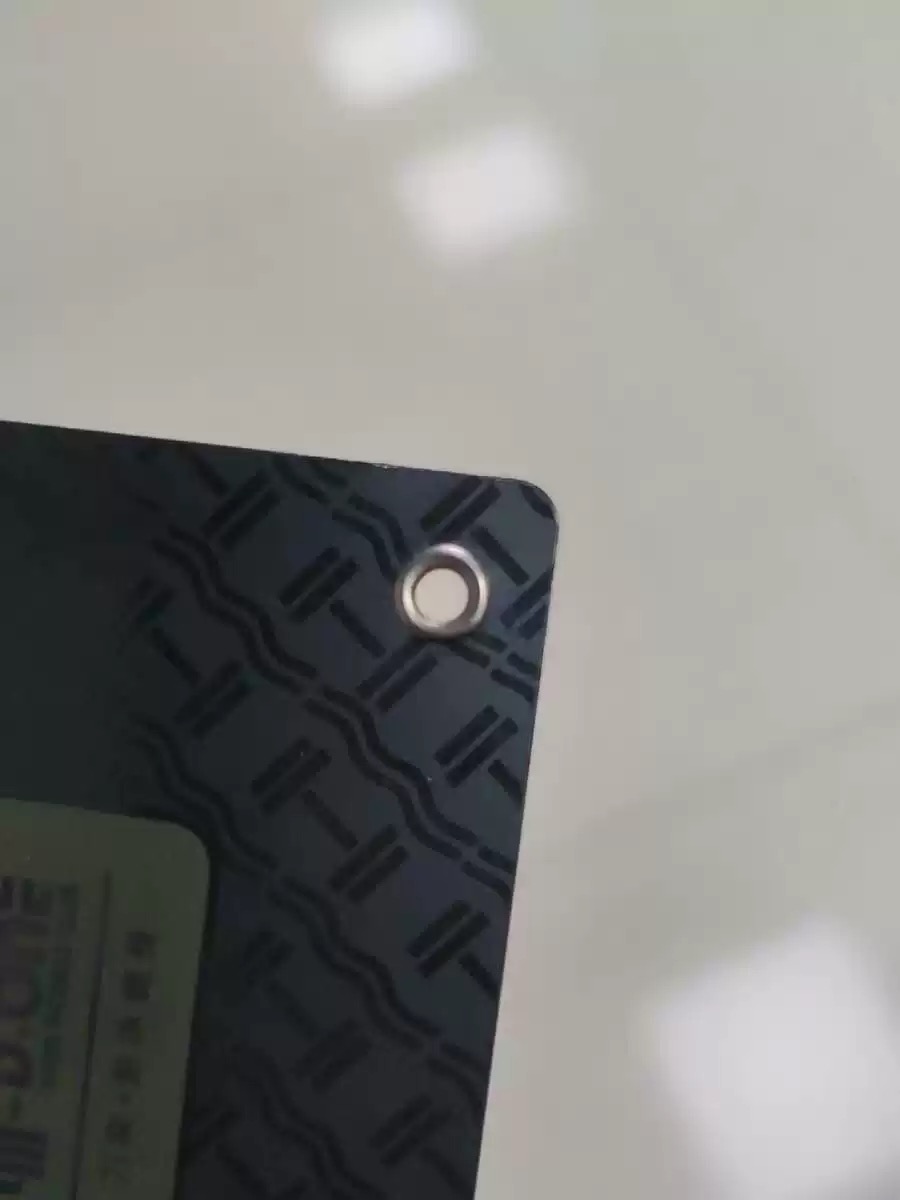
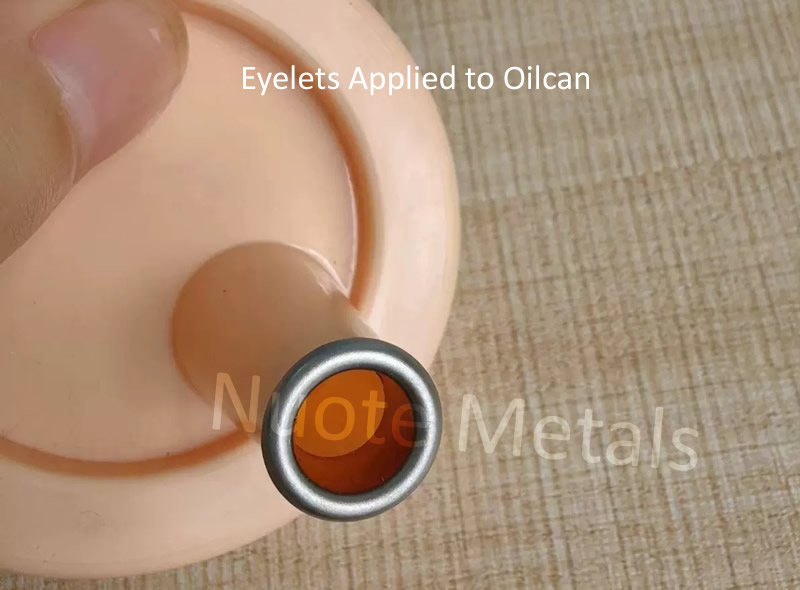
A kitchenware manufacturer producing glass oil dispensers needed a durable, food‑safe reinforcement for the pour spout hole. The sharp glass edges around the opening were prone to chipping and made pouring messy. Plated steel eyelets corroded in contact with acidic oils and risked rust contamination. We supplied 304 stainless steel standard eyelets with a smooth rolled flange. The eyelet is inserted into the glass opening during the annealing process, creating a corrosion‑resistant pouring rim that eliminates sharp edges and prevents dripping. The stainless steel withstands repeated contact with cooking oils and acidic dressings. The manufacturer has used this solution for over two years with zero complaints about rust or chipping.
Installation – What Works for Stainless Steel
Stainless steel is harder than brass or aluminium. Installing stainless steel eyelets requires proper technique and tooling.
Critical Success Factors
- Use high‑carbon steel setting dies – Standard brass‑rated tools will not work and may be damaged. Stainless steel eyelets require tools specifically designed for stainless steel.
- Hole diameter – Punch or drill hole 0.05–0.10 mm larger than eyelet shank.
- Deburring – Essential. Burrs can prevent proper roll formation and may cut into the stainless steel.
- Setting force – Stainless steel requires significantly more force than brass. For a 5 mm eyelet, optimal force is 1,800–2,200 N.
- Single stroke – Use a single, firm stroke. Multiple strikes work‑harden stainless steel and cause cracking.
Common Installation Mistakes
| Mistake | Consequence | Correction |
|---|---|---|
| Using brass‑rated setting dies | Incomplete roll, damaged tooling | Use high‑carbon steel dies |
| Insufficient setting force | Weak roll, eyelet pulls out | Use a press or heavier mallet |
| Wrong tool for eyelet style | Damaged eyelet, poor finish | Match tool to eyelet style |
| Burred hole | Cracked or split barrel | Deburr both sides before setting |
Stainless Steel Eyelets – FAQ
Q1: How do I choose between standard, spur, and shoulder type stainless steel eyelets?
A: The choice depends entirely on your material and load direction. Standard (plain flange) is best for soft, thick materials that compress during setting – foam, rubber, or multiple layers of fabric. The smooth flange distributes force evenly. Spur flange (with teeth) is best for thin, tough, or slippery materials – canvas, leather, plastic sheeting, or tarpaulins. The teeth penetrate the surface, preventing rotation and increasing pull‑out resistance by 40–60%. Shoulder type (stepped barrel) is for applications where you need a precise standoff or spacer between layers – for example, in PCB assemblies where the eyelet must not short against a trace. Our recommendation: If you are unsure, start with spur flanges for textile and leather, plain flanges for soft composites, and shoulder types only when you need a controlled standoff.
Q2: Can I use 304 stainless steel eyelets outdoors? When do I need 316?
A: 304 stainless steel eyelets perform well in fresh water, mild outdoor conditions, and occasional moisture. However, in continuous saltwater or coastal spray environments (within approximately 5 km of the ocean), 304 can develop surface pitting corrosion over time. The salt concentration increases through evaporation cycles, accelerating chloride attack. 316 stainless steel eyelets contain 2–3% molybdenum, providing exceptional resistance to chloride‑induced pitting. Our specific advice: For boat covers, dock hardware, or any product regularly exposed to saltwater, specify 316. For general outdoor use away from salt – tents, awnings, banners in inland areas – 304 is sufficient and more cost‑effective.
Q3: How do I calculate the correct barrel length for a stainless steel eyelet?
A: The correct barrel length depends on your total material thickness. For standard stainless steel eyelets, the barrel must extend completely through the material stack and have enough protruding length to roll over. Our formula: Barrel Length = Material Stack Thickness + 0.8 to 1.5 mm. The extra length forms the rolled curl. For example, reinforcing a canvas boat cover with a total thickness of 2.5 mm requires a barrel length of approximately 3.3 mm to 4.0 mm. If the barrel is too short, the curl will be weak and the eyelet may pull out. If too long, the curl will be oversized or may split. For spur stainless steel eyelets with mating washers, the calculation is: Barrel Length = Material Stack Thickness + Washer Thickness + 0.5 to 1.0 mm. Our recommendation: Order free sample eyelets in two or three adjacent barrel lengths and test them on your actual material using your setting tool.
Quality and Transparency
Nuote Metals operates under ISO 9001:2015. Every batch of stainless steel eyelets is traceable to the raw material certificate (heat number), production press log, and final inspection report. We perform 100% whole‑range inspection through production – not just spot checks. AQL sampling per ISO 2859: critical dimensions at 1.0, major at 2.5.
Our customer policies:
- Free samples (stocked sizes) – pay only courier
- Custom tooling – ready in 10 days for non‑standard flange shapes or barrel lengths
- MOQ 20,000 pieces for standard sizes; lower for first orders
- Lead time – stock: 3–5 days; custom (including tooling): 15–25 days
- 8‑hour technical response
We have supplied stainless steel eyelets to customers in over 70 countries.
Summary: Stainless steel eyelets offer permanent corrosion resistance through a self‑repairing chromium oxide layer. Choose 304 for general outdoor use, 316 for marine/coastal. Select standard, spur, or shoulder based on your material and load. Set with proper tooling and a single stroke. Nuote Metals supplies ISO 9001‑certified stainless steel eyelets with free samples available.
Send Inquiry



X
We use cookies to offer you a better browsing experience, analyze site traffic and personalize content. By using this site, you agree to our use of cookies.
Privacy Policy