
Why Do We at Nuote Metals Recommend Stainless Steel Eyelets for Marine, Medical, and Heavy-Duty Applications?
When a boat cover faces constant salt spray, or a medical drape requires repeated sterilization, ordinary eyelets fail. Brass tarnishes. Plated steel rusts. At Nuote Metals, we have supplied stainless steel eyelets to customers who need fasteners that simply do not quit. Over the years, we have learned exactly where stainless steel eyelets excel—and how to specify them correctly.
What Exactly Are Stainless Steel Eyelets? (Our Factory Definition)
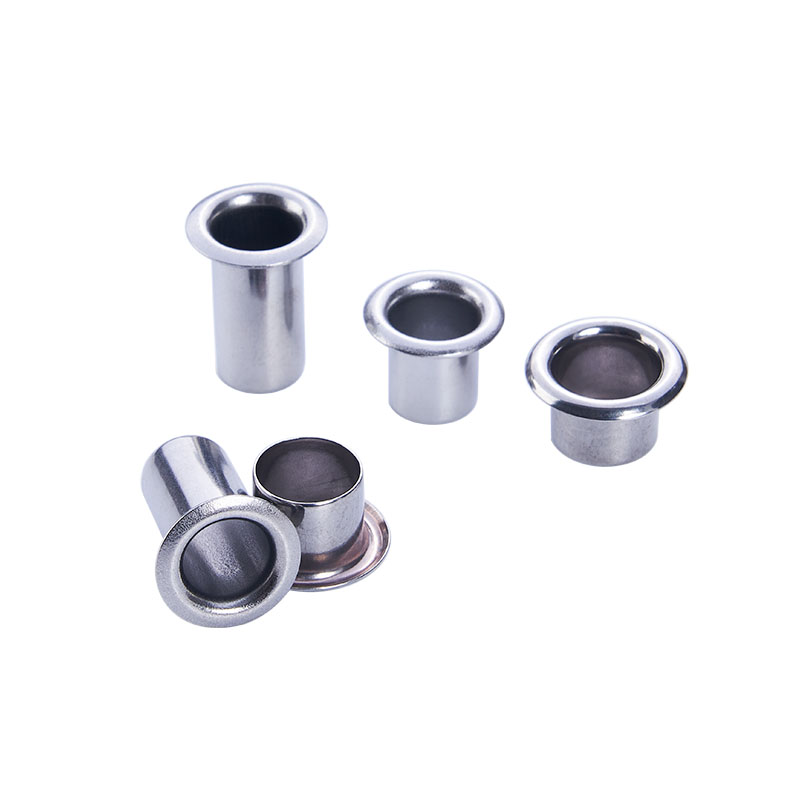
A stainless steel eyelet is a hollow metal ring, stamped from stainless steel sheet, designed to reinforce a punched or drilled hole in fabric, leather, plastic sheeting, or thin metal. The primary job: protect the hole edge from tearing and provide a smooth, durable passage for laces, cords, wires, or hooks. Unlike brass or plated steel, stainless steel eyelets do not rely on a surface coating for corrosion resistance—the protection is built into the alloy itself.
At Nuote Metals, we manufacture stainless steel eyelets in three main configurations. The table below shows how they differ.
| Type | Configuration | Best For |
|---|---|---|
| Standard | One‑piece, flat or rolled flange | General hole reinforcement: canvas, banners, upholstery |
| Spur | Sharp teeth (spurs) on the underside of the flange | Leather, marine covers, tarps—where pull‑out resistance is critical |
| Shoulder / Stepped | Barrel with a stepped profile | Multi‑layer materials or applications requiring a spacer between layers |
Stainless steel eyelets are harder and stronger than brass—much more resistant to deformation under heavy loads. But that same hardness means they require more careful installation and proper tooling.
304 vs. 316 Stainless Steel – Which Grade Should You Specify?
We manufacture stainless steel eyelets in two primary grades. The choice depends entirely on your environment.
| Grade | Common Name | Key Properties | Best For |
|---|---|---|---|
| 304 | A2 stainless | Excellent corrosion resistance, good formability, non‑magnetic | General outdoor use, food equipment, industrial covers, awnings |
| 316 | Marine grade (A4) | Superior corrosion resistance (added molybdenum), resists chlorides and saltwater | Marine hardware, coastal installations, chemical plants, medical devices |
304 stainless steel is our standard for most outdoor and industrial applications. The chromium in stainless steel forms an invisible, self‑repairing oxide layer that prevents rust—even after scratches or abrasion.
316 stainless steel contains 2–3% molybdenum, which provides exceptional resistance to chloride‑induced corrosion. According to NACE International, 316 can handle chloride levels five times stronger than what would damage 304 before breaking down.
Our recommendation: For boat covers, dock hardware, or any product within 5 km of saltwater, specify 316 stainless steel eyelets. For general outdoor use—tents, awnings, banners—304 is sufficient and more economical. We stock both grades and can provide free samples for salt‑spray testing.
Technical Specifications – What We Actually Deliver (Real Numbers)
We do not guess. Every batch of stainless steel eyelets leaving our factory meets these parameters. These are the numbers our customers in marine, medical, and industrial sectors rely on.
Standard Sizing and Tolerances
| Parameter | Range / Value | Tolerance |
|---|---|---|
| Shank (Barrel) Outside Diameter | 1.5 mm – 12 mm | ±0.05 mm |
| Flange Outside Diameter | 4 mm – 30 mm (customizable) | ±0.10 mm |
| Barrel Length (Under Flange) | 2.0 mm – 15 mm (material‑stack dependent) | ±0.10 mm |
| Material Thickness (Sheet) | 0.4 mm – 1.5 mm | ±0.03 mm |
| Concentricity (Barrel to Flange) | ≤ 0.1 mm TIR | 100% visual inspection |
For precision electronics or medical device applications, we can tighten shank diameter tolerance to ±0.02 mm upon request.
Surface Finish Options
| Finish | Process | Properties |
|---|---|---|
| Mill (As‑Stamped) | No additional treatment | Original matte silver finish |
| Polished | Mechanical buffing | Bright, reflective surface—used in visible decorative applications |
| Passivated | Acid bath removes free iron | Maximises corrosion resistance, clean surface—standard for medical and marine orders |
All finishes are RoHS compliant.
Where Our Customers Actually Use Stainless Steel Eyelets (Real Cases)
We do not just publish product lists—we solve real problems. Here are actual applications where our customers rely on Nuote Metals stainless steel eyelets.
Marine Canvas and Boat Covers (316 Stainless Steel)
A customer in Florida builds custom boat covers for saltwater yachts. Standard brass eyelets tarnished within months, and plated steel rusted and stained the canvas. We supplied 316 stainless steel spur eyelets with matching spur washers. The result: three years of continuous saltwater exposure—no corrosion, no pull‑out, no staining. The spurs grip the canvas, preventing rotation under wind stress.
Marine‑grade eyelets must pass minimum 200 hours of salt spray testing (ASTM B117)—more than double the requirement for fashion accessories. Only 316 stainless steel or solid brass meets this standard consistently.
Food Processing Equipment (304 Stainless Steel)
A food processing plant needed eyelets for filter bags used in dairy production. The environment is constantly wet, with daily high‑temperature washdowns and chemical sanitizers. Brass was not allowed due to potential leaching concerns. We supplied 304 stainless steel standard eyelets with passivated finish. The non‑porous surface is easy to clean and does not support bacterial growth. Two years in service—no signs of corrosion or material degradation.
Medical Device Sterile Drapes (304 Stainless Steel)
A medical textile manufacturer produces sterile drapes for operating rooms. The drapes require eyelets for attachment to surgical tables, and must withstand repeated autoclave sterilization (steam at 134°C). We supplied 304 stainless steel flat‑flange eyelets in 5 mm size. Stainless steel maintains structural integrity through extreme temperature cycles—from cryogenic to over 800°C—making it suitable for medical sterilization equipment.
Industrial PVC Curtains (304 Stainless Steel)
An industrial facility uses heavy PVC strip curtains to separate welding areas from clean zones. The curtains hang from overhead rods through metal eyelets. Standard zinc‑plated steel eyelets rusted within six months, leaving rust stains on the PVC and on operators' hands. We supplied 304 stainless steel spur eyelets. The chromium oxide layer prevents rust entirely, and the self‑healing property means even scratches from daily use do not lead to corrosion.
Our Quality Assurance and Certifications – Real Transparency
We do not just claim quality. We prove it.
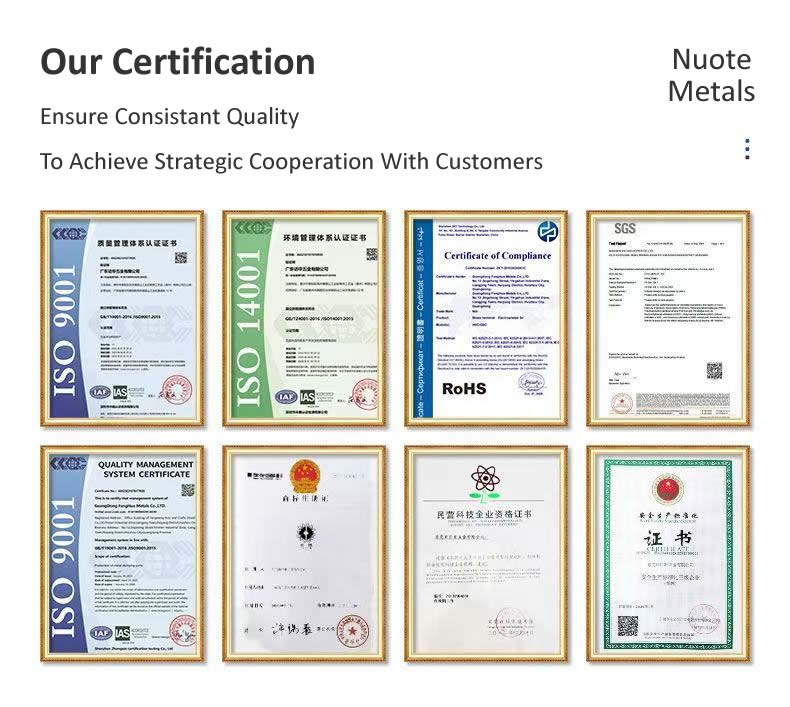
ISO 9001:2015 Certified Production
Our factory operates under ISO 9001:2015 quality management systems. Every batch of stainless steel eyelets undergoes:
100% whole‑range inspection during production
Dimensional inspection – shank OD, flange OD, barrel length, concentricity
Hardness verification – ensures consistent forming without cracking
Plating/passivation thickness testing
Our quality control team documents every inspection. Batch traceability is maintained from raw material coil to finished packaging.
RoHS Compliance
All stainless steel eyelets from Nuote Metals are RoHS compliant. We maintain supply chain documentation and can provide compliance certificates upon request.
Our Transparent Customer Policies
Free samples – For sizes we have in stock. Test before you commit.
Custom tooling within 10 days – Need a non‑standard flange shape, barrel length, or diameter? We design and cut tooling in‑house.
100% inspection before shipment – No shipment leaves without QC sign‑off.
MOQ 20,000 pieces – Flexible for standard sizes; lower volumes available for sample runs.
Lead times – Stock sizes: 3–5 days. Non‑standard: 15–25 days including custom tooling.
8‑hour inquiry response – Our sales team replies to technical questions within one business day.
Installation Best Practices for Stainless Steel Eyelets
Stainless steel is harder than brass or aluminium. Installing stainless steel eyelets requires proper technique and tooling. Here is what we have learned from years of customer support.
Critical Installation Requirements
Use high‑carbon steel setting dies – Standard brass‑rated tools will not work and may be damaged. Stainless steel eyelets require tools specifically designed for stainless steel.
Hole diameter – Punch or drill hole 0.05–0.10 mm larger than eyelet shank (same as other metals).
Deburring – Essential. Burrs can prevent proper roll formation and may cut into the stainless steel.
Setting force – Stainless steel requires significantly more force than brass. A gentle tap is not enough. Use a heavier mallet or a press.
Tool compatibility – Different eyelet styles (rolled rim vs. self‑piercing) require different setting tools. Even the same size number does not guarantee tool compatibility.
Common Mistakes We Have Helped Customers Fix
| Mistake | Consequence | Our Fix |
|---|---|---|
| Using brass‑rated setting dies | Incomplete roll, damaged tooling | Use high‑carbon steel dies specifically for stainless |
| Insufficient setting force | Weak roll, eyelet pulls out | Use a press or heavier mallet |
| Wrong tool for eyelet style | Damaged eyelet, poor finish | Match tool to eyelet style (rolled rim vs. spur washer) |
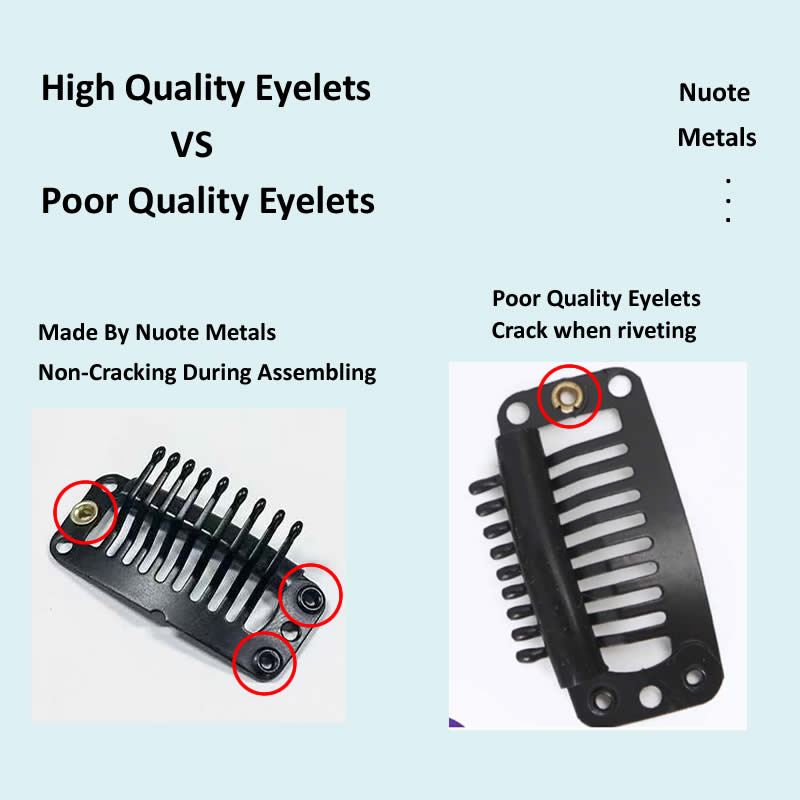
| Burred hole | Cracked or split barrel | Deburr both sides before setting |
We include a one‑page setting guide with every sample order. Just ask.
【stainless steel eyelets】FAQ – Answers to the Three Questions We Hear Most
Q1: What is the difference between a standard stainless steel eyelet and a spur eyelet? Which one should I choose?
A: At Nuote Metals, we manufacture both. The difference is the underside of the flange. A standard stainless steel eyelet has a smooth, flat flange. It sits flush against the material and is suitable for stationary or low‑movement applications—banners, signage, indoor upholstery, and light clothing. A spur stainless steel eyelet has small sharp teeth (spurs) stamped into the underside of the flange. When the eyelet is set, these spurs bite into the material, preventing the eyelet from rotating or pulling out under tension or vibration. Our recommendation: For marine covers, tarpaulins, canvas awnings, belts, and any application subject to wind stress or movement, choose spur stainless steel eyelets with matching spur washers. The combination of stainless steel's corrosion resistance plus the mechanical grip of spurs makes for a virtually indestructible joint. For indoor signage or light upholstery, standard eyelets are sufficient and more economical. We can provide samples of both types so you can test the pull‑out resistance on your actual material.
Q2: Can I use 304 stainless steel eyelets in saltwater? When do I need 316?
A: This is the most common grade question we receive. 304 stainless steel eyelets perform well in fresh water, mild outdoor conditions, and occasional moisture. However, in continuous saltwater or coastal spray environments (within approximately 5 km of the ocean), 304 can develop surface pitting corrosion over time. The salt concentration increases through evaporation cycles, accelerating chloride attack. 316 stainless steel eyelets contain 2–3% molybdenum, which provides exceptional resistance to chloride‑induced pitting and crevice corrosion. According to NACE International, 316 can handle chloride levels five times stronger than what would damage 304 before breaking down. Our specific advice: For boat covers, dock hardware, sail reinforcement points, or any product that will be regularly exposed to saltwater, specify 316 stainless steel spur eyelets. For general outdoor use away from salt (tents, awnings, banners in inland areas), 304 is sufficient and more cost‑effective. We stock both grades and can provide free samples for salt‑spray testing.
Q3: How do I calculate the correct stainless steel eyelet barrel length for my material stack?
A: This is the most common technical question we receive. The correct barrel length depends on your total material thickness. For standard stainless steel eyelets, the barrel must extend completely through the material stack and have enough protruding length to roll over. Our formula: Barrel Length = Material Stack Thickness + 0.8 to 1.5 mm (the extra length forms the rolled curl). For example, if you are reinforcing a canvas boat cover with a total thickness of 2.5 mm, you need a stainless steel eyelet with a barrel length of approximately 3.3 mm to 4.0 mm. If the barrel is too short, the curl will be weak and the eyelet may pull out. If the barrel is too long, the curl will be oversized or may split. For spur stainless steel eyelets with mating washers, the calculation is: Barrel Length = Material Stack Thickness + Washer Thickness + 0.5 to 1.0 mm. Stainless steel is harder than brass, so we recommend being slightly more generous with the protrusion length—aim for the higher end of the range. Our recommendation: When in doubt, order free sample eyelets in two or three adjacent barrel lengths and test them on your actual material using your setting tool. Nuote Metals can supply sample kits exactly for this purpose—just tell us your material stack and we will suggest the correct lengths.
Why Our Customers Trust Nuote Metals for Stainless Steel Eyelets
We are not a trading company. We are a manufacturer with over ten years of dedicated experience in stainless steel eyelets and precision metal stamping.
One‑stop supply – Stainless steel eyelets in all types (standard, spur, shoulder) and both grades (304 and 316)
Custom tooling in‑house – New tooling ready within 10 days for custom flange shapes, barrel lengths, or diameters
RoHS‑compliant production – All finishes and materials meet international environmental standards
100% quality inspection – Every batch checked for dimensions, hardness, and finish integrity
Free samples – Test before you commit
70+ countries supplied – Proven track record with marine, medical, food, and industrial customers
We also manufacture brass eyelets, aluminium eyelets, and copper eyelets. So when a job calls for a different material, we can supply it without you needing a new vendor.
Contact Nuote Metals for Your Stainless Steel Eyelets Requirements
From boat covers that face Atlantic storms to medical drapes that must survive daily autoclaving, stainless steel eyelets from Nuote Metals deliver. Tell us your material, your environment, and your production volume. We will reply with a specific grade and type recommendation, technical datasheets, and free samples.
Contact Nuote Metals today:
🌐 Website: www.nuotemetal.com
📧 Email: info@notinmetal.com
📞 Phone: +86 13316629095
Let us reinforce your product the right way.
Send Inquiry



X
We use cookies to offer you a better browsing experience, analyze site traffic and personalize content. By using this site, you agree to our use of cookies.
Privacy Policy