
What's the Point of Brass Eyelets?
In a hardware store, you'll see eyelets made of steel or nickel-plated metal. But open a box from a quality leatherworker or a marine supply shop, and you might find a warmer, gold-colored ring. Those are brass eyelets. They cost a bit more, so why use them? For three reasons: they look classic, they resist corrosion well, and they're decent conductors. You see them on high-end bags, boat covers, vintage-style gear, and sometimes in electrical grounding panels. They're not for every job, but when you need that mix of looks and lasting power, brass eyelets are the call.
Drawing Out the Brass: A Look from the Press
My name is Frank, and I run the deep draw machines. This is where we make the brass eyelets . It's not a stamping job; it's a stretching job.
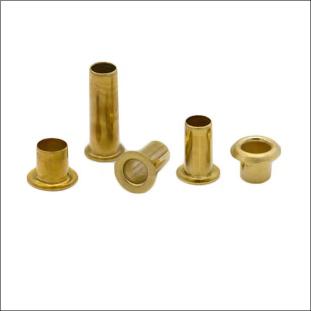
We start with a small circle of brass sheet, punched out from a coil. This blank gets fed into the press. There's a punch above and a die below. The punch comes down and pushes the brass blank through the die hole. The metal doesn't get cut; it gets stretched and formed into a little cup shape with a flange (the flat rim) on top. That's the body of the eyelet.
The trick with brass is its softness. It flows nicely under pressure, which is good, but it's also soft enough to scratch or tear if your tools aren't perfect. The punch and the die have to be polished mirror-smooth. Any tiny nick or scratch on the tool will mark every single brass eyelet in the batch. We also have to get the pressure and speed just right. Too much force too fast, and the brass can thin out too much at the walls or even split. It's a gentle, steady squeeze.
After they're formed, the brass eyelets go into a vibratory tumbler. We toss them in with a special media that's gentle but effective. This tumbles them for an hour or so, deburring the edges, smoothing the surface, and giving them a consistent, satin finish. You can't have sharp edges on an eyelet—it'll cut the cord or fabric that goes through it.
My quality check is hands-on. I'll take a handful from a batch, run my thumb around the inside of the barrel—it should be perfectly smooth. I'll check the flange is even all around. A good brass eyelet feels solid and well-made, with no burrs to catch on.
We make them in all sizes, from tiny ones for shoelaces to big ones for canvas tarps. The process feels the same, but you respect the material. Making brass eyelets is different from making steel ones. There's less brute force, more finesse. You're not fighting the metal; you're guiding it into shape.
When I see a finished product using our brass eyelets , I know they'll hold up. They might patina over time, but they won't rust out. They're made to do their job well and look good doing it. That's what keeps our customers coming back.
Send Inquiry



X
We use cookies to offer you a better browsing experience, analyze site traffic and personalize content. By using this site, you agree to our use of cookies.
Privacy Policy