
What Are Sheet Metal Stamping Parts Really?
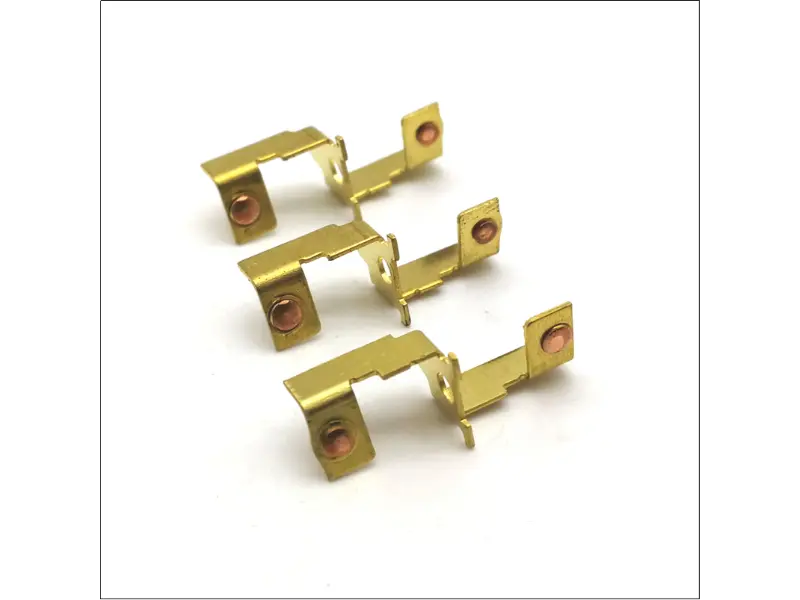
When you hear "stamping," you might think of a simple hole punch. But in a factory, it's how we make the skeleton of almost everything. Sheet metal stamping parts are those flat or formed pieces—brackets, clips, enclosures, contacts—that come out of a press. They start as a coil of sheet metal and, with one or a series of hits from a heavy tool called a die, become a finished part. The beauty of it is speed and sameness. Once the die is set, you can make a thousand metal stamping parts in an hour, and they'll all be within a hair's width of each other.
My Shift at the Press
I'm Dmitri, and I've run stamping presses for fifteen years. My world is noise, vibration, and getting things exactly right.
Everything starts with the die. It's a massive block of hardened steel, maybe a foot thick, that we bolt into the press. One half is fixed to the bed; the other is on the ram that slams down. The die has the exact negative shape of the part we want cut and formed. Setting it up is an art. You use feeler gauges, shims, and a lot of patience to get it perfectly aligned. A die that's off by a thousandth of an inch will make scrap, or worse, destroy itself.
Then we thread the coil. Steel, aluminum, stainless—it comes in a ribbon. The press feeds it through, step by step. I never just hit "start" and walk away. First, I run it in "inch" mode, one stroke at a time. I take those first few metal stamping parts to my bench. I measure every dimension with calipers, check bends with a gauge, and feel the edges. Are they clean, or are there burrs? This first-off check is everything. It tells me if the die is set right, if the material is feeding straight, if the pressure is correct.
When it's good, I let it run automatic. Now my job is to listen and watch. A healthy press has a solid, rhythmic THUMP-hiss... THUMP-hiss.... If the sound changes—gets slappy, or there's a sharp crack—something's wrong. Maybe a punch is chipping. Maybe the material has a hard spot. I'm also watching the scrap skeleton, the lace-like leftover metal that snakes out of the press. It should flow smoothly. If it curls or jumps, the clearances are off.
We make all kinds of metal stamping parts. Simple flat washers. Complex brackets with six different bends. Electrical contacts with tiny, precise features. The process is the same, but the attention to detail is what separates a good part from a bad one. A burr on a washer might not matter. A burr on an electrical contact will cause a short.
At the end of a run, there's a bin full of identical parts. That's the point. Consistency. When an assembly line gets our metal stamping parts, they know every one will fit. My job isn't glamorous, but it's fundamental. Without good stamping, a lot of modern manufacturing just stops. And getting that solid, reliable THUMP right, shift after shift—that's the satisfaction.
Send Inquiry



X
We use cookies to offer you a better browsing experience, analyze site traffic and personalize content. By using this site, you agree to our use of cookies.
Privacy Policy