
Why Use Stainless Steel Tubular Rivets?
Most tubular rivets are made from plain steel or aluminum. They work fine for a lot of jobs. But open a box in a boatyard, a food processing plant, or a chemical factory, and you'll find a different kind. They have a dull silver-gray sheen and feel a bit heavier. These are stainless steel tubular rivets. People choose them for one main reason: they won't rust. In places that are wet, salty, acidic, or just need to stay clean, stainless is the only choice that holds up. They're the tubular rivets you use when the environment is the enemy.
Working with the Tough Stuff
I'm Mikhail, and I run the line that makes our stainless tubular rivets. My machine looks the same as the one making mild steel rivets, but the job feels completely different.
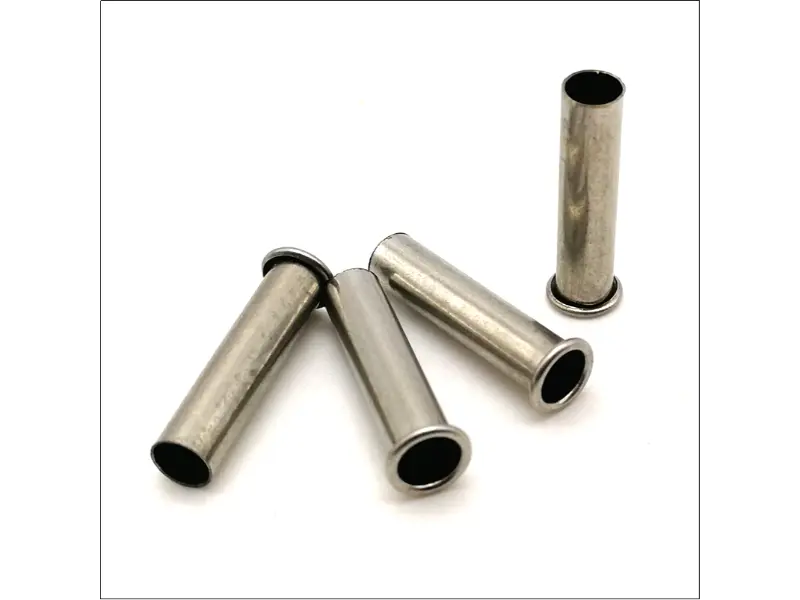
It starts with the wire. The stainless coil is harder and springier. When it feeds into the header, you hear a sharper, higher-pitched crack as it's cut, not the duller thud of mild steel. Forming the head is tougher on the dies. Stainless work-hardens—it gets even harder as you deform it—so our tools wear out faster. We have to check them constantly.
The real challenge is drawing the hollow part. For a standard tubular rivet, we punch a deep hole into the end of the cut wire. With stainless, you need more pressure, sharper punches, and perfect alignment. The material doesn't want to flow; it wants to resist. If your tool is even slightly dull, instead of a clean hole, you get a ragged opening or work-hardened material that might crack later. It's a battle of precision over toughness.
After they're formed, the stainless steel tubular rivets get tumbled. But not for long, just to remove any microscopic burrs. We don't want to polish away their natural finish. That dull, satin look is part of what makes them corrosion-resistant. A bright, polished finish can sometimes be less durable in the long run.
My quality check is simple but strict. I take a few rivets and try to set them in a test plate. A good stainless tubular rivet should flare smoothly. If it's too hard or cracks, something went wrong in the drawing process. I also check the hollow depth with a pin gauge. Consistency is everything. When you're on a ladder riveting a marine fitting, you need every rivet to set the same way.
We send these tubular rivets to industries where failure isn't an option. A boat hull. A brewery tank. An outdoor electrical cabinet. They're not the cheapest rivets in the box, but they're often the most reliable. Making them isn't about being fast; it's about being relentless with the details. Every one has to be right, because the places they go don't forgive mistakes.
Send Inquiry



X
We use cookies to offer you a better browsing experience, analyze site traffic and personalize content. By using this site, you agree to our use of cookies.
Privacy Policy