
Products
Tubular Rivets
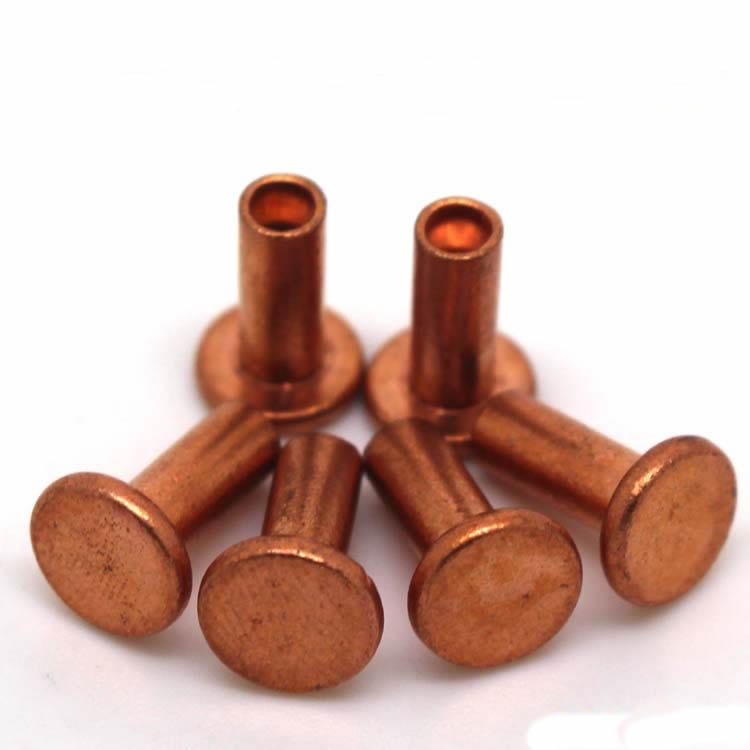
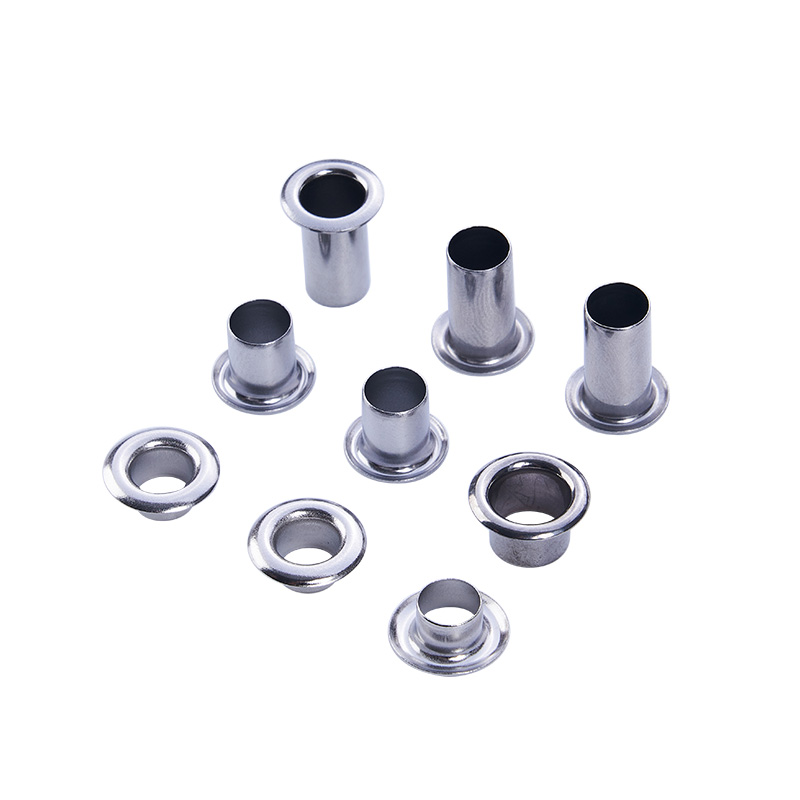
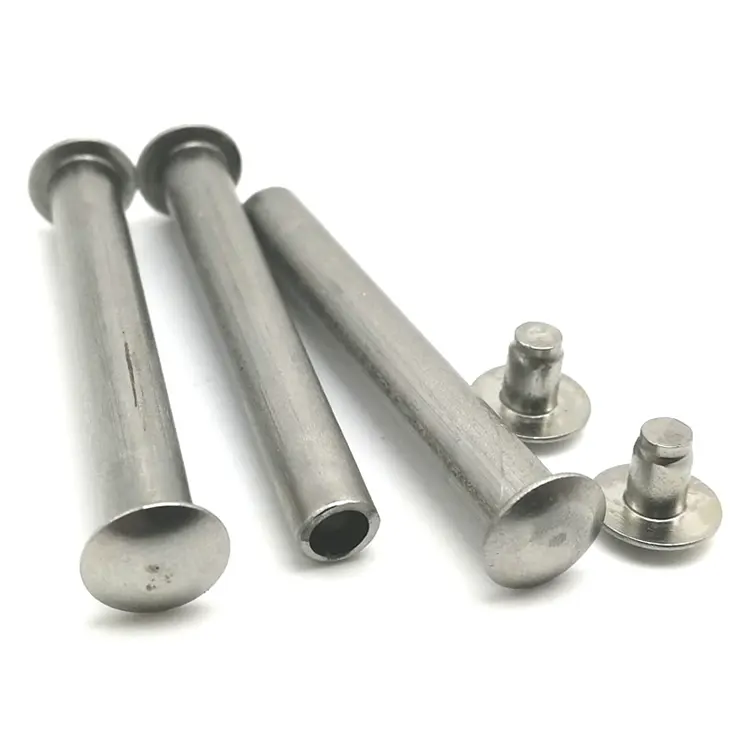
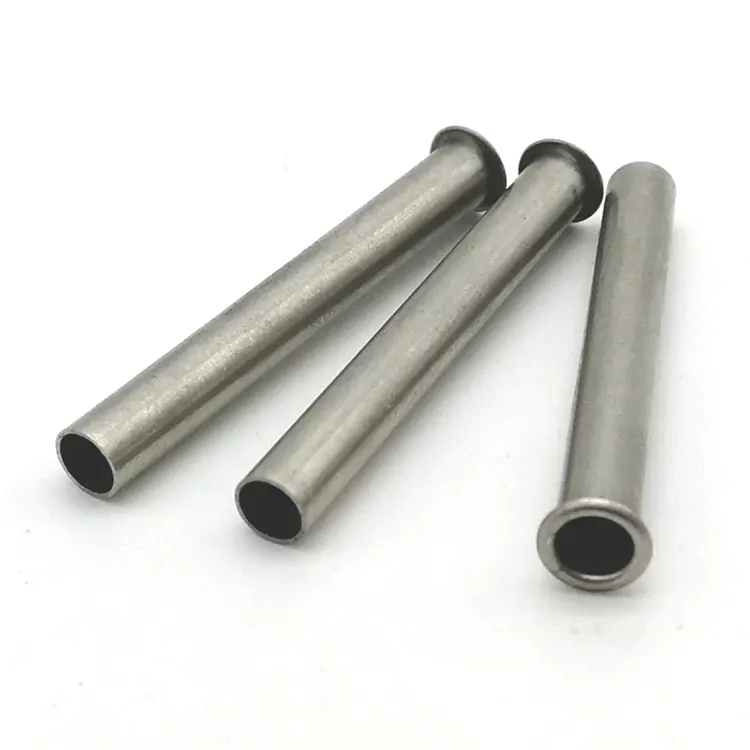
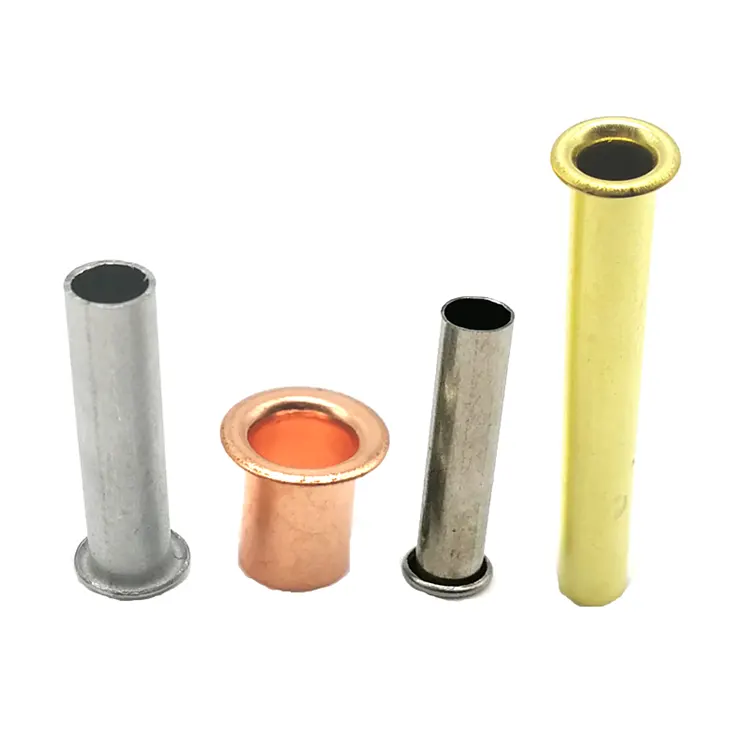
Nuote Metals is a China-based manufacturer of tubular rivets – fully hollow fasteners made from metal tube stock, ideal for lightweight assemblies and soft materials where minimal setting force is required. Available in 1.5–8.0mm shank diameters, round, flat, and countersunk heads, carbon steel, stainless steel, brass, copper, and aluminum.
Send Inquiry
Product Description
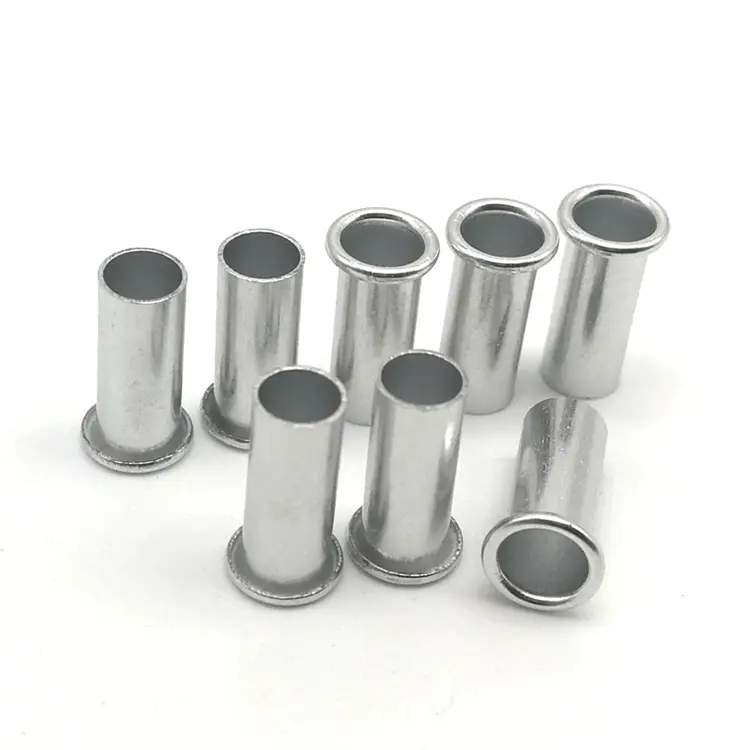
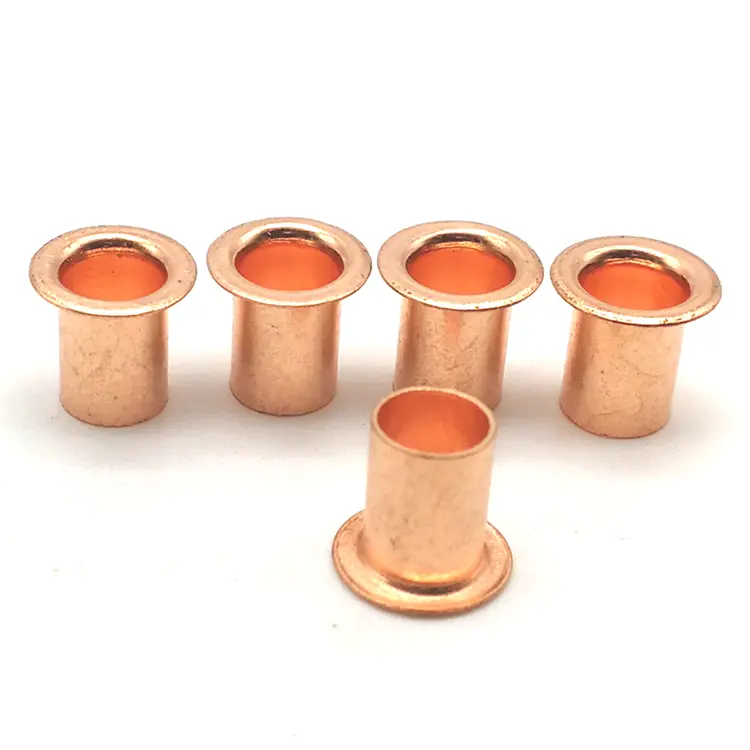
Tubular rivets are fully hollow fasteners. Unlike semi‑tubular rivets that have a partial cavity, they have a hollow shaft running the full length of the barrel. They are made from metal tube stock – the tube is cut to length, then a head is formed on one end using a heading press. The hollow wall flares outward during installation with very little force – typically 15–20% of what a solid rivet requires.
This is the fastener for soft materials. Leather, fabric, canvas, rubber, thin plastics – materials that would crack or compress under the force of a solid rivet.
Tubular vs. Semi‑Tubular vs. Solid – Where the Hollow Shaft Wins
| Feature | Tubular Rivet | Semi‑Tubular Rivet | Solid Rivet |
|---|---|---|---|
| Shaft design | Fully hollow (tube stock) | Partially hollow (45–55%) | Fully solid |
| Setting force | 15–20% of solid | 25–30% of solid | 100% |
| Wall thickness | Thin | Moderate | Solid |
| Best for | Soft materials, lightweight assemblies, bushings | General purpose, moderate loads, pivot joints | Structural, heavy‑duty, maximum strength |
Head Styles – What We Offer
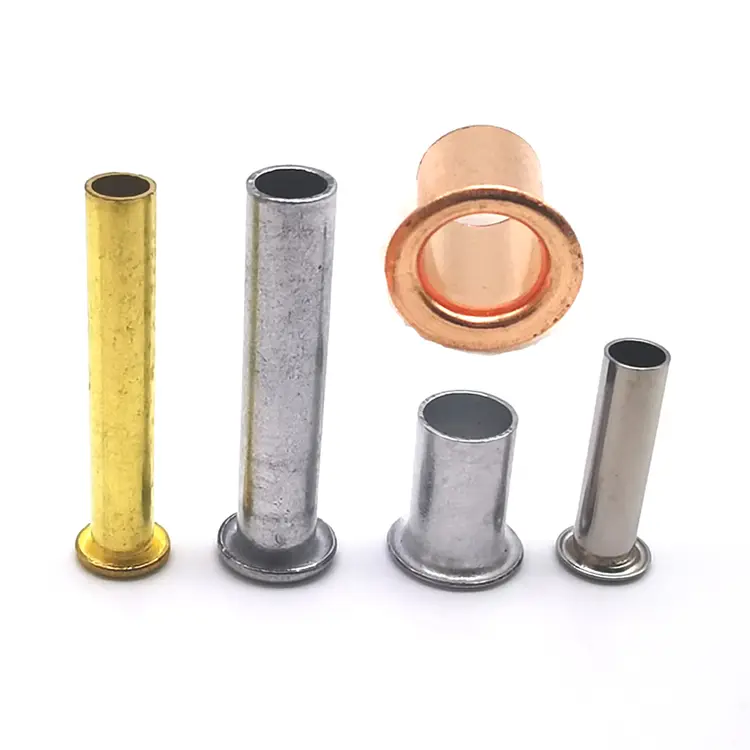
Because tubular rivets are made from tube stock, head style options are limited to three:
| Head Style | Best For | Visual Profile |
|---|---|---|
| Round | Visible joints, general purpose | Classic dome |
| Flat | Clearance‑limited, low profile | Sits near flush |
| Countersunk | Flush surfaces, zero protrusion | Tapered, sits flush |
Materials We Can Offer
| Material | Grade | Key Characteristics | Typical Applications |
|---|---|---|---|
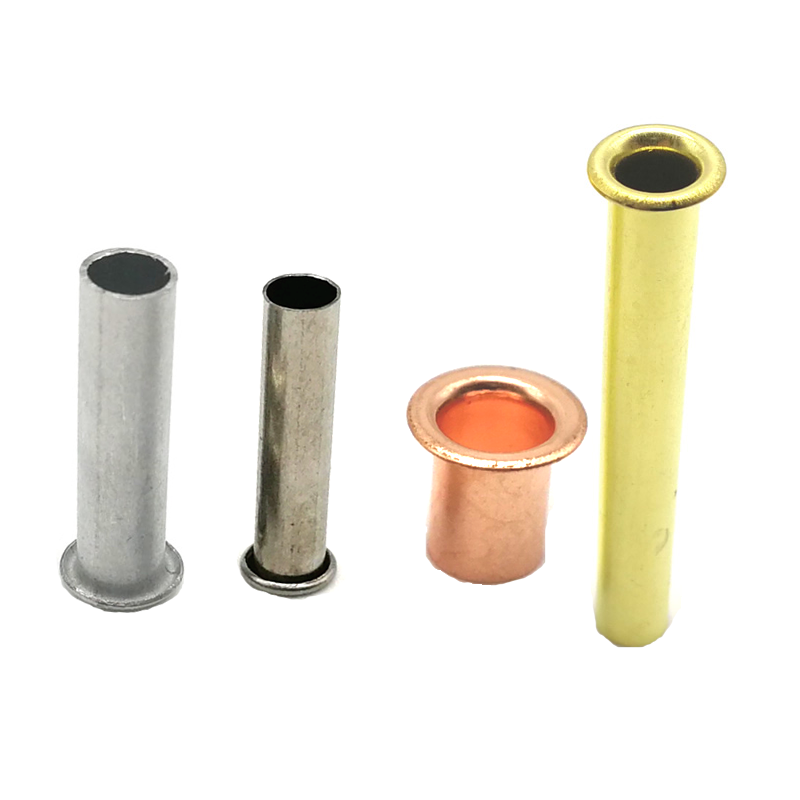
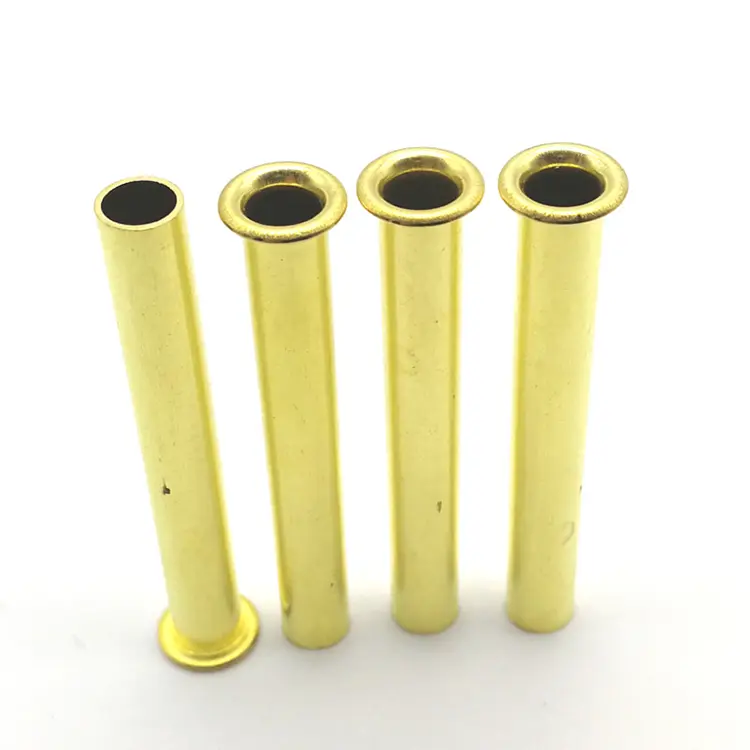
| Brass | C2680 / C2600 | Good conductivity, corrosion resistance, gold appearance | Leather goods, decorative hardware, apparel |
| Copper | C11000 (T2) | Best conductivity, thermal performance, antimicrobial | Electrical connections, heat sinks, antimicrobial surfaces |
| Stainless Steel | SUS304 / SUS316 | Corrosion resistant, non‑rusting, high strength | Outdoor equipment, medical devices, marine |
| Aluminum | 5052 / 5056 / 1100 | Lightweight, non‑magnetic, corrosion resistant | Aerospace, drones, lightweight structures |
| Carbon Steel | 1008 / Q195 | High strength, low cost, best value | Industrial equipment, furniture, hardware, high‑volume |
One Real Application – Fabric Tarpaulin Reinforcement
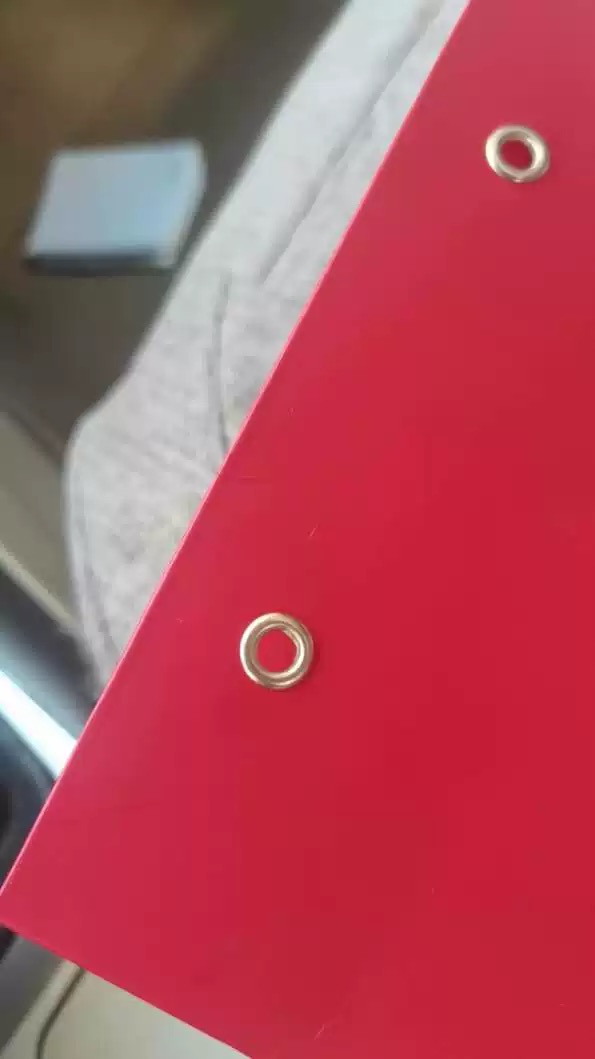
A manufacturer of heavy‑duty truck tarpaulins needed to reinforce tie‑down points and edge grommets. The fabric was thick PVC‑coated polyester – solid rivets would tear through the material, and semi‑tubular rivets still required more force than the fabric could handle without distortion.
We supplied brass tubular rivets – 6.0mm shank, 11.0mm round head, 10.0mm barrel length, plain finish. The fully hollow shaft flared outward with minimal force – no tearing, no distortion. The brass provided corrosion resistance for outdoor exposure. The customer tested 500 rivets across 100 tarpaulins. After 10,000 pull cycles, zero failures. They now order our rivets in batches of 200,000 pieces annually.
How We Manufacture Them – Tube Cutting + Heading
Tubular rivets are made from metal tube stock – not wire. The process is different from solid or semi‑tubular rivets.
1. Tube Stock Procurement – We purchase certified metal tube (seamless or welded) from approved mills – carbon steel, stainless steel, brass, copper, or aluminum. Each batch comes with a mill test certificate and heat number.
2. Incoming Material Inspection – Tube stock is checked for outside diameter (±0.02mm), wall thickness, and material composition. Tubes outside specification are rejected.
3. Tube Cutting – The tube is cut to precise blank length using high‑speed cutting equipment. Each blank becomes one rivet.
4. Heading – The cut tube blank is placed into a heading press. A carbide die forms the head (round, flat, or countersunk) on one end. The hollow tube remains open at the tail end.
5. Trimming – Flash around the head edge is removed.
6. Tumbling – Micro‑burrs are eliminated.
7. Plating or Coating – Zinc, nickel, lacquer, passivation, or other finishes are applied as specified.
8. Final Inspection – 100% optical sorting for critical dimensions. AQL sample manually verified. Dimensional report and Certificate of Conformance issued with every shipment.
Lead time: 5–10 days standard; custom tooling: 15–20 days.
Our In‑House Inspection Equipment

We maintain a full set of calibrated inspection equipment to verify every batch of tubular rivets:
Laser micrometer – Shank diameter measurement (±0.02mm)
Optical comparator – Head diameter, height, and profile inspection
2.5D image measuring system – Wall thickness and concentricity verification
Rockwell hardness tester – Raw material hardness verification
Spectrometer – Material composition verification
Salt spray test chamber – Corrosion resistance testing (ASTM B117) when required
XRF thickness gauge – Plating thickness verification
All equipment is calibrated annually by accredited third‑party labs. Inspection records are retained for five years.
Where They Are Used
Tarpaulins and canvas – Tie‑down points, edge reinforcements, grommets
Leather goods – Belt holes, bag hardware, saddlery
Apparel – Denim, workwear, outdoor gear
Furniture – Upholstery, fabric attachments
Marine – Canvas covers, sail attachments, boat interiors
Sporting goods – Backpacks, camping gear, safety harnesses
Automotive – Soft trim, fabric panels, interior assemblies
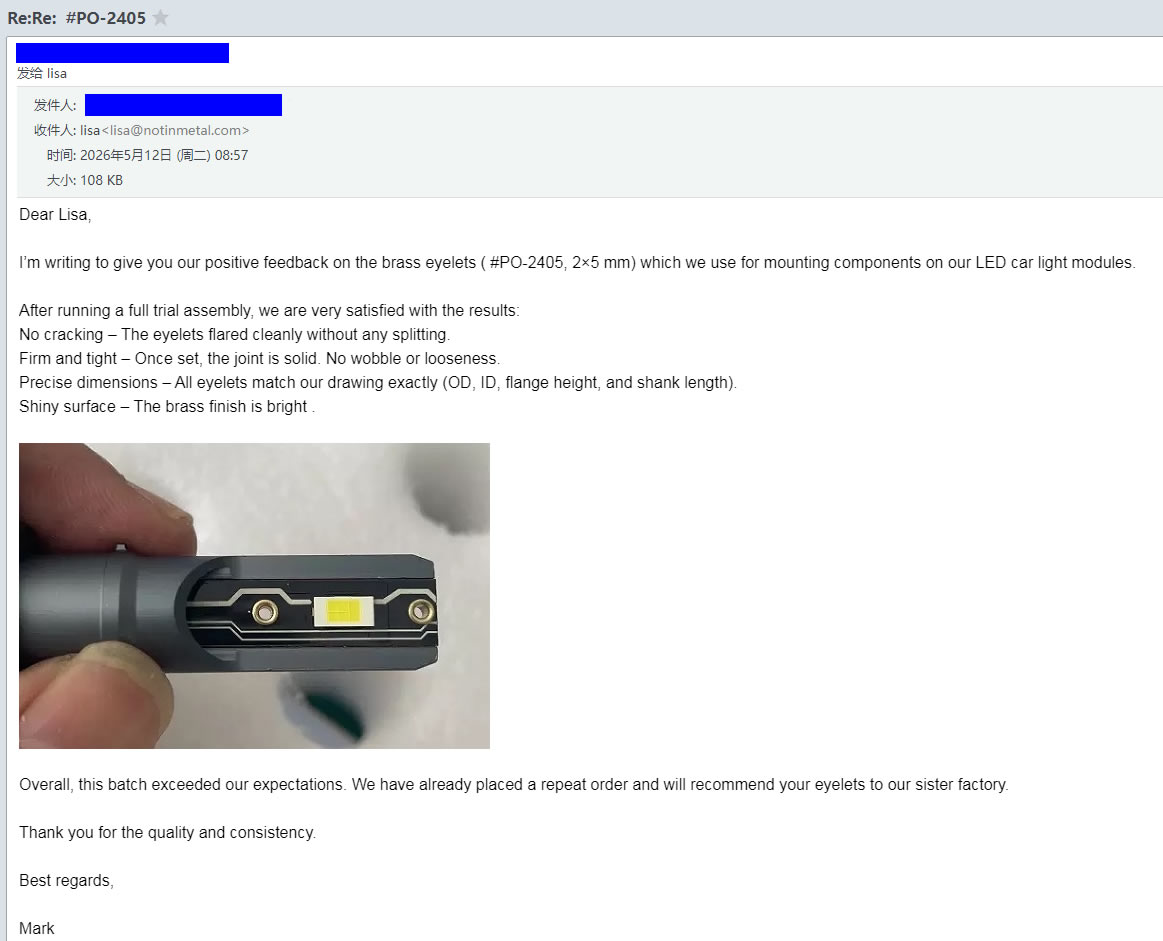
What Our Customers Say – Real Feedback
Three Questions We Answer Often
Q: "What is the difference between tubular rivets and semi‑tubular rivets?"
A: A tubular rivet is fully hollow – the entire barrel is a thin wall that flares outward during setting. A semi‑tubular rivet has a shallow cavity (45–55% of barrel length) with a thicker wall. Tubular rivets require the least setting force (15–20% of solid) and are ideal for soft materials like fabric, leather, and canvas. Semi‑tubular rivets offer more strength (80–90% of solid) and are better for general‑purpose applications where you need a balance of strength and low setting force.
Q: "Can They be used for structural applications?"
A: Tubular rivets are not designed for structural applications. The thin wall does not provide the same shear or tensile strength as semi‑tubular or solid rivets. Choose tubular for soft materials, fabric, leather, and lightweight assemblies. Choose semi‑tubular for moderate‑load assemblies. Choose solid for structural, load‑bearing joints where maximum strength is required.
Q: "How do I select the correct barrel length for a tubular rivet?"
A: Select a barrel length approximately 2.0–2.5mm longer than your total material stack thickness. The thinner wall of a tubular rivet needs more length to flare evenly without crumpling. For example, if you are reinforcing 3mm thick fabric, choose a barrel length of 5.0–5.5mm. Send us your material stack thickness and we will recommend the exact length.
Hot Tags: Tubular Rivets Supplier,Tubular Rivets,China Tubular Rivets
Related Categories
Send Inquiry
Please feel free to fill your inquiry in the form below. We will reply you in 24 hours.



X
We use cookies to offer you a better browsing experience, analyze site traffic and personalize content. By using this site, you agree to our use of cookies.
Privacy Policy