
Products
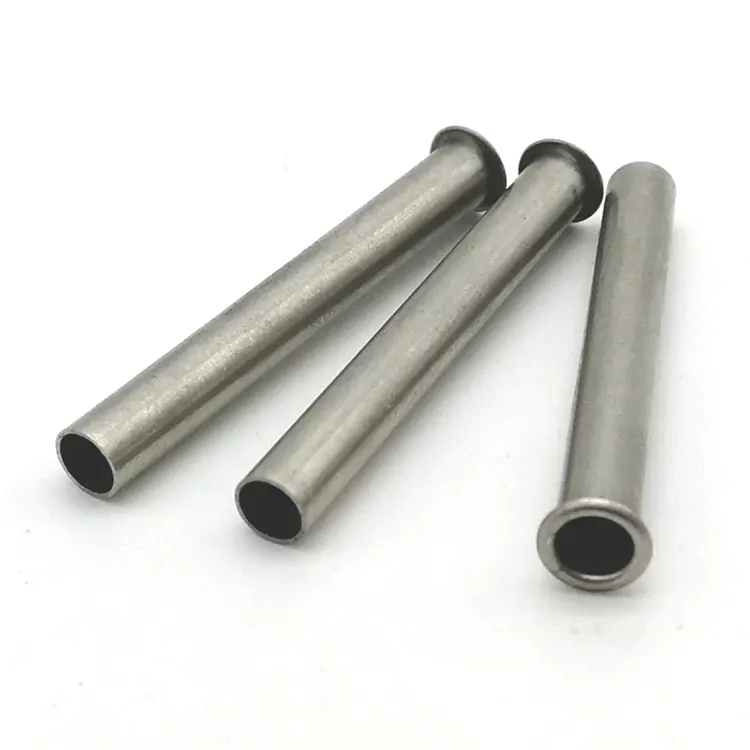
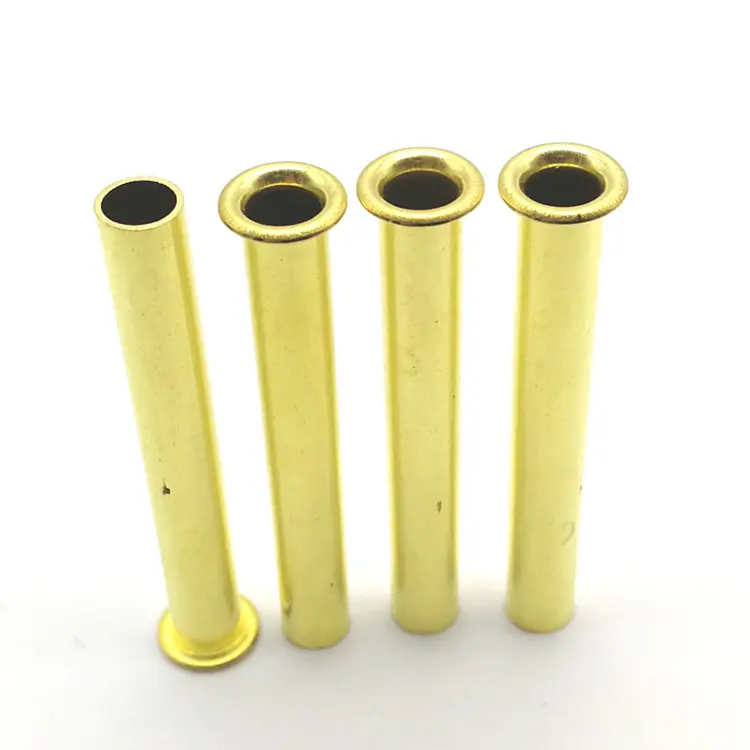
Brass Tubular Rivets
Nuote Metals is a manufacturer of brass tubular rivets in China for more than 10 years. A wide range of tubular rivets available in stock, samples can be offered free. We also accept custom tubular rivets, send us your drawing for your tailor-making.
Send Inquiry
Product Description
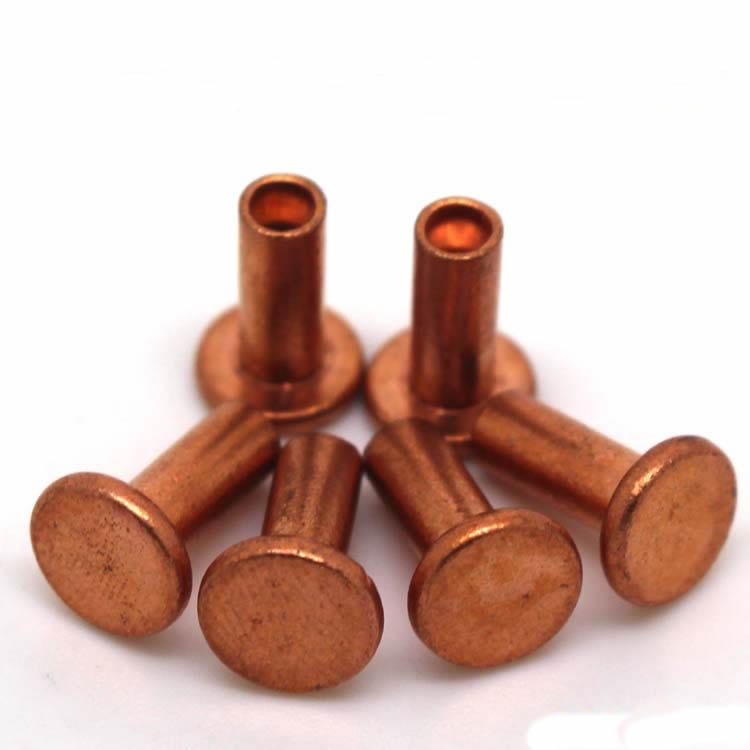
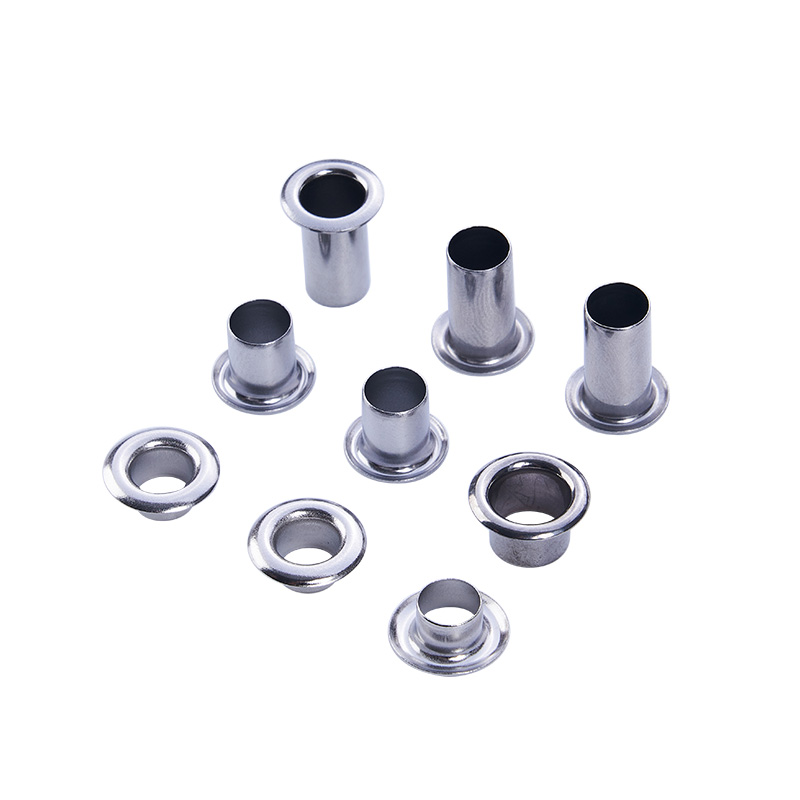
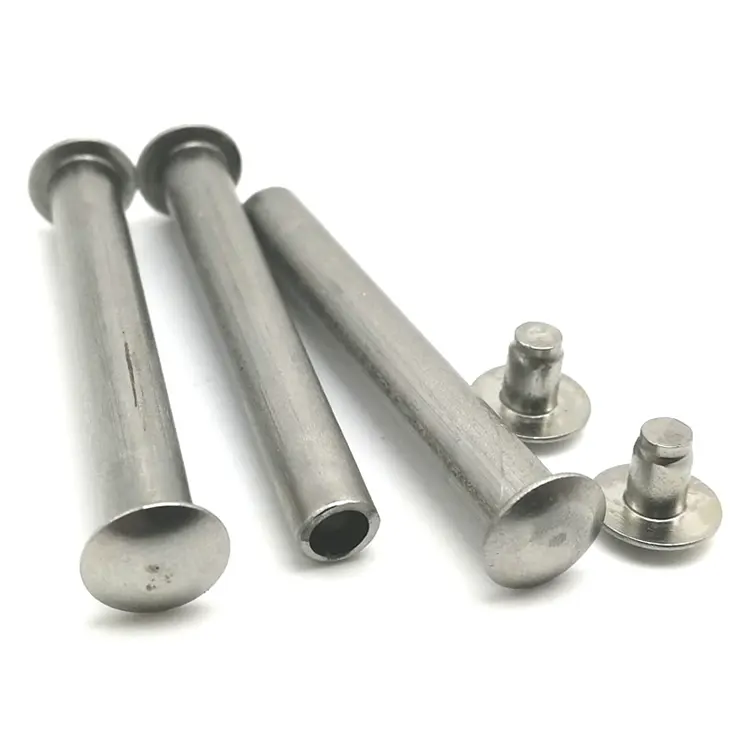
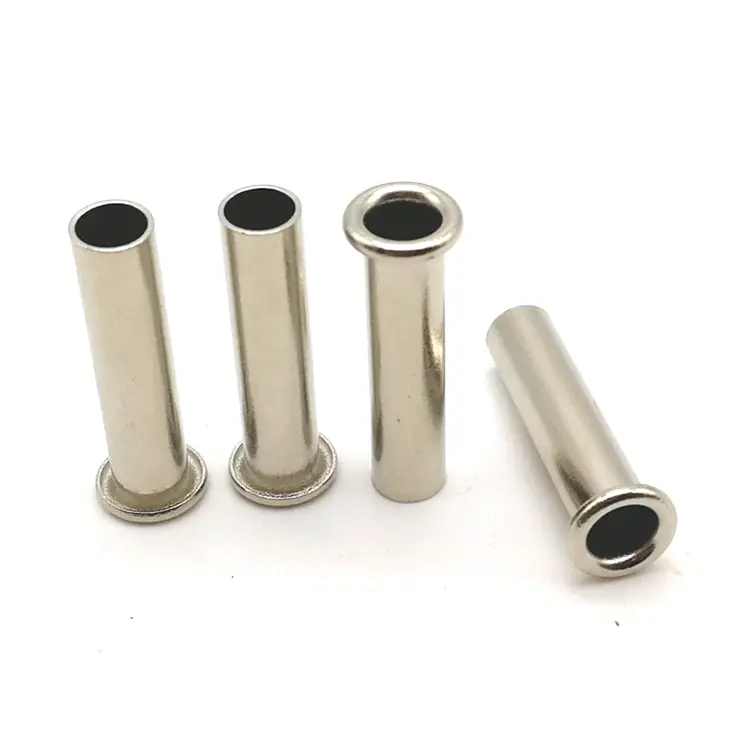
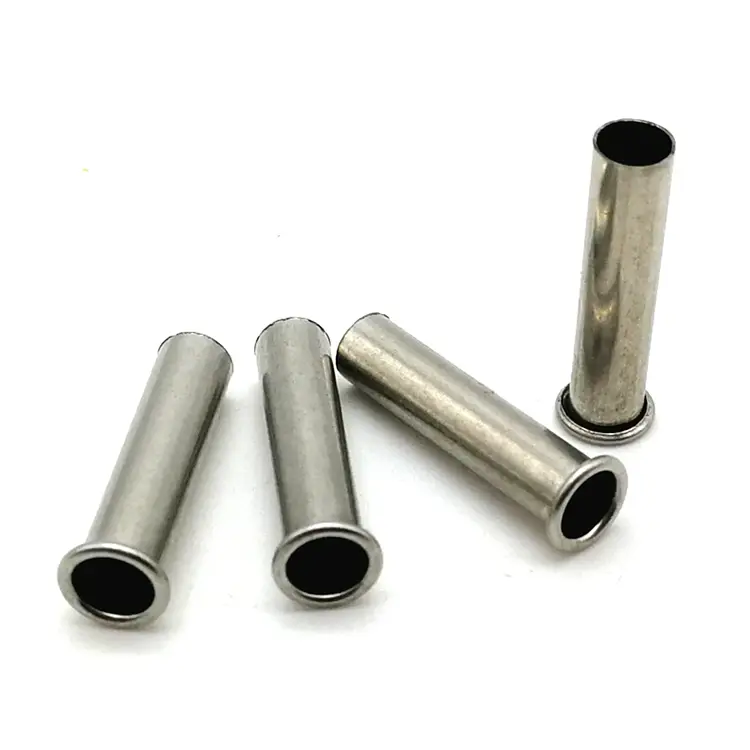
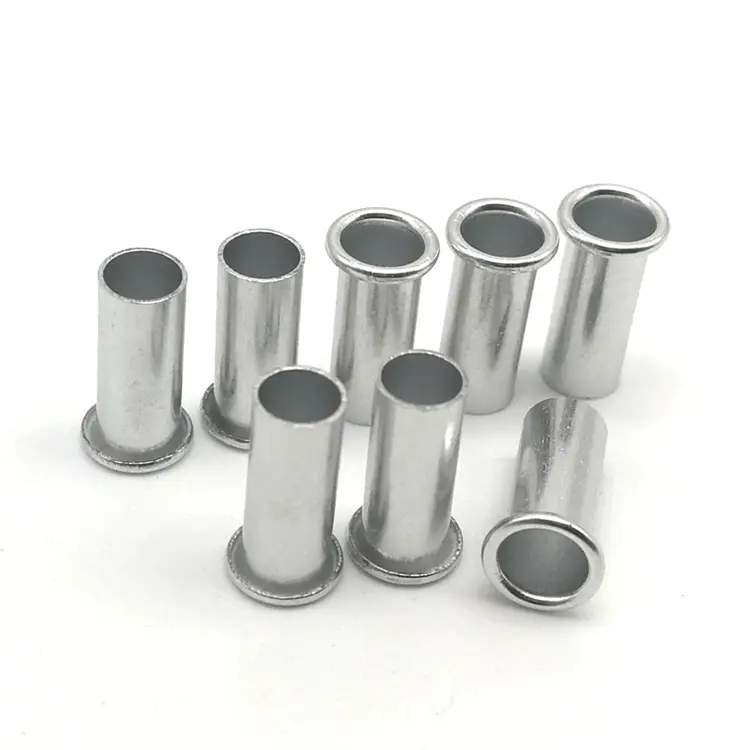
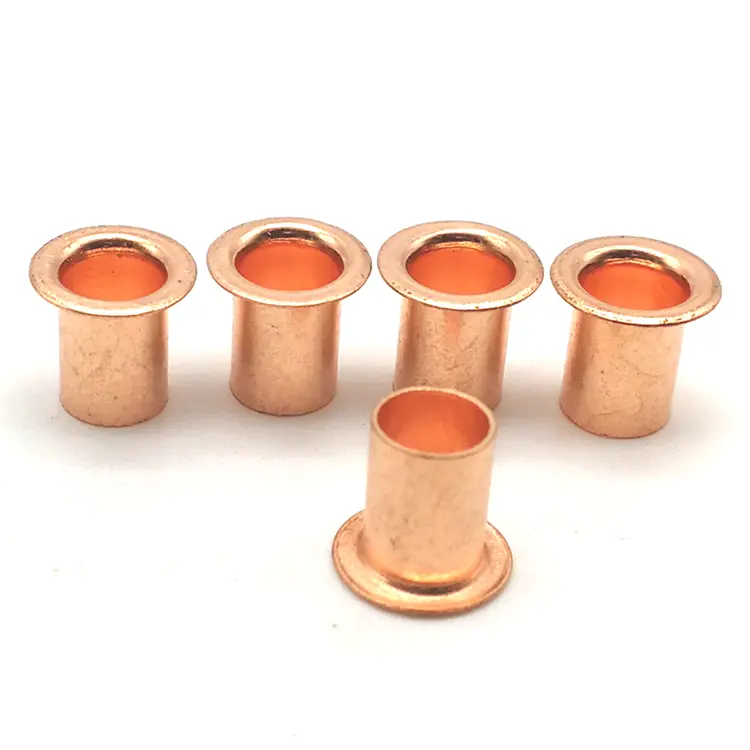
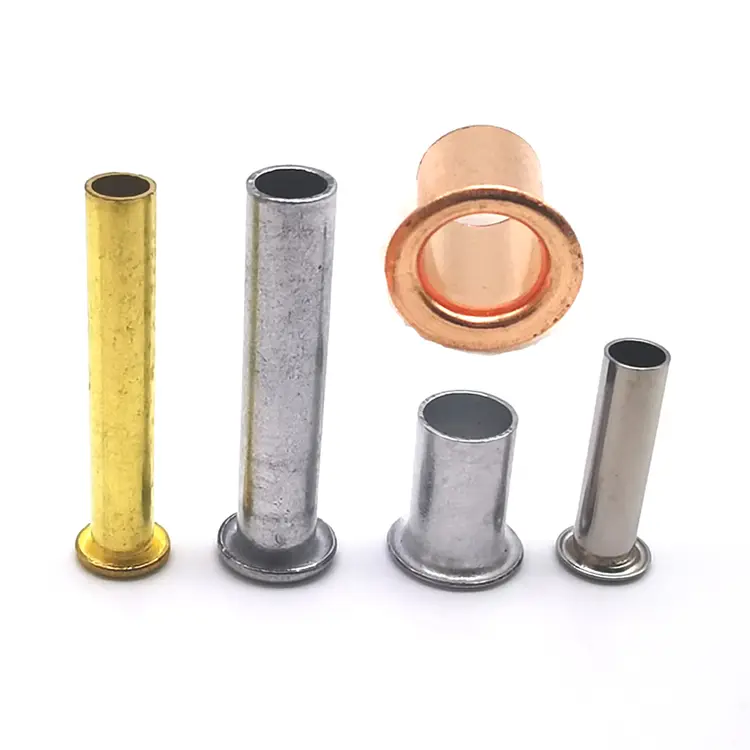
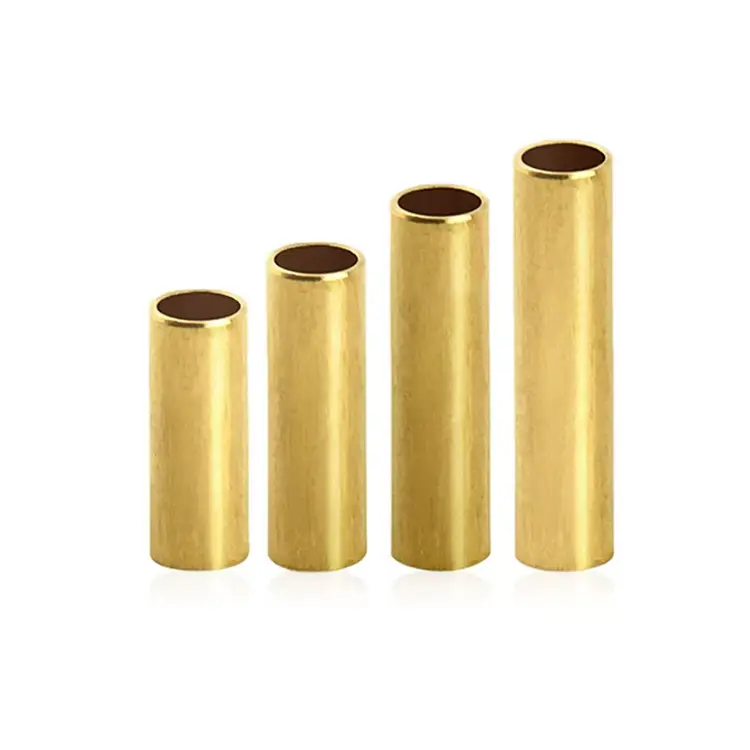
Brass tubular rivets are fully hollow fasteners made from C2680 brass tube stock. Unlike drawn brass eyelets, which are formed from sheet metal, tubular rivets start as actual tubing – cut to length with a head formed on one end. The result is a fastener with uniform wall thickness, a consistent inside diameter, and the warm, classic appearance that brass is known for.
They are specified when you need the low‑force installation of a hollow rivet combined with the electrical conductivity, corrosion resistance, and visual appeal of brass.
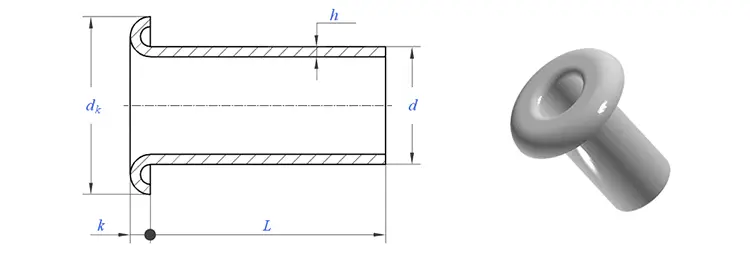
Brass Tubular vs. Brass Eyelet – The Difference That Matters
| Feature | Brass Tubular Rivet | Brass Eyelet (Drawn) |
|---|---|---|
| Starting material | Brass tube stock | Brass sheet metal strip |
| Manufacturing process | Tube cutting + heading | Progressive deep drawing |
| Wall thickness | Uniform, consistent | Varies (thinner at barrel tip) |
| Inside diameter | Consistent, smooth | May vary |
| Appearance | Substantial, solid feel | Lighter, thinner feel |
| Best for | Leather, marine, electrical, structural feel | Fabric, paper, light‑duty reinforcement |
Choose brass tubular rivets when: You need the classic brass look with a more substantial feel. The application involves leather, marine trim, or electrical assemblies where consistent wall thickness matters.
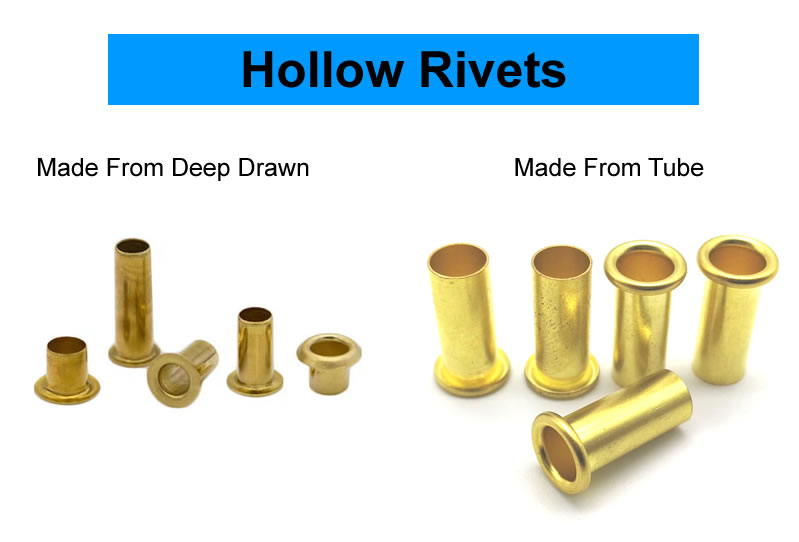
Materials – C2680 Brass
We manufacture brass tubular rivets from C2680 brass:
| Property | C2680 Brass |
|---|---|
| Copper content | 64.0 – 68.5% |
| Zinc content | 31.5 – 36.0% |
| Electrical conductivity | ~28% IACS |
| Corrosion resistance | Good – develops protective patina |
| Key advantage | Harder and more wear‑resistant than C2600 |
C2680 offers the optimal balance of hardness, corrosion resistance, and formability for tubular rivet applications. Finishes include natural (lacquered), nickel‑plated, and antique.
One Real Application – Musical Instrument Hardware Assembly
A manufacturer of brass and woodwind instruments was using solid brass rivets for hinge and key assemblies. The solid rivets required high setting force that occasionally distorted the thin brass tubing of the instrument body. The customer needed a fastener that would set with less force, maintain the classic brass appearance, and not deform the instrument body.
We supplied brass tubular rivets – 3.0mm shank, 5.5mm round head, 6.0mm barrel length, natural lacquered finish. The fully hollow shaft flared outward with minimal force – no distortion to the instrument body. The C2680 brass matched the existing hardware appearance. The consistent inside diameter allowed smooth hinge pin movement. The customer tested 500 rivets across 100 instruments. After 5,000 key cycles, zero failures. They now order our tubular rivets in batches of 100,000 pieces annually.
Head Styles – What We Offer
Brass tubular rivets are available in three head styles:
| Head Style | Best For | Visual Profile |
|---|---|---|
| Round | Visible joints, general purpose | Classic dome |
| Flat | Clearance‑limited, low profile | Sits near flush |
| Countersunk | Flush surfaces, zero protrusion | Tapered, sits flush |
Available Finishes
| Finish | Appearance | Best For |
|---|---|---|
| Natural lacquered | Bright gold | General purpose, visible applications |
| Nickel‑plated | Bright silver | Matching silver hardware, modern appearance |
| Antique | Dark, aged bronze | Vintage‑style, decorative, leather goods |
How We Manufacture Tubular Rivets – Tube Cutting + Heading
Brass tubular rivets start as brass tube stock. The process is distinct from drawn eyelets.
1. Tube Stock Procurement – Certified C2680 brass tube from approved mills. Each batch comes with a mill test certificate and heat number.
2. Incoming Material Inspection – Tube stock is checked for outside diameter (±0.02mm), wall thickness, and material composition. Tubes outside specification are rejected.
3. Tube Cutting – The tube is cut to precise blank length. Each blank becomes one rivet.
4. Heading – The cut tube blank is placed into a heading press. A carbide die forms the head (round, flat, or countersunk) on one end.
5. Trimming – Flash around the head edge is removed.
6. Tumbling – Micro‑burrs are eliminated.
7. Plating or Lacquering – Applied as specified.
8. Final Inspection – 100% optical sorting. AQL sample manually verified. Dimensional report and Certificate of Conformance issued.
Lead time: 5–10 days standard; custom tooling: 15–20 days.
One Rivet, Eight Checks – How We Ensure Quality
Every batch of brass tubular rivets passes through eight quality gates:
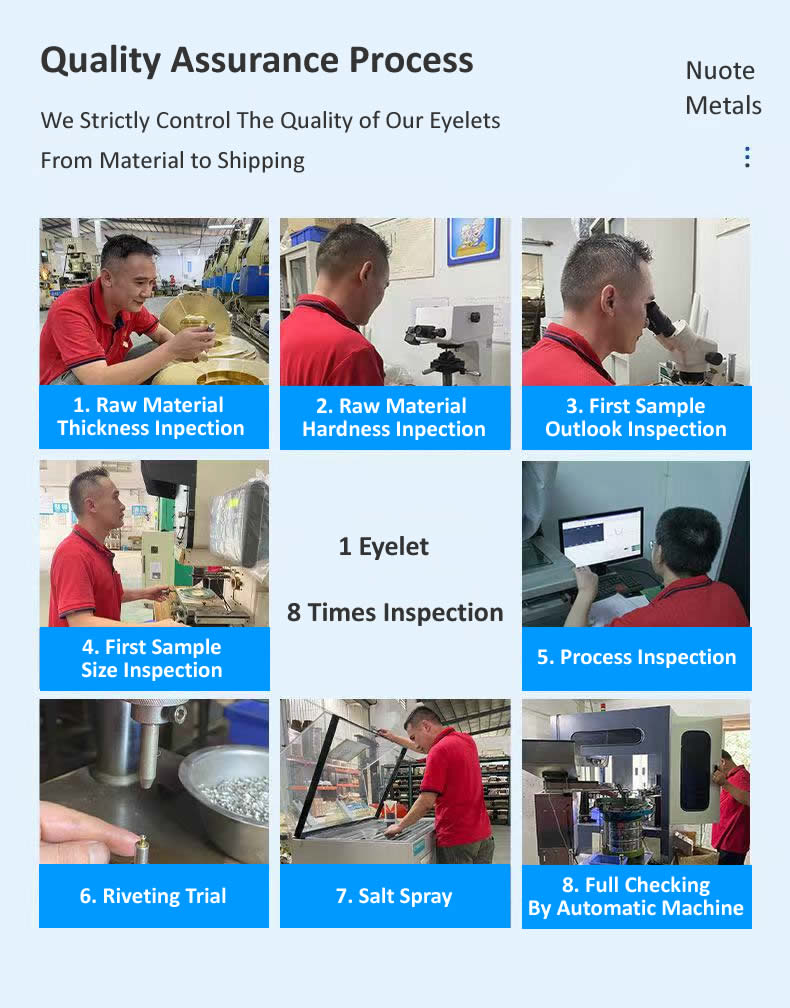
Raw material diameter check – Tube stock measured with laser micrometer (±0.02mm).
Raw material composition check – Spectrometer verifies C2680 brass composition.
First article appearance check – First 10 rivets inspected under magnification for cracks or defects.
First article dimensional check – Head diameter, head height, shank, barrel length verified on optical comparator.
In‑process checks – 5 rivets every 500 pieces. Any drift stops the press.
Test setting (trial flaring) – Every 2,000 pieces, set 3 rivets into sample material. Clinch inspected for symmetry and cracks.
Plating/lacquer thickness check – XRF verification (if applicable).
Final outgoing inspection – 100% optical sorting. AQL sample manually verified. Full documentation issued.
Our Certifications – Proof of Quality
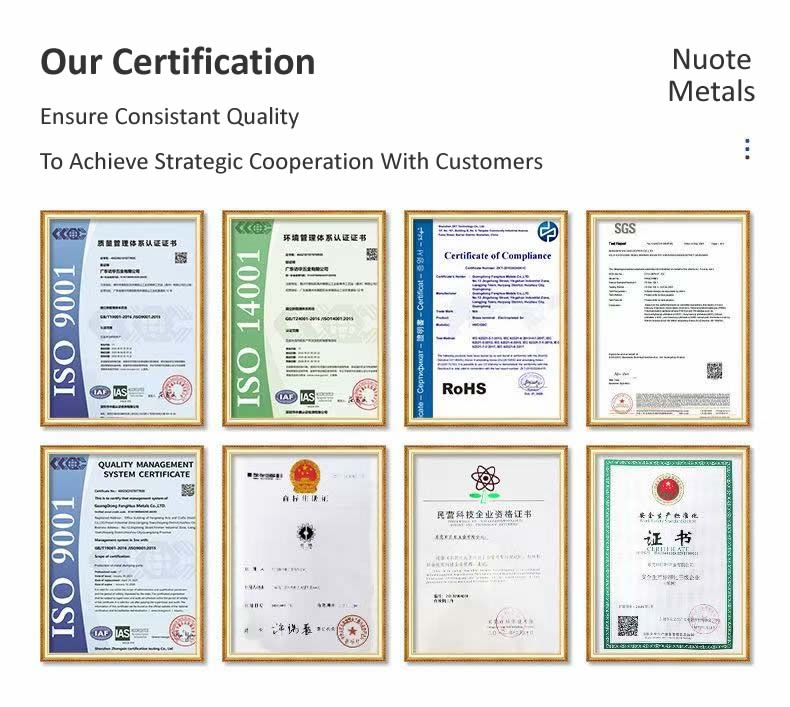
We maintain full traceability and quality documentation for every batch of brass tubular rivets:
- ISO 9001:2015 – Certified quality management system
- RoHS compliance – Verified by SGS third‑party testing
- REACH compliance – Current SVHC declaration
- SGS test reports – Available upon request for specific batches
- Material certificates – Mill test certificates traceable to original coil
All certifications and test reports are available for download or upon request. We believe in full transparency – what we claim, we can prove.
Three Questions We Answer Often
Q: "What is the difference between a brass tubular rivet and a brass eyelet – are they the same?"
A: No – they are different products made through different processes. A brass tubular rivet starts as brass tube stock – cut to length with a head formed on one end. It has uniform wall thickness and a consistent inside diameter. A brass eyelet is drawn from sheet metal – the wall thickness varies, and the inside diameter is less consistent. Tubular rivets feel more substantial and are better for applications where strength and appearance matter. Eyelets are lighter and better for fabric and paper applications.
Q: "Can brass tubular rivets be used for electrical connections?"
A: Yes. C2680 brass offers approximately 28% IACS conductivity, making them suitable for circuit board connections, grounding devices, and wire terminations. For higher conductivity requirements, we recommend copper tubular rivets (100% IACS). For most general electrical applications, brass provides the ideal balance of conductivity, corrosion resistance, and cost.
Q: "How do I select the correct barrel length for a brass tubular rivet?"
A: Select a barrel length approximately 2.0–2.5mm longer than your total material stack thickness. The tube wall needs enough length to flare outward cleanly without crumpling. For example, if you are joining 3mm of leather, choose a barrel length of 5.0–5.5mm. Too short, the flare will be weak. Too long, the tube may crumple. Send us your material stack thickness and we will recommend the exact length.
Hot Tags: Brass Tubular Rivets,China Brass Tubular Rivets,Brass Tubular Rivets Manufacturer
Related Categories
Send Inquiry
Please feel free to fill your inquiry in the form below. We will reply you in 24 hours.



X
We use cookies to offer you a better browsing experience, analyze site traffic and personalize content. By using this site, you agree to our use of cookies.
Privacy Policy