
Products
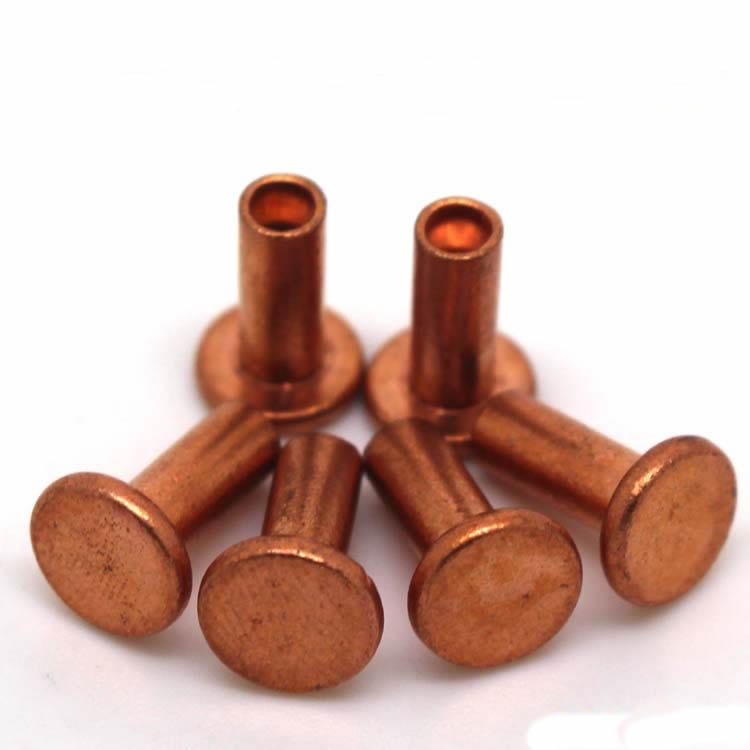
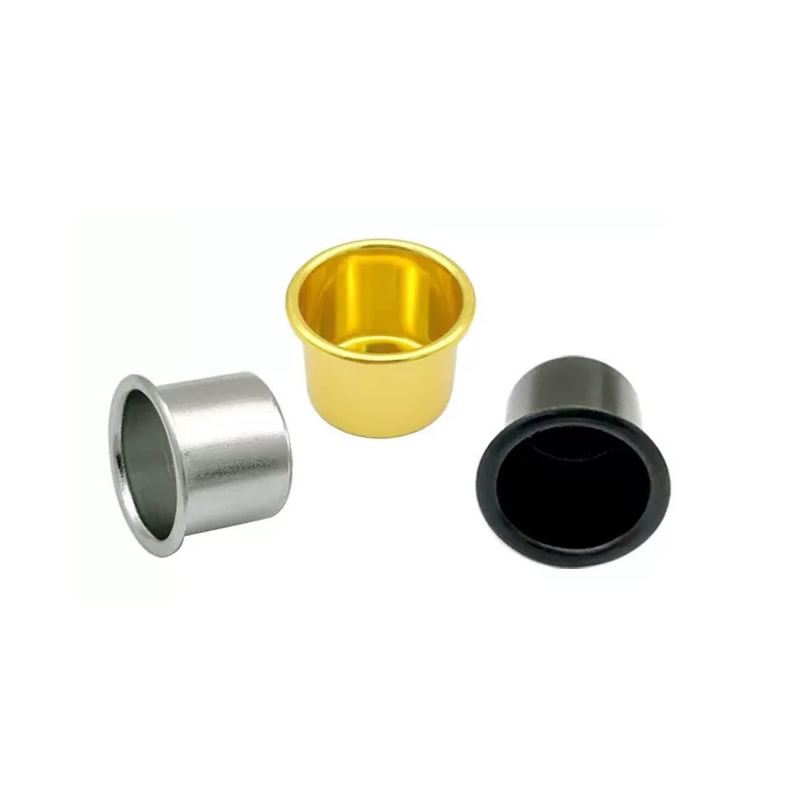
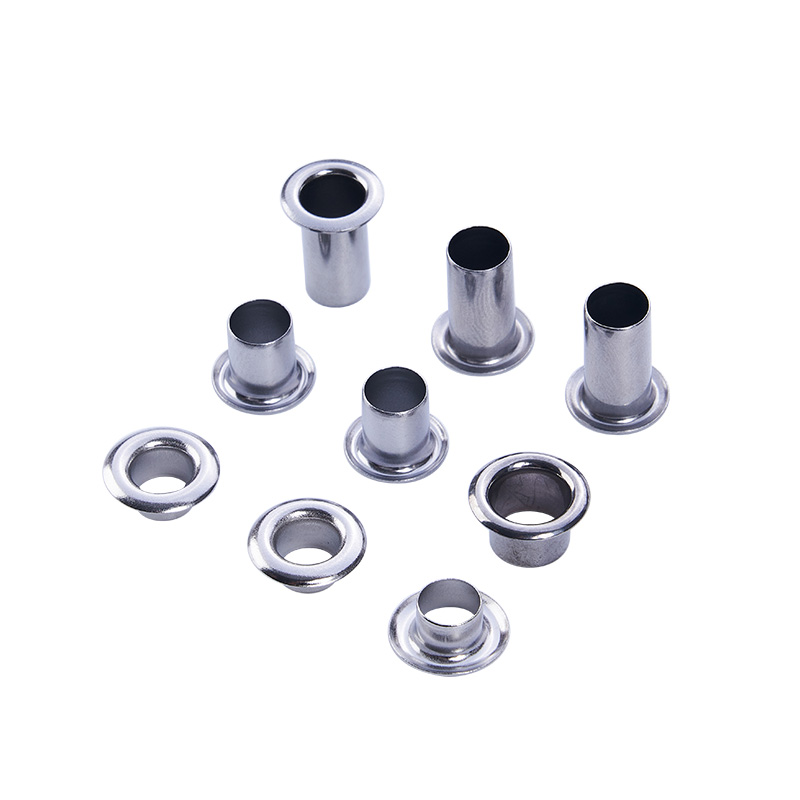
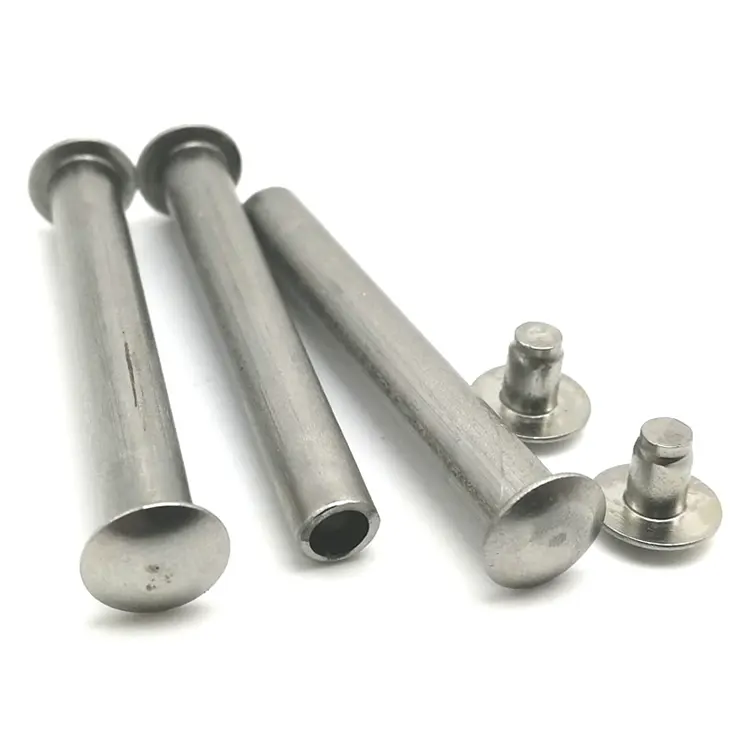
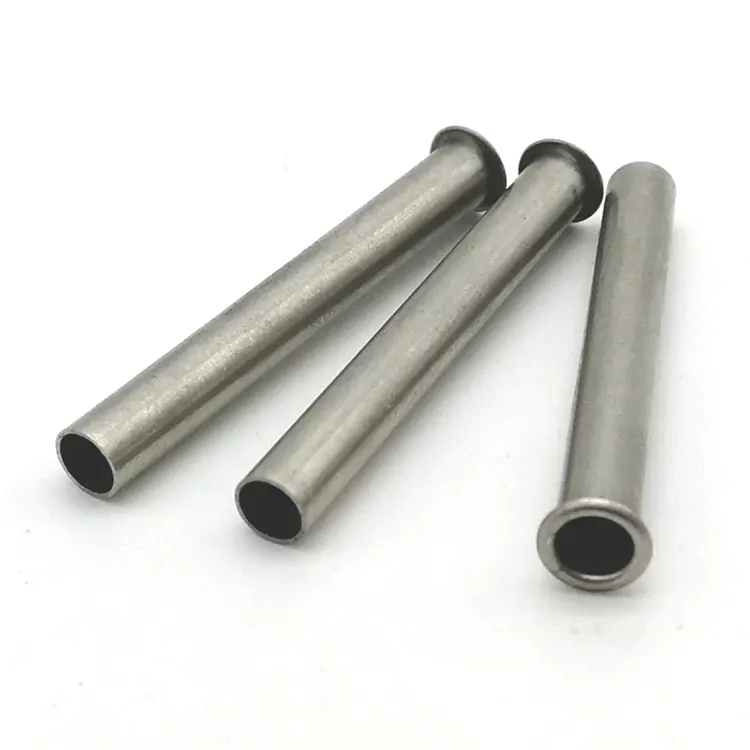
Stainless Steel Hollow Rivets
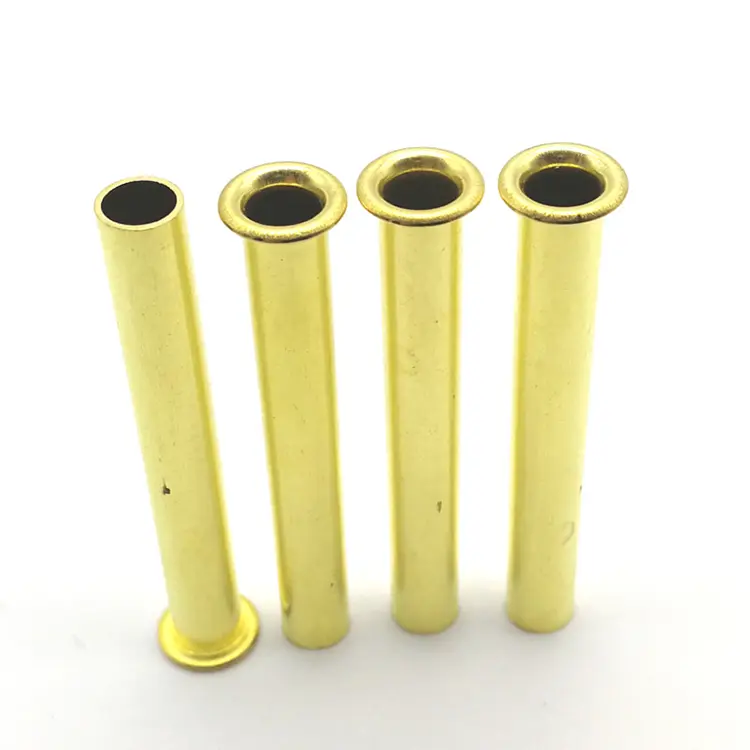
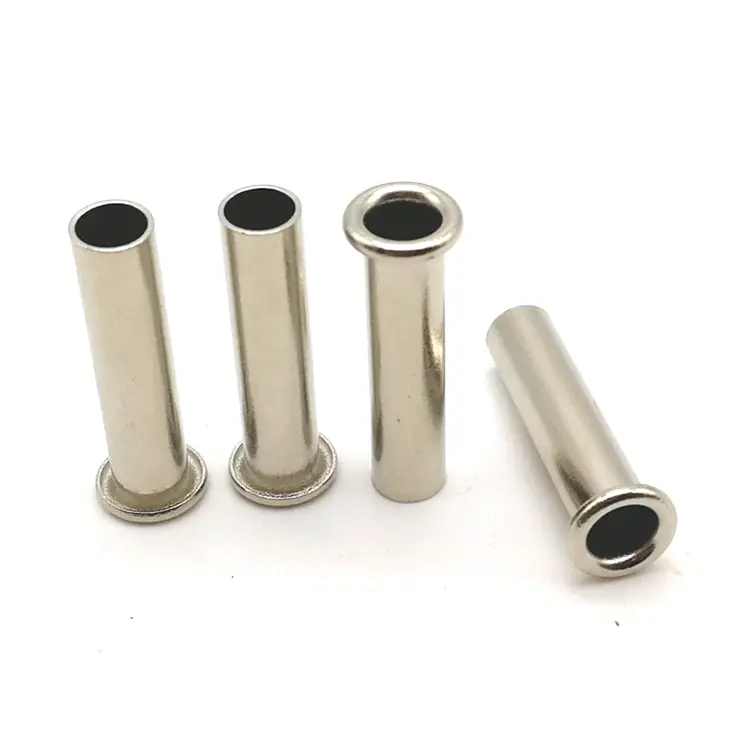
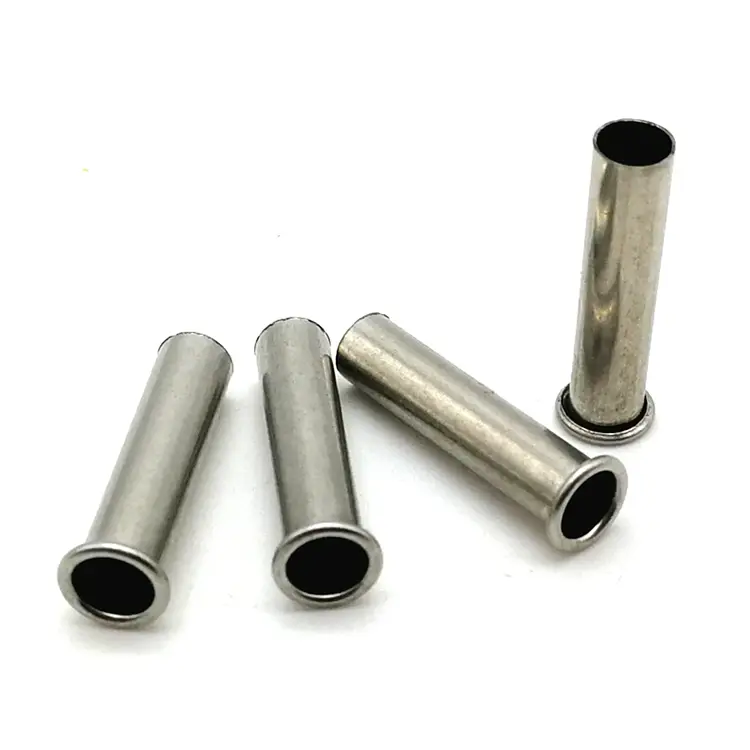
Nuote Metals supplies stainless steel hollow rivets – fully hollow fasteners available in 304 and 316 stainless steel, manufactured through tube‑cutting with heading or progressive deep drawing from sheet. The right process depends on your application, quantity, and corrosion resistance requirements.
Send Inquiry
Product Description
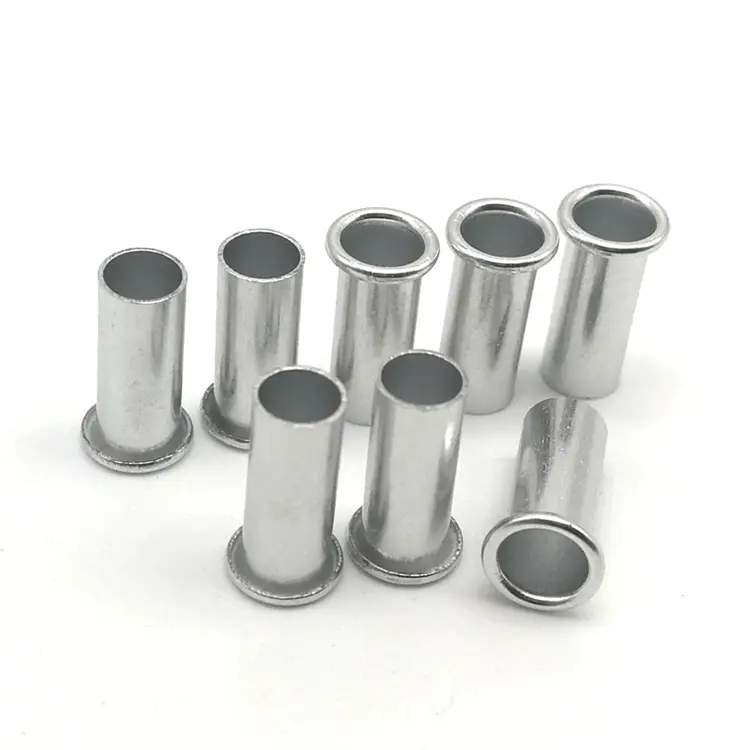
Stainless steel hollow rivets are fully hollow fasteners that combine the low‑force installation of a hollow shaft with the permanent corrosion resistance of stainless steel. Unlike carbon steel hollow rivets that require plating to prevent rust, they are corrosion‑resistant by nature – the chromium oxide layer is self‑healing. They are the premium choice for outdoor, marine, food, and medical applications where rust is not an option.
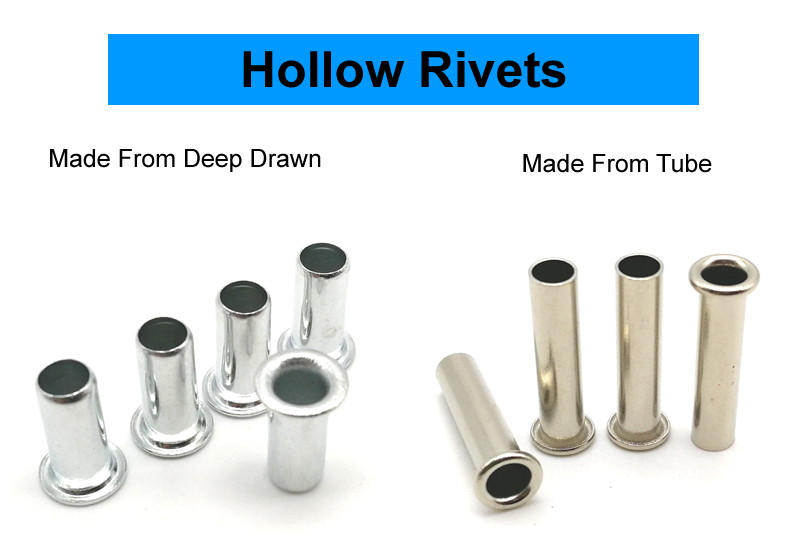
We offer two manufacturing routes for stainless steel hollow rivets:
Tube‑cutting + heading – We start with stainless steel tube stock, cut it to length, and form the head on one end. Cost‑effective for larger diameters and thicker walls, with faster tooling lead times.
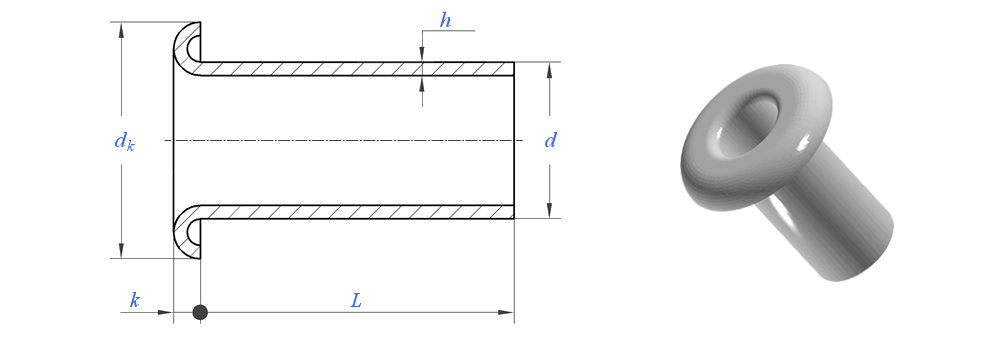
Deep drawing from sheet – We start with stainless steel sheet and form the rivet through progressive drawing. Produces a seamless, one‑piece construction with consistent wall thickness and a smooth inside bore, ideal for thinner walls and tighter tolerances.
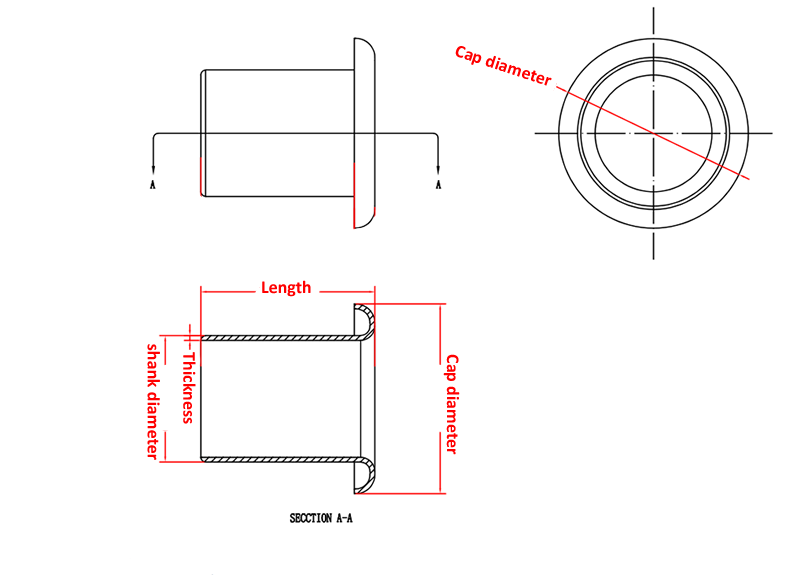
We review your drawing and recommend the optimal manufacturing route at quotation stage.
304 vs. 316 Stainless Steel – Which Grade Do You Need?
| Grade | Key Alloy | Salt Spray Resistance | Best For |
|---|---|---|---|
| 304 | 18% Cr, 8% Ni | 200 – 500 hours | General outdoor, rain, humidity, food contact |
| 316 | 16% Cr, 10% Ni, 2% Mo | 1,000+ hours | Marine, coastal, saltwater, chemical, acidic environments |
Choose 304 for general outdoor applications, food processing equipment, and industrial assemblies where salt exposure is limited.
Choose 316 for marine environments, coastal installations, chemical plants, and any application where chlorides or acids are present.
Tube‑Cutting vs. Deep‑Drawing – Which Process Is Right for You?
| Feature | Tube‑Cutting + Heading | Deep‑Drawing from Sheet |
|---|---|---|
| Starting material | Stainless steel tube stock | Stainless steel sheet (coil) |
| Construction | Cut tube + headed end | Seamless, one‑piece drawn |
| Wall thickness | Uniform, thicker | Uniform, can be thinner |
| Inside bore | Smooth, may have seam (if welded tube) | Smooth, seamless |
| Tooling lead time | Faster (2–3 weeks) | Longer (3–4 weeks) |
| Best for | Larger diameters, thicker walls, faster turnaround | Thin walls, tight tolerances, seamless requirement |
| Cost | Lower tooling cost | Higher tooling cost, lower piece price at volume |
If you are unsure which process is right for your application, send us your drawing. We will review and recommend the optimal method – at no charge.
Passivation – Why It Matters for Stainless Steel Hollow Rivets
Stainless steel does not rust – but during manufacturing, microscopic particles of free iron can transfer from tooling onto the surface. These particles can rust, creating red stains on your product – even though the rivet itself is stainless.
Passivation removes these free iron particles and restores the true corrosion‑resistant surface. Without it, your "stainless" rivets may still show rust stains.
We include passivation as standard on every batch of stainless steel components at no extra charge.
One Real Application – Outdoor Display Stand Assembly
A manufacturer of outdoor retail display stands needed a corrosion‑resistant fastener for assembling powder‑coated steel frames. The stands were used outdoors year‑round – rain, humidity, and temperature changes were constant. The previous zinc‑plated carbon steel hollow rivets showed rust after one season. The customer needed a fastener that would not rust and would match the display's clean appearance.
We supplied 304 stainless steel hollow rivets – 4.0mm shank, 7.5mm round head, 6.0mm barrel length, passivated finish. The 304 stainless provided 200–500 hours of salt spray resistance – more than enough for outdoor displays. The passivated surface matched the powder‑coated frames. The hollow design flared with minimal force – no distortion to the thin frame material. The customer tested 500 rivets across 100 stands. After 18 months of outdoor exposure, zero rust, zero failures. They now order our hollow rivets in batches of 150,000 pieces annually.
How We Manufacture Hollow Rivets – Two Routes
Route 1: Tube‑Cutting + Heading
1. Tube Stock Procurement – Certified 304 or 316 stainless steel tube from approved mills. Each batch comes with a mill test certificate and heat number.
2. Incoming Material Inspection – Tube stock checked for outside diameter (±0.02mm), wall thickness, and material composition (spectrometer).
3. Tube Cutting – The tube is cut to precise blank length.
4. Heading – The cut tube blank is placed into a heading press. A carbide die forms the head on one end.
5. Trimming – Flash around the head edge is removed.
6. Tumbling – Micro‑burrs are eliminated.
7. Passivation – Removes free iron particles and restores the chromium oxide layer. Included at no extra charge.
8. Final Inspection – 100% optical sorting. AQL sample manually verified.
Route 2: Deep‑Drawing from Sheet
1. Sheet Stock Procurement – Certified stainless steel sheet from approved mills.
2. Incoming Material Inspection – Sheet stock checked for thickness and material composition.
3. Progressive Deep Drawing – The sheet feeds into a transfer press with a multi‑station progressive die. In a single continuous sequence, the die blanks a disc, draws it into a cup, deepens it to final barrel length, and pierces the bottom to create the hollow bore.
4. Flanging – The flange is coined flat and parallel.
5. Tumbling – Micro‑burrs are eliminated.
6. Passivation – Applied as standard.
7. Final Inspection – 100% optical sorting. AQL sample manually verified.
Sample lead time: 5–7 days standard; custom tooling: 15–20 days.
Precision Inspection Equipment – Safeguarding Quality at Every Step

To ensure every batch of stainless steel hollow rivets meets your specifications, we maintain a full range of calibrated inspection equipment:
Laser micrometer – High‑speed, non‑contact measurement of shank diameter, outer diameter, and wall thickness to ±0.02mm accuracy.
Optical comparator (profile projector) – Visual inspection of head profile, flange diameter, edge radius, and overall shape against master overlay templates.
2.5D image measuring system – Automated measurement of inner diameter, flange concentricity, barrel length, and surface flatness with high precision.
Spectrometer – Material composition verification for 304 and 316 stainless steel grades, ensuring each batch matches the certified material specification.
Rockwell hardness tester – Raw material and finished product hardness verification to confirm consistent material properties.
Salt spray test chamber – Corrosion resistance testing per ASTM B117 standards to validate passivation effectiveness and grade performance.
XRF thickness gauge – Non‑destructive verification of passivation layer consistency and surface quality.
All equipment is calibrated annually by accredited third‑party laboratories. Inspection records are retained for five years and included with every shipment.
Working with Customers Worldwide
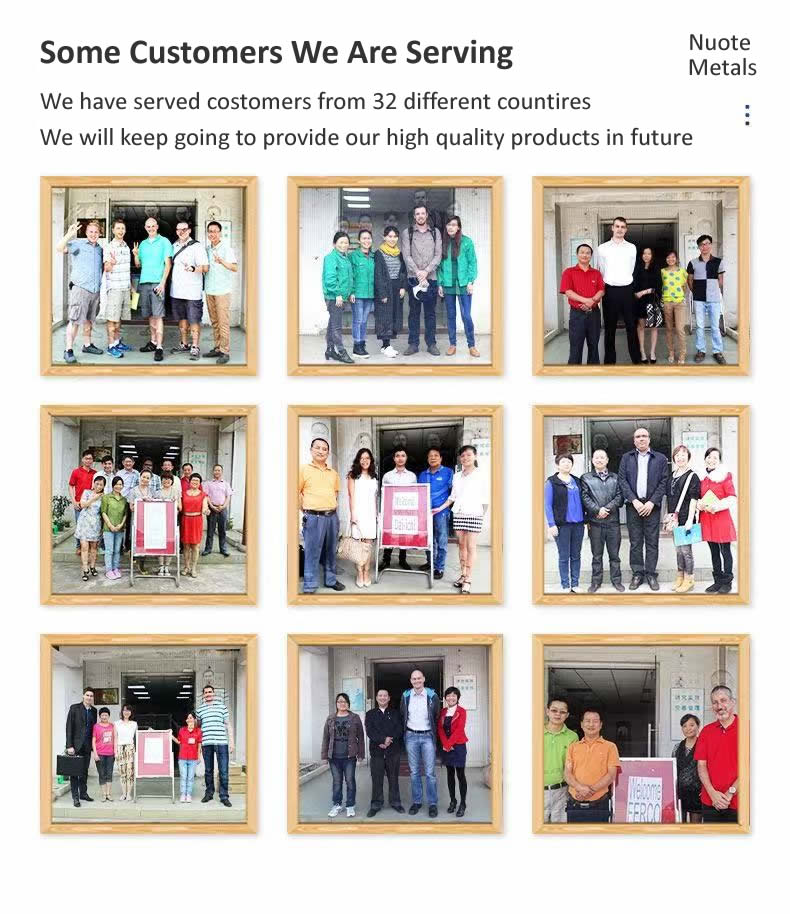
We work with manufacturers across North America, Europe, and Asia – from outdoor display manufacturers to marine equipment suppliers to food processing equipment builders. The images above show some of our valued partners visiting our facility, collaborating on custom projects, and sharing their experiences with stainless steel hollow rivets.
We maintain full traceability and quality documentation for every batch:
- Material certificates – Mill test certificates traceable to original coil
- Dimensional inspection reports – Actual measurements from every batch
- Passivation verification – ASTM A967 compliance documented
- Certificate of Conformance – Signed, batch‑traceable
Three Questions We Answer Often
Q: "Can I get samples of stainless steel hollow rivets before placing a production order?"
A: Yes – we offer samples for all our products. For standard existing specifications, samples are provided free of charge – you only pay the shipping cost. For custom sizes or custom tooling, sample availability and lead time depend on the specific requirements. Please contact our sales team with your drawing or specification, and they will advise on sample cost and delivery timeline. We believe in testing before committing – we want you to be confident in the product before you order production quantities.
Q: "What is the difference between SUS304 and 316 hollow rivets – which one should I choose?"
A: The difference is molybdenum content. 316 contains 2–3% molybdenum, which provides superior resistance to chlorides (saltwater, de‑icing salts, bleach). 304 offers excellent general corrosion resistance but can pit in prolonged saltwater exposure. Choose 304 for general outdoor use – rain, sun, humidity, food contact. Choose 316 for marine environments, coastal installations, chemical plants, and any application where salt spray is present. For the display stand case above, 304 was sufficient because the stands were used outdoors but not in continuous saltwater exposure.
Q: "How can I prevent my stainless steel hollow rivets from cracking during setting?"
A: Stainless steel work‑hardens faster than carbon steel and is more prone to cracking if conditions are not correct. Here are the likely causes and solutions:
Cause 1: Setting force is too high. Hollow rivets only need 15–20% of the force required for solid rivets. Stainless work‑hardens under pressure – excessive force causes cracking before the wall can flare. Solution: Reduce setting force by 30–40% and test again.
Cause 2: Barrel length is too short. If the barrel does not extend 1.0–1.5mm beyond your material thickness, the hollow section bottoms out and cracks. Solution: Measure your total stack thickness – we will adjust the barrel length on your next order.
Cause 3: Work‑hardening from previous forming. Stainless steel work‑hardens rapidly. If your press speed is too high or the tooling is worn, the metal hardens before it can flare. Solution: We use polished carbide dies and controlled flaring speeds specifically for stainless steel hollow rivets.
Cause 4: Hole size is too tight. If the hole is undersized, the barrel is compressed excessively. Solution: Increase hole size to shank diameter + 0.15–0.20mm.
If none of these solve the problem, send us a sample of your cracked rivets and your material stack. We will analyze the failure and recommend a specific fix – at no charge.
Hot Tags: Stainless Steel Hollow Rivets, Hollow Rivets Supplier, Custom Stainless Rivets
Related Categories
Send Inquiry
Please feel free to fill your inquiry in the form below. We will reply you in 24 hours.



X
We use cookies to offer you a better browsing experience, analyze site traffic and personalize content. By using this site, you agree to our use of cookies.
Privacy Policy