Products
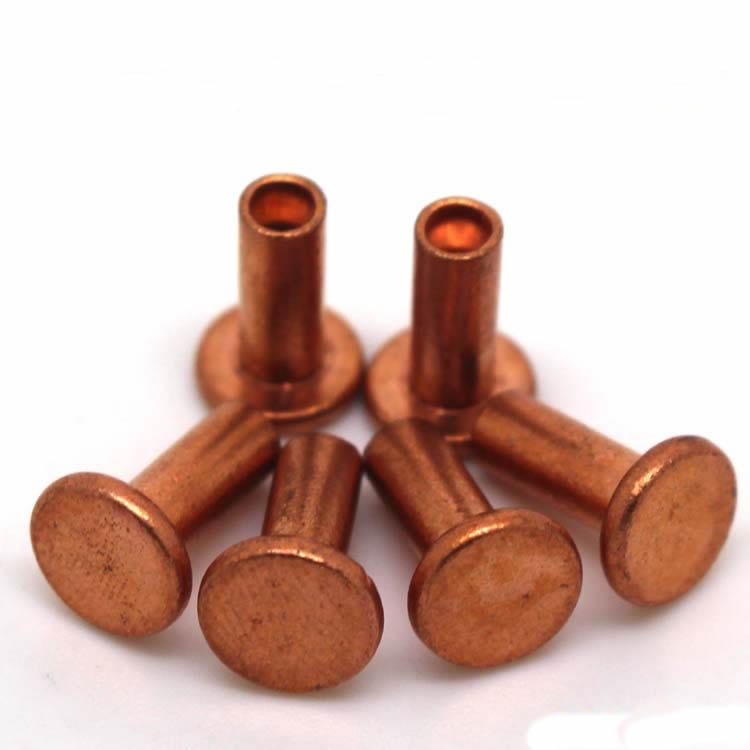
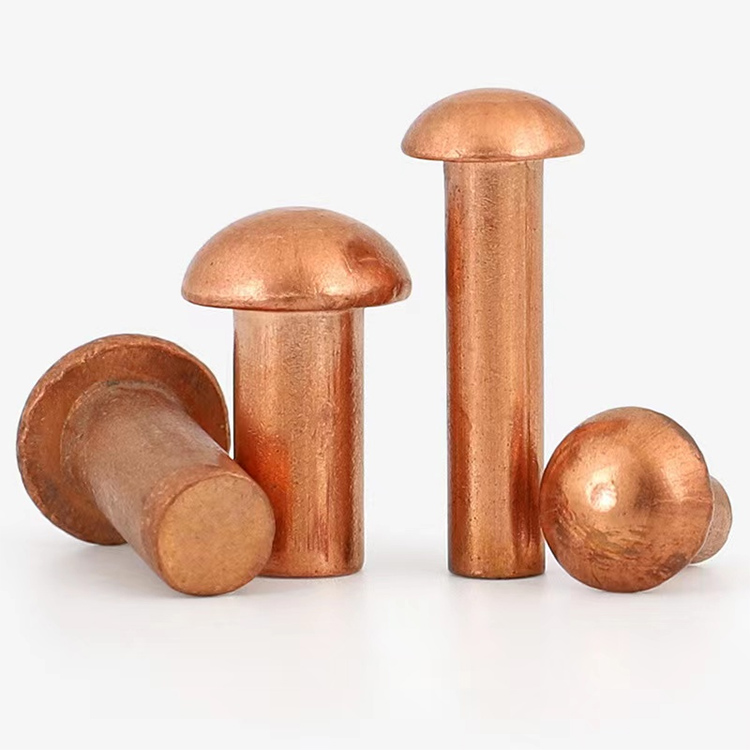
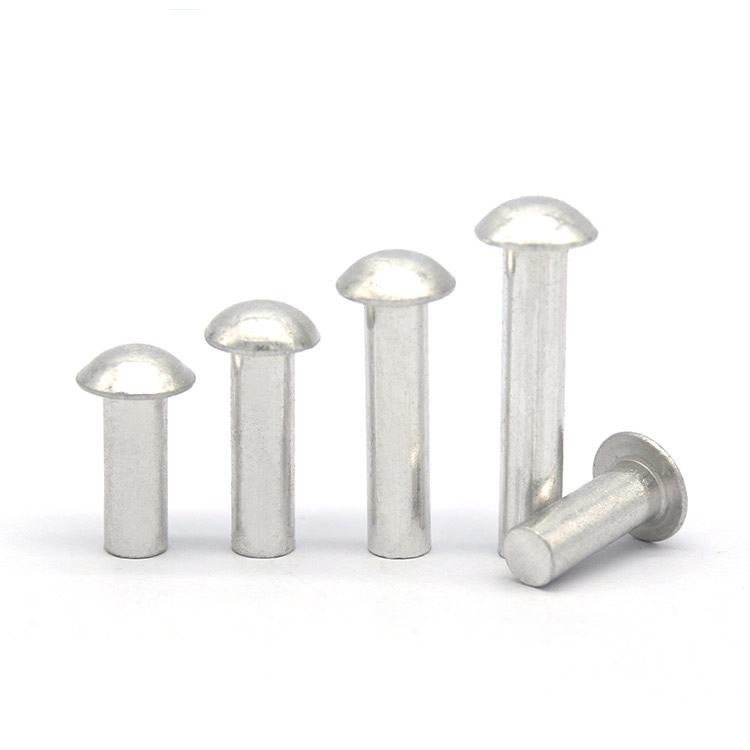
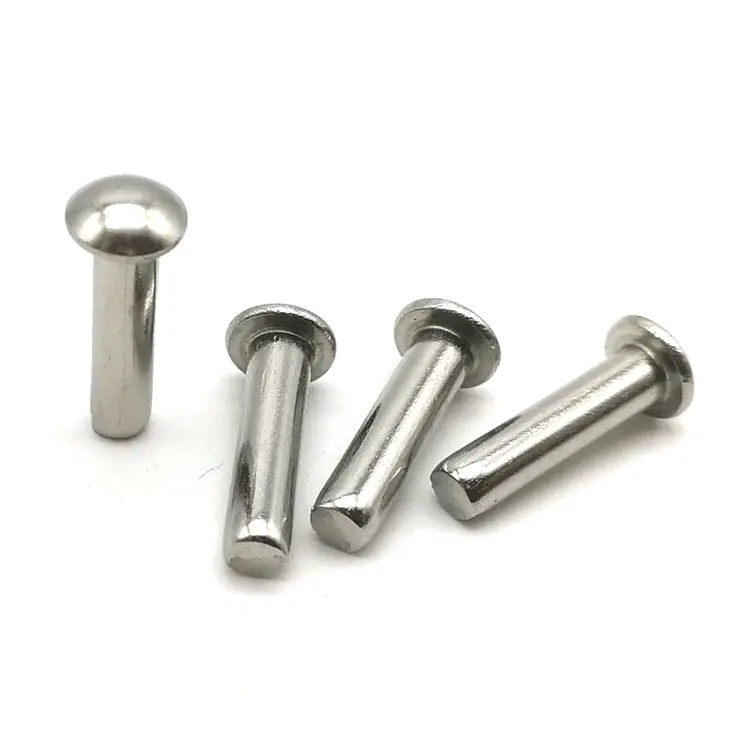
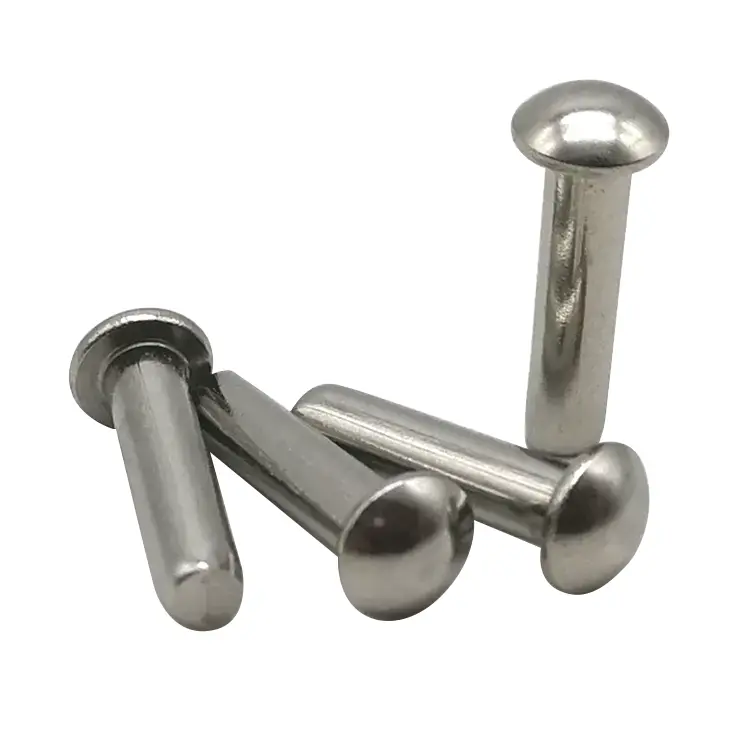
Copper Solid Rivets
Copper solid rivets from Nuote Metals – the only fastener material that combines 100% IACS electrical conductivity, 401 W/m·K thermal conductivity, natural antimicrobial properties, and permanent, maximum‑strength fastening. Available in C11000 pure copper, 1.5–8.0mm shank diameters, six head styles. ISO 9001 certified. Free samples available. Contact us today.
Send Inquiry
Product Description
Copper solid rivets are not the strongest rivets. They are not the cheapest rivets. But when the joint must carry current, transfer heat, resist bacteria, or survive outdoors for decades without rusting – copper is the material that delivers. Engineers choose copper for what it does, not just for what it holds. And when they need maximum holding power alongside those unique properties, they choose copper solid rivets.
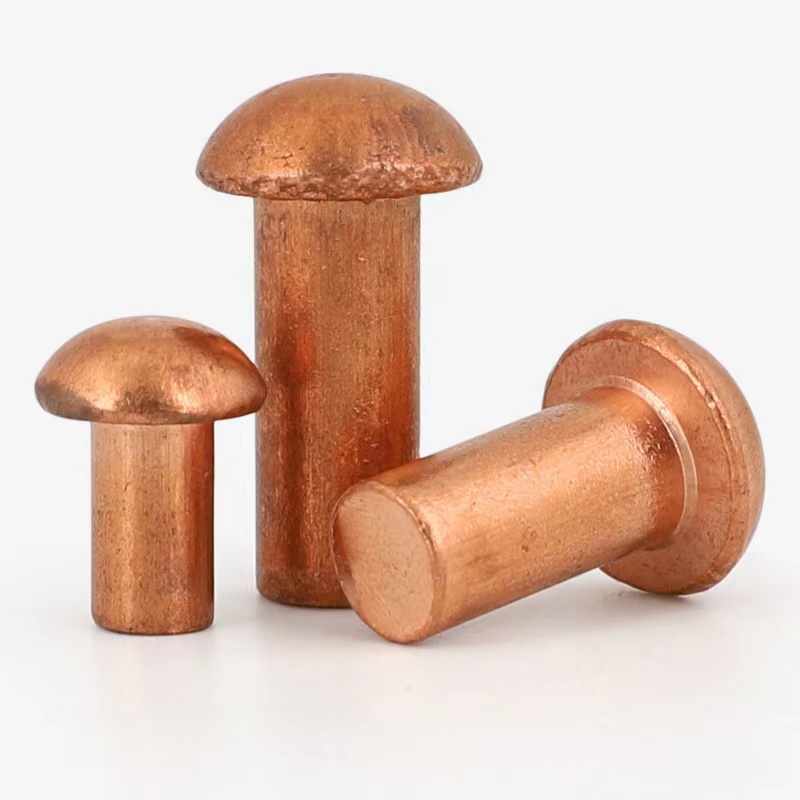
Why Copper – And Why Solid
| Property | Copper (C11000) | Steel | Aluminum | Brass |
|---|---|---|---|---|
| Electrical conductivity (% IACS) | 100% | ~10% | ~61% | ~28% |
| Thermal conductivity (W/m·K) | 401 | ~50 | ~140 | ~120 |
| Antimicrobial | Yes | No | No | Limited |
| Corrosion resistance | Excellent | Depends on finish | Good | Good |
| Magnetic | No | Yes | No | No |
Solid construction delivers maximum shear and tensile strength. Choose copper solid when the joint must carry current, transfer heat, resist bacteria, or survive outdoors without rusting.
Materials & Head Styles
Material: C11000 pure copper (≥99.9% Cu), 100% IACS conductivity.
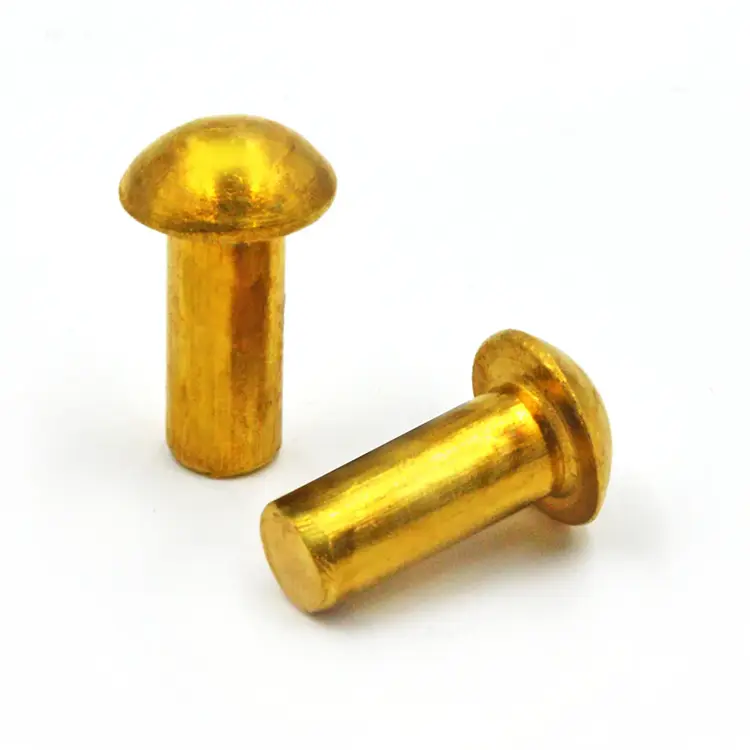
Head styles available: Round, flat, oval, countersunk, truss, mushroom.
Finishes: Plain (as‑headed), tumbled (bright), antiqued, lacquered.
One Real Application – Brazilian Power Distribution Grounding Panel
A Brazilian industrial distributor needed 480,000 copper solid rivets for grounding panels and marine equipment. Requirements: conductivity >101% IACS, 72+ hours salt spray, third‑party test reports. The buyer visited our factory, reviewed our quality system, and placed the order.
We supplied round head and countersunk head copper solid rivets, 2mm to 8mm diameters, with mill test reports and dimensional inspection sheets for every batch. After one year of field use, zero conductivity failures, zero corrosion issues. Reorders total over 1.2 million pieces.
How to Specify – What We Need From You
- Shank diameter – 1.5mm to 8.0mm
- Overall length – we calculate from your material stack thickness
- Head style – round, flat, oval, countersunk, truss, or mushroom
- Finish – plain, tumbled (bright), antiqued, or lacquered
Length rule for solid rivets: Overall length = material stack thickness + (1.2–1.5 × shank diameter). Send us your stack thickness – we will calculate the exact length. No charge for engineering advice.
Sample lead time: 5–10 days standard; custom tooling: 15–20 days.
Quality Control – What We Check, Why It Matters
| Check | Tolerance | Risk If Missed |
|---|---|---|
| Shank diameter | ±0.05mm | Won't fit your hole |
| Head diameter | ±0.15mm | Pull‑through or uneven bearing |
| Overall length | ±0.15mm | Weak clinch or buckled barrel |
| Copper content | ≥99.9% | Reduced conductivity |
| Conductivity | 100% IACS | Electrical failure |
| Surface finish | Pass/fail | Visible defects |
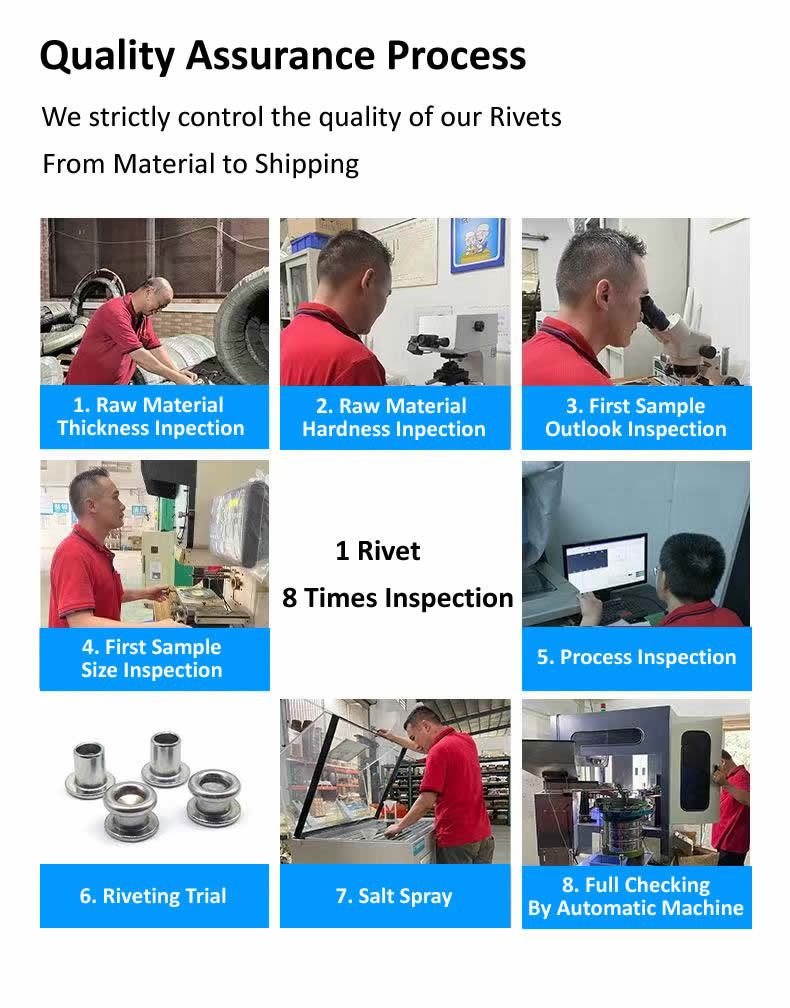
Our process: Incoming wire inspection → first article (10 pieces, every dimension verified) → in‑process (5 pieces every 500) → setting test (every 2,000 pieces) → 100% optical sorting → AQL manual verification.
Your Order – What We Send You
- Rivets in sealed poly bags – Labeled with part number, batch number, and quantity
- Material certificate – Cu ≥99.9% from original coil
- Dimensional inspection report – Actual measurements from the batch
- Conductivity test report – IACS verification (if requested)
- Certificate of Conformance – Signed, batch‑traceable
Certified to: ISO 9001:2015, RoHS, REACH
Three Questions We Answer Often
Q: "Copper vs. brass – which one should I choose?"
A: Copper offers 100% IACS conductivity; brass offers ~28%. If your rivet must carry current, copper is the right choice. Brass is harder and offers better wear resistance for mechanical applications – but for electrical, thermal, or antimicrobial requirements, copper wins every time.
Q: "Do copper solid rivets corrode? Why do they change colour?"
A: Copper does not rust – it forms a protective patina over time that actually protects the underlying metal. Colour change from bright red to dark brown or green is cosmetic and does not affect performance. Specify tumbled (bright) or lacquered if you need to maintain the bright finish.
Q: "Can I use copper solid rivets outdoors?"
A: Yes – copper is one of the best materials for outdoor applications. The patina that forms over time actually protects the metal, extending its life. They have been used in roofing, marine hardware, and outdoor electrical installations for decades – with proven longevity.
Hot Tags: Copper Solid Rivets,China Copper Rivets,Copper Solid Rivets Manufacturer
Product Tag
Related Categories
Send Inquiry
Please feel free to fill your inquiry in the form below. We will reply you in 24 hours.



X
We use cookies to offer you a better browsing experience, analyze site traffic and personalize content. By using this site, you agree to our use of cookies.
Privacy Policy