
Products
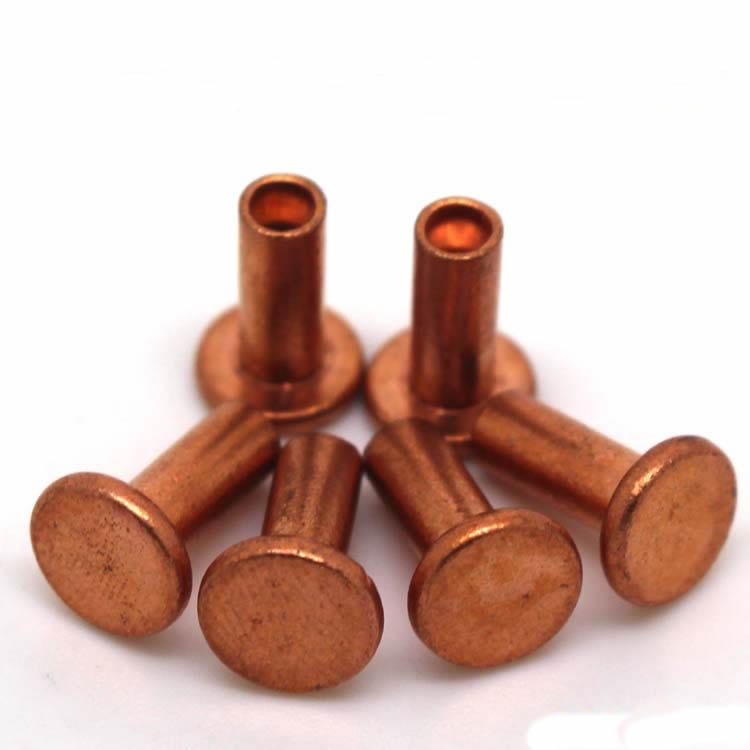
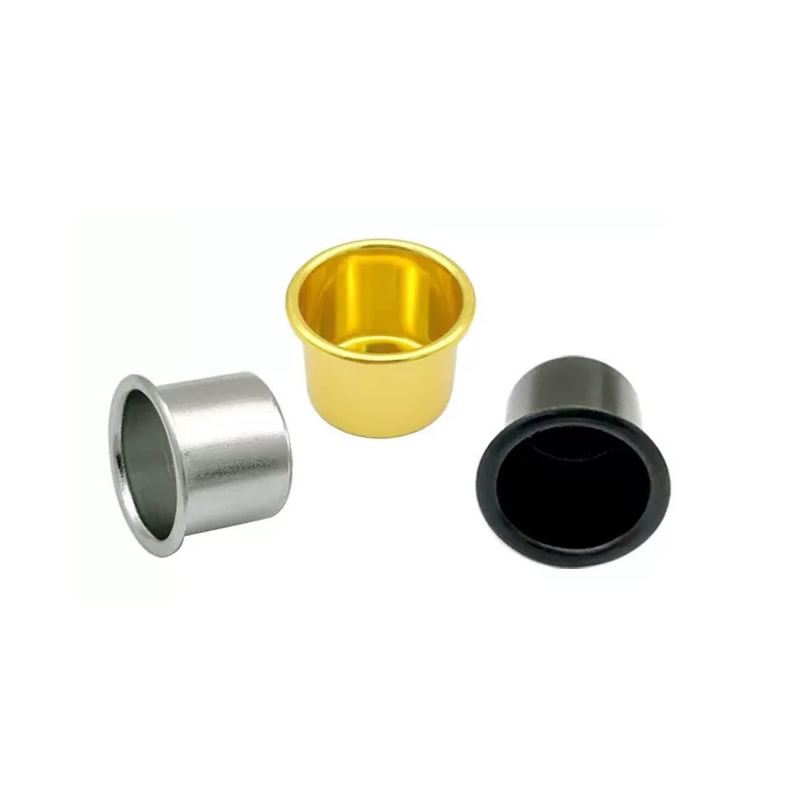
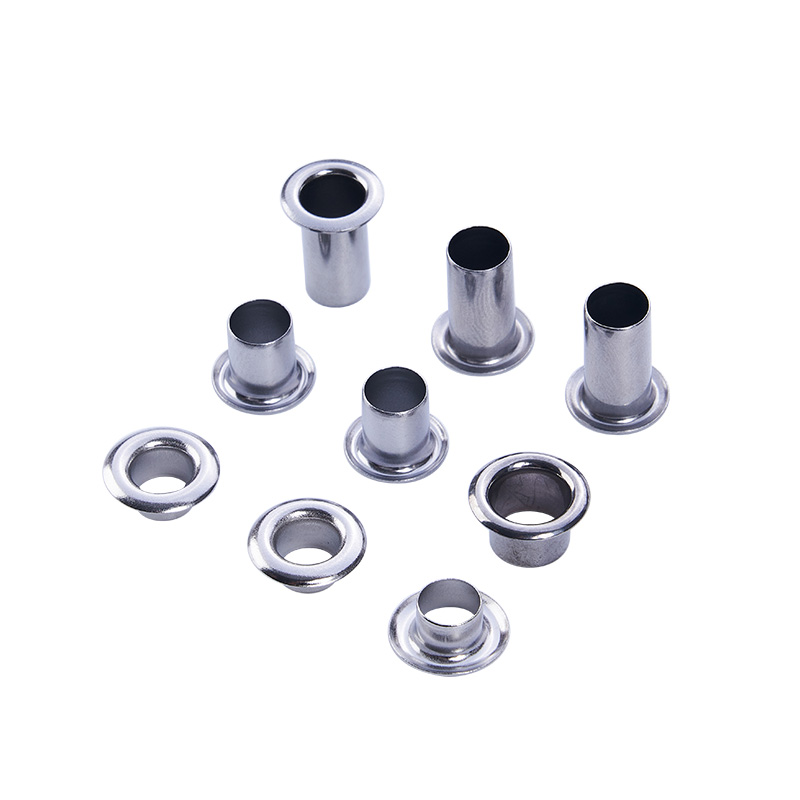
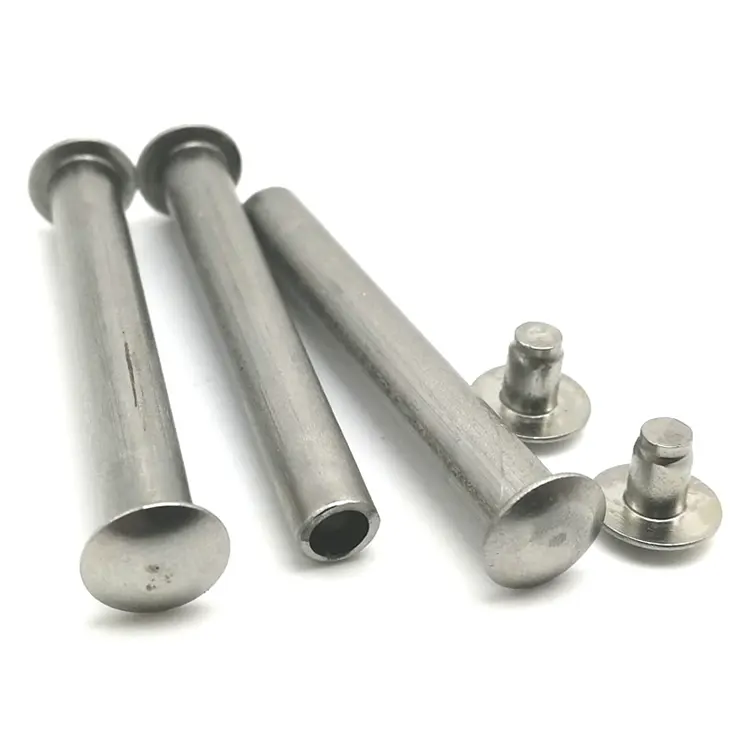
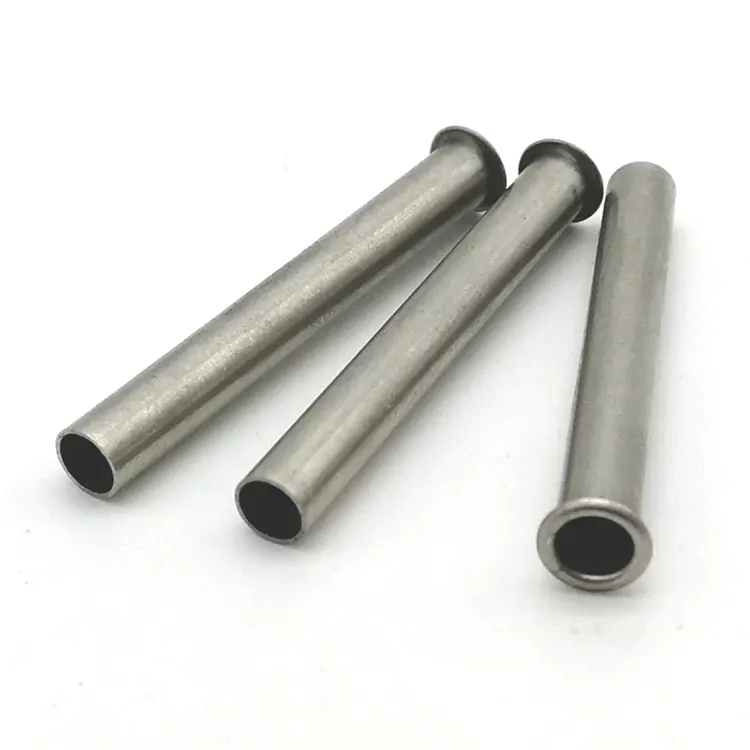
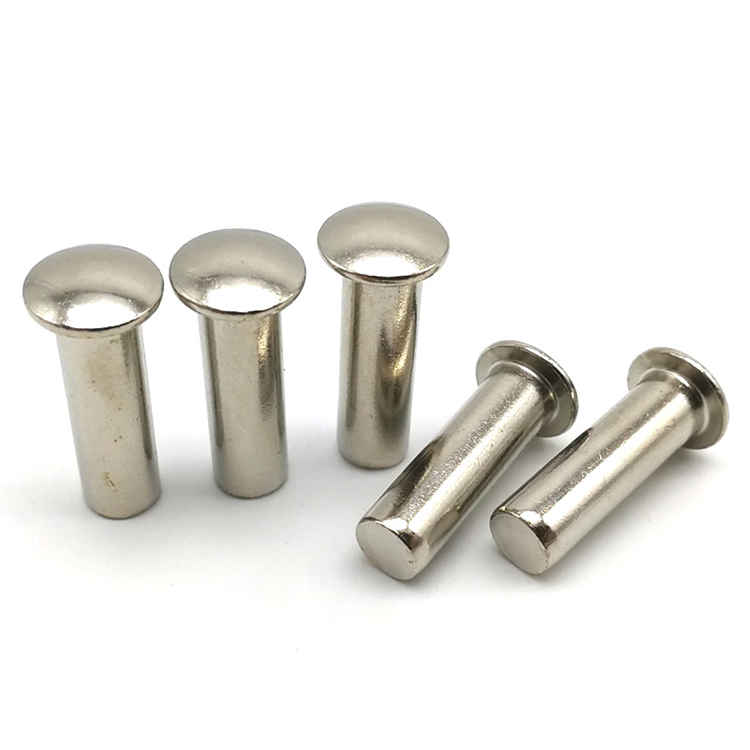
Steel Solid Rivets
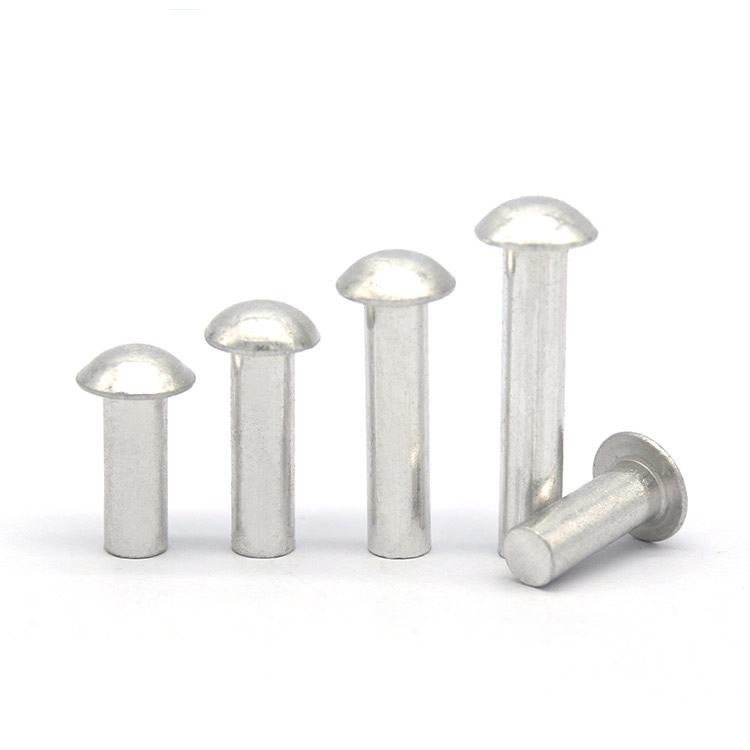
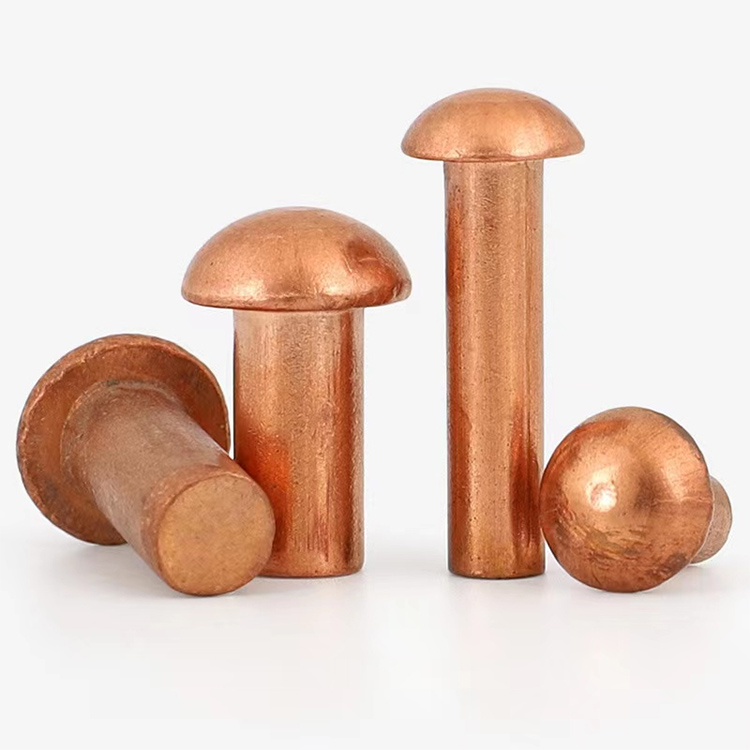
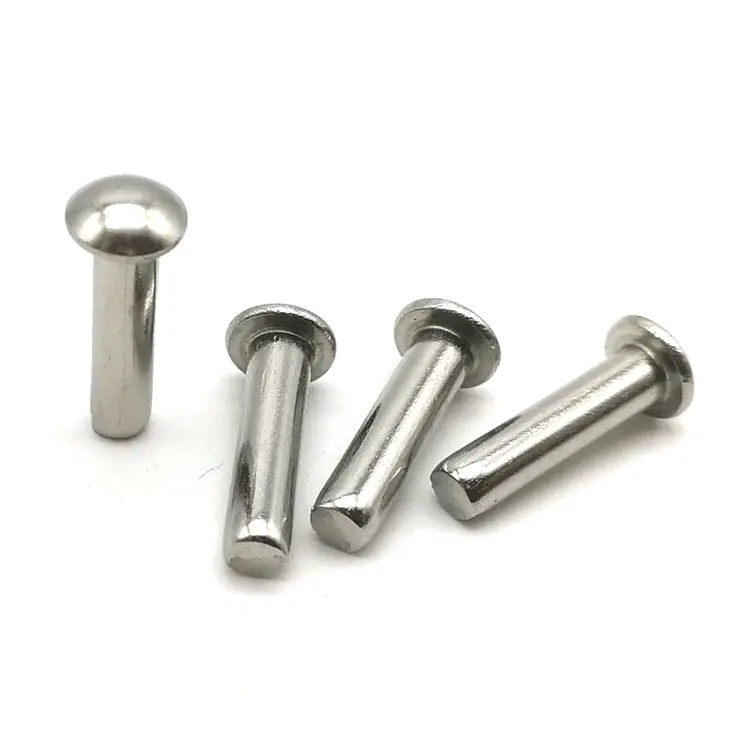
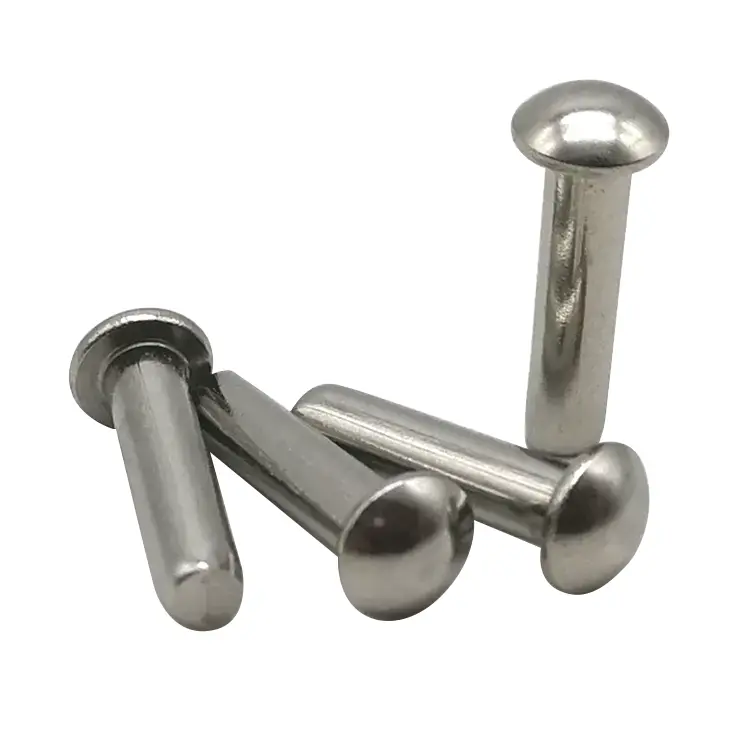
When your design requires maximum holding power and disassembly is never an option, Nuote Metals delivers steel solid rivets – the strongest permanent fastening solution available in carbon steel. Our solid rivets offer maximum shear and tensile strength for structural assemblies, heavy‑duty equipment, and high‑load applications where semi‑tubular rivets cannot provide enough strength. Available in 1.5–8.0mm shank diameters with round, flat, oval, and countersunk heads. ISO 9001:2015 certified.
Send Inquiry
Product Description
Steel is the strongest common metal used in rivet manufacturing. That is not an opinion—it is a material fact.
| Material | Tensile Strength (MPa) | Relative Strength | Cost |
|---|---|---|---|
| Low‑carbon steel | 400 – 500 MPa | Highest | Lowest |
| Stainless steel | 620 – 750 MPa | Higher (but more brittle) | Higher |
| Brass | 315 – 390 MPa | Moderate | Medium |
| Aluminum | 220 – 350 MPa | Moderate | Medium |
If you need maximum strength at the lowest cost, steel solid rivets are the clear choice.
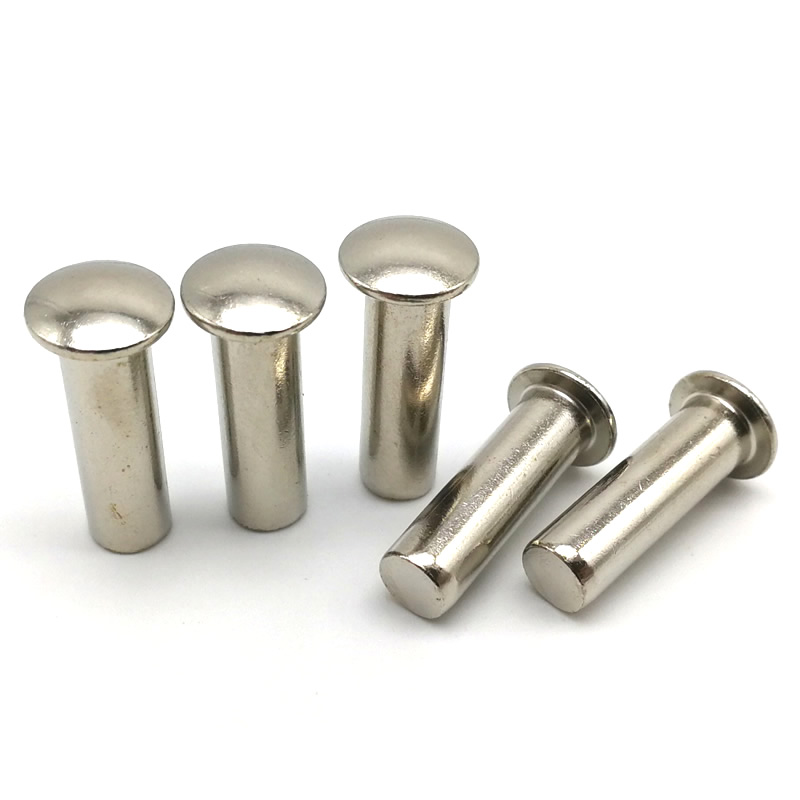
Solid is the strongest rivet design. Unlike semi‑tubular rivets that have a hollow cavity and rely on thin walls rolling outward, solid rivets use the full shank diameter to form the clinch.
| Feature | Steel Solid Rivet | Steel Semi‑Tubular Rivet |
|---|---|---|
| Strength | 100% (maximum) | 80–90% of solid |
| Setting force | 4–6 tons (for 5mm) | 25–30% of solid |
| Clinch | Full shank deformation | Hollow wall rolling |
| Best for | Structural, heavy‑load, permanent | High‑volume, material‑sensitive |
Why choose our rivets?
- Maximum strength – Highest shear and tensile strength available
- Permanent – Cannot loosen or back out
- Cost‑effective – Lowest cost per unit of strength
- Temperature resistant – Performs in extreme heat and cold
- Impact resistant – Withstands shock loads without failure
If your assembly must carry heavy load and never come apart, steel solid is the standard.
Key Specifications – What You Can Expect
Our steel rivets are made from low‑carbon steel (1008 / Q195 / SPCC). We maintain the following quality standards:
| Property | Specification |
|---|---|
| Material | Low‑carbon steel (1008, Q195, SPCC) |
| Tensile strength | 400 – 500 MPa |
| Hardness | HRB 60 – 80 |
| Shank diameter range | 1.5 – 8.0mm |
| Head styles | Round, flat, oval, countersunk |
| Finishes | Zinc‑plated, black oxide, plain (uncoated), nickel‑plated |
| Available lengths | Custom to your material stack thickness |
Zinc plating is our standard finish. Uncoated steel will rust quickly when exposed to moisture.
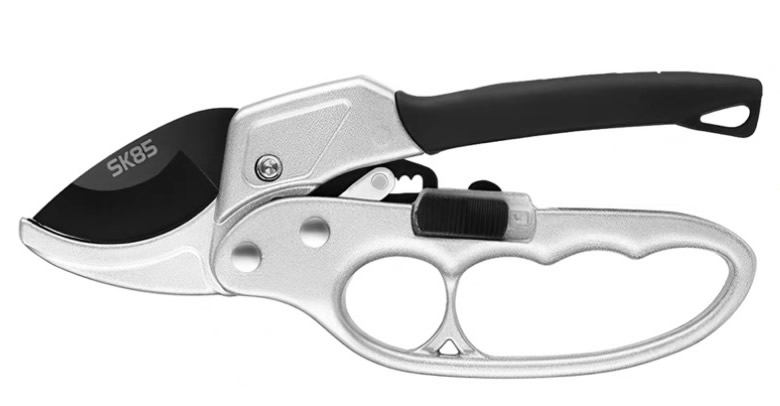
One Application – Garden Pruning Shears Pivot Joint
A manufacturer of garden pruning shears was using semi‑tubular rivets for the blade pivot joint. After heavy pruning seasons, the rivets loosened, causing blade misalignment and poor cutting performance. The customer needed a rivet that would hold tight under continuous shear stress, survive exposure to moisture and plant sap, and maintain consistent blade tension over thousands of cuts.
Nuote Metals supplied steel solid rivets – 5.0mm shank, 9.0mm round head, 14.0mm overall length, zinc‑plated. The solid construction provided maximum shear strength and permanent clamping force, eliminating the loosening issue. The round head delivered a clean, professional appearance on the finished shears. The zinc plating offered corrosion resistance against moisture and plant acids.
The customer tested the rivets across 500 shears. After 10,000 cutting cycles and humidity chamber testing, no loosening or rust was observed. The customer has since placed reorders totalling over 400,000 rivets and now specifies them for their entire pruning shear line.
Steel Rivets vs. Brass Rivets – Which Is Right?
| Consideration | Steel Solid Rivet | Brass Solid Rivet |
|---|---|---|
| Strength | Highest (400–500 MPa) | Moderate (315–390 MPa) |
| Cost | Lowest | Higher |
| Corrosion resistance | Depends on plating | Good (natural) |
| Conductivity | Poor | Excellent (26–28% IACS) |
| Magnetic | Yes | No |
| Appearance | Silver, industrial | Gold, classic |
| Best for | Heavy‑duty structural, cost‑sensitive | Electrical, decorative, non‑magnetic |
Choose steel when strength and cost are your primary concerns. Choose brass when you need conductivity, non‑magnetic properties, or a warm gold appearance.
Head Style Reference – Visual Guide
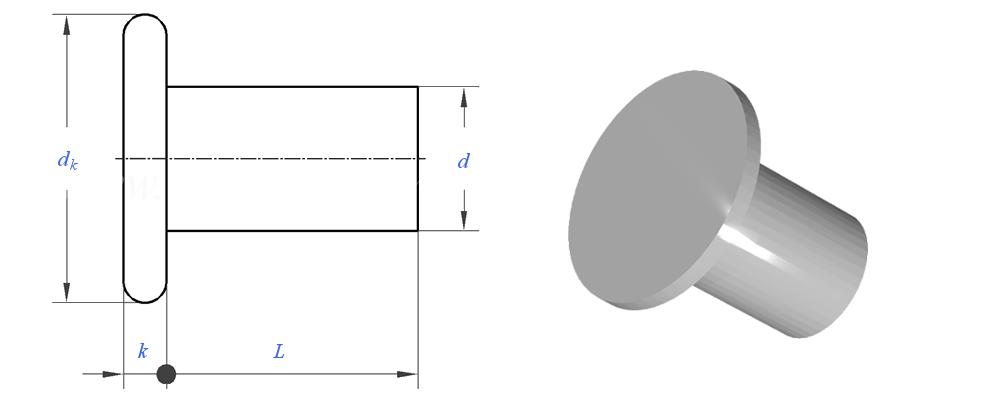
Flat Head – Sits nearly flush with the material surface. Ideal for clearance‑limited assemblies.
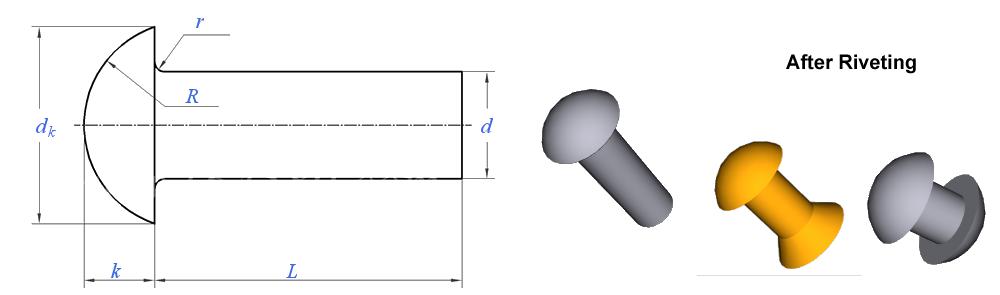
Round Head – The classic dome design. Maximum head strength, visible, traditional appearance.
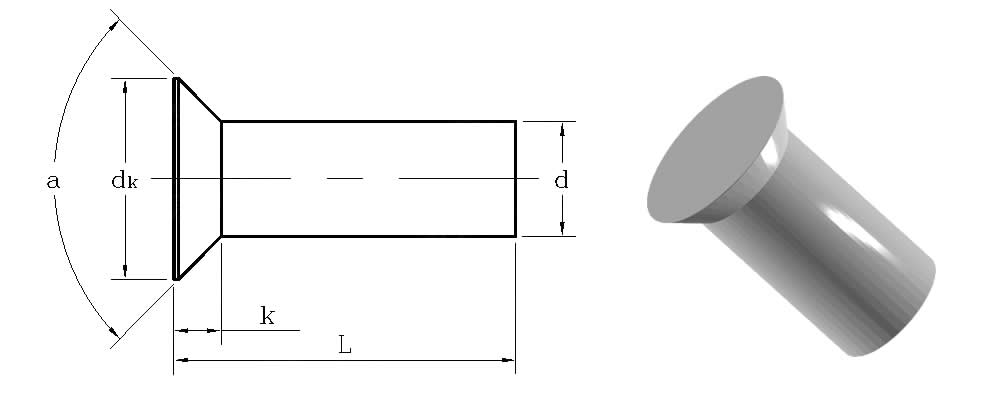
Countersunk Head – Sits completely flush with or below the material surface. Requires a pre‑drilled tapered hole. Zero protrusion.
Oval head available upon request.
How We Make Rivets – Cold Heading for Maximum Strength
Solid rivets require high‑force cold heading. Our presses are rated for up to 200 tons, allowing us to form solid rivets up to 8.0mm diameter.
Our cold‑heading sequence:
- Wire drawing – Raw steel wire drawn to exact shank diameter (±0.02mm)
- Cut‑off – Sheared to blank length
- First blow (squaring) – Blank is squared and centred
- Second blow (heading) – Carbide die forms the head (round, flat, oval, or countersunk)
- Trimming – Flash around the head edge removed
- Tumbling – Micro‑burrs eliminated
- Plating – Zinc or other finish applied as specified
How We Ensure Quality – Inspection Workflow for Rivets
Every batch of steel solid rivets is verified through a complete inspection sequence.
- Raw material verification – Each coil is tested for diameter (±0.02mm) and hardness before production begins. Coils outside specification are rejected.
- First article inspection – The first 10 rivets from a new tooling setup are examined under magnification for surface defects. Every dimension is measured on an optical comparator. Head diameter, head height, shank diameter, and overall length must match the drawing.
- In‑process monitoring – Operators pull 5 rivets every 500 pieces. Critical dimensions are checked with digital calipers. If the shank diameter drifts beyond ±0.05mm, the press stops immediately for tooling adjustment.
- Setting verification – Every 2,000 pieces, we set 3 rivets into a sample of your actual material. The clinch is inspected for symmetry, tightness, and crack‑free formation.
- Plating verification – For zinc‑plated rivets, plating thickness is measured by XRF on every batch.
- Final sorting – Every rivet passes through an optical sorting machine with high‑speed cameras. Rejects are automatically ejected. After sorting, a random AQL sample (Level II, 1.0) is manually verified.
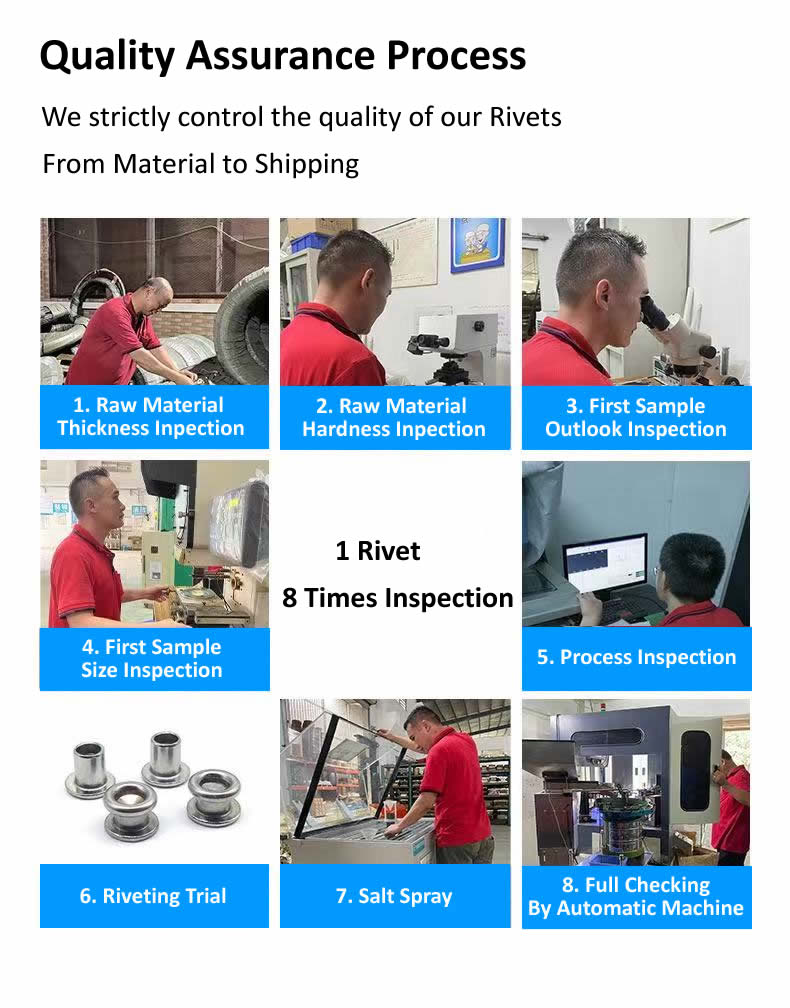
All inspection records are retained for five years and included with every shipment.
Where They Are Used
Steel solid rivets are the preferred choice for heavy‑duty, structural applications:
- Agricultural equipment – Frame assemblies, implement components, structural joints
- Heavy machinery – Industrial equipment, structural connections, high‑load assemblies
- Automotive – Frame components, suspension arms, axle assemblies
- Railway – Structural assemblies, braking systems, coupling components
- Construction – Structural steel connections, architectural hardware
- Mining equipment – Structural joints, high‑load assemblies
- Shipbuilding – Structural connections, hull assemblies
- Industrial equipment – Machinery frames, structural connections
What We Can Prove – Certifications & Documentation
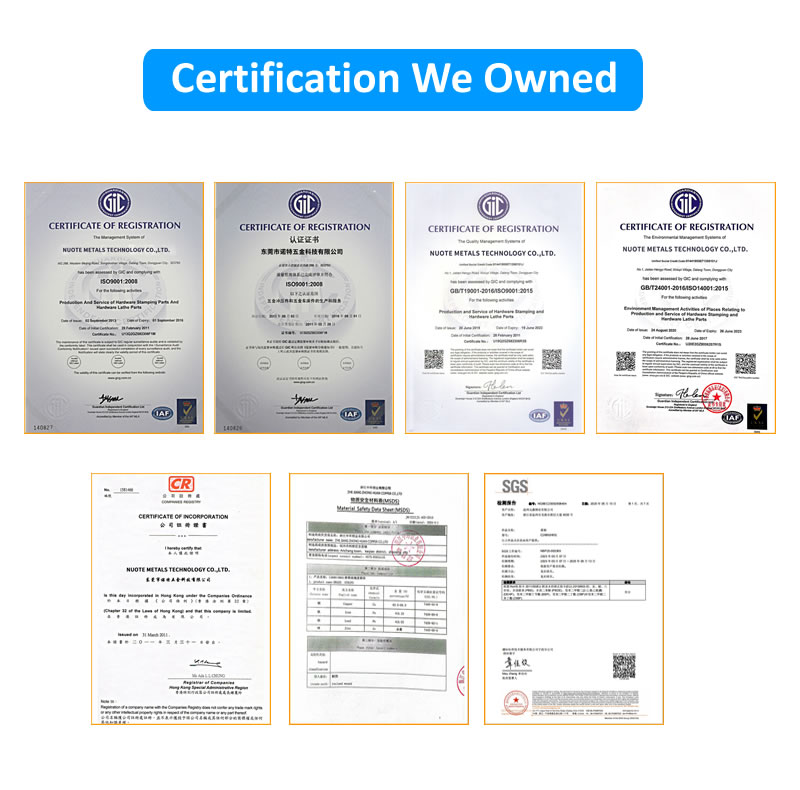
We do not ask you to trust our claims. We provide third‑party verification.
- ISO 9001:2015 – Certified quality management system
- RoHS compliance – Verified by SGS testing
- REACH compliance – Current SVHC declaration
- SGS test reports – Available per batch on request
Every shipment of steel solid rivets includes a dimensional inspection report and material certificate.
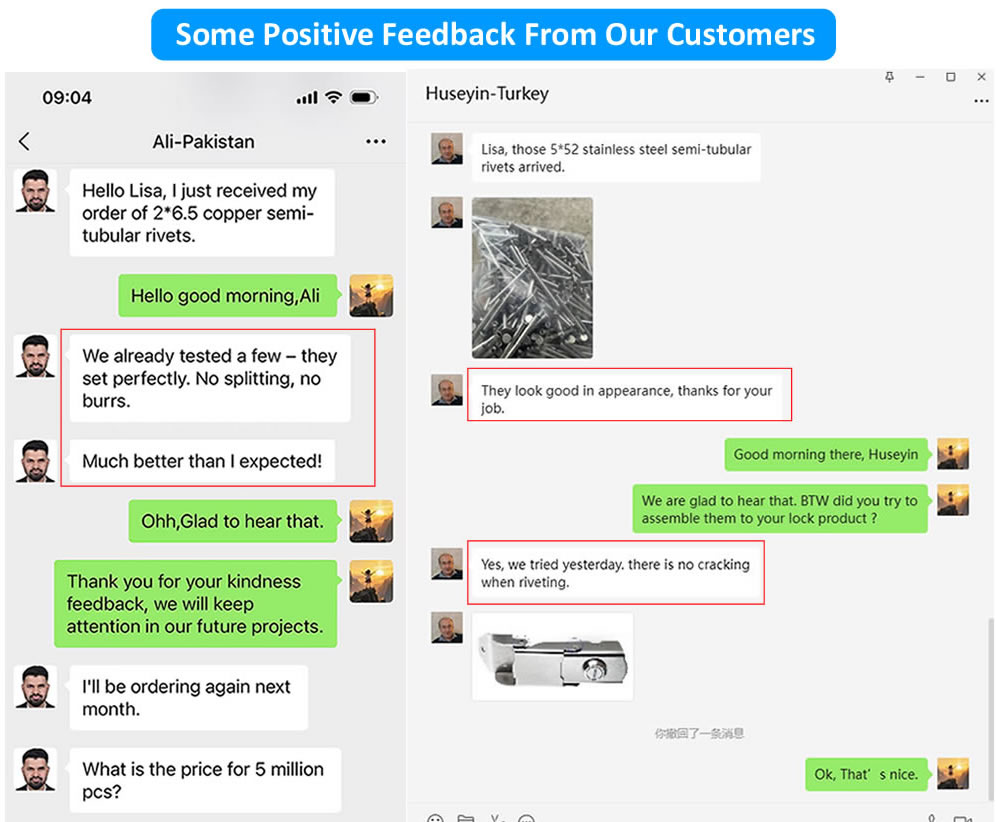
Three Questions We Answer Often
Q1: What is the difference between a steel solid rivet and a steel semi‑tubular rivet?
A: The fundamental difference is the tail design. A steel solid rivet is fully solid—the entire shank deforms during installation, providing maximum shear and tensile strength. A steel semi‑tubular rivet has a hollow cavity at the tail, reducing setting force by 70% but offering slightly lower strength (80–90% of solid). Choose solid for structural, load‑bearing, and permanent assemblies where maximum strength is required. Choose semi‑tubular for high‑volume production where installation speed is critical and loads are moderate. For the pruning shear case above, solid was the right choice because the customer needed maximum holding power under continuous shear stress.
Q2: Do steel solid rivets rust? How do I protect them?
A: Uncoated steel will rust quickly when exposed to moisture. Our standard finish is zinc plating, which provides 48–96 hours of salt spray resistance—sufficient for indoor and sheltered outdoor use. For the pruning shear case above, zinc plating protected the rivets against moisture and plant sap. For outdoor or coastal applications, we recommend zinc‑plated steel or switching to stainless steel solid rivets. We can also apply black oxide or nickel plating for decorative or anti‑glare requirements.
Q3: How do I select the correct overall length for a steel solid rivet?
A: Select a length that will leave 1.2–1.5 times the shank diameter protruding past your material stack after insertion. For example, if you are joining two 2mm sheets (total 4mm) with a 5mm shank, you need 1.2 × 5mm = 6mm of shank protruding. Total length = 4mm (stack) + 6mm (protrusion) = 10mm. This protruding material forms the second head during setting. If the protrusion is too short, the clinch will be weak. Too long, and the rivet will buckle. Send us your material stack thickness, and we will recommend the exact length.
What We Guarantee About Every Steel Solid Rivet
We do not just sell rivets. We guarantee:
- Strength – shear strength meets or exceeds your specification
- Fit – shank diameter within ±0.05mm of your specification
- Plating – plating thickness verified on every batch
- Material – steel composition verified on every coil
- Clinch – tested on your material before shipment
- Delivery – 5–7 days for standard sizes, 10–12 days for custom
If any rivet in your shipment fails to meet these standards, we will replace the entire batch—at our cost.
That is not a marketing line. That is our standard procedure.
Hot Tags: Steel Solid Rivets,China Steel Solid Rivets,Solid Rivets Manufacturer
Product Tag
Related Categories
Send Inquiry
Please feel free to fill your inquiry in the form below. We will reply you in 24 hours.



X
We use cookies to offer you a better browsing experience, analyze site traffic and personalize content. By using this site, you agree to our use of cookies.
Privacy Policy