
Why Are Tubular Rivets the Most Reliable Fastening Solution for Precision Engineering?
In the world of industrial fastening, the smallest components often bear the greatest responsibility. For over two decades, Nuote Metals has established itself as a trusted partner for manufacturers seeking reliability, precision, and engineering excellence. As industries evolve toward lighter structures and higher performance requirements, tubular rivets have emerged as a critical solution for applications demanding strength without compromising material integrity.
This article provides a comprehensive technical overview of tubular rivets, their classifications, application scenarios, and selection criteria—designed for procurement specialists, design engineers, and quality assurance professionals.
Understanding Tubular Rivets: Definition and Structural Characteristics
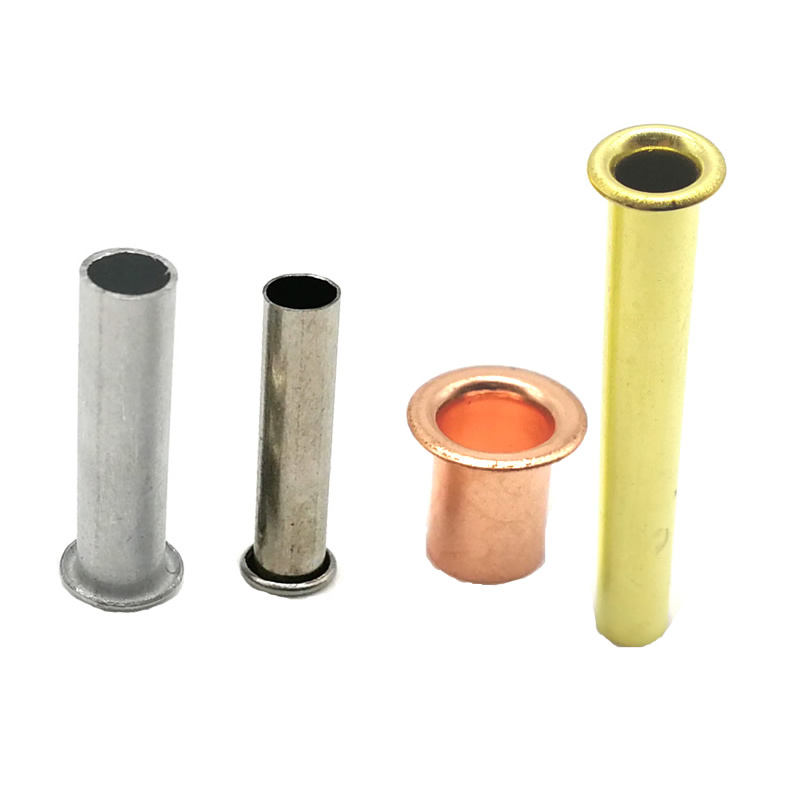
Tubular rivets are semi-hollow or fully hollow fasteners designed to join materials through deformation. Unlike solid rivets that require significant force for installation, tubular rivets feature a pre-formed hollow shank that rolls over during setting, creating a secure joint with controlled clamping force.
Key Structural Features
Hollow shank design: Reduces installation force while maintaining shear strength
Rolled head formation: Creates a uniform, smooth finish on the blind side
Material versatility: Available in steel, stainless steel, aluminum, copper, and brass
Customizable dimensions: Shank diameters typically range from 1.6 mm to 8.0 mm, with lengths tailored to material stack thickness
These characteristics make tubular rivets particularly suitable for applications where back-side access is limited or where cosmetic appearance matters.
Classification of Tubular Rivets
Understanding the different types of tubular rivets is essential for selecting the right fastener for a given application. Nuote Metals categorizes its product line based on structural configuration and end-use requirements.
By Structural Type
| Type | Description | Typical Applications |
| Semi-Tubular Rivets | Hollow at the tip; solid at the head. Offers a balance of strength and ease of setting. | Automotive brake linings, hinges, furniture assembly |
| Full Tubular Rivets | Completely hollow throughout the shank. Lightweight with minimal installation force. | Electronics enclosures, decorative trims, soft material joining |
| Shoulder Tubular Rivets | Features a shoulder between head and shank to act as a spacer or pivot point. | Folding mechanisms, tool joints, rotating assemblies |
| Step Tubular Rivets | Variable shank diameter for multi-layer material stacks. | Appliance housings, automotive interior modules |
By Material Composition
Material selection directly impacts corrosion resistance, electrical conductivity, and mechanical performance. Nuote Metals offers tubular rivets in the following material grades:
Aluminum Alloys (5056, 6061): Lightweight, corrosion-resistant, ideal for aerospace and marine applications
Carbon Steel (C1008, C1010): High strength, cost-effective, often plated for corrosion protection
Stainless Steel (304, 316): Superior corrosion resistance, suitable for medical devices and outdoor equipment
Copper and Brass: Excellent conductivity and aesthetic appeal, used in electrical components and leather goods
Application Industries and Engineering Use Cases
Nuote Metals supplies tubular rivets to a diverse range of industries. The fastener’s ability to provide consistent joint integrity without damaging sensitive substrates makes it a preferred choice in the following sectors.
Automotive Industry
Brake lining attachment
Seat belt anchor assemblies
Interior trim fastening
HVAC duct connections
Consumer Electronics
Hinge mechanisms for laptops
Enclosure assembly for portable devices
Structural reinforcement in thin-wall casings
Medical Devices
Surgical instrument assemblies
Orthopedic device components
Diagnostic equipment housings
Aerospace and Defense
Aircraft interior panel fastening
Lightweight structural connections
Vibration-resistant assemblies
General Manufacturing and Assembly
Luggage and case hardware
Furniture frame connections
Electrical junction boxes
Textile and leather product assembly
Advantages of Using Tubular Rivets Over Alternative Fasteners
When compared to solid rivets, screws, or weld joints, tubular rivets offer distinct engineering advantages.
Lower installation force: Reduces operator fatigue and extends tool life
Minimal material deformation: Ideal for thin-gauge materials or brittle substrates
Controlled clamping force: Consistent joint quality without over-torquing risks
No thermal impact: Cold-forming process preserves material properties of joined components
Aesthetic finish: Rolled heads provide a clean, professional appearance
Vibration resistance: Once set, tubular rivets maintain joint integrity under dynamic loads
Selection Criteria for Tubular Rivets
Selecting the correct tubular rivets requires evaluating multiple technical parameters. Nuote Metals recommends the following assessment framework.
1. Material Stack Thickness
Measure the total thickness of materials to be joined
Select rivet length that allows approximately 0.5–1.0 mm of shank protrusion for proper roll formation
2. Shear and Tensile Requirements
Determine expected loads in the application
Reference Nuote Metals technical datasheets for rivet strength ratings by diameter and material
3. Environmental Exposure
Indoor use: Plated steel or aluminum
Outdoor or corrosive environments: Stainless steel or coated aluminum
Electrical applications: Copper or brass
4. Installation Equipment Compatibility
Manual press for low-volume production
Pneumatic or servo-driven presses for automated assembly lines
5. Head Style Requirements
Flat head for flush mounting
Countersunk head for surface continuity
Round head for aesthetic or functional spacing
Installation Best Practices and Quality Assurance
Proper installation is critical to achieving the performance expected from tubular rivets. Nuote Metals integrates rigorous quality control at every stage of production and provides technical support to ensure optimal installation outcomes.
Installation Process Overview
Hole Preparation: Drill or punch hole with diameter 0.05–0.10 mm larger than rivet shank
Insertion: Insert rivet through aligned material holes
Setting: Apply axial force using a rivet press or automatic feeding system
Roll Formation: The hollow end rolls outward, forming a secondary head that clamps materials
Quality Control Parameters
Shank concentricity: Ensures uniform roll formation
Head concentricity: Maintains consistent appearance and load distribution
Hardness consistency: Prevents cracking during installation
Plating thickness: Meets corrosion resistance specifications
【tubular rivets】FAQ Common Questions
Q1: What is the difference between semi-tubular rivets and full tubular rivets?
A: Semi-tubular rivets have a hollow depth approximately 20–30% of the shank length, with the remaining portion solid. This design provides higher shear strength while still reducing installation force compared to solid rivets. Full tubular rivets are hollow throughout the entire shank, offering the lowest installation force and lightest weight, but with lower overall strength. Nuote Metals recommends semi-tubular rivets for structural joints and full tubular rivets for non-structural assemblies or when weight reduction is critical.
Q2: How do I determine the correct tubular rivet length for my assembly?
A: The correct rivet length is calculated as: Material thickness + 0.5 to 1.0 mm (for standard roll formation). For example, if joining two sheets with a total thickness of 3.0 mm, select a rivet with a shank length between 3.5 mm and 4.0 mm. The protruding portion forms the rolled head. For harder materials or when a larger rolled head diameter is required, a longer protrusion may be necessary. Nuote Metals provides detailed length selection charts for all material combinations upon request.
Q3: Can tubular rivets be used in high-vibration environments?
Yes. Tubular rivets are widely used in automotive and heavy equipment applications precisely because they resist loosening under vibration. Unlike threaded fasteners, which can back out over time, the cold-formed rolled head creates a permanent deformation that maintains clamping force throughout the product’s service life. For extreme vibration conditions, Nuote Metals offers locking tubular rivets with knurled shanks or adhesive-coated options to further enhance retention.
Why Nuote Metals Leads the Industry in Tubular Rivets Manufacturing
With two decades of specialization in precision metal fasteners, Nuote Metals has developed a manufacturing ecosystem that prioritizes consistency, traceability, and engineering support.
ISO 9001:2015 certified facilities: Every batch of tubular rivets undergoes dimensional inspection, hardness testing, and plating verification
In-house tooling development: Custom rivet geometries are engineered and prototyped within weeks, not months
Global supply chain capabilities: Consistent lead times for both standard and custom specifications
Technical engineering team: On-call support for application engineering, installation troubleshooting, and failure analysis
Contact Nuote Metals for Your Tubular Rivets Requirements
Whether you are specifying tubular rivets for high-volume automotive assembly lines or custom-engineered solutions for medical device applications, Nuote Metals delivers the technical expertise and manufacturing reliability that modern industries demand.
Contact Information:
Website: www.nuotemetals.com
Email: info@nuotemetals.com
Phone: +86 13316629095
Request technical datasheets, free samples, or engineering consultation today. Nuote Metals—precision fastening, engineered for performance.
Send Inquiry



X
We use cookies to offer you a better browsing experience, analyze site traffic and personalize content. By using this site, you agree to our use of cookies.
Privacy Policy