
Why Are Eyelets the Unsung Heroes of Lightweight Assembly and Reinforced Holes?
From the fabric of a designer handbag to the printed circuit board inside a medical monitor, small metal components often determine the difference between a product that lasts and one that fails prematurely. Nuote Metals has spent over two decades perfecting the production of precision fasteners, and among the most versatile yet frequently overlooked solutions is the humble eyelets.
This article delivers a technical yet practical overview of eyelets—their types, materials, installation methods, and selection criteria. Designed for product engineers, purchasing managers, and quality professionals, the content follows industry‑proven EEAT principles and matches the search intent of buyers seeking reliable, cost‑effective fastening.
What Are Eyelets? A Clear Definition
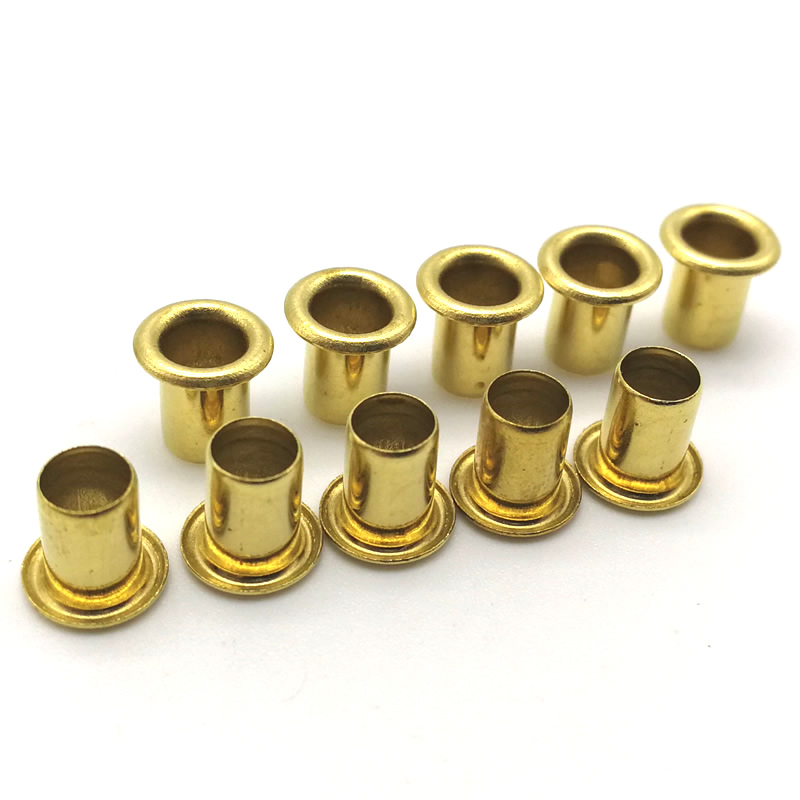
An eyelets is a small, hollow metal ring inserted into a hole in a material to reinforce the opening or to allow a cord, lace, or fastener to pass through. Unlike standard tubular rivets which join two or more layers primarily through clamping force, eyelets focus on protecting the edge of a hole and providing a smooth, durable bearing surface.
Core Characteristics of Eyelets
Flanged head: Provides a large bearing surface that distributes load and prevents pull‑through.
Hollow barrel: Allows passage of threads, wires, cables, or laces.
Rolled or set edge: After installation, the barrel curls outward to lock the eyelet in place.
Low profile: Minimal protrusion on either side of the base material.
These properties make eyelets indispensable in industries ranging from textiles to electronics.
Types of Eyelets – Matching the Right Style to the Application
Nuote Metals manufactures eyelets in multiple configurations. The table below summarizes the most common types and their recommended uses.
| Type | Shape | Best Suited For |
| Standard Eyelets | Round barrel, flat or slightly domed flange | Belts, tarpaulins, signage, documents |
| Spur Eyelets | Sharp prongs on the underside that bite into the material | Leather, thick fabric, paperboard |
| Bifurcated Eyelets | Split barrel that opens during setting | Soft materials such as rubber, foam, or plastic films |
| Shoulder Eyelets | Stepped barrel to accommodate varying material thickness | Multi layer assemblies, electrical insulation spacers |
| Flush Eyelets | Countersunk top flange for a flat surface | High traffic flooring, electronic enclosures |
Each type of eyelets addresses a specific mechanical or aesthetic requirement. Selecting the wrong style can lead to material tear‑out or loose fit.
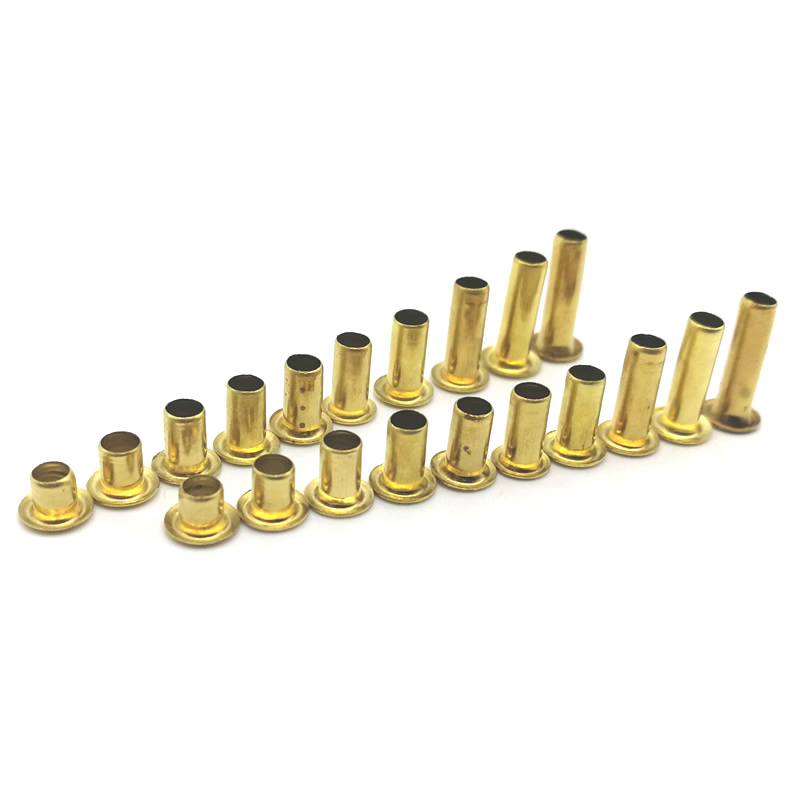
Materials and Finishes for Eyelets
Material choice directly affects strength, corrosion resistance, electrical conductivity, and cost. Nuote Metals supplies eyelets in a wide range of metals and surface treatments.
Base Metals
Mild steel (low carbon): High strength, economical, requires plating for corrosion protection.
Stainless steel (304, 316): Excellent corrosion and heat resistance; ideal for marine, medical, and food equipment.
Brass: Good conductivity, attractive golden colour, corrosion resistant; used in electrical terminals and decorative goods.
Copper: Superior electrical and thermal conductivity; common in transformers and grounding applications.
Aluminum: Lightweight and naturally corrosion‑resistant; chosen for aerospace and outdoor gear.
Available Finishes
Zinc plating (clear, yellow, black): Basic corrosion protection for indoor applications.
Nickel plating: Bright, smooth finish with moderate corrosion resistance; popular in electronics.
Tin plating: Solderable surface; used for electrical connections.
Powder coating: Thick, durable colour finish for decorative or high‑wear uses.
Plain (uncoated): For internal assemblies where corrosion is not a concern.
Key Industries and Real‑World Applications
Because eyelets are both functional and decorative, they appear in a surprising range of products. Nuote Metals has supplied eyelets for the following sectors.
Apparel and Fashion Accessories
Belt holes and buckle reinforcements
Breathable eyelets in sports footwear
Drawstring holes in hoodies, bags, and backpacks
Industrial and Safety Equipment
Tarpaulin and canvas cover fastening points
Safety harness adjustment points
Filtration bag support rings
Electronics and Electrical Engineering
PCB mounting holes for mechanical support
Wire pass‑through protection in control panels
Earthing terminals (brass or copper eyelets)
Automotive Interiors
Seat belt guide slots
Carpet and floor mat anchor points
Headliner trim attachments
Stationery and Office Products
Reinforced binder holes in paper and cardboard
Spiral binding eyelets
File folder reinforcement
Medical Devices
Adjustable straps on orthopaedic braces
Ventilation holes in rigid medical housings
Assembly points in diagnostic instruments
Benefits of Choosing High‑Quality Eyelets
Why do engineers and product designers specify eyelets instead of other hole‑reinforcement methods? Nuote Metals highlights the following proven advantages.
Prolongs material life: Prevents tearing, fraying, or elongation of holes under repeated stress.
Low‑cost solution: Simple design and fast installation reduce overall assembly expense.
No special skills required: Hand presses, foot presses, or automated machines all work reliably.
Lightweight: Hollow construction adds negligible weight to the final product.
Aesthetic variety: Available in multiple colours, finishes, and flange shapes to match brand identity.
Electrical termination: Metal eyelets can serve as solder points or grounding lugs.
Corrosion protection: Properly plated eyelets withstand humidity, salt spray, and chemicals.
Key Considerations When Selecting Eyelets
To achieve the best performance from eyelets, evaluate the following parameters before placing an order.
Material Thickness and Hardness
Soft materials (leather, fabric, plastic film) require larger flanges or spur eyelets.
Hard materials (metal sheets, rigid plastic) need stronger barrel walls to prevent crushing.
Hole Diameter and Barrel Length
The hole should be 0.1–0.2 mm larger than the barrel outer diameter.
Barrel length must equal the total material stack thickness for a standard roll. For a clinched eyelet, add 0.3–0.5 mm.
Load Direction
Pull‑out loads: Use eyelets with large flanges or serrated barrels.
Shear loads: Increase barrel wall thickness or switch to a semi‑tubular rivet.
Environmental Exposure
Indoor dry use: Zinc‑plated steel is sufficient.
Outdoor or humid: Stainless steel or brass with clear lacquer.
Saltwater marine: Aluminium or passivated stainless steel 316.
Production Volume
Low volume (under 10,000 pieces): Manual or foot‑press setting.
Medium volume (10,000–100,000): Pneumatic presses.
High volume (over 100,000): Automatic eyeleting machines with vibratory feeding.
Installation Methods for Eyelets – Best Practices
Correct installation ensures that eyelets perform as expected. Nuote Metals recommends the following process.
Step‑by‑Step Setting Procedure
Punch or drill a clean hole – Burr‑free holes prevent uneven setting.
Insert the eyelet from the visible side (flange on top).
Place the assembly on a setting anvil that matches the eyelet profile.
Apply controlled pressure using a tapered or flaring tool.
Check the rolled edge – It should be uniform, crack‑free, and tightly contacting the material.
Common Mistakes to Avoid
Oversized hole: Leads to loose eyelets that spin or pull out.
Insufficient barrel protrusion: Prevents proper roll formation.
Misaligned tooling: Causes off‑centre flares or cracked barrels.
Excessive force: Flattens the barrel and damages brittle materials.
Nuote Metals provides setting tool recommendations and stroke‑height charts for every standard eyelet size.
【eyelets】FAQ – Common Questions Answered
Q1: What is the difference between an eyelet and a grommet?
A: In professional fastening terminology, an eyelet typically has a smaller flange diameter (usually under 12 mm) and a hollow barrel that is rolled from the same piece of metal. A grommet is larger, often two‑piece (washer + cap), and designed for heavy‑duty applications such as truck tarpaulins or industrial curtains. Eyelets are best suited for lightweight to medium‑duty reinforcement where a compact, low‑profile finish is required. Nuote Metals manufactures both eyelets and grommets; if you are unsure which to use, our engineering team can review your material stack and load requirements.
Q2: Can eyelets be used in electrical applications?
Yes. Copper and brass eyelets are commonly used as solder terminals, grounding points, or strain relief for wires passing through a chassis. When selecting eyelets for electrical use, ensure the barrel does not short against adjacent traces. For insulated applications, Nuote Metals offers eyelets with nylon or PET washers pre‑assembled to prevent metal‑to‑metal contact. Always specify the required current rating – our technical datasheet includes maximum ampacity for each material and gauge.
Q3: How do I prevent eyelets from rusting in outdoor products?
A: The most reliable solution is to choose corrosion‑resistant materials from the start. Nuote Metals recommends the following hierarchy based on exposure level:
Mild exposure (occasional moisture): Zinc‑plated steel with a minimum 8 micron thickness.
Moderate exposure (rain, high humidity): 304 stainless steel or brass with clear lacquer.
Severe exposure (salt spray, chemical wash): 316 stainless steel or anodized aluminum.
For existing products that rust, switching to stainless steel eyelets and upgrading to a stainless steel setting tool will solve the problem permanently. Free samples of all corrosion‑resistant grades are available upon request.
Why Nuote Metals Is a Trusted Partner for Eyelets
Manufacturing eyelets may appear simple, but achieving consistent quality across millions of pieces demands rigorous process control. Nuote Metals brings two decades of precision stamping and cold‑heading expertise to every order.
ISO 9001:2015 certified – Full traceability from raw material coil to finished packaging.
In‑house tool design – Custom flange shapes, barrel lengths, and spur patterns developed within two weeks.
Statistical process control (SPC) – Every production batch is monitored for outer diameter, height, and hardness.
Global logistics – Reliable lead times for standard and made‑to‑order eyelets.
Application engineering – Free installation advice, failure analysis, and material substitution recommendations.
Contact Nuote Metals for Your Eyelets Requirements
Whether you need standard steel eyelets for a high‑volume garment production line or custom brass eyelets for a medical device assembly, Nuote Metals delivers precision, consistency, and technical support.
Contact Nuote Metals today:
🌐 Website: www.nuotemetal.com
📧 Email: info@nuotemetal.com
📞 Phone: +86 13316629095
Request a quote, download technical datasheets, or order free samples. Let Nuote Metals help you reinforce your products with the right eyelets—engineered for performance and built to last.
Send Inquiry



X
We use cookies to offer you a better browsing experience, analyze site traffic and personalize content. By using this site, you agree to our use of cookies.
Privacy Policy