
What Does a Reliable Machining Service Actually Do?
We've all heard the term "custom part." But where do these parts come from when they aren't on a shelf? That's where a machining service comes in. Think of it as a job shop or a partner that takes your drawing or idea and turns it into a physical, precise metal (or plastic) component. They don't just sell standard fasteners; they make the unique pieces that standard parts can't be.
The heart of any machining service is its equipment and know-how. This means CNC mills that can carve complex 3D shapes, lathes that spin material to create perfect rounds, and often EDM (Electrical Discharge Machining) for incredibly hard metals or intricate details. A good service doesn't just run machines; it figures out the smartest way to make your part—what material to use, what process sequence to follow, how to hold the workpiece. Their product is the machining parts they deliver, but their real value is the problem-solving that happens before the first tool touches metal.
Why not just buy a standard part? Because sometimes a design needs something that doesn't exist. Maybe it's a one-off prototype for a new invention, a small batch of specialized fixtures for a factory line, or a replacement component for an old machine that's no longer made. A machining service fills that gap.
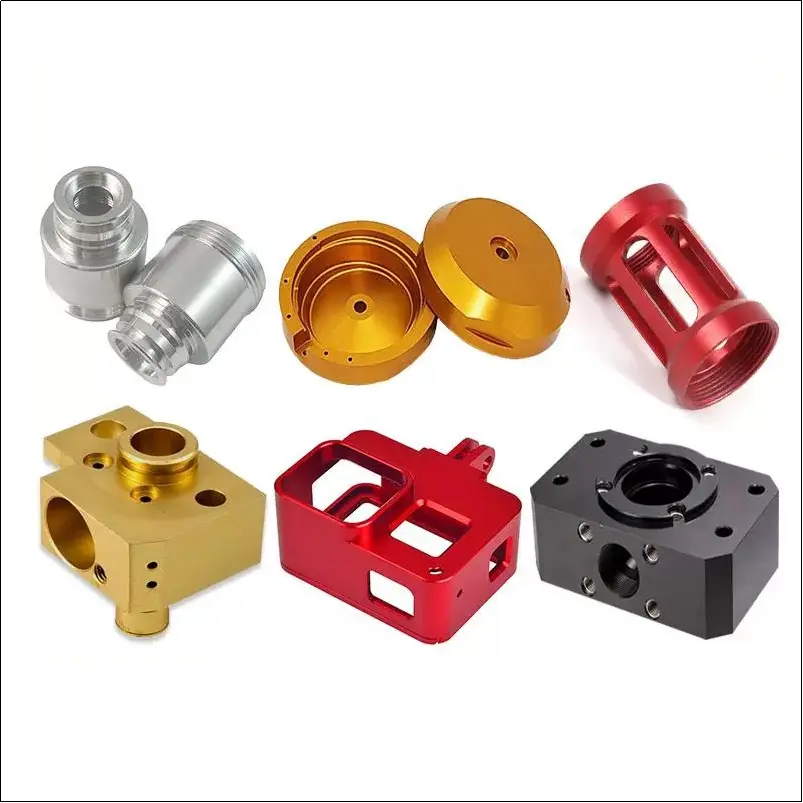
More Than Just a Machine Shop
I'm Mark, and I handle customer projects for a mid-sized machining service. My job starts with a conversation, not a machine. Someone sends us a sketch, a CAD file, or sometimes just a description of a problem. My first task is to translate that into a manufacturable plan.
The questions are always practical. "What's this part for?" tells us about the needed strength. "How many do you need?" determines if we use a CNC mill for ten pieces or set up a dedicated fixture for a thousand. Often, we'll look at a design and suggest a small change—a slightly different corner radius or a different alloy—that makes it faster, stronger, or cheaper to produce without hurting its function. That collaborative tweak is a big part of the service.
Then, the plan moves to the floor. Our machinists are craftsmen. They choose the right tools, write or adjust the programs, and set up the stock. Watching a block of aluminum turn into a complex, finished machined part is still satisfying. We make machining parts from stainless steel for chemical resistance, aluminum for lightweight frames, brass for conductivity, and plastics for insulators. Every material behaves differently, and you learn to respect that.
Quality control is built into the process. We measure first articles meticulously, often with advanced CMMs (Coordinate Measuring Machines), and check samples throughout a run. When we ship a box of machining parts, we're not just sending metal. We're sending a solution that we've thought through, executed, and verified. It might be a simple spacer or a complex housing—the common thread is that it was made to answer a specific need.
So, a good machining service is really a bridge. It connects an idea or a problem on one side with a tangible, precise, and reliable part on the other. In a world of mass production, it keeps custom, low-volume, and critical manufacturing alive.
Send Inquiry



X
We use cookies to offer you a better browsing experience, analyze site traffic and personalize content. By using this site, you agree to our use of cookies.
Privacy Policy