
What Can High Speed Stamping Really Do?
Walk by a stamping press running at normal speed, and you hear a steady thud... thud... thud. Now stand next to a high-speed press. The sound becomes a continuous, roaring BRRRRRP—a rapid-fire vibration you feel in your chest. That's the sound of making parts at a dizzying rate, sometimes over a thousand strokes per minute. High speed stamping isn't just fast; it's a different world of production, built for one thing: making massive quantities of identical, relatively small stamping parts efficiently.
The parts made this way are everywhere, but you rarely notice them. Think of the tiny metal contacts inside an electrical connector, the precise leadframes for semiconductors, or the small, complex brackets in your car's fuel injector. These aren't big, heavy panels. They are smaller, intricate components that need to be made by the millions. High speed stamping is the only way to meet that volume demand cost-effectively.
The process demands perfection in the tooling. The dies are engineering marvels, often made from exotic, wear-resistant tool steels. They have to be perfectly balanced, with every spring, guide pin, and lifter working in flawless harmony at those insane speeds. A tiny bit of friction or misalignment at 1,200 strokes per minute means instant failure.
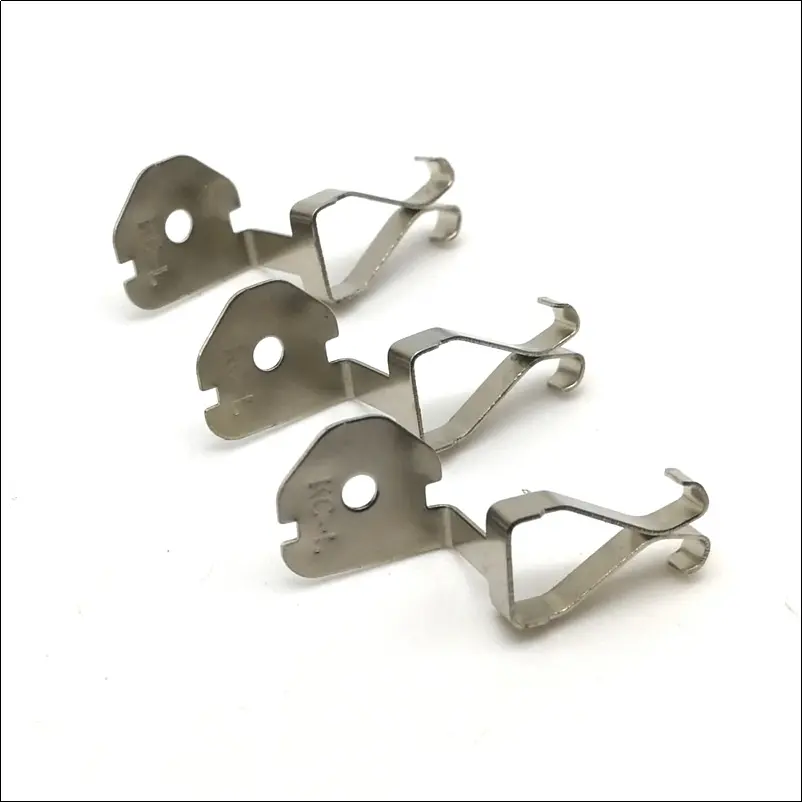
The Need for Speed: Feeding the Line
My name is Chen, and I'm a tool technician for our high-speed lines. My world is about microns and milliseconds. When we're setting up a job for high speed stamping, it's a days-long process of meticulous adjustment. We're not just making a part; we're tuning a system to run a marathon at a sprint pace.
The material feed is critical. We work with thin coils of metal—often copper alloy for electrical parts, tempered spring steel for clips, or specific aluminum grades. The material has to be perfectly uniform. Any variation in thickness or temper will cause a misfeed, and at those speeds, a misfeed can destroy a $100,000 die in seconds. We run test coils slowly, checking the first hundred stamping parts under a microscope.
Different materials behave differently in the storm. Brass and copper alloys feed beautifully; they're malleable and kind to the tools. High-carbon spring steel is tough—it's abrasive and requires harder die coatings. Thin aluminum can be tricky; it's softer but can tear if the die clearance isn't exact. Making stamping parts from each is a lesson in adjusting the machine's "touch."
Once it's running, my job is about monitoring. I don't just listen; I watch the ribbon of scrap metal—the skeleton left after the parts are punched out—as it snakes out of the press. It should flow smoothly, like a ribbon. Any hiccup, vibration, or curl in that scrap is a red flag. We take sample metal stamping parts every fifteen minutes to check for burrs, dimensional creep, or any signs of tool wear.
We run parts for automotive sensors where a single press might make every grounding clip for a year's production of a car model. The volume is staggering. That's what high speed stamping is for: it feeds the insatiable appetite of global manufacturing for tiny, perfect, cheap, and absolutely essential metal pieces. It's not glamorous, but it's the heartbeat of modern assembly.
Send Inquiry



X
We use cookies to offer you a better browsing experience, analyze site traffic and personalize content. By using this site, you agree to our use of cookies.
Privacy Policy