
What Makes a Ball Head Bolt Different?
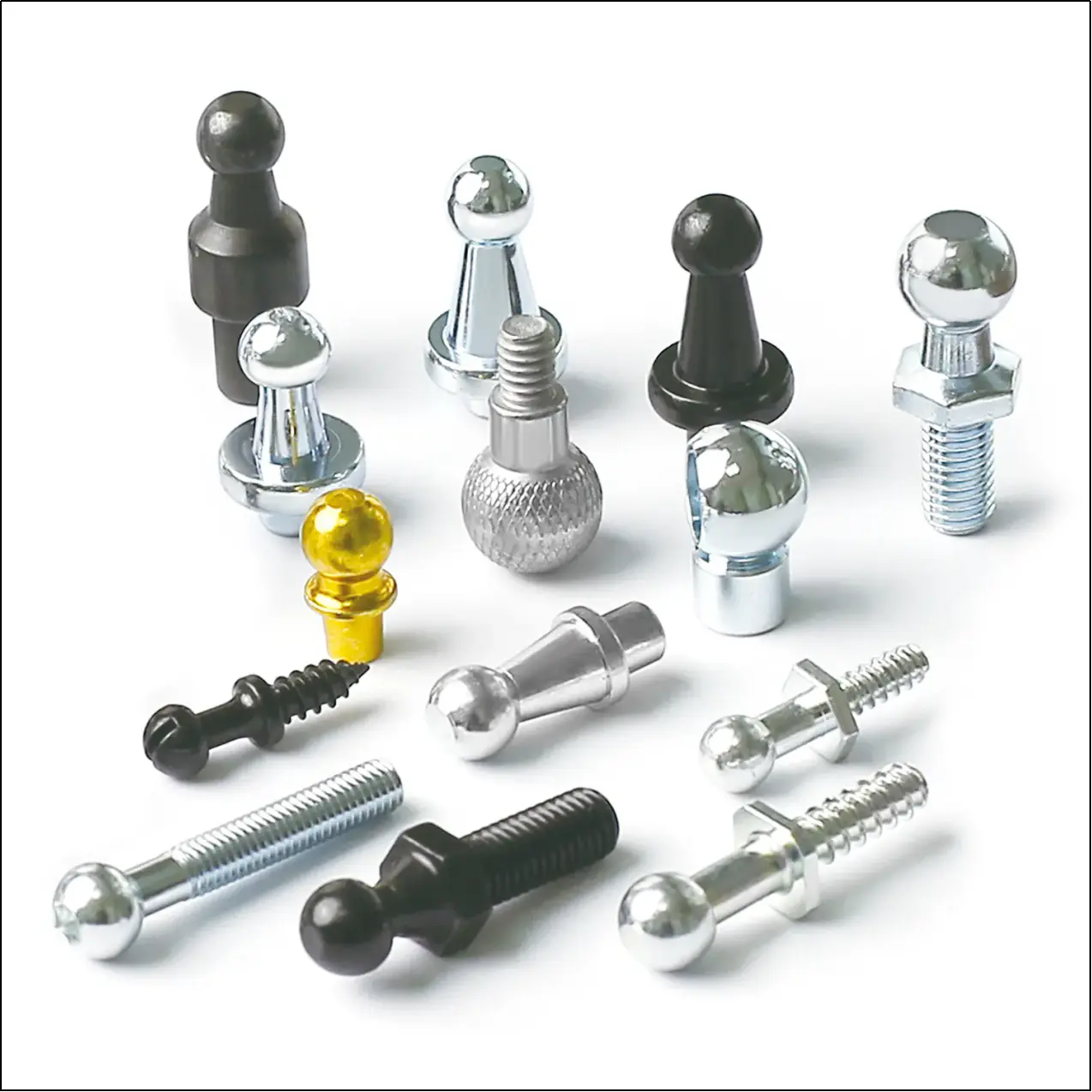
Most bolts have a hexagonal head you turn with a wrench. But look at certain types of furniture, machinery guards, or decorative fixtures, and you'll find a smoother, rounded fastener—the ball head bolt. This design features a partially spherical, domed head that sits above the surface, often with a socket drive (like an Allen key) recessed into its top.
The shape is the main advantage. The smooth, rounded head has no sharp edges to snag on clothing, wiring, or moving parts. This makes it safer and gives a finished, almost decorative look compared to a standard hex head. It's commonly used where aesthetics matter, in adjustable linkages where parts need to pivot smoothly against the bolt head, or as a stud for attaching knobs and handles. While not for ultra-high-torque applications, a ball head bolt provides a clean and functional solution where a traditional bolt head would be impractical or unattractive.
Forging the Smooth Curve with Cold Heading
My name is Leo, and I work on the cold heading line where we make special screws like the ball head bolt. We don't machine these from rod—that's too slow and wastes material. Instead, we forge them. Cold heading is the right process here: it's fast, strong, and perfect for creating that spherical shape in one solid piece.
We start with coils of steel, stainless steel, or brass wire. The wire gets cut to a precise length, called a blank. Then the magic happens. The blank is fed into the heading machine where it's struck by dies under tremendous pressure. In a couple of swift blows, the metal flows like stiff putty. One die forms the beginnings of the shank and threads, while the other die—carefully machined with a spherical cavity—forges the ball head. The grain of the metal follows the shape, making the head incredibly strong. After heading, another station punches the internal socket drive into the top of the still-warm head.
The beauty of cold heading this ball head bolt is consistency and strength. Every one comes out of the die with the same smooth, continuous curve. They then go to the thread-rolling station, where the shank is rolled between dies to form perfect threads, again making them stronger than cut threads.
My job is all about setup and the first-off check. Getting the die alignment and pressure just right is crucial. If the dies are off-center, you get an ugly flash line or a lopsided head. I take the first few ball head bolts from a run and inspect them closely. I roll the head on a flat plate—it should roll true without wobbling. I check the socket depth with a pin gauge. That initial setup determines the quality of thousands of parts.
We had a large order last month for ball head screws used in modular retail shelving systems. The cold-headed strength was key for durability, but equally important was the consistent, blemish-free curve of the head, as it was a visible design element. The customer needed that combination of looks and forged reliability.
So, while it looks simple, a good ball head bolt is a product of precise forging. It's not just shaped metal; it's metal that's been forced into a stronger, more elegant form under pressure. And that's what makes it right for jobs where both appearance and integrity matter.
Send Inquiry



X
We use cookies to offer you a better browsing experience, analyze site traffic and personalize content. By using this site, you agree to our use of cookies.
Privacy Policy