
A Closer Look at the Eyelet
Think about the lace holes in your shoes, the reinforced ring on a tarpaulin where a rope goes through, or the vent holes in a metal cabinet. What do they all have in common? they are small, often unnoticed, component called an eyelet.
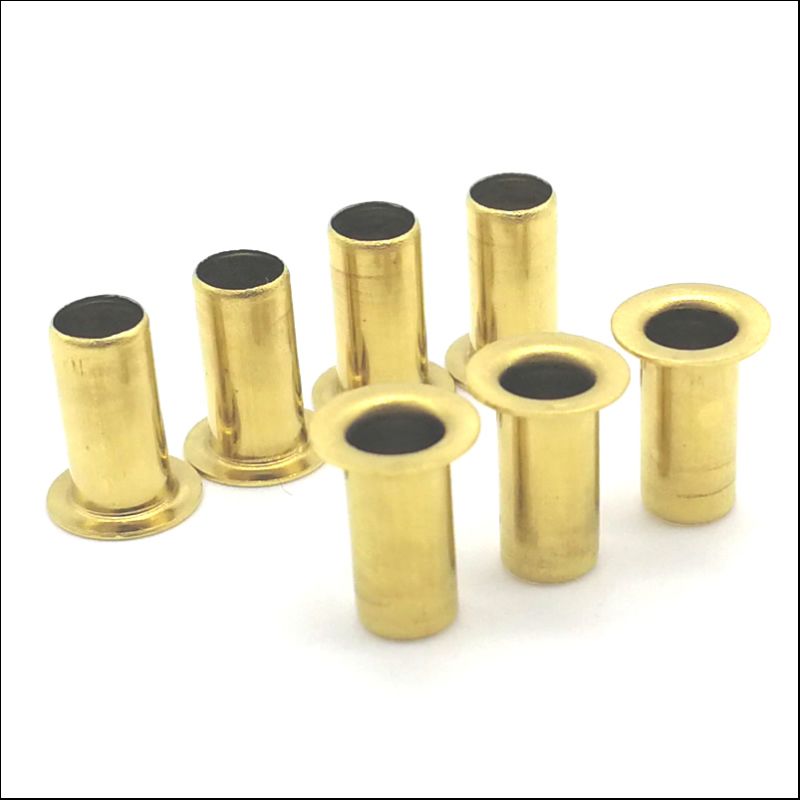
In simple terms, an eyelet is a small metal or plastic ring. It's designed to be pressed into a pre-punched hole in a material like fabric, leather, or sheet metal. Once it's in place, we use a machine to flare out the bottom end, securing it firmly. This simple action does two brilliant things. First, it reinforces the hole, preventing it from tearing or fraying under stress. Second, it creates a smooth, finished surface that looks good and is safe to touch.
You'd be surprised where you find them. From the cables on your backpack and the sails on a boat to the industrial filters in a factory, eyelets are everywhere. They are the quiet, reliable workhorses that make products more durable, functional, and safer to use. Without them, a simple lace hole would wear out after a few weeks, and a canvas tent would be much more vulnerable to the wind.
My Day Making Eyelets at Nuote Metals
Hello. My name is Li Jie. I operate a stamping press at Nuote Metals. I've been here for eight years, and there's a real rhythm to our work that I love. My job, in a way, is to turn flat sheets of metal into these perfect little circles that hold the world together.
It all starts with a giant coil of metal—usually brass, steel, or aluminum. This coil feeds into my machine, which is like a powerful, precise giant. It punches out small, flat discs from the metal strip with a loud, satisfying clunk. This is the blank, the very beginning of an eyelet.
The next part is my favorite. The blank is then forced through a series of dies, which are like specially shaped molds. In a matter of seconds, the flat disc is curled and formed into that familiar tubular shape. It's amazing to watch. We have to make sure the barrel is straight and the flange (that's the flat rim at the top) is perfectly smooth.
After they are formed, the eyelets are often tumbled in large drums to remove any sharp edges. It sounds a bit like rocks in a washing machine. Then, many of them go for plating. We can give them a shiny zinc coating, a black finish, or even a colorful powder coat, depending on what our customer needs for their product.
At Nuote Metals, we don't just make parts; we make parts that have to be reliable. My supervisor, Old Wang, always says, "A bad eyelet can ruin a good product." He's right. That's why we are all trained to keep an eye on the production line. If I see a piece that doesn't look right—maybe a slight dent or a rough edge—I pull it out. It’s that simple.
There's a sense of pride when I see a truckload of our eyelets heading out the gate. I might never see the final products they end up in, but I know they're doing an important job. Maybe they're on a fancy fashion boot, or maybe they're on a piece of farm equipment. Either way, a little piece of our careful work here is helping someone out there. And that feels pretty good.
Send Inquiry



X
We use cookies to offer you a better browsing experience, analyze site traffic and personalize content. By using this site, you agree to our use of cookies.
Privacy Policy