
Why Do Steel Eyelets Fail in Real-World Products?
Abstract: Steel Eyelets look simple, but the wrong choice (or a small sizing/finishing mistake) can trigger rust, fabric tearing, loose fit, sharp edges, and warranty claims. This guide breaks down the most common customer pain points and shows how to choose the right material, size, finish, and installation method—so your eyelets stay clean, secure, and consistent across production. You’ll also find a practical checklist, a comparison table, and a detailed FAQ to help you specify Steel Eyelets with confidence. Nuote Metals Technology Co.,Ltd. supports customized eyelet solutions for brands and manufacturers who need reliable performance at scale.
Table of Contents
- Article Outline
- Steel Eyelets Basics and Where They’re Used
- Top Customer Pain Points and What Causes Them
- Material Choices That Prevent Rust and Deformation
- Sizing Steel Eyelets Without Guesswork
- Finishes and Coatings That Actually Hold Up
- Installation Methods That Avoid Damage and Rework
- Quality Checks That Catch Problems Before Shipping
- A Practical Ordering Checklist for Production
- FAQ
Article Outline
- Define Steel Eyelets and typical applications
- Explain failure modes: rust, pull-out, sharp edges, mismatch
- Choose the right steel grade and structure for your environment
- Specify dimensions that match fabric/panel thickness and loads
- Select finishes that suit humidity, salt, sweat, and abrasion
- Pick installation methods that protect materials and increase yield
- Use simple QC and incoming inspection to reduce defects
- Finalize a supplier-ready checklist and common FAQ answers
Steel Eyelets Basics and Where They’re Used
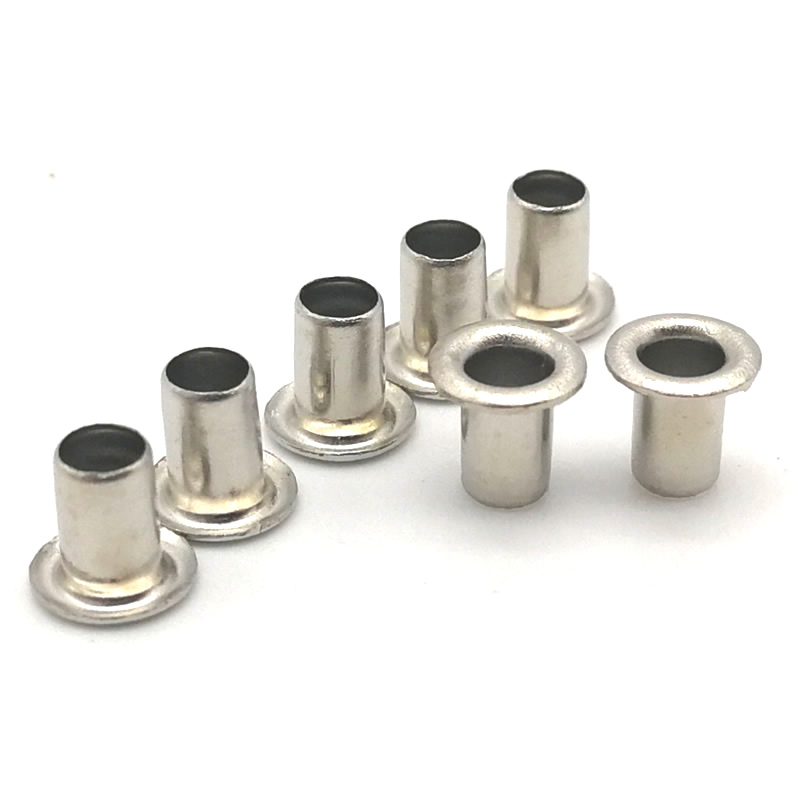
Steel Eyelets are reinforced rings—typically with a barrel and flange—that protect holes, reduce fraying, and distribute stress around a puncture point. They’re often used to guide laces, cords, hooks, wires, straps, and fasteners. You’ll see them in canvas and tarps, bags, shoes, outdoor gear, banners, industrial covers, pet accessories, stationery, and many other products where a clean, durable hole is non-negotiable.
The value is straightforward: a properly chosen eyelet improves durability, extends product life, and gives the hole a professional finish. The risk is also straightforward: when Steel Eyelets are under-specified, they turn into a tiny failure point that ruins an otherwise excellent product.
Top Customer Pain Points and What Causes Them
If you’ve ever dealt with returns, complaints, or production slowdowns, you’ve probably seen one of these issues. Here’s what customers usually experience—and what’s really happening behind the scenes.
- Rust stains around the hole: Often caused by choosing carbon steel without adequate plating, poor post-plating drying, or exposure to humidity/salt/sweat.
- Eyelets pulling out under load: Typically a mismatch between barrel length and material thickness, insufficient flange area, or incorrect setting force/die selection.
- Fabric tearing or cracking near the eyelet: The hole may be punched too large, the edge left unsealed, or the flange pressing too aggressively on fragile materials.
- Sharp edges that cut cords or hands: Burrs from stamping, inadequate tumbling/polishing, or inconsistent forming.
- Inconsistent appearance across batches: Color variance in plating, uneven coating thickness, or weak process control on forming dies.
- Slow installation and high rework rates: Wrong tooling, wrong machine choice, or a design that requires too much operator correction.
The key takeaway: most “eyelet problems” aren’t random. They’re specification problems. Once you align the material, dimensions, finish, and installation method, Steel Eyelets become boring—in the best way.
Material Choices That Prevent Rust and Deformation
Choosing the steel is the first fork in the road. The right choice depends on environment, load, and appearance requirements.
| Option | Best For | Watch Outs |
|---|---|---|
| Carbon Steel | General indoor use, cost-sensitive production | Needs reliable plating/coating to avoid rust |
| Stainless Steel (e.g., 304) | Humid environments, frequent handling, premium durability | Higher cost; still needs good forming to avoid burrs |
| Stainless Steel (e.g., 316) | Salt exposure, coastal outdoor products, marine-like conditions | Overkill for many indoor products; costliest |
| Alloy or Hardened Variants | High load, industrial pull forces, abrasion-heavy use | May require specialized tooling and careful finishing |
Practical rule: if your product is used outdoors, near salt, in sweaty contact (sports gear), or in humid storage, “basic plated carbon steel” is where rust complaints are born. In those cases, stepping up to stainless or selecting a more robust finishing system is usually cheaper than handling returns and reputation damage.
Sizing Steel Eyelets Without Guesswork
“It fits the hole” is not a real specification. Correct sizing balances inner diameter, barrel length, flange diameter, and the thickness/behavior of your base material.
- Inner diameter (ID): Must clear your cord/hook/fastener with enough margin for movement and wear.
- Barrel length: Must match your material thickness (including reinforcements, hems, coatings, or multi-layer seams).
- Flange diameter: Spreads load; larger flanges reduce tear-out in soft materials.
- Hole diameter: Needs to match the barrel, not the flange. Too tight causes cracking; too loose causes wobble.
A common production mistake is ordering a “standard” eyelet size and then forcing it into multiple materials—thin fabric, thick leather, and multi-layer webbing—using the same machine setting. That’s when you see inconsistent flare, wrinkling, or pull-out.
Quick Spec Tip:
- If the eyelet spins after setting, your hole is likely too large or your barrel is too short.
- If the material puckers badly, your flange may be too wide or your setting force is too high for that substrate.
- If the cord frays quickly, check for burrs and ensure the ID isn’t too tight under load.
Finishes and Coatings That Actually Hold Up
The finish is where “looks great in the box” becomes “still looks great after use.” With Steel Eyelets, coating quality and consistency matter as much as coating type.
- Zinc plating: Popular for cost and basic corrosion resistance; great for indoor use when done well.
- Nickel plating: Often chosen for a bright, premium look and improved corrosion resistance in mild outdoor exposure.
- Black finishes: Good aesthetics, but must be specified carefully to avoid rubbing off or revealing corrosion underneath.
- Passivation for stainless: Helps stabilize the surface; useful for products exposed to moisture and handling.
Real-life friction matters. If your eyelets touch sand, cords, metal hooks, or repeated abrasion, ask for abrasion-resistant finishes and confirm coating thickness expectations. If your end users are athletes or outdoor customers, consider sweat and salt as constant exposure—not an edge case.
Installation Methods That Avoid Damage and Rework
A perfect eyelet can still fail if it’s installed poorly. Setting is not just “press it harder.” The goal is a smooth, even flare that locks layers without cutting them.
- Hand press: Good for prototyping and small batches; requires consistent operator technique.
- Pneumatic or hydraulic press: Better consistency; ideal for medium-to-large batches with controlled pressure.
- Automatic grommet/eyelet machines: High throughput; best for stable, repeatable production lines.
The dies matter as much as the press. Correct dies shape the flare smoothly; incorrect dies create sharp edges, uneven rolls, or crushed substrates. If you’re seeing wrinkling, cracking, or inconsistent flare depth, the fix is often a die match—not a stronger machine.
Production Reality Check: If your yield improves only when your most experienced operator is on shift, your process is too sensitive. Standardize the setting method and tooling so the result is consistent—even on a “normal day.”
Quality Checks That Catch Problems Before Shipping
Quality control doesn’t have to be complicated. With Steel Eyelets, a small set of checks catches the big failures early.
- Visual inspection: Look for burrs, cracks, uneven flares, coating chips, and color variance.
- Dimensional checks: Verify ID, barrel length, flange diameter, and hole fit on a sample plan.
- Set test on your real material: Always test on production materials, including coatings, laminations, and seam thickness.
- Pull-out or tear resistance: Simple load tests reveal whether the flange/barrel combo is correct.
- Corrosion screening: For outdoor/humid products, use a basic corrosion exposure check appropriate for your use case.
Many complaints come from “looks fine” parts that weren’t tested on the actual substrate. A banner vinyl behaves differently than canvas. Leather behaves differently than webbing. Your eyelet spec should match the weakest layer in the stack.
A Practical Ordering Checklist for Production
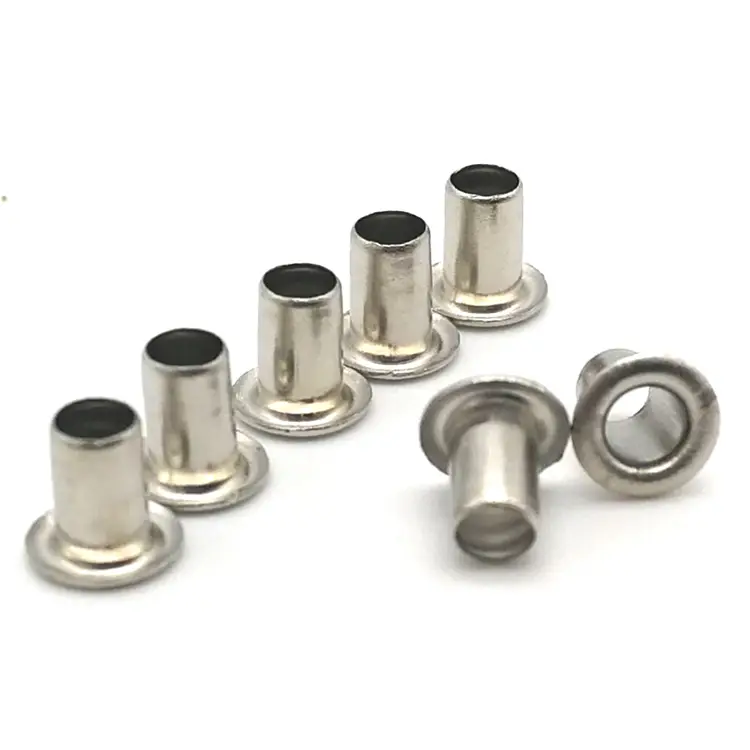
If you want fewer surprises, hand your supplier a complete, production-ready specification. Nuote Metals Technology Co.,Ltd. works with manufacturers who need stable quality and customization—so the more complete your requirements are, the faster you’ll reach a reliable solution.
- Application: What product uses the Steel Eyelets and how (indoor/outdoor, sweat/salt exposure, abrasion)?
- Base material: Fabric/leather/vinyl/laminated panel; thickness range; layers and reinforcements.
- Key dimensions: ID, barrel length, flange diameter, and recommended hole diameter.
- Finish and appearance: Color, gloss level, plating/coating preference, and durability expectations.
- Performance requirement: Pull-out resistance target, handling safety (no sharp edges), and corrosion expectations.
- Installation method: Hand press, pneumatic press, or automatic; share die type if you have it.
- Packaging: Bulk vs. sorted counts; protection to prevent scratching or coating damage in transit.
- Sampling plan: How you approve samples and what constitutes “pass” vs. “revise.”
When you specify Steel Eyelets this way, you move from guessing to controlling. That shift is usually the difference between “constant small headaches” and “quiet, predictable production.”
FAQ
Q: Which Steel Eyelets are best for outdoor products?
A: For outdoor use, prioritize corrosion resistance and coating durability. Stainless steel options are often preferred in humid or coastal environments. If you use plated carbon steel, ensure the finish is specified for your exposure and that abrasion is considered.
Q: Why do my eyelets spin after installation?
A: Spinning usually means the barrel didn’t flare enough to lock the material, or the hole is too large for the barrel. It can also happen if the barrel length is too short for your material thickness stack-up.
Q: How do I stop fabric from tearing around the eyelet?
A: Increase load distribution with a suitable flange size, confirm the hole size is correct, and consider reinforcement (patches, washers, backing layers). Also confirm your setting force and die shape aren’t cutting into the substrate.
Q: What causes sharp edges on Steel Eyelets?
A: Burrs from stamping, poor finishing, or misaligned forming dies. Ask for deburring/tumbling standards and confirm that the flare roll is smooth after setting on your actual material.
Q: Can I match eyelets to a specific color or finish?
A: Yes. Many projects require consistent appearance across batches. Provide a color/finish target, discuss acceptable tolerance, and request sample approvals before mass production.
Q: Do I need special tooling to install eyelets consistently?
A: Consistency improves dramatically with matched dies and a stable press method. If defects vary by operator or shift, standardizing tooling and pressure settings is usually the fastest improvement.
Q: What information should I send to get an accurate quotation?
A: Share application environment, base material and thickness, required dimensions, finish preference, performance targets, and installation method. The clearer your use case, the fewer revisions you’ll need.
Conclusion
Steel Eyelets are small components that do big work: they protect holes, improve durability, and keep your product looking professional. The fastest way to eliminate rust, pull-out, and installation headaches is to treat eyelets as a specification—material, dimensions, finish, and setting method—not as an afterthought.
If you’re building a product line and want Steel Eyelets that stay consistent from sample to mass production, Nuote Metals Technology Co.,Ltd. can support custom sizing, finishing, and production-ready supply. Tell us your application and performance needs, and we’ll help you narrow down the best option—then validate it on your real materials. Ready to reduce defects and returns? contact us to start your specification today.
Previous:A Closer Look at the Eyelet
Send Inquiry



X
We use cookies to offer you a better browsing experience, analyze site traffic and personalize content. By using this site, you agree to our use of cookies.
Privacy Policy