
When standard hardware fails to match material thickness, load direction, appearance requirements, or assembly methods, Special Eyelets become the practical answer. In real manufacturing, buyers are rarely looking for “just a ring.” They need a component that prevents tearing, supports repeated use, fits a unique hole geometry, and stays consistent across large production runs. This article explains how to evaluate Special Eyelets, what problems they solve, and how to choose a supplier with confidence.
As a manufacturer-focused brand, Nuote Metals Technology Co.,Ltd. is often associated with eyelet and metal component solutions for different industrial applications. If you are comparing custom options and trying to avoid trial-and-error procurement, this guide is designed to help you make faster and safer decisions.
Article Summary
Special Eyelets are custom or application-specific eyelets designed to solve problems that standard eyelets cannot handle. They are commonly used when a product requires a unique shape, controlled flange height, improved pull-out resistance, non-snag performance, decorative finish, or compatibility with special materials and tooling.
This guide covers the most common buyer pain points, material and finish selection, application matching, tolerance control, tooling considerations, quality checkpoints, and supplier evaluation criteria. It also includes a comparison table, a practical selection workflow, and an FAQ section for quick internal decision-making.
Table of Contents
- Article Summary
- Table of Contents
- Outline
- What Are Special Eyelets and Why Are They Different?
- Which Buyer Pain Points Can Special Eyelets Solve?
- How Should You Choose Materials and Finishes?
- Which Special Eyelet Type Fits Your Application?
- What Quality Checks Matter Before Mass Production?
- How Can You Shorten Development and Purchasing Cycles?
- What Should You Ask a Supplier Before Placing an Order?
- FAQ
- Conclusion and Next Step
Outline
- Define Special Eyelets in a practical manufacturing context
- Map common product failures and sourcing frustrations to eyelet design choices
- Compare materials, finishes, and application environments
- Review eyelet types and typical use cases
- Build a pre-production quality checklist
- Create a faster RFQ and sampling workflow
- Answer common questions from engineering and procurement teams
What Are Special Eyelets and Why Are They Different?
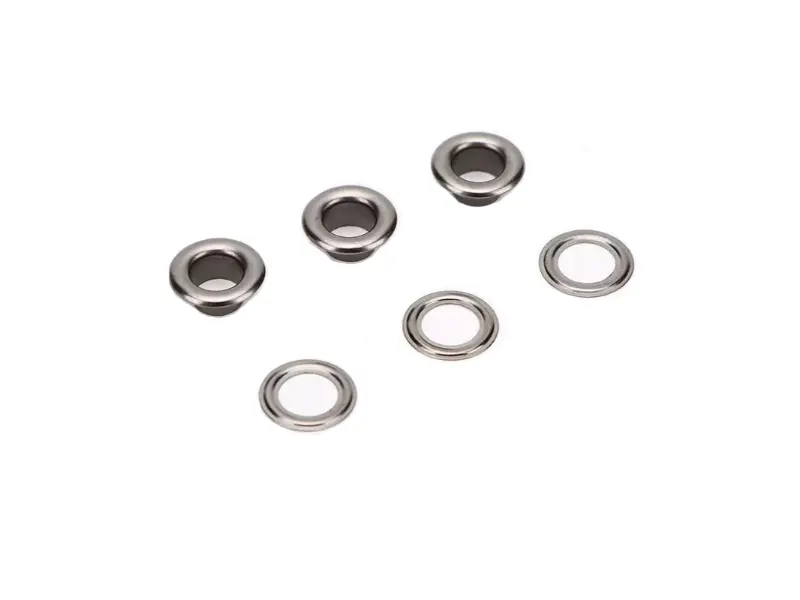
Special Eyelets are not a single product category with one fixed shape. They are a family of engineered eyelet solutions designed around a specific use condition. In other words, the “special” part usually comes from the problem being solved: unusual material thickness, a two-sided cosmetic requirement, anti-snag installation, dual-hole routing, reinforced clamping, or compatibility with a dedicated assembly die.
Standard eyelets work well for general applications, but modern products often require more precision. A bag component may need a smooth backside finish. A panel opening may require flush installation. A technical textile may need stronger retention without cutting the substrate. A decorative product may need exact color matching and a premium edge profile. In all these cases, Special Eyelets help bridge the gap between functionality and manufacturability.
The biggest mistake buyers make is choosing an eyelet by appearance alone. A component can look correct in a sample photo and still fail in assembly speed, pull strength, coating durability, or long-term field use.
Which Buyer Pain Points Can Special Eyelets Solve?
Most inquiries for Special Eyelets start with a pain point, not a part number. Below are common issues that lead teams to request custom eyelet structures.
- Material tearing during setting: The flange shape or barrel length may be wrong for the substrate.
- Loose fit or spinning: The eyelet may need a different profile, step design, or controlled expansion behavior.
- Poor appearance on the back side: Double-head or finishing-cap solutions may be required.
- Snagging or abrasion: Flush or low-profile designs can improve sliding and cable protection.
- Corrosion complaints: Material and plating must match humidity, salt exposure, or chemical contact.
- Assembly inconsistency: Tolerance control and die matching are often more important than unit price.
- Slow new product development: A supplier that supports sampling and design feedback can save weeks.
If your team is seeing repeated quality escapes, a redesign of the Special Eyelets specification can often reduce downstream rework, warranty claims, and labor loss. A small metal component can have a surprisingly large effect on total product reliability.
How Should You Choose Materials and Finishes?
Material selection for Special Eyelets should begin with the application environment and the function of the eyelet, not just cost. Buyers commonly compare brass, steel, stainless steel, aluminum, and copper-based options. The best choice depends on corrosion resistance, strength, ductility, finish quality, and how the eyelet will be formed during installation.
| Material | Typical Strengths | Common Concerns | Best-Fit Applications |
|---|---|---|---|
| Brass | Good formability, attractive finish options, stable appearance | Higher material cost than basic steel in some projects | Leather goods, decorative parts, fashion accessories, premium hardware |
| Carbon Steel | High strength, cost-effective, suitable for volume production | Needs proper plating/coating to resist corrosion | Industrial hardware, utility products, general fastening points |
| Stainless Steel | Strong corrosion resistance, durable in harsh environments | Harder forming may affect tooling and lead time | Marine, outdoor, medical-adjacent equipment, humid environments |
| Aluminum | Lightweight, good for weight-sensitive products | Lower strength than steel in some load cases | Light assemblies, soft material applications, selected panel uses |
| Copper / Specialty Alloys | Conductivity or unique performance in niche designs | Application-specific cost and process limitations | Electrical or customized technical applications |
Finish selection matters just as much. Even excellent Special Eyelets can underperform if the coating cracks during setting or fails under friction. When discussing finishes, ask about adhesion performance after forming, not just color availability. For visible products, request appearance standards under consistent lighting. For industrial parts, ask for salt-spray expectations or environmental compatibility if relevant to your market.
Which Special Eyelet Type Fits Your Application?
Different Special Eyelets are designed for different mechanical and visual outcomes. Choosing the right geometry early helps avoid repeated sampling rounds.
| Type | Primary Function | Buyer Benefit | Typical Use Cases |
|---|---|---|---|
| Step Eyelets | Different diameters or levels along the barrel | Improves fit across mixed thickness materials | Panels, layered assemblies, technical textiles |
| Double Head Eyelets | Finished appearance on both sides | Better aesthetics and user-facing quality | Bags, leather goods, reversible products |
| Flush / Low-Profile Eyelets | Reduced protrusion after installation | Less snagging, smoother contact surfaces | Cable routing, interiors, protective covers |
| Twin Eyelets | Two aligned eyelet paths in one arrangement | Saves space and improves alignment consistency | Special lacing systems, technical straps, routing points |
| Decorative Cap Combinations | Back-side or top-side finishing enhancement | Upgrades appearance without redesigning the whole assembly | Fashion, luggage, branded consumer products |
If your project team is unsure which version is best, send the supplier your material stack-up, hole diameter, pull direction, and target appearance photos. A reliable supplier can recommend the right Special Eyelets configuration based on function instead of guessing from a general inquiry.
What Quality Checks Matter Before Mass Production?
Many quality problems with Special Eyelets show up only after assembly starts. That is why pre-production validation is critical. Instead of checking only dimension and color, build a simple functional quality plan.
- Dimensional tolerance: Inner diameter, outer diameter, barrel length, flange thickness
- Setting performance: Whether the eyelet forms correctly with your tooling and material stack
- Pull-out and retention: Evaluate real load direction, not only static vertical force
- Appearance after setting: Inspect both sides for cracks, scratches, burrs, and uneven roll
- Coating durability: Check finish damage after crimping, rubbing, or repeated use
- Batch consistency: Confirm process stability across multiple cartons or lots
- Packaging protection: Prevent scratching, mixing, and contamination in transit
If the supplier also provides or verifies matching dies, your Special Eyelets program usually becomes more stable. Eyelets and tooling should be treated as one system, not two separate purchases.
How Can You Shorten Development and Purchasing Cycles?
Procurement delays often come from incomplete RFQ information. The fastest way to source Special Eyelets is to provide a clear functional brief from the beginning. This reduces re-quotation rounds and helps engineering and purchasing move together.
- Define the application: What product is the eyelet used in, and what failure are you trying to prevent?
- Share key dimensions: Hole size, material thickness, and target finished appearance.
- Specify environment: Indoor, outdoor, humid, marine, chemical exposure, or cosmetic-only use.
- Confirm installation method: Manual, semi-automatic, or automated setting line.
- Request prototype samples: Test performance in real materials, not only a sample board.
- Approve the standard: Lock drawing, finish, tolerance, and acceptance criteria before mass production.
- Plan replenishment: Set lead-time expectations and batch traceability for repeat orders.
A structured process like this can reduce hidden costs dramatically. Even if unit pricing for better Special Eyelets is slightly higher, the total project cost may drop because you avoid assembly stoppage, scrap, and customer complaints.
What Should You Ask a Supplier Before Placing an Order?
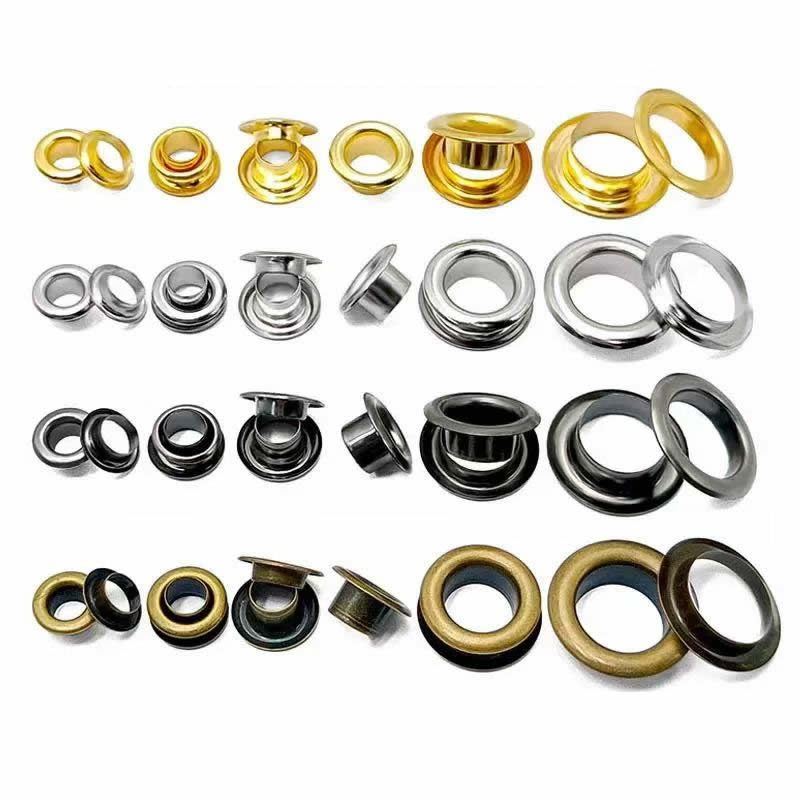
Choosing a supplier for Special Eyelets is not only about who offers the lowest quote. You want a partner who understands forming behavior, production consistency, and practical application constraints. These questions help you evaluate capability quickly.
- Can you recommend a structure based on our material stack and use condition?
- Can you produce samples before tooling finalization?
- What materials and finishes do you commonly support for this type of eyelet?
- How do you control burrs, plating consistency, and dimensional stability?
- Can you support custom tooling or verify compatibility with our existing dies?
- What inspection reports or quality records can you provide per batch?
- What are the MOQ, sample lead time, and mass production lead time?
- How do you package parts to prevent cosmetic damage during shipping?
Suppliers who can answer these questions clearly are usually better prepared for long-term cooperation. When sourcing Special Eyelets, transparency and repeatability matter more than a one-time low price.
FAQ
Q1: Are Special Eyelets only for decorative products?
No. Special Eyelets are widely used in industrial, technical, and functional applications. Many custom designs are created to improve retention, reduce snagging, support cable routing, or fit unusual material combinations.
Q2: Can I replace a standard eyelet with Special Eyelets without changing my process?
Sometimes, but not always. The installation result depends on the eyelet geometry, material thickness, and tooling. For best results, test samples with your actual production setup before approving mass orders.
Q3: What information should I send in my first inquiry?
Include product application, hole size, material thickness, target finish, expected quantity, and any failure photos or drawings. The more context you provide, the more accurate the recommendation for Special Eyelets will be.
Q4: Do Special Eyelets always cost much more than standard eyelets?
Not necessarily. Some customizations are simple and cost-efficient. Tooling and complexity can increase cost, but the total cost of ownership may still be lower if the eyelet reduces defects and rework.
Q5: How can I improve consistency across repeat orders?
Lock the drawing, material grade, finish, tolerance, and inspection method after sample approval. Ask for the same tooling setup and define batch traceability requirements for every shipment.
Q6: Are Special Eyelets suitable for outdoor use?
Yes, if you choose the correct material and finish. Corrosion resistance requirements should be discussed early, especially for humid, coastal, or weather-exposed environments.
Conclusion and Next Step
The best Special Eyelets are not defined by appearance alone. They are defined by fit, forming behavior, durability, finish quality, and repeatable performance in your real application. When buyers evaluate the full system—part design, material, finish, tooling, and quality control—they make better decisions and avoid expensive production surprises.
If your team is developing a new product or trying to solve recurring assembly issues, now is a good time to review whether standard eyelets are still the right choice. A properly specified Special Eyelets solution can improve product reliability, appearance, and production efficiency at the same time.
Need a practical recommendation for your project?
Share your drawing, material thickness, application photos, or sample requirements with Nuote Metals Technology Co.,Ltd., and let the team help you evaluate a suitable Special Eyelets solution for your production goals.
Ready to move faster from idea to sample to mass production? Contact us today to discuss your custom eyelet requirements and request a quotation.