
Why Do We Use Eyelet Steel?
In our shop, when we talk about Eyelet Steel, we're not talking about any old steel. We're talking about a specific type of steel that's made to be punched, drawn, and formed into eyelets. It's a low-carbon, cold-rolled steel that's soft enough to stretch without cracking, but strong enough to hold its shape once it's formed. This Eyelet Steel comes in thin coils, perfectly smooth, and ready to feed into our presses. Using the right steel means the difference between an eyelet that works for years and one that splits the first time you pull a cord through it.
Stretching the Steel: How We Make Them
I'm Leo, and I've been running the deep draw presses for eyelets for over a decade. My whole job is about understanding how Eyelet Steel moves.
The process starts with a coil of that special steel. It feeds into a progressive die. The first station punches out a perfect little disc from the strip. That disc is the blank. It gets carried to the next station by the metal strip itself (the skeleton that holds everything together until the end).
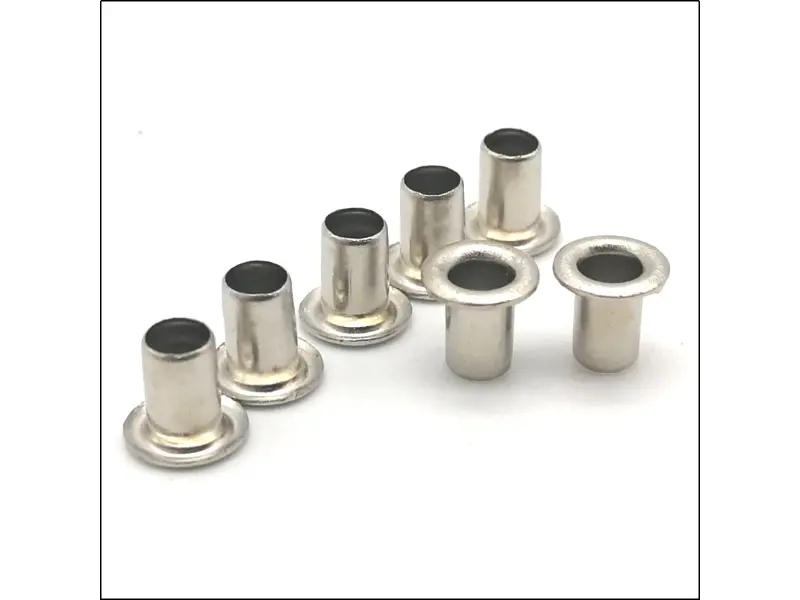
Then comes the draw. The blank is pushed by a punch into a die, stretching it up into a cup shape. This is where the steel's quality shows. Good Eyelet Steel flows smoothly, like thick syrup. It stretches evenly, so the walls of the cup are the same thickness all around. Cheap or wrong steel will stretch unevenly, making one side thin and weak. Sometimes we do this in two draws to get the right depth without tearing the metal.
After the cup is formed, another station trims the top to get a clean, even edge. Then, a final station punches the center hole. All of this happens in one press, in less than a second. Out comes a finished steel eyelet, still attached to the skeleton strip, which gets wound up into a coil of scrap.
My main job is watching the first piece and listening. When Eyelet Steel is drawing correctly, the press has a solid, rhythmic thump-thump-thump. If I hear a sharper crack or a tearing sound, I know the steel might be too hard, the die is misaligned, or a punch is getting dull. I stop and check immediately. I'll look at the eyelets under a magnifier. The edge of the flange should be smooth, and the hole should be clean, not ragged.
We use this Eyelet Steel for the eyelets that need to be tough. The ones on heavy-duty tarps, work boots, or military gear. They're not fancy, but they have to be reliable. That reliability starts with the steel coil we load into the machine. If the steel isn't right, nothing I do at the press can fix it. Making good eyelets is a partnership between the right material and the right touch.
Send Inquiry



X
We use cookies to offer you a better browsing experience, analyze site traffic and personalize content. By using this site, you agree to our use of cookies.
Privacy Policy