
What Should You Ask Before Ordering Stamping Parts?
Article Summary
Buying Stamping Parts shouldn’t feel like gambling with your budget, lead time, and quality. If you’ve ever received parts with burrs, warped geometry, mystery materials, or “good enough” tolerances that suddenly break your assembly line, you already know the real pain: unclear requirements, poor process matching, and weak quality control.
In this guide, we’ll walk through the most common customer problems—dimensional drift, inconsistent surface finish, tooling surprises, late deliveries—and how to prevent them with practical questions, specification tips, and a supplier evaluation checklist. We’ll also explain how modern stamping methods, inspection routines, and finishing options work together so your parts arrive ready to assemble, not ready to argue about.
Table of Contents
- Outline at a Glance
- Why Stamping Orders Go Wrong
- How to Define Requirements Without Overpaying
- Choosing the Right Stamping Process
- Material Choices That Affect Performance and Cost
- Tooling, Samples, and Approval: How to Avoid Surprises
- Quality Control That Actually Protects You
- Finishing, Deburring, and Secondary Operations
- Packaging and Logistics for Damage-Free Delivery
- RFQ Checklist You Can Copy
- FAQ
Outline at a Glance
- Identify the real failure points behind “bad stamping parts” and how to prevent them
- Lock requirements the smart way: function-first tolerances, clear critical dimensions, realistic finishes
- Match the process (progressive, transfer, deep draw, blanking, forming) to your part and volume
- Choose materials and thickness with strength, corrosion resistance, and forming limits in mind
- Control tooling risk with sample plans, revision rules, and ownership terms
- Verify capability using measurable inspection methods and traceable documentation
- Plan deburring, plating, coating, and secondary ops so parts arrive “assembly-ready”
- Use a practical RFQ checklist to speed quoting and reduce rework
Why Stamping Orders Go Wrong
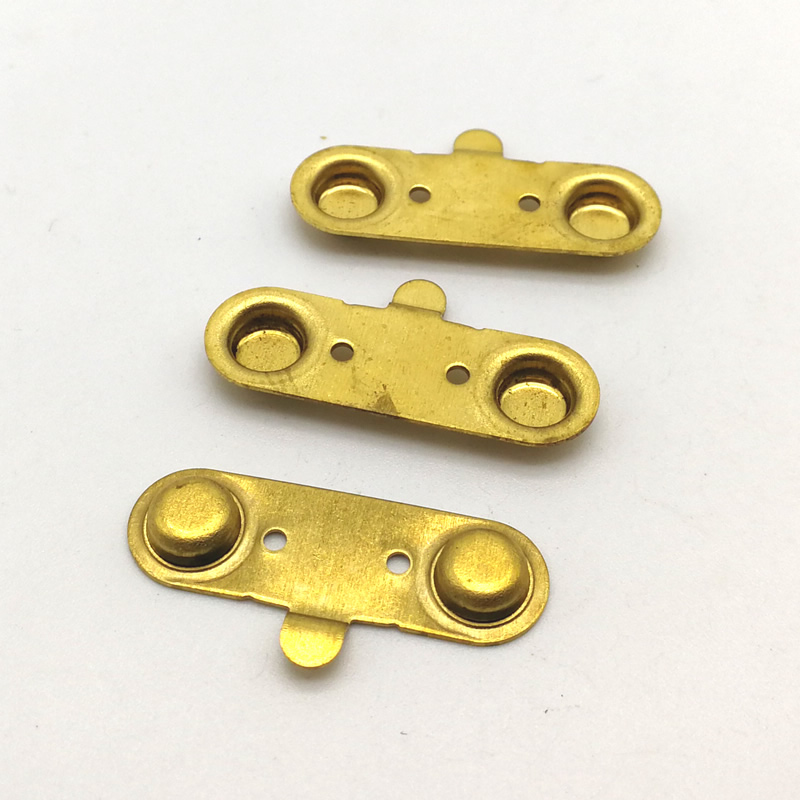
Most quality disputes around Stamping Parts don’t start at the press—they start at the quote and the drawing. When requirements are incomplete (or overly vague), suppliers make assumptions. When those assumptions don’t match your assembly reality, you pay for it through scrap, sorting, line stoppages, and reorders.
Common customer pain points (and what they usually mean):
- “Dimensions drift between batches.” Process capability wasn’t validated, tool wear wasn’t managed, or critical dimensions were never identified.
- “Burrs cut operators or damage mating parts.” Edge condition wasn’t specified, deburring wasn’t defined, or punch/die clearance isn’t optimized.
- “Parts warp or don’t sit flat.” Residual stress, asymmetric forming, coil set, or poor handling/packaging is bending the part after stamping.
- “Surface finish is inconsistent.” Material lot variation, lubrication residues, or finishing steps aren’t controlled.
- “Tooling cost exploded.” Engineering changes, unclear revision rules, or unrealistic tolerances forced tool redesign.
- “Lead times are unpredictable.” Tooling schedule was optimistic, sampling plan was missing, or secondary operations were not planned.
The fix is simple in theory: define what matters, verify capability early, and build a transparent approval pathway. The next sections show how to do that without turning your project into a paperwork marathon.
How to Define Requirements Without Overpaying
You don’t want to pay for aerospace-level tolerances on a bracket that simply holds a wire. At the same time, a single uncontrolled hole position can ruin your assembly. The goal is to be precise where it matters and flexible where it doesn’t.
Start with function-first requirements:
- Critical dimensions (CTQs): Identify the few measurements that affect fit, safety, sealing, electrical contact, or alignment.
- Datum strategy: Define how the part is located and measured (datums) so supplier and customer don’t “measure different parts.”
- Hole and slot requirements: If a fastener must pass smoothly, specify clearance and edge condition (e.g., “no sharp burr”).
- Flatness and form: If the part must sit flush, call out flatness/parallelism in a measurable way.
- Surface requirements: If plating or coating must bond, specify cleanliness and allowable marks.
Practical tips that reduce cost and rework:
- Don’t tighten tolerances “just in case.” Tight tolerances may force slower presses, extra inspection, or additional operations.
- Use realistic notes for edges: “deburred” is vague; “no burrs that catch on a cotton swab” is clearer.
- Clarify appearance rules: if cosmetics matter, define acceptable scratches and directionality.
- Provide the mating context: a simple assembly sketch often prevents costly assumptions.
Choosing the Right Stamping Process
Not all stamping is the same. A supplier can “make it work” with the wrong process, but you’ll feel it in unit cost, dimensional stability, and repeatability—especially when you scale.
| Part Requirement | Recommended Method | Why It Fits | Watch Outs |
|---|---|---|---|
| High volume + multiple features in one part | Progressive die stamping | Fast cycle time, consistent steps, efficient material use | Upfront tooling investment; design changes can be costly |
| Larger parts + several forming operations | Transfer stamping | Better control for complex forms; less strip constraint | Handling steps require careful setup to avoid marks |
| Deep cup shapes or shells | Deep drawing | Strong, seamless shapes with good material utilization | Material selection and lubrication are critical |
| Simple cut profiles from sheet | Blanking / piercing | Cost-effective for straightforward geometry | Burr control depends on clearance and tool condition |
| Precision bends and consistent angles | Forming / bending | Repeatable bends when tooling and material are matched | Springback varies by material and thickness |
If you’re unsure which process is best, ask your supplier to explain the process plan step-by-step and identify where variation can enter. A capable partner will describe controls (tooling features, inspection points, wear monitoring) in plain language.
Material Choices That Affect Performance and Cost
Material isn’t just a line item—it dictates how your Stamping Parts form, how they resist corrosion, how they perform under load, and how stable they are across production lots. Two suppliers quoting “stainless” may not be quoting the same grade, finish, or forming capability.
Material questions that prevent misunderstandings:
- Grade and standard: Is it 304, 316, 430, spring steel, aluminum alloy, brass, copper, or coated steel? Which standard applies?
- Thickness tolerance: Coil thickness variation can affect bend angles, hole size, and flatness.
- Temper and hardness: A harder temper may improve strength but reduce formability.
- Surface condition: Bright, brushed, pickled, or coated surfaces behave differently in forming and finishing.
- Traceability: Can the supplier provide material certs and lot tracking when needed?
If your part is safety-critical or used in harsh environments, consider documenting corrosion expectations (salt exposure, humidity, cleaning chemicals). That helps choose the right grade and finishing method from the start.
Tooling, Samples, and Approval: How to Avoid Surprises
Tooling is where costs and schedules often derail. The goal is to make tooling decisions transparent and measurable, so your first production run isn’t an experiment.
Smart questions to ask about tooling:
- What’s included in the tooling quote? Design, build, tryout, fixture(s), gauges, and maintenance plan should be clear.
- What happens if we revise the drawing? Define how revisions are handled and what triggers tooling changes.
- Who owns the tooling? Ownership and storage responsibilities should be stated upfront.
- What does the sampling plan look like? Agree on sample quantity, measurement method, and acceptance criteria.
- How will you prove repeatability? A credible supplier explains capability checks, not just “we’ve done this before.”
At Nuote Metals Technology Co.,Ltd., a common approach is to align early on the sampling and approval checkpoints so customers can confirm fit and function before scale-up.
Quality Control That Actually Protects You
“100% inspected” sounds comforting, but it can hide weak process control. The best protection is a system that prevents defects, detects drift early, and documents the results clearly.
Quality controls worth insisting on:
- First article inspection (FAI): A full dimensional report on initial samples, tied to the drawing revision.
- In-process checks: Defined checkpoints during production (not only at the end).
- Measurement method clarity: How are dimensions measured—CMM, calipers, pin gauges, optical measurement?
- Tool wear monitoring: A plan for sharpening, replacement, and wear limits.
- Lot control and records: Batch ID, material lot, and inspection records that match what shipped.
If you’ve been burned before, ask for proof:
- Sample inspection reports (with sensitive data removed)
- Examples of control plans and corrective action responses
- Photographs of deburring/finishing and packaging methods
Finishing, Deburring, and Secondary Operations
Many projects fail because stamping is treated as the final step. In reality, your part may need deburring, cleaning, plating, passivation, powder coating, anodizing, tapping, riveting, welding, or assembly. If these steps are not defined and controlled, your “stamped part” becomes a half-finished component.
Define edge and surface outcomes, not vague process words:
- Deburring: Specify acceptable edge feel and functional requirements (safe handling, no interference, no flaking).
- Cleaning: If your part will be coated, bonded, or used electrically, residues matter.
- Plating/coating: Specify thickness range if relevant, plus adhesion or corrosion expectations.
- Threads and hardware: If tapping or inserts are required, define thread class and torque expectations.
- Welding or assembly: Call out weld locations and acceptable cosmetic outcomes if visible.
For high-volume programs, it’s often cheaper to consolidate these steps with one responsible partner than to split them across multiple vendors and chase accountability later.
Packaging and Logistics for Damage-Free Delivery
Even perfect Stamping Parts can arrive bent, scratched, or contaminated if packaging is an afterthought. This is especially common with thin-gauge components, coated surfaces, and parts that nest together tightly.
Packaging details that reduce damage and sorting time:
- Separation: Use layer pads, partitions, or interleaving for cosmetic surfaces.
- Orientation control: Avoid heavy stacking that bends flanges or tabs.
- Contamination control: Bagging or protective film when surface cleanliness matters.
- Labeling: Part number, revision, quantity, lot number, and date code where applicable.
- Handling instructions: “Do not stack,” “keep dry,” or “this side up” for fragile parts.
If your production line depends on fast kitting, ask for packaging that matches your workflow (tray packing, counted bundles, barcode labels). A small packaging upgrade can save hours of downstream labor.
RFQ Checklist You Can Copy
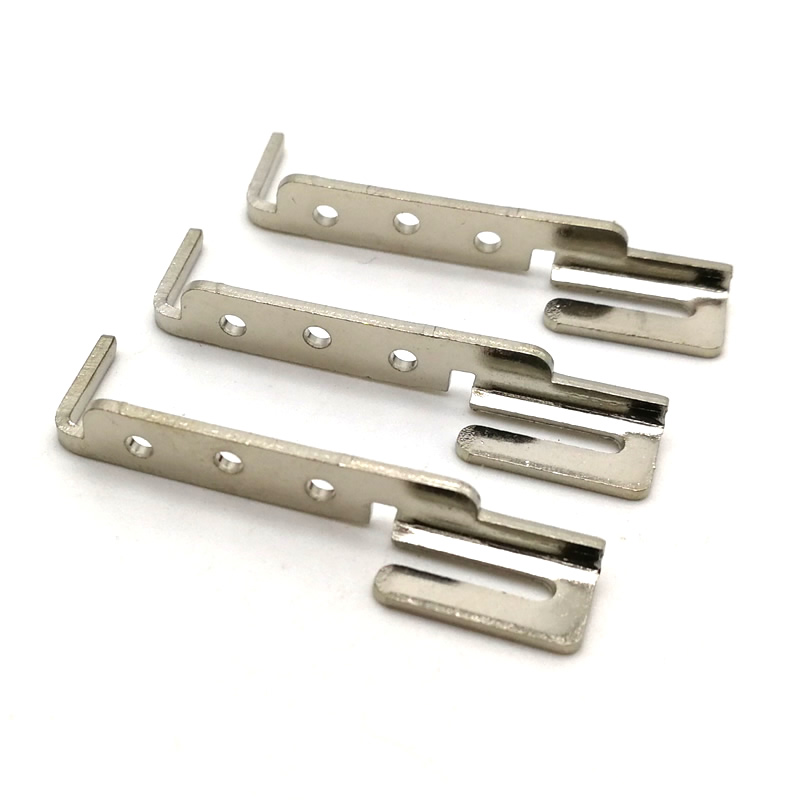
Use the checklist below to speed quoting and reduce back-and-forth. The clearer your request, the more accurate your pricing and lead time.
- Drawing + revision: PDF and, if possible, a 2D/3D file
- Annual volume + ramp plan: Monthly forecast if available
- Material: Grade, thickness, temper, surface condition, standard
- Critical dimensions: Mark CTQs, datums, and special inspection points
- Edge condition: Burr limits, deburring requirements, safety needs
- Finish: Plating/coating type, thickness expectations (if applicable), appearance rules
- Secondary operations: Tapping, inserts, welding, assembly, cleaning
- Quality documents: FAI, material certs, inspection reports, lot traceability level
- Packaging: Cosmetic protection, count method, labeling requirements
- Target lead time: First samples, approval timeline, mass production start date
FAQ
Q1: How do I know if stamping is better than machining for my part?
If your part is made from sheet metal, has a consistent thickness, and your quantity is medium to high, stamping often delivers lower unit cost and faster throughput. Machining can be better for low volumes, thick parts, or complex 3D geometry that isn’t suitable for forming. A good supplier can explain the cost breakpoints and whether tooling investment makes sense for your forecast.
Q2: What tolerance levels are realistic for stamping parts?
It depends on material, thickness, feature type, and process. Holes and critical locating features can be controlled tightly when the tool is designed for it, but chasing extreme tolerances everywhere can raise cost dramatically. A practical approach is to identify CTQs and let non-critical dimensions have wider tolerance ranges.
Q3: Why do burrs happen, and can they be eliminated?
Burrs typically come from punch/die clearance, tool wear, and material behavior. You can reduce burrs with proper die design and maintenance, but many applications still require a defined deburring step. The key is to specify the edge outcome you need, not just “no burrs,” and ensure it’s checked consistently.
Q4: Can I change the design after tooling is built?
Yes, but changes may require tool modification or rebuild depending on the feature. That’s why revision rules and approval checkpoints matter. If you expect changes, discuss flexible tooling options early and lock critical dimensions first.
Q5: What should I request for first samples?
Ask for a first article inspection report that lists measured dimensions tied to the drawing revision, plus material documentation if needed. If your assembly is sensitive, request a small pilot run to verify repeatability before full production.
If you’re sourcing Stamping Parts and want fewer surprises—stable quality, clear documentation, and parts that arrive ready to assemble—work with a partner that treats your drawings, materials, and approval steps as a system, not a guess.
For reliable custom Stamping Parts with a transparent process from sampling to mass production, Nuote Metals Technology Co.,Ltd. is ready to support your project. Tell us your application, quantity, and critical requirements, and we’ll help you choose the right process and finishing plan—contact us to get a fast, practical quotation.
Previous:What Makes a Good Turning Component?
Send Inquiry



X
We use cookies to offer you a better browsing experience, analyze site traffic and personalize content. By using this site, you agree to our use of cookies.
Privacy Policy