
What is an Eyelet?
We often admire the sleek design of a favorite backpack or the crisp sound of a well-made boot. But rarely do we notice the small, shiny details that make these designs both beautiful and functional. One such detail is the eyelet.
So, what is an eyelet ? Think of it as a small, sturdy ring, often made of metal, that's set into a pre-punched hole. Its job is simple but vital: to reinforce and protect. By lining the hole, it prevents the material—whether it's delicate nylon, premium leather, or even a thin polymer—from fraying, tearing, or wearing out. It turns a vulnerable puncture into a durable, long-lasting feature.
But in today's world, function isn't enough. A poorly made eyelet with a rough edge can snag threads and ruin the look of an expensive jacket. A finish that fades or corrodes can make a new piece of gear look old and neglected. That's why the best eyelets are engineered to be as aesthetically pleasing as they are strong, becoming a seamless part of the product's design.
Crafting Precision at Nuote Metals
My name is Chen Lin, and I'm a quality inspector at Nuote Metals . While some of our colleagues work on heavy-duty rivets, my team and I focus on the smaller, finer things—the eyelets that end up on the products you use every day. Our part of the factory feels a bit different; it's where raw metal gets transformed into something you could almost call jewelry for gear.
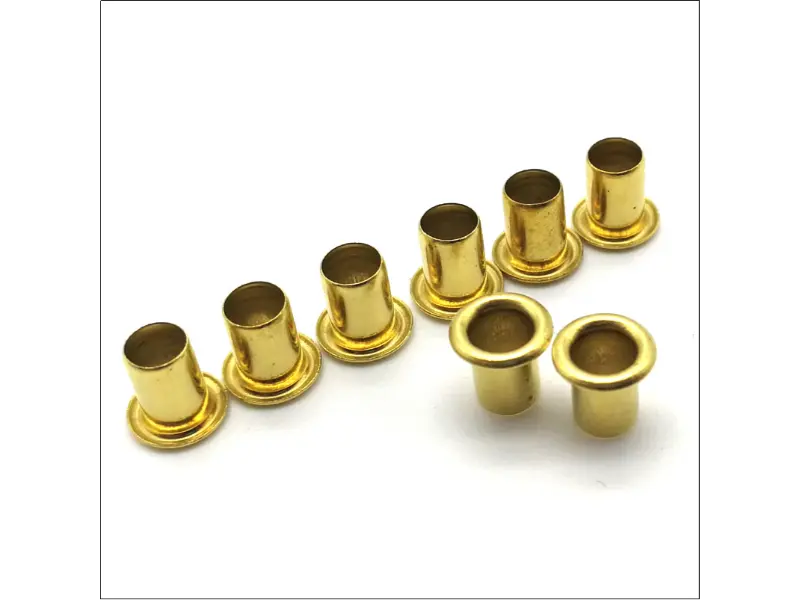
My day starts with the sound of the high-speed stamping presses. They punch and form these perfect little circles from coils of brass or stainless steel with a rapid, rhythmic sound. But for me, the real work begins after they're formed. I see the batches before they get their final finish. My job is to catch the tiny flaws that most people would never notice.
I look at them under a bright light with a magnifying lens. Is the barrel perfectly round? Is the flange—that's the flat part on top—absolutely smooth to the touch? Even a microscopic burr can, over time, cut through a shoelace or damage a high-tech fabric. We can't have that.
The final touch is all about beauty. We don't just use standard silver or gold plating. We match colors. We develop matte finishes that don't reflect too much light, and shiny ones that pop. I've personally inspected eyelets destined for limited-edition hiking boots, where the bronze finish had to exactly match the metal hardware on the buckles. For a top-tier electronics brand, we make tiny, conductive eyelets that are part of a device's internal wiring, where precision is measured in microns.
There's a shared understanding here at Nuote that we're not just making metal parts; we're contributing to a product's final look and feel. When I approve a batch, I'm thinking about the person who will eventually use that tent, wear those shoes, or rely on that backpack on a long trip. They'll probably never look closely at the eyelets, but they'll appreciate the seamless functionality and the clean, polished detail.
That's our real product—not just a piece of metal, but a promise of quality and a touch of unseen beauty. And that feels pretty good.
Send Inquiry



X
We use cookies to offer you a better browsing experience, analyze site traffic and personalize content. By using this site, you agree to our use of cookies.
Privacy Policy