
What Makes a Good Stamping Steel Part?
When you need a metal part that's strong, cheap, and exactly the same every time, you stamp it out of steel. Stamping Steel Parts are everywhere—the bracket holding your car's taillight, the frame inside a washing machine, the latch on a heavy toolbox. The process is simple in theory: you hit a flat sheet of steel with a heavy tool, and it cuts and bends it into shape. But making a good Stamping Steel Part, one that's strong, precise, and reliable, is where the skill comes in.
My Day at the Press
I'm Ben, and I've been stamping steel for almost twenty years. My workplace is loud, it shakes, and it smells like oil and hot metal. But I like it. It's where raw material turns into something useful.
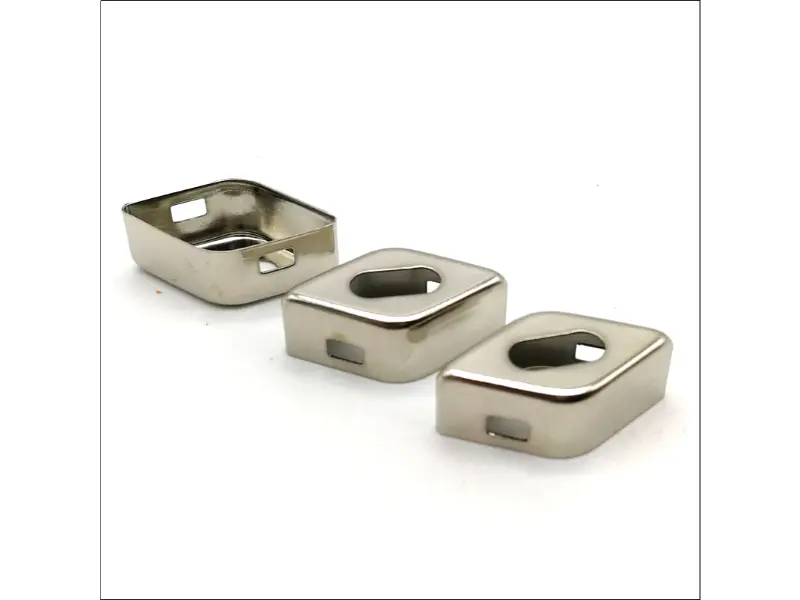
Everything starts with the coil. A big roll of steel sheet, maybe a millimeter thick, gets loaded onto the decoiler. It feeds into my press. The heart of the job is the die—a massive block of hardened tool steel that's been machined to the exact shape of the part we're making. My first and most important task is setting up that die. I bolt it into the press, and then I spend an hour or more getting it perfectly aligned. I use feeler gauges, shims, and a dial indicator. If the die is a hair off, the parts will have burrs, the bends will be wrong, or worse—you'll smash the die itself. A mistake here costs thousands of dollars and days of downtime.
Once it's set, I run the first few parts slowly. I take those first Stamping Steel Parts over to my bench. I check the dimensions with calipers and micrometers. I check the bend angles with a gauge. I run my finger along the edges—they should be clean, not sharp with burrs. This first-off inspection tells me if my setup is right. Only when everything is perfect do I let the press run at full speed.
Then the rhythm starts. THUMP-hiss... THUMP-hiss... That's the sound of the press cycling and the parts dropping into the bin. But I'm not just watching. I'm listening. That THUMP should be solid and consistent. If it starts to sound slappy or crunchy, something's wrong—maybe a punch is chipping, or the material has a flaw. I'm also watching the scrap skeleton, the lace of leftover metal that snakes out of the press. It should flow smoothly. If it curls or jumps, I need to stop and adjust.
We make all kinds of Stamping Steel Parts. Simple flat blanks. Complex brackets with multiple bends and pierced holes. The steel can be mild steel, high-strength steel, or galvanized. Each type stamps a little differently. But the goal is always the same: consistency. When the bin is full, every single part in it needs to be a perfect copy of the first one I checked.
That's the real product of my job: not just a part, but a thousand identical parts. Parts that someone downstream will weld, bolt, or assemble without even thinking about it, because they know every one will fit. Making Stamping Steel Parts well is about turning noise and force into quiet, reliable precision. It's not glamorous, but it's essential. And getting it right feels good.
Previous:Sending Brass Caps to Indonesia
Send Inquiry



X
We use cookies to offer you a better browsing experience, analyze site traffic and personalize content. By using this site, you agree to our use of cookies.
Privacy Policy