
What's So Useful About Tubular Rivets?
If you need to fasten something permanently, but you can only work from one side, you reach for a tubular rivet. These are the rivets with a hole in the end. They’re not solid all the way through. That hole is the whole point. It lets the metal flare out easily when you set it, creating a strong, wide clinch on the backside of your workpiece. Compared to a solid rivet, they take much less force to install. You’ll find tubular rivets everywhere—in jeans, on lawnmowers, inside electronics, and on aircraft interiors. They’re the fast, reliable choice for assembly lines.
Making the Hollow: A Look from the Machine
I’m Leo, and I’ve been running the machines that make tubular rivets for twelve years. My job is all about that hole.
We start with wire, usually steel, aluminum, or brass. It gets cut to a specific length. That piece, called a blank, goes into the heading machine. First, the machine forms the head—round, flat, or countersunk. That’s the easy part.
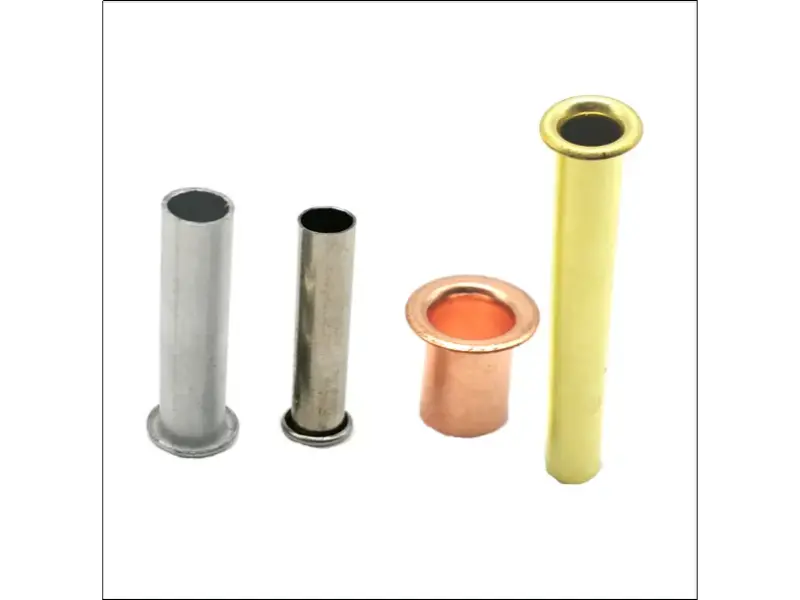
The real work is making the hole. Right after the head is formed, another station on the machine punches a hole into the opposite end of the shank. It doesn’t go all the way through; it’s a blind hole. The depth is critical. For a semi tubular rivet, the hole might go about halfway down the shank. For a full tubular rivet, it goes almost all the way through, leaving a very thin wall. Getting this depth consistent, rivet after rivet, is what my job is about.
The punch that makes the hole is a small, hardened steel rod. It has to be kept sharp. A dull punch makes a rough, torn hole instead of a clean one. If the hole is rough, the rivet won’t flare smoothly when it’s set; it might crack or set unevenly. I listen to the machine. A clean punch makes a crisp pop sound. A dull one makes more of a tearing noise.
After they’re punched, the tubular rivets often get a finish. We might tumble them to smooth the edges, or plate them with zinc or another coating.
My quality check is simple but important. I’ll take a handful of rivets from a batch and look at the hollow end. I want to see a clean, smooth hole. I might also try setting a few in a test plate. They should flare out evenly, like opening a flower, not split or bend to one side.
We make millions of these tubular rivets. They might seem simple, but that little hole has to be perfect. If it’s not, the rivet is useless. When I see a finished product that uses them, I know our attention to that detail is what makes the final joint strong and reliable. It’s a small thing, but it matters.
Send Inquiry



X
We use cookies to offer you a better browsing experience, analyze site traffic and personalize content. By using this site, you agree to our use of cookies.
Privacy Policy