
Are Aluminum Hollow Rivets the Smartest Way to Cut Weight Without Sacrificing Joint Integrity?
Weight reduction is no longer a niche concern—it is a competitive necessity. Electric vehicles, portable electronics, and aerospace manufacturers are scrutinizing every gram. At Nuote Metals, we have watched engineers specify steel or solid aluminum rivets out of habit, while an aluminum hollow rivet would do the job faster, lighter, and at a lower total cost.
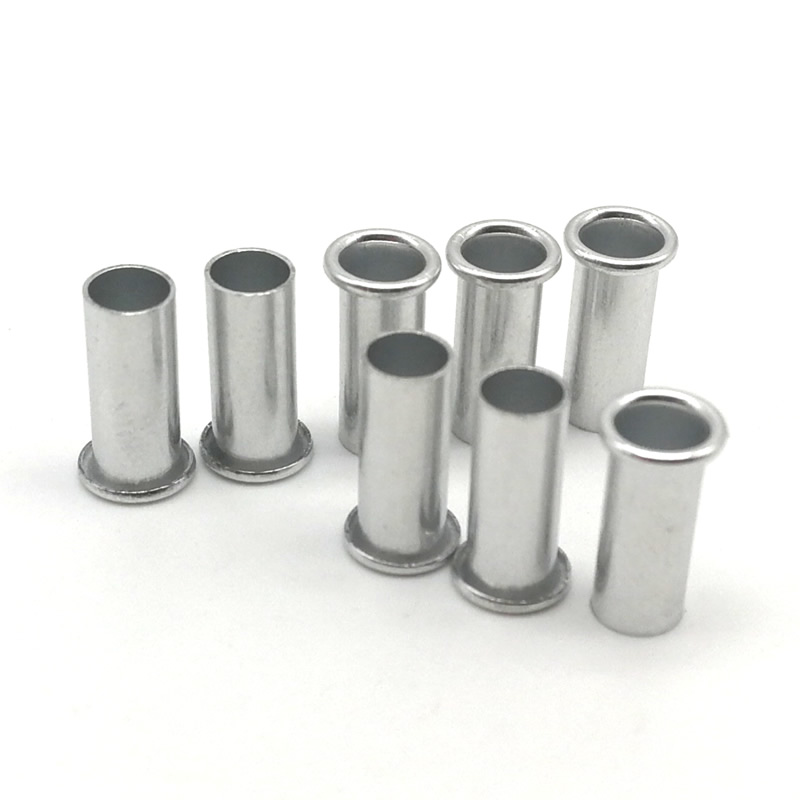
What Exactly Is an Aluminum Hollow Rivet?
it is a fastener with a solid head and a shank that is either partially or fully hollow. The hollow section reduces the volume of metal that must be deformed during installation, lowering setting force by 30–60% compared to a solid rivet of the same diameter.
Two Main Configurations
| Type | Hollow Depth | Best For |
|---|---|---|
| Semi-Tubular (Half Hollow) | 20–40% of shank length | General assembly, structural joints, pivot points |
| Full Tubular | 100% of shank length | Soft materials, lightweight decorative, low-load applications |
During installation, the hollow portion rolls outward, forming a second head that clamps materials together. Aluminum's natural properties—about one-third the weight of steel and excellent corrosion resistance—make this design particularly compelling for weight-sensitive applications.
Alloy Selection – Matching the Grade to the Job
At Nuote Metals, we produce aluminum hollow rivets in three common alloys:
| Alloy | Shear Strength (MPa) | Corrosion Resistance | Typical Use |
|---|---|---|---|
| 1100 | 55–70 | Low (indoor only) | Decorative, crafts, low-load |
| 5056 | 100–130 | Very good (marine-grade) | Electronics, outdoor, general purpose |
| 6061 | 110–140 | Good | Automotive, industrial, structural |
For 80% of customers, 5056 aluminum hollow rivets are the right answer.
Three Industries Where they Are Winning
Automotive – Lightweighting Without Compromise
They are widely used in the assembly of body panels and interior parts, effectively reducing overall vehicle weight. An automotive tier-one supplier needed to attach fabric trim to plastic door panels—800,000 assemblies per year. Steel semi-tubular rivets were over-specified; the trim carried almost no load. Switching to 6061 aluminum hollow rivets cut the press cycle time by 35%, eliminated rust stains on light-colored fabric, and reduced cost per rivet by 40%.
Aerospace – Where Every Gram Counts
The aerospace rivet market was valued at USD 1.5 billion in 2024 and is expected to reach USD 2.8 billion by 2031, growing at a 7.6% CAGR. Aluminum hollow rivets are used for connecting thin-walled structures such as aircraft skins. Their lightweight characteristics improve fuel efficiency and flight performance, while also dispersing stress and adapting to temperature changes. Replacing steel rivets with aluminum can cut fastener weight by up to 65%.
Electronics – Precision and Conductivity
In electronic device assembly, micro hollow aluminum rivets can be used for fixing circuit boards or connecting heat sinks. The conductivity of aluminum helps achieve electromagnetic shielding while meeting requirements for lightweight and space limitations. A medical device manufacturer switched from solid aluminum rivets to 5056 aluminum hollow rivets with a 3 mm shank. The setting force dropped by nearly half, cracks disappeared, and each device shed 1.2 grams of fastener weight. Over a 500,000-unit run, that is over half a ton of weight saved.
Technical Specifications – Our Factory Standards
Dimensional Range
| Parameter | Range | Tolerance |
|---|---|---|
| Shank diameter | 1.5 mm – 10 mm | ±0.05 mm |
| Barrel length | 2 mm – 30 mm (customizable) | ±0.15 mm |
| Head diameter | 1.6 – 2.8 × shank diameter | ±0.10 mm |
| Hollow depth (semi-tubular) | 20–40% of shank length | ±5% |
Head Styles Available
Flat head – low profile, flush surface
Round head – classic domed profile
Countersunk head – sits flush or below surface
Standard Finishes
- Natural (as-formed)
- Zinc plating – basic corrosion protection
- Nickel plating – bright finish, wear resistance
- Passivation – enhanced corrosion resistance
- Anodized – additional surface protection
All finishes are RoHS compliant.
Two Applications from Our Factory Records
Portable Electronics Enclosure
A laptop manufacturer needed a non-magnetic fastener for joining thin aluminum housing panels. The material was only 0.8 mm thick, and solid rivets were causing deformation around the hole. Nuote Metals supplied 5056 aluminum hollow rivets with a 3 mm shank and clear anodized finish. The tubular design set with very low force, preventing distortion of the thin housing. Weight added per device: less than 2 grams. Over one million units, the customer saved over 1.5 metric tons of fastener weight compared to steel alternatives.
Leather Goods and Backpacks
A backpack brand wanted a lightweight, non-rusting rivet for strap attachments. Steel tubular rivets corroded after outdoor use; solid aluminum rivets required too much force and crushed the nylon webbing. Nuote Metals recommended 5056 aluminum hollow rivets with a clear anodized finish. The rivets set cleanly through 3 mm of webbing plus 2 mm of leather, added almost no weight, and showed zero corrosion after two years of field use.
FAQ
Q1: What is the difference between semi-tubular and full tubular aluminum hollow rivets?
A: The difference is the depth of the hollow section. A semi-tubular (half hollow) rivet has a hollow cavity extending 20–40% of the shank length from the tail end. A full tubular rivet is hollow throughout the entire shank. Semi-tubular rivets offer higher shear strength (80–95% of solid) and are suitable for structural joints and pivot points. Full tubular rivets provide lower strength (50–70% of solid) but require even less setting force, making them ideal for soft materials and lightweight decorative applications. At Nuote Metals, we manufacture both configurations.
Q2: Which aluminum alloy should I choose for my application?
A: The choice depends on your environment and load requirements. 1100 is commercially pure aluminum—soft, easy to set, but lowest strength. Use it for decorative or craft applications. 5056 is a magnesium-containing alloy with superior corrosion resistance, especially in marine and saltwater environments. Use it for outdoor, electronics, and general purpose. 6061 combines strength with good corrosion resistance. Use it for automotive, industrial, and structural applications. For 80% of customers, 5056 is the right answer.
Q3: What is the MOQ and lead time for aluminum hollow rivets from Nuote Metals?
A: Our standard MOQ for aluminum hollow rivets is 20,000 pieces. For first orders or sample runs, we can accommodate lower quantities. We provide free samples for sizes we have in stock—you pay only the courier charge. Lead time: 3–5 days for stock sizes; 15–25 days for non-standard sizes (including custom tooling). Every product is 100% inspected by our QC department before shipment. We have supplied products and services to more than 70 countries.
Quality and Transparency
Nuote Metals operates with full traceability and documented quality systems.
Certifications
| Certification | Scope | Status |
|---|---|---|
| ISO 9001:2015 | Quality management – fastener manufacturing | Active |
| RoHS | Compliance with EU environmental standards | Batch-certified |
Our Customer Policies
- Free samples – stocked sizes available; you pay only courier
- Custom tooling – ready in 10 days for non-standard diameters or head styles
- MOQ – 20,000 pieces for standard sizes; lower for first orders
- Lead time – stock: 3–5 days; custom (including tooling): 15–25 days
- 100% inspection – every product checked by QC before shipment
- 8-hour response – technical inquiries answered within one business day
Send Inquiry



X
We use cookies to offer you a better browsing experience, analyze site traffic and personalize content. By using this site, you agree to our use of cookies.
Privacy Policy