
How Do You Specify Full Hollow Rivets for Soft Materials and Lightweight Assemblies?
What Defines a Full Hollow Rivet?
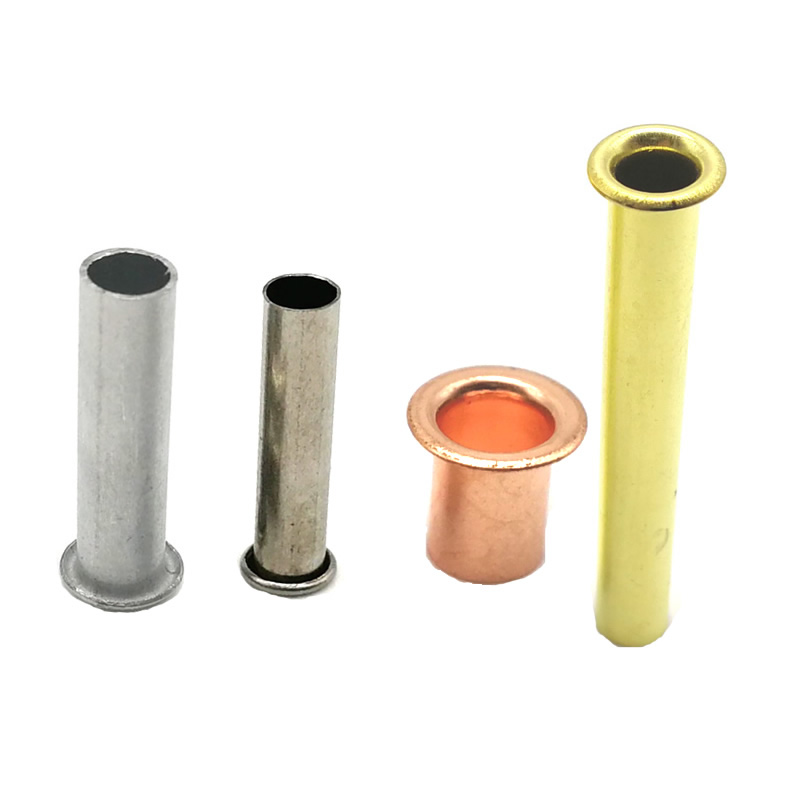
This fastener has a pre-formed head and a shank that is hollow from the head all the way to the tail. There is no solid section. The wall thickness is typically 0.20–0.40 mm, depending on shank diameter.
During installation, the thin wall rolls outward under light pressure, forming a second head that clamps the material. Because there is no solid body to resist deformation, the setting force required is only 15–20% of what a solid rivet of the same diameter would need.
This is not a semi-tubular rivet with a deeper hole. It is a different product category. The absence of a solid section changes everything about how the fastener performs, where it can be used, and how it must be installed.
Where This Fastener Is the Right Choice
Full hollow designs are not general-purpose fasteners. They solve specific problems.
Soft and Compressible Materials
Leather, fabric, foam, rubber, and thin plastic compress under load. A semi-tubular or solid rivet applies enough force to deform these materials permanently—crushing the substrate around the hole. A full hollow design rolls with minimal pressure, leaving the material structure intact.
Thin Material Stacks
When the total stack thickness is under 3 mm, this fastener provides sufficient clamping with almost no risk of distortion. Above 4 mm, the thin wall becomes difficult to control during rolling, and semi-tubular rivets are the better choice.
Weight-Critical Assemblies
A full hollow rivet removes 25–30% more material than a semi-tubular rivet of the same size. In aerospace, electronics, and lightweight consumer products, that difference accumulates across thousands of fasteners.
Decorative and Visible Joints
The rolled head produced by this design is smooth and uniform. On leather goods, bags, and visible fabric assemblies, this finish is cleaner than the deformed tail of a semi-tubular rivet.
When the Design Is Not Suitable
| Condition | Why It Fails | Use Instead |
|---|---|---|
| Structural load above 50 N | Wall collapses under shear | Semi-tubular or solid |
| Material stack over 4 mm | Roll becomes oversized or splits | Semi-tubular |
| High-vibration joints | Thin wall fatigues | Semi-tubular or solid |
| Pivot points requiring controlled looseness | Wall cannot hold a loose set | Semi-tubular |
The Two Head Styles – Flat and Rolled Round
At Nuote Metals, this fastener is manufactured with two head styles. There are no countersunk, truss, or pan variants for this product category—the thin wall does not support those geometries.
| Head Style | Description | Best For |
|---|---|---|
| Flat Head | Low profile, flat top surface | Leather goods, bags, flush-mounted fabric, where a smooth surface is required |
| Rolled Round Head | Domed, rounded profile | Visible decorative applications, belts, upholstery, where a traditional rivet look is desired |
Our recommendation: Flat head for anything that will contact skin, clothing, or a flat surface. Rolled round head for visible decorative fastening where the rivet is meant to be seen.
Material Selection – Five Options, Three Real Choices
This fastener is manufactured in five materials. In practice, three account for the majority of orders.
| Material | Corrosion Resistance | Conductivity | Best For | Notes |
|---|---|---|---|---|
| Brass (C2680) | Good (indoor, fresh water) | 28% IACS | Leather goods, bags, decorative, electrical terminals | Most common choice; lacquered finish prevents tarnishing |
| Copper (C1100) | Good (patina forms) | 100% IACS | Electrical grounding, roofing, heritage restoration | Softest; requires careful setting |
| Aluminum (5056) | Very good (marine grade) | 61% IACS | Lightweight assemblies, outdoor fabric, electronics | Lowest weight; anodized finishes available |
| Stainless Steel (304/316) | Excellent | <3% IACS | Marine fabric, chemical exposure, food equipment | Highest strength; requires higher setting force than other hollow designs |
| Steel (low carbon) | Poor (needs plating) | Low | Cost-sensitive indoor fabric, hidden assemblies | Zinc plating required for any moisture exposure |
Our rule: Brass for leather and decorative work. Copper for electrical. Aluminum for weight. Stainless for corrosion. Steel only when cost is the dominant factor and the environment is dry.
Technical Specifications
| Parameter | Range | Tolerance |
|---|---|---|
| Shank diameter | 1.6 mm – 8 mm | ±0.05 mm |
| Wall thickness | 0.20 mm – 0.40 mm | ±0.03 mm |
| Barrel length | 2.5 mm – 12 mm | ±0.10 mm |
| Flange diameter | 3 mm – 16 mm | ±0.10 mm |
| Concentricity | — | ≤0.1 mm TIR |
For shank diameters below 2 mm, wall thickness becomes difficult to control. In those sizes, we recommend semi-tubular rivets instead.
Installation – Preventing Wall Collapse
The thin wall is this fastener’s advantage and its vulnerability. Three parameters determine success.
Hole Size
Hole diameter should be 0.05–0.10 mm larger than the shank. A tight hole causes the wall to buckle inward. An oversized hole produces an uneven, wavy roll.
Setting Force
Use 15–20% of the force required for a solid rivet of the same diameter. For a 4 mm brass full hollow rivet in a 2 mm stack, 400–600 N is typical. Exceeding this collapses the wall.
Anvil Profile
A shallow-concave anvil is essential. A flat anvil crushes the roll. The anvil cavity should match the desired rolled head diameter.
Common Defects
| Defect | Cause | Correction |
|---|---|---|
| Collapsed wall | Excessive force | Reduce force by 30% |
| Wavy, uneven roll | Hole too large | Reduce hole diameter to +0.05–0.10 mm |
| Split barrel | Burr on hole edge | Deburr both sides |
| Incomplete roll | Insufficient force | Increase force gradually on next sample |
Two Applications from Our Records
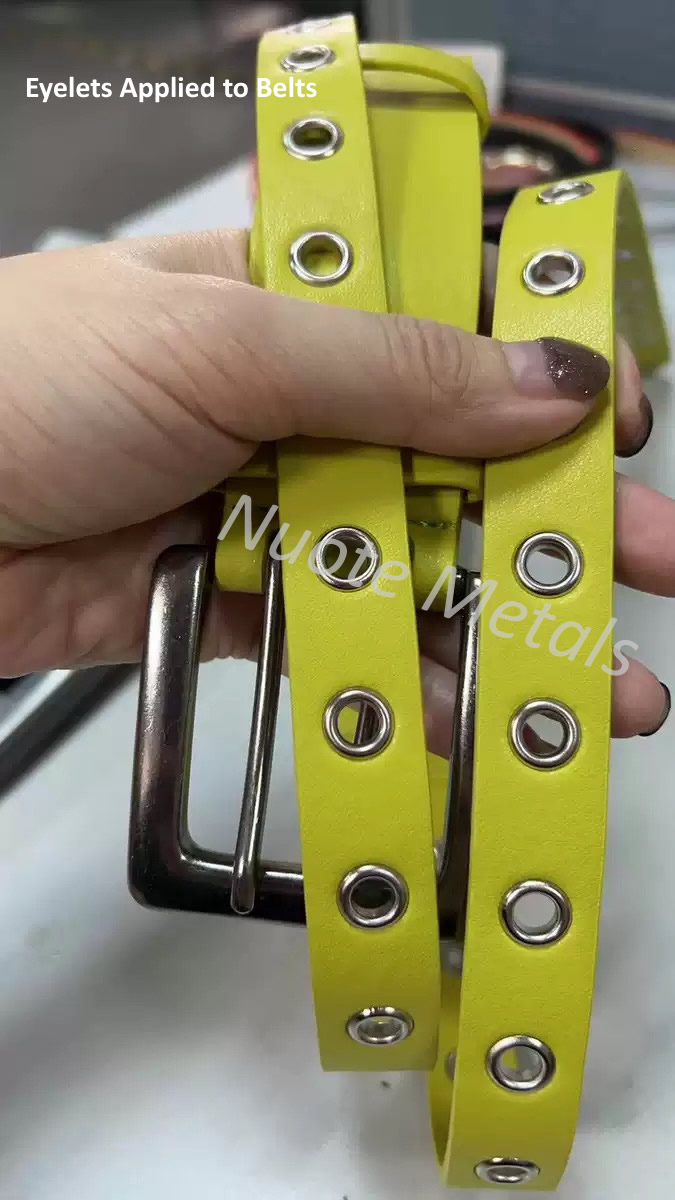
Leather Belts and Straps (Brass, Flat Head)
Problem: A leather goods manufacturer used steel semi-tubular rivets on 3 mm vegetable-tanned belts. The setting force cracked the leather around the hole in approximately 2% of units. Steel also rusted in humid storage.
Our solution: We supplied C2680 brass full hollow rivets with flat heads, 3 mm shank, 5 mm barrel length, lacquered finish. The thin wall rolled with less than 500 N of force—gentle enough to avoid cracking. The lacquer prevented tarnishing.
Result: Rejection rate dropped below 0.1%. The brass color matched the belt buckles. The manufacturer has used these fasteners for over two years with zero field complaints.
Outdoor Canvas Awnings (Aluminum, Rolled Round Head)
Problem: An awning manufacturer needed a lightweight rivet for attaching canvas to aluminum frames. The assembly was installed on coastal buildings, and steel rivets rusted within one season. Brass was too heavy and tarnished.
Our solution: We supplied 5056 aluminum full hollow rivets with rolled round heads, 3 mm shank, 6 mm barrel length, clear anodized. The 5056 alloy provided marine-grade corrosion resistance. The rolled round head gave a finished appearance on the visible side.
Result: Two years of coastal exposure with no corrosion and no pull-outs. The customer reduced fastener weight by 65% compared to the previous steel rivets.
FAQ
Q1: What is the difference between a full hollow rivet and a semi-tubular rivet?
A: A full hollow rivet is hollow through the entire shank. There is no solid section. A semi-tubular rivet has a hollow cavity extending only 45–55% of the shank length from the tail; the rest is solid. This means the full hollow design sets with the lowest force (15–20% of solid) but provides only 60–70% of solid rivet shear strength. Semi-tubular rivets set with 25–30% of solid force but retain 80–90% of solid strength. Use the full hollow design for soft materials, thin stacks under 3 mm, and weight-critical assemblies. Use semi-tubular for anything load-bearing or thicker than 4 mm.
Q2: Why do full hollow rivets only come in flat and rolled round head styles?
A: Because the wall is thin. Head styles like countersunk, truss, and pan require either a thicker wall for the head geometry or a solid section to support the head profile during setting. A full hollow rivet lacks both. The flat head provides a simple, low-profile surface. The rolled round head is formed during installation by the anvil profile, not by the pre-formed head. Attempting to manufacture a countersunk full hollow rivet would result in a head that distorts under setting force. For other head styles, semi-tubular rivets are the correct product.
Q3: Can full hollow rivets be used outdoors or in marine environments?
Yes, with the right material. 5056 aluminum full hollow rivets offer excellent saltwater resistance and are the lightest option. 316 stainless steel full hollow rivets provide the highest corrosion resistance but require more setting force. Brass performs well in fresh water and mild outdoor conditions but can dezincify in continuous salt spray. Copper forms a protective patina and is suitable for roofing and heritage applications. Steel must be plated and is not recommended for prolonged moisture exposure. For coastal or marine use, specify 5056 aluminum or 316 stainless steel.
Q4: What is the MOQ and lead time for full hollow rivets from Nuote Metals?
A: Our standard MOQ is 20,000 pieces for stock sizes. For first orders or sample runs, we accommodate lower quantities—as low as 5,000 pieces. We provide free samples for stocked sizes; you pay only the courier charge. Lead time: 3–5 days for stock sizes; 15–20 days for non-standard sizes including custom tooling. Every batch includes a material certificate, dimensional inspection report, and RoHS declaration. We have supplied full hollow rivets to customers in over 40 countries. ISO 9001:2015 certified.
Send Inquiry



X
We use cookies to offer you a better browsing experience, analyze site traffic and personalize content. By using this site, you agree to our use of cookies.
Privacy Policy