
Products
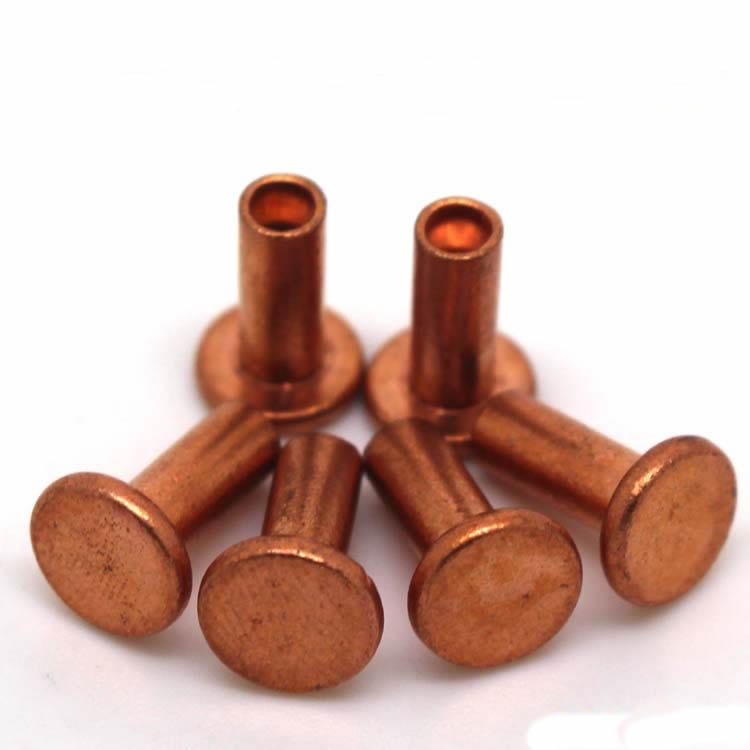
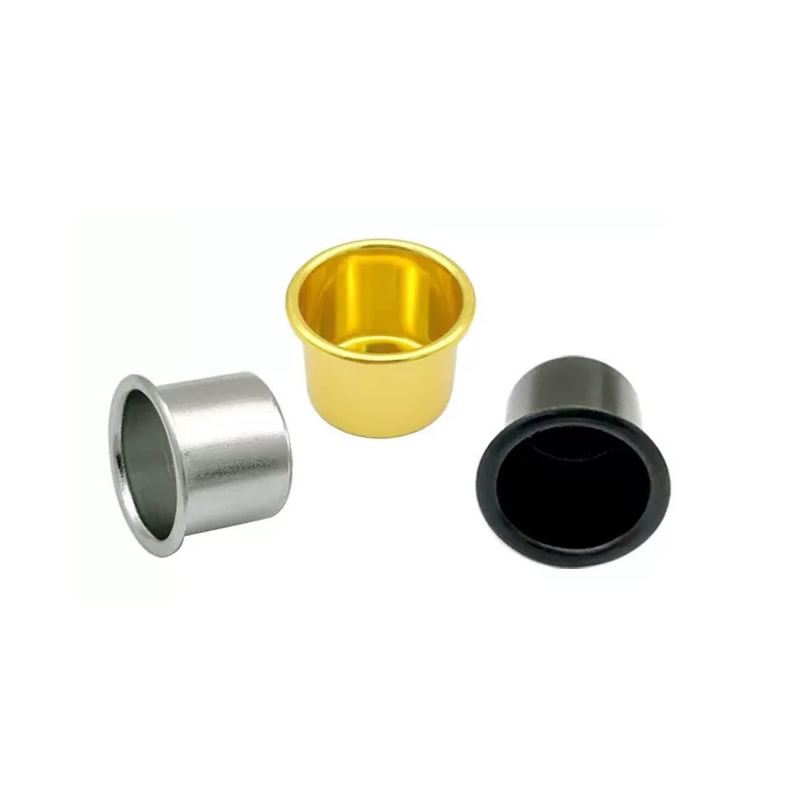
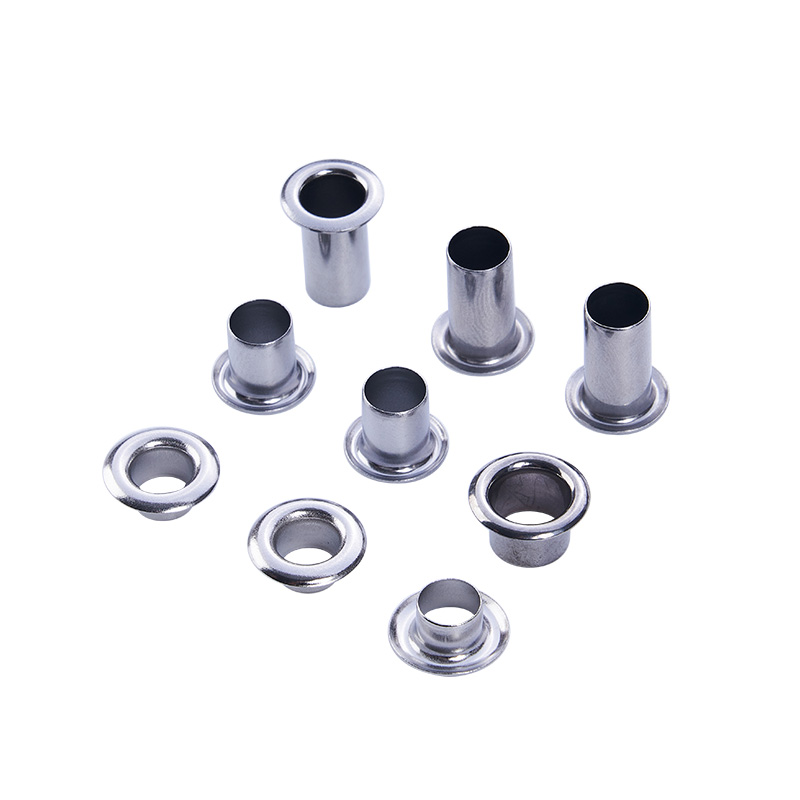
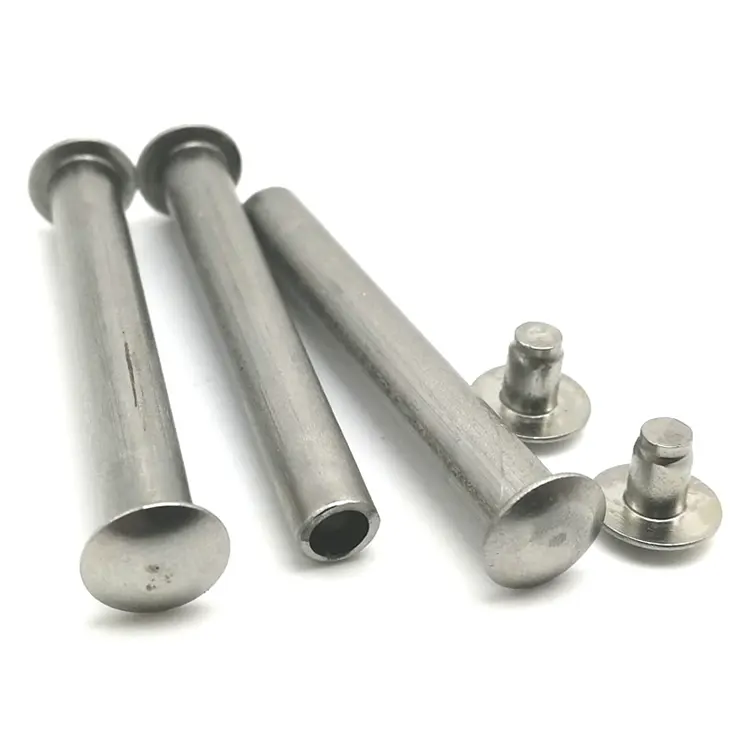
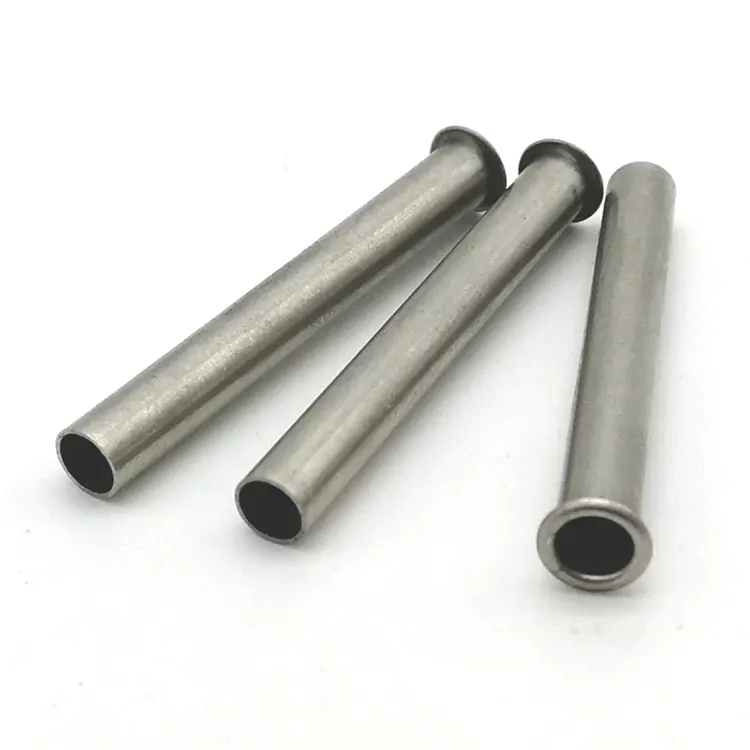
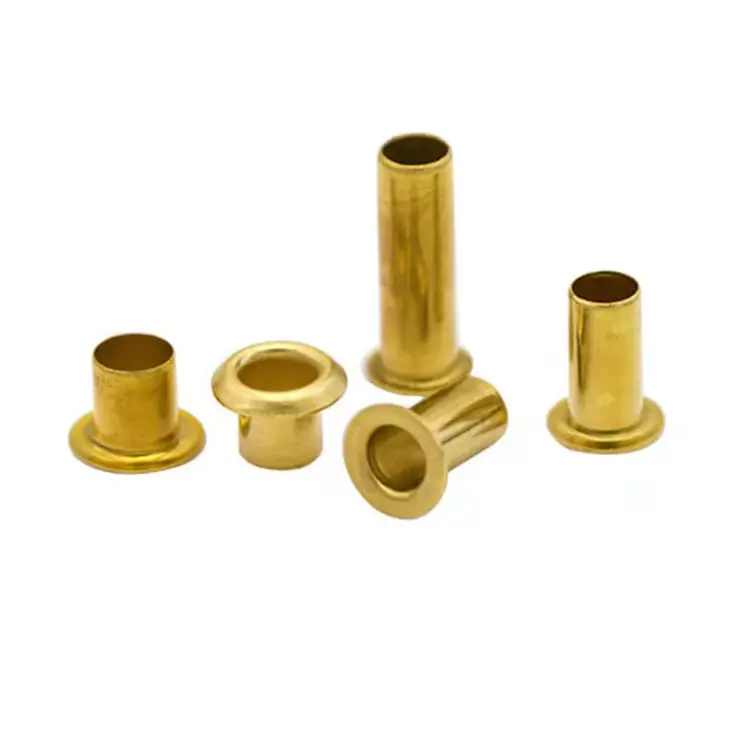
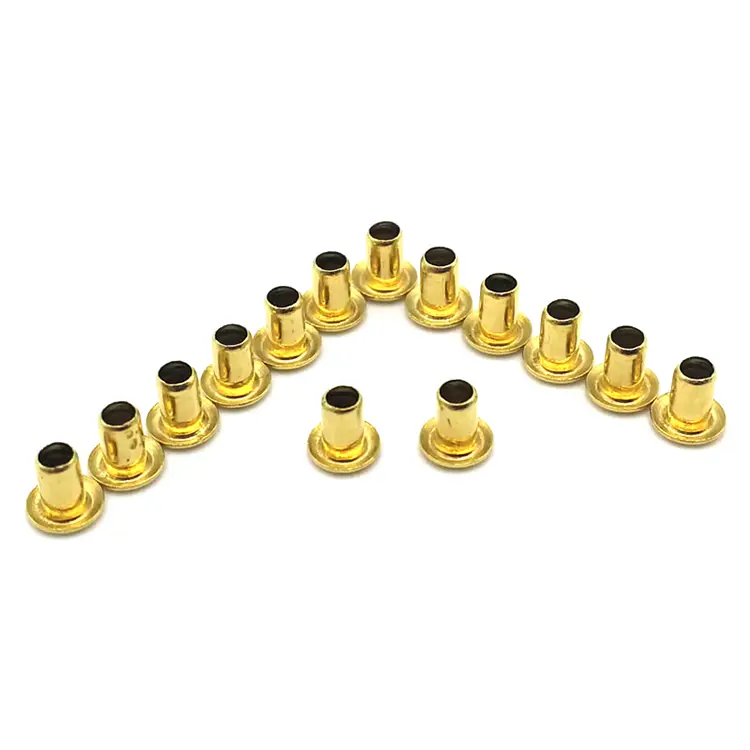
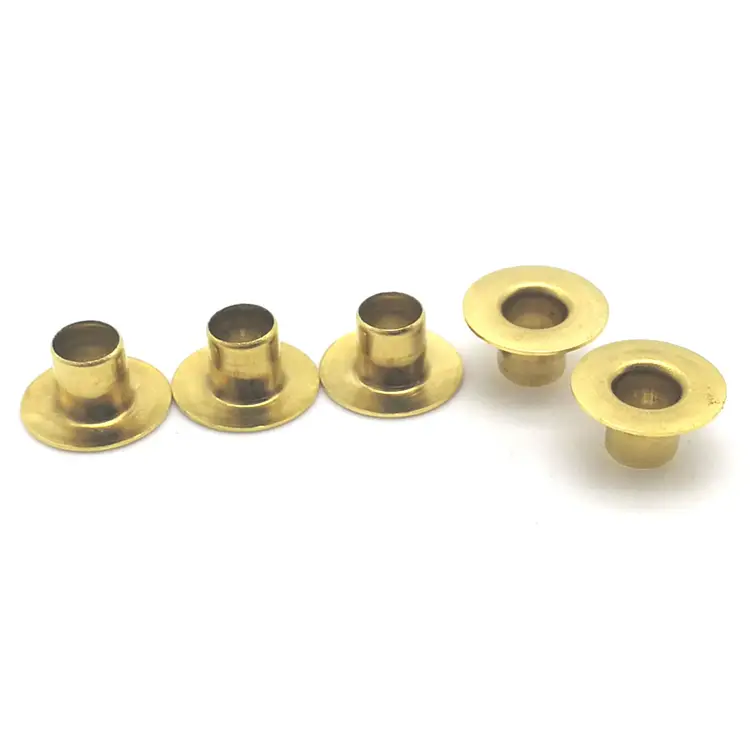
Hollow Rivets
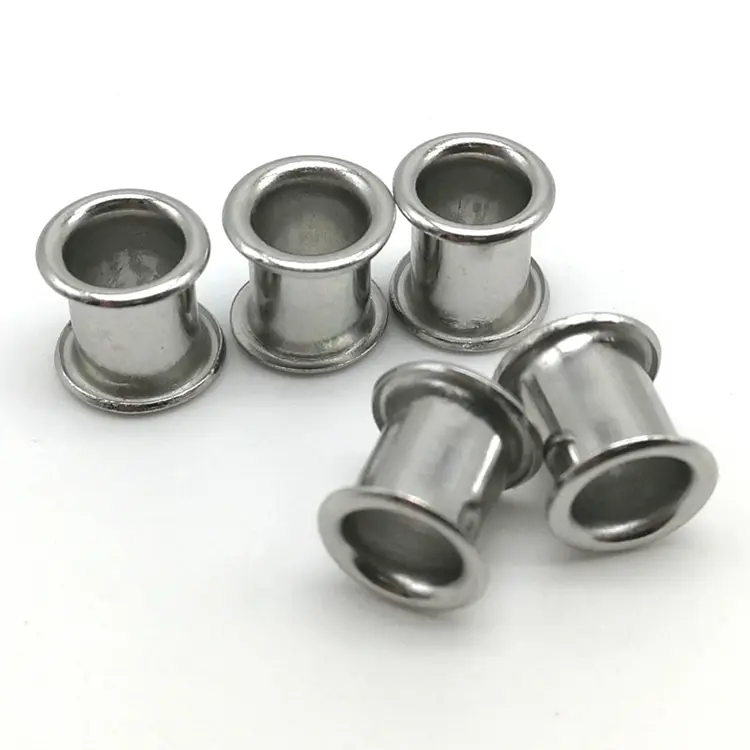
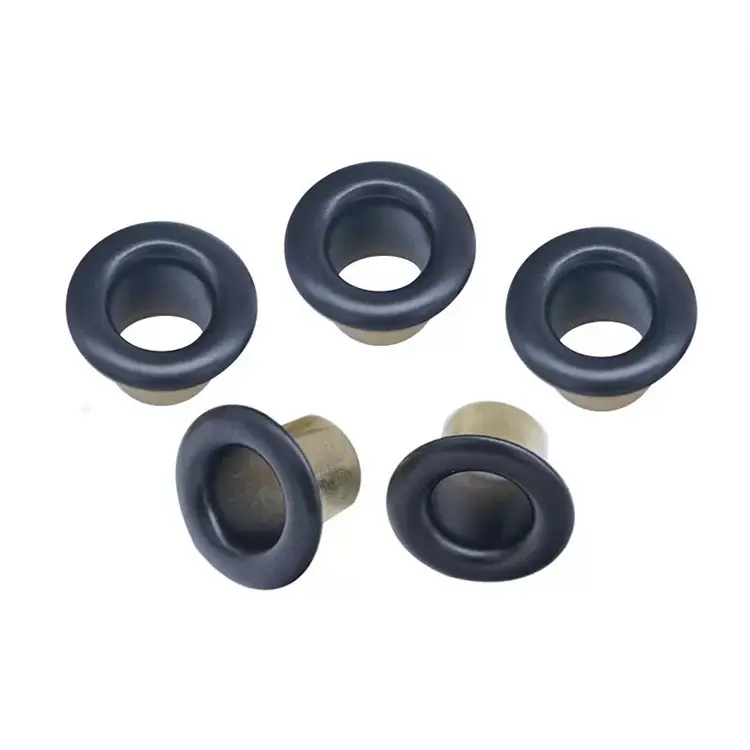
Hollow rivets also called as eyelet rivets, usually made from material of brass, steel, copper, stainless steel, aluminum etc, they could be plated with tin, nickel,zinc etc. Nuote Metals has produced hollow rivets for more than 10 years in China, we have many different sizes in stock, welcome to send us inquiry with a tailor making drawing.
Send Inquiry
Product Description
When your assembly involves soft materials – leather, fabric, plastic, rubber – or when you need to minimise setting force to protect delicate components, a hollow rivet is often the best choice. Unlike solid or semi‑tubular rivets, a hollow rivet is fully tubular: the entire barrel is hollow, and during installation, the thin wall flares or rolls outward with very little force.
This makes them the fastener of choice for applications where the rivet must pass through soft materials, act as a bushing or pivot, or simply provide a clean, low-profile reinforcement without damaging the surrounding material.
We manufacture hollow rivets using two processes: deep drawing from sheet metal (seamless, one‑piece construction) and tube cutting + heading (cut from seamless or welded tube stock, then headed). Both methods produce reliable hollow rivets – the right choice depends on your volume, tolerance, and cost requirements.

Hollow vs. Semi‑Tubular vs. Solid – Choosing the Right Design
The defining feature of a hollow rivet is the fully hollow barrel – unlike a semi‑tubular rivet (partially hollow) or a solid rivet (fully solid). This design reduces setting force to just 15–20% of what a solid rivet requires.
| Feature | Hollow Rivet | Semi‑Tubular Rivet | Solid Rivet |
|---|---|---|---|
| Tail design | Fully hollow (tube‑style) | Partially hollow (45–55% of length) | Fully solid |
| Setting force | 15–20% of solid rivet force | 25–30% of solid | 100% |
| Shear strength | 60–70% of solid rivet | 80–90% of solid | 100% (reference) |
| Installation speed | Fastest, lowest force required | Fast | Slower, requires heavy equipment |
| Best for | Soft materials, lightweight assemblies, bushings, pivots | High‑volume production, thin materials | Extreme structural loads, heavy‑duty applications |
For applications involving leather, fabric, rubber, or plastic – and for assemblies where the rivet will function as a pivot or bushing – the hollow rivet is the ideal choice.
Materials & Head Styles – What We Offer
Hollow rivets are available in five material families and three head styles.
| Material | Strength | Corrosion Resistance | Best Application |
|---|---|---|---|
| Low‑carbon steel | Moderate | Depends on finish | Industrial, cost‑sensitive |
| Stainless steel (304/316) | High | Excellent | Marine, outdoor, medical |
| Brass (C2680) | Moderate | Good | Decorative, electrical, leather goods |
| Copper (C11000) | Moderate | Good | Electrical, thermal, antimicrobial |
| Aluminum (5052/5056) | Moderate | Good | Lightweight, non‑magnetic |
Head styles available:
| Head Style | Best For |
|---|---|
| Round | Visible joints, general purpose |
| Flat | Clearance‑limited, low profile |
| Countersunk | Flush surfaces, zero protrusion |
Finishes: Zinc‑plated, black oxide, passivated, lacquered, nickel‑plated, antiqued, anodized, plain – depending on material.
One Real Application – Leather Belt Hole Reinforcement
A leather goods manufacturer was producing a line of premium belts and needed to reinforce the buckle holes. The original design used no reinforcement – the holes stretched and tore over time. Solid rivets were too heavy and required high setting force that damaged the leather. Semi‑tubular rivets were an improvement, but still caused some compression marks on the soft leather.
Nuote Metals supplied brass hollow rivets – 3.0mm shank, 5.5mm round head, 5.0mm barrel length, antique finish. The fully hollow design set with minimal force – no compression marks, no damage to the leather. The antique finish matched the brand's vintage aesthetic. The rivets provided a clean, professional reinforcement that prevented stretching and tearing.
The customer tested 500 rivets across 200 belts. After six months of wear testing, no stretching, no tearing, no loosening. They now order our rivets in batches of 100,000 pieces annually.

Two Manufacturing Processes – Deep Drawing vs. Tube Cutting + Heading
We manufacture hollow rivets using two different processes, depending on your requirements.
Process 1: Deep Drawing from Sheet Metal
This process starts with a flat metal sheet or strip. A progressive die performs multiple drawing operations to form the tubular barrel, then pierces and separates the finished rivet. The result is a seamless, one‑piece hollow rivet with consistent wall thickness – no seam, no weld line.
Best for: High‑volume production, seamless appearance, thin walls, consistent wall thickness.
Process 2: Tube Cutting + Heading
This process starts with metal tube (seamless or welded). The tube is cut to length, then fed into a heading machine where a die forms the head (round, flat, or countersunk) on one end. The other end remains as the hollow barrel.
Best for: Thicker walls, lower tooling cost, shorter lead times.
Which process is right for you?
| Consideration | Deep Drawing | Tube Cutting + Heading |
|---|---|---|
| Seamless | Yes | Depends on tube stock |
| Wall thickness consistency | Excellent | Good |
| Tooling cost | Higher | Lower |
| Lead time (tooling) | 3–4 weeks | 1-2 weeks |
| Best for | High volume, thin walls, small diameters | Thicker walls, faster turnaround |
We can advise on the best process for your specific application – send us your specifications and we will recommend the optimal method.
How They Are Specified – What We Need From You
Hollow rivets are custom‑produced to your exact requirements. Here is what we need to get your specification right.
The dimensions we need:
- Shank diameter – 1.5mm to 8.0mm
- Barrel length – measured from the underside of the head to the end of the shank. We calculate this from your material stack thickness.
- Head style – round, flat, or countersunk
- Head diameter – matched to your bearing surface requirement
The choices you make:
- Material – steel, stainless, brass, copper, or aluminum
- Process – deep drawing or tube cutting + heading
- Finish – zinc, passivated, lacquered, nickel, anodized, antique, etc.
If you are not sure about barrel length or head diameter: Send us your material stack thickness or a sample part. We will recommend the optimal dimensions. We do not charge for engineering advice.
Sample lead time: 5–10 days for standard specifications. Custom tooling: 15–20 days.
Quality Control – What We Check, Why It Matters
| Check | Tolerance | Risk If Missed |
|---|---|---|
| Shank diameter | ±0.05mm | Rivet doesn't fit your hole |
| Head diameter | ±0.15mm | Pull‑through or uneven bearing |
| Head height | ±0.15mm | Inconsistent appearance |
| Barrel length | ±0.15mm | Weak clinch or buckled barrel |
| Hollow wall thickness | ±0.02mm | Uneven flaring, weak clinch |
| Seam quality (if tube stock) | No split or weld defect | Weak point in the barrel |
| Plating thickness | Verified by XRF | Rust, corrosion |
Our inspection process:
- Incoming material – Wire, sheet, or tube stock checked for diameter/thickness and composition. Spectrometer verifies material grade.
- First article – 10 rivets measured on optical comparator. Every dimension verified.
- In‑process – 5 rivets every 500 pieces. Critical dimensions checked. Any drift stops the press.
- Setting test – Every 2,000 pieces, set into sample material. Clinch inspected for symmetry, tightness, and cracks.
- Final sorting – 100% optical inspection. AQL sample manually verified.

What Our Customers Say – Real Feedback

Where They Are Used
- Leather goods – Belt hole reinforcement, bag hardware, saddlery, straps
- Apparel – Denim, workwear, outdoor gear – where rivets contact fabric
- Furniture – Upholstery, leather chairs – where soft materials meet hardware
- Automotive – Interior trim, soft panel assemblies, fabric attachments
- Marine – Canvas attachments, boat interiors
- Sporting goods – Backpacks, camping gear, safety harnesses
- Medical – Soft goods, braces, wearable devices
- General manufacturing – Bushings, pivots, lightweight assemblies
Three Questions We Answer Often
Q: "What is the difference between a hollow rivet and a semi‑tubular rivet?"
A: A hollow rivet is fully tubular – the entire barrel is hollow, with a wall thickness that flares outward during setting. A semi‑tubular rivet has a shallow cavity at the tail (45–55% of barrel length) with a thicker wall. Hollow rivets require the least setting force (15–20% of solid) and are ideal for soft materials. Semi‑tubular rivets offer more strength (80–90% of solid) and are better for applications where you need a balance of strength and low setting force.
Q: "Which process should I choose – deep drawing or tube cutting + heading?"
A: Deep drawing produces a seamless, one‑piece rivet with consistent wall thickness – ideal for high‑volume production, small diameters, and thin walls. Tube cutting + heading is more cost‑effective for larger diameters, thicker walls, and lower volumes, but the barrel may have a seam if welded tube is used. If you are unsure, send us your specifications – we will recommend the optimal process for your application.
Q: "How do I select the correct barrel length for a hollow rivet?"
A: Select a barrel length approximately 2.0–2.5mm longer than your total material stack thickness. For example, if you are reinforcing 3mm thick leather, choose a barrel length of 5.0–5.5mm. The thinner wall of a hollow rivet requires more length to flare evenly without crumpling. Send us your material stack thickness, and we will recommend the exact length.

Nuote Metals – Dongguan, China. ISO 9001:2015 certified. Free samples available. Contact us with your specs – we will respond within 24 hours with tooling cost (if any), piece price, and lead time.
Hot Tags: Hollow Rivets,China Hollow Rivets,Hollow Rivets Manufacturer
Product Tag
Related Categories
Send Inquiry
Please feel free to fill your inquiry in the form below. We will reply you in 24 hours.



X
We use cookies to offer you a better browsing experience, analyze site traffic and personalize content. By using this site, you agree to our use of cookies.
Privacy Policy