
Why Are Stainless Steel Rivets the Ultimate Choice for Corrosive and High‑Temperature Environments?
When a joint must survive salt spray, chemical exposure, extreme temperatures, or high humidity, ordinary steel rivets fail. Rust compromises strength. Corrosion eats away at the joint. In these demanding conditions, stainless steel rivets are not a luxury—they are a necessity. Nuote Metals manufactures a complete range of stainless steel rivets, including solid, semi‑tubular, and tubular types, serving industries from marine engineering to food processing and medical devices.
What Are Stainless Steel Rivets? A Clear Definition
Stainless steel rivets are permanent mechanical fasteners manufactured from corrosion‑resistant steel alloys containing at least 10.5% chromium. The chromium forms a passive oxide layer that protects the rivet from rust and chemical attack. Depending on the application, stainless steel rivets can be produced as solid stainless steel rivets (fully solid shank), stainless steel semi‑tubular rivets (partially hollow), or stainless steel tubular rivets (fully hollow).
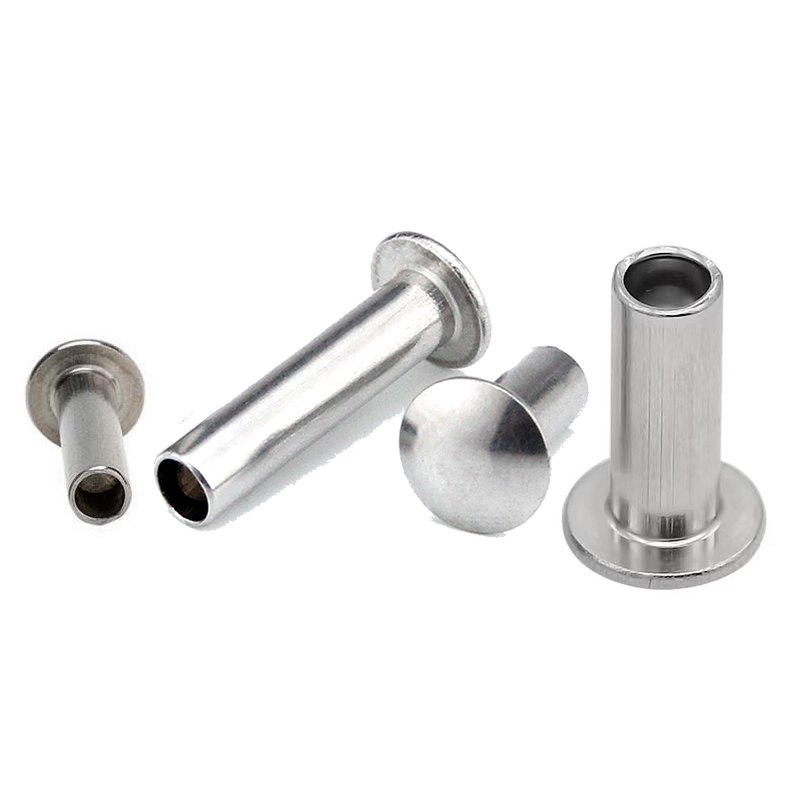
Core Properties of Stainless Steel as a Rivet Material
Exceptional corrosion resistance: Withstands saltwater, acids, alkalis, and industrial atmospheres
High strength: Tensile and shear strength comparable to or exceeding carbon steel
Temperature tolerance: Retains strength from cryogenic to 800°C (depending on grade)
Non‑magnetic options: Austenitic grades (304, 316) are non‑magnetic in the annealed condition
Hygienic surface: Easy to clean, does not support bacterial growth
Long service life: Outlasts carbon steel by decades in corrosive environments
Nuote Metals offers stainless steel rivets in multiple alloys to match specific environmental and mechanical requirements.
The Three Types of Stainless Steel Rivets – Solid, Semi‑Tubular, and Tubular
Understanding the differences among the three configurations of stainless steel rivets is essential for correct specification.
| Type | Hollow Depth | Setting Force | Strength | Best Applications |
|---|---|---|---|---|
| Solid Stainless Steel Rivets | 0% (fully solid) | Highest | Maximum shear and tensile | Structural marine joints, chemical plant equipment, high‑load assemblies |
| Stainless Steel Semi‑Tubular Rivets | 20–40% of shank (tail end) | Moderate (30–50% less than solid) | 80–95% of solid | General industrial assembly, food processing equipment, automotive exhaust components |
| Stainless Steel Tubular Rivets | 100% of shank (fully hollow) | Lowest (40–60% less than solid) | 50–70% of solid | Lightweight corrosive‑environment assemblies, soft material joining, low‑load applications |
Nuote Metals produces all three types, allowing customers to match the rivet configuration precisely to their mechanical and production requirements.
Stainless Steel Grades for Rivets – Selecting the Right Alloy
Not all stainless steel is the same. Nuote Metals offers stainless steel rivets in the following grades, each with distinct properties.
| Grade | Common Name | Key Properties | Typical Applications |
|---|---|---|---|
| 304 / 304L | Standard 18-8 | Good corrosion resistance, excellent formability, non‑magnetic | General purpose: food equipment, chemical tanks, automotive trim, medical devices |
| 316 / 316L | Marine grade | Superior corrosion resistance (added molybdenum), resists chlorides and saltwater | Marine hardware, offshore platforms, pharmaceutical equipment, coastal construction |
| 310 / 310S | High‑temperature grade | Excellent oxidation resistance up to 1100°C | Furnace components, heat exchangers, exhaust systems |
| 410 | Martensitic | Hardened by heat treatment, magnetic, moderate corrosion resistance | High‑wear applications, valve components, pump shafts (less common for rivets) |
| 17-4 PH | Precipitation hardening | Very high strength, good corrosion resistance, heat treatable | Aerospace fasteners, high‑load marine rivets, defense equipment |
For most industrial stainless steel rivets, Nuote Metals recommends 304 for general corrosive environments and 316 for marine or chloride‑rich conditions.
Key Industries and Applications for Stainless Steel Rivets
The combination of corrosion resistance, strength, and hygiene makes stainless steel rivets indispensable across demanding industries.
Marine and Offshore Engineering
Boat hull and deck fittings
Sail track and rigging attachments
Dock hardware and gangway assemblies
Offshore platform handrails and grating
Food and Beverage Processing
Conveyor belt fastener attachments
Stainless steel equipment housings
Tanks, hoppers, and mixing vessel assemblies
Hygiene‑critical joints (no crevices for bacterial growth)
Medical and Pharmaceutical
Surgical instrument pivots and joints
Hospital bed and medical cart assemblies
Sterilisation‑resistant equipment (autoclave safe)
Implantable device components (special grades)
Chemical and Petrochemical Plants
Pipe support and clamp assemblies
Pump and valve housings
Corrosion‑resistant structural joints
Fume extraction ducting
Automotive and Transportation
Exhaust system brackets and heat shields
Stainless steel trim and moulding attachment
Marine vehicle (boat trailer) components
Electric vehicle battery tray fasteners
Architectural and Construction
Stainless steel curtain wall and cladding attachments
Handrail and balustrade assemblies
Outdoor furniture and playground equipment
Bridge inspection walkway fasteners
Advantages of Using Stainless Steel Rivets Over Other Materials
Why specify stainless steel rivets instead of carbon steel, aluminium, or brass? Nuote Metals highlights the following engineering benefits.
| Advantage | Explanation |
|---|---|
| Superior corrosion resistance | Outperforms carbon steel, aluminium, and most brass alloys in salt, acid, and chemical environments |
| High strength | 304 stainless steel has tensile strength of 515 MPa minimum – comparable to medium carbon steel |
| Temperature range | Performs from cryogenic (-196°C) to 800°C (depending on grade) |
| Hygienic surface | Smooth, non‑porous surface that resists bacterial adhesion and is easy to clean |
| Non‑magnetic option | 304 and 316 grades are non‑magnetic in the annealed condition – critical for sensitive electronics |
| Long service life | 316 stainless steel rivets can last 50+ years in marine environments without failure |
| Recyclable | 100% recyclable with no loss of properties |
For any application exposed to moisture, chemicals, or temperature extremes, stainless steel rivets are the most reliable choice.
How to Select the Right Stainless Steel Rivet Type for Your Assembly
Choosing among solid, semi‑tubular, and tubular stainless steel rivets requires evaluating load, speed, and environment.
1. Load Requirements
| Load Level | Recommended Type |
|---|---|
| High structural (shear > 700 N per rivet) | Solid stainless steel rivets |
| Medium general (200–700 N) | Stainless steel semi‑tubular rivets |
| Light / low‑load (under 200 N) | Stainless steel tubular rivets |
2. Assembly Speed and Volume
| Production Volume | Recommended Type |
|---|---|
| Low (under 5,000) | Any type; manual or press setting |
| Medium (5,000–50,000) | Semi‑tubular for balance of strength and speed |
| High (over 50,000) | Semi‑tubular or tubular (best for automated feeding) |
3. Environmental Exposure
| Environment | Recommended Grade |
|---|---|
| Indoor / dry | 304 stainless steel |
| Outdoor / humid | 304 stainless steel |
| Coastal / salt spray | 316 stainless steel (marine grade) |
| Chemical / acidic | 316 stainless steel |
| High temperature (over 500°C) | 310 or 17-4 PH |
4. Access to Both Sides
All three types of stainless steel rivets require access to both sides of the joint for proper installation.
If only one side is accessible, Nuote Metals recommends blind rivets (pop rivets) instead.
Surface Finishes and Passivation for Stainless Steel Rivets
While stainless steel naturally resists corrosion, certain finishes can enhance performance or appearance.
| Finish | Process | Properties | Typical Use |
|---|---|---|---|
| As‑headed (mill finish) | No additional treatment | Original surface with light scale | Internal assemblies, cost‑sensitive applications |
| Passivated | Acid bath removes free iron and contaminants | Maximises corrosion resistance, clean surface | Medical devices, food equipment, marine hardware |
| Electropolished | Reverse‑plating smooths surface | Mirror finish, ultra‑clean, reduces crevices | Pharmaceutical, semiconductor, high‑hygiene applications |
| Bead blasted | Glass bead impact | Matte, uniform satin finish | Architectural visible fasteners |
| Mechanically polished | Abrasive buffing | Bright, reflective surface | Decorative hardware, automotive trim |
Nuote Metals offers passivation as a standard value‑added service for all stainless steel rivets used in medical, food, and marine applications.
Installation Best Practices for Stainless Steel Rivets
Stainless steel is stronger and harder than carbon steel. Installing stainless steel rivets requires proper technique and tooling.
Recommended Setting Guidelines
Hole diameter: 0.05–0.10 mm larger than rivet shank (same as steel)
Deburring: Essential – burrs can crack the rivet tail during roll formation
Setting force: Use 10–20% higher pressure than for carbon steel rivets of the same diameter (stainless steel work‑hardens)
Lubrication: A light film of stainless‑compatible lubricant reduces galling on automatic setters
Tooling: Use carbide or hardened steel anvils and punches; replace tooling more frequently than for carbon steel
Common Defects Specific to Stainless Steel Rivets
| Defect | Cause | Solution |
|---|---|---|
| Cracked roll | Excessive force or work‑hardened rivet | Reduce pressure; use annealed stainless rivets; increase hole diameter slightly |
| Galling / seizing | Stainless steel adhesion to tooling | Use polished carbide tooling; apply lubricant |
| Insufficient roll | Rivet too short or force too low | Increase rivet length or setting pressure |
| Work hardening during setting | Multiple hits or slow setting cycle | Use single‑stroke hydraulic or servo press for consistent force |
Nuote Metals provides setting parameter sheets for each stainless steel grade and rivet type. Free sample setting trials are available.
【stainless steel rivets】FAQ – Common Questions Answered
Q1: What is the difference between solid stainless steel rivets, semi‑tubular stainless steel rivets, and tubular stainless steel rivets?
A: The difference lies in the hollow depth of the shank, which affects strength and setting force. Solid stainless steel rivets have no hollow section; they offer the highest shear and tensile strength but require the most force to install. They are used in structural marine, chemical plant, and high‑load industrial applications. Stainless steel semi‑tubular rivets have a hollow cavity extending 20–40% from the tail end, reducing setting force by 30–50% while retaining 80–95% of solid rivet strength – making them the most popular choice for general manufacturing in corrosive environments. Stainless steel tubular rivets are fully hollow, requiring the least setting force but providing only 50–70% of solid rivet strength. Nuote Metals manufactures all three types. For load‑critical applications like offshore platform structural joints, choose solid. For high‑volume assembly of food processing equipment or automotive exhaust components, choose semi‑tubular. For lightweight, non‑structural attachments in corrosive environments, choose tubular.
Q2: Which stainless steel grade is best for marine environments – 304 or 316?
A: For marine environments, 316 stainless steel is strongly preferred over 304. The difference is the addition of 2–3% molybdenum in grade 316, which provides exceptional resistance to chloride‑induced corrosion, including pitting and crevice corrosion. In saltwater, coastal spray, or de‑icing salt exposure, 304 stainless steel can develop surface rust spots (pitting) within months or a few years, while 316 stainless steel can last decades without visible corrosion. Nuote Metals recommends 316 stainless steel rivets for all marine applications: boat hardware, dock structures, offshore platforms, and any coastal construction within 5 kilometres of salt water. For fresh water or indoor pools (chlorinated but not salt), 304 is usually sufficient. We stock both grades and can provide free samples for environmental testing.
Q3: Can stainless steel rivets be used with aluminium or other dissimilar metals?
Yes, but with precautions to avoid galvanic corrosion. When stainless steel rivets are used to join aluminium, the contact between dissimilar metals creates a galvanic cell in the presence of an electrolyte (moisture, saltwater). Stainless steel is cathodic (noble) and aluminium is anodic (active), so the aluminium will corrode preferentially around the rivet hole. To prevent this, Nuote Metals recommends the following measures:
Use an insulating barrier: apply a heavy‑duty primer, paint, or an anti‑corrosion paste between the metals
Use a large flange stainless steel rivet head to distribute load and reduce crevice effects
Seal the joint edge with a flexible sealant (silicone or polyurethane)
In severe marine environments, consider using a polymer‑coated stainless steel rivet or switching to aluminium rivets (if strength permits)
For aerospace or critical assemblies, consult Nuote Metals engineering team for detailed galvanic compatibility charts and recommended isolation methods.
Why Nuote Metals Is a Trusted Partner for Stainless Steel Rivets
Manufacturing stainless steel rivets in solid, semi‑tubular, and tubular configurations requires precision cold‑heading, stress relieving, and rigorous quality control. Stainless steel is harder to form than carbon steel, demanding specialised tooling and process control. Nuote Metals brings over two decades of experience.
ISO 9001:2015 certified – Full traceability from stainless steel wire rod to finished rivet
In‑house alloy inventory – 304, 304L, 316, 316L, 310, 17-4 PH, and custom grades
All three types – Solid, semi‑tubular, and tubular stainless steel rivets under one roof
Precision cold‑heading – Diameter tolerances as tight as ±0.05 mm, even with tough stainless alloys
Annealing and stress relieving – Prevents work hardening and cracking during roll formation
Passivation in‑house – Maximises corrosion resistance for medical, food, and marine orders
Packaging options – Bulk, tape‑and‑reel, stick feeding, or custom labelled boxes
Engineering support – Free alloy selection, galvanic corrosion advice, setting parameter optimisation, and failure analysis
Whether you need 1,000 solid 316 stainless steel rivets for a boat restoration or 1 million semi‑tubular 304 rivets for a food processing line, Nuote Metals delivers consistent quality.
Contact Nuote Metals for Your Stainless Steel Rivets Requirements
From the corrosive spray of an offshore platform to the sterile environment of a pharmaceutical cleanroom, stainless steel rivets deliver unmatched durability and reliability. Nuote Metals supplies all three configurations – solid, semi‑tubular, and tubular – in a wide range of stainless steel grades and finishes.
Contact Nuote Metals today:
🌐 Website: www.nuotemetal.com
📧 Email: info@notinmetal.com
📞 Phone: +86 13316629095
Request technical datasheets, free samples, or an engineering consultation. Let Nuote Metals help you select the right stainless steel rivets – engineered for corrosion resistance, built for the harshest environments.
Send Inquiry



X
We use cookies to offer you a better browsing experience, analyze site traffic and personalize content. By using this site, you agree to our use of cookies.
Privacy Policy