
Why Are Brass Rivets the Preferred Choice for Corrosion Resistance, Conductivity, and Visual Appeal?
Not all rivets are created equal. When an application demands more than just mechanical strength—when it requires resistance to saltwater, the ability to carry current, or a finish that complements premium materials—standard steel rivets fall short. Brass rivets step into that gap. Nuote Metals manufactures a complete range of brass rivets, including solid, semi‑tubular, and tubular types, serving industries from marine hardware to electrical terminals and luxury goods.
This guide provides a technical yet practical overview of brass rivets, helping professionals select the right type, material grade, and configuration for their specific application.
What Are Brass Rivets? A Complete Definition
Brass rivets are permanent mechanical fasteners made from copper‑zinc alloys. Depending on the application, they can be manufactured as solid brass rivets (fully solid shank), brass semi‑tubular rivets (partially hollow), or brass tubular rivets (fully hollow). All three types share the inherent properties of brass: excellent corrosion resistance, good electrical and thermal conductivity, and an attractive gold‑like appearance.
Core Properties of Brass as a Rivet Material
Corrosion resistance: Performs well in humid, marine, and mildly acidic environments
Electrical conductivity: Approximately 28% of pure copper (IACS), sufficient for many electrical applications
Non‑magnetic: Suitable for electronic and medical equipment where magnetism is prohibited
Aesthetic finish: Natural gold colour that polishes well and resists tarnishing
Workability: Easily cold‑headed and rolled without cracking
Gall resistance: Does not seize or gall when set against steel or aluminium tooling
Nuote Metals offers brass rivets in multiple alloy compositions to balance strength, corrosion resistance, and cost.
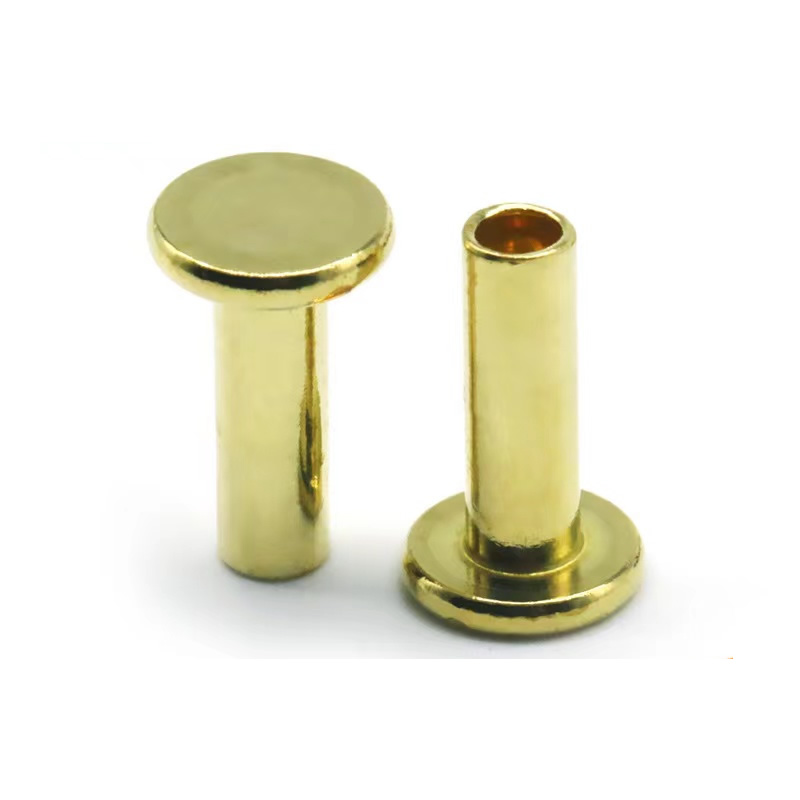
The Three Types of Brass Rivets – Solid, Semi‑Tubular, and Tubular
Understanding the differences among the three configurations of brass rivets is essential for correct specification.
| Type | Hollow Depth | Setting Force | Strength | Best Applications |
|---|---|---|---|---|
| Solid Brass Rivets | 0% (fully solid) | Highest | Maximum shear and tensile | Structural joints, high‑load marine hardware, heavy electrical terminals |
| Brass Semi‑Tubular Rivets | 20–40% of shank (tail end) | Moderate (30–50% less than solid) | 80–95% of solid | General assembly, medium‑load electrical connections, furniture pivots |
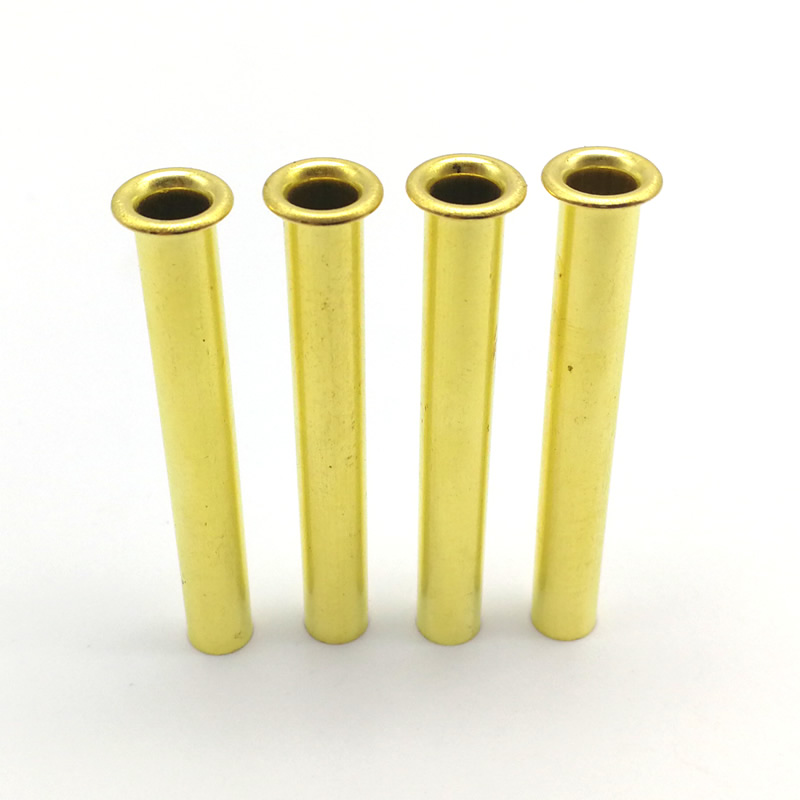
| Brass Tubular Rivets | 100% of shank (fully hollow) | Lowest (40–60% less than solid) | 50–70% of solid | Lightweight decorative assemblies, soft material joining, low‑load electrical contacts |
Nuote Metals produces all three types, allowing customers to match the rivet configuration precisely to their mechanical and production requirements.
Brass Alloys Used for Rivets – Grades and Properties
Not all brass is the same. Nuote Metals selects specific brass alloys for brass rivets based on the intended application.
| Alloy (UNS) | Common Name | Copper % | Zinc % | Properties | Typical Uses |
|---|---|---|---|---|---|
| C26000 | Cartridge Brass | 70 | 30 | Highest ductility, excellent cold‑heading | Semi‑tubular and tubular rivets, deep‑drawn parts |
| C27000 | Yellow Brass | 65 | 35 | Good strength and ductility, cost‑effective | General purpose solid and semi‑tubular rivets |
| C28000 | Muntz Metal | 60 | 40 | Higher strength, lower ductility | Heavy‑duty solid brass rivets for structural applications |
| C23000 | Red Brass | 85 | 15 | Superior corrosion resistance, richer colour | Marine hardware, decorative exterior rivets |
| C36000 | Free‑Cutting Brass | 61 | 35 | Contains lead for machinability | Specialised rivets requiring secondary machining |
For most standard brass rivets, Nuote Metals recommends C26000 for tubular and semi‑tubular types, and C27000 for solid brass rivets. For marine or high‑corrosion environments, C23000 is preferred.
Key Industries and Applications for Brass Rivets
The combination of mechanical strength, corrosion resistance, and visual appeal makes brass rivets valuable across diverse industries.
Marine and Boat Building
Deck hardware attachment (cleats, hinges, railings)
Sail and canvas reinforcement
Porthole frame assembly
Corrosion‑resistant joints in saltwater environments
Electrical and Electronic Equipment
Terminal lug fastening
Switch and relay contacts
Earthing connections (non‑ferromagnetic)
Battery terminal assembly
Transformer core clamping
Leather Goods and Fashion Accessories
Belt hole reinforcement
Handbag and luggage rivets
Saddlery and equestrian hardware
Denim jeans and workwear branding rivets
Furniture and Decorative Hardware
Brass hinge rivets
Drawer pull attachments
Lamp and lighting fixture assemblies
Ornamental metalwork joints
Automotive and Motorcycle
Classic and vintage vehicle trim fastening
Fuel system components (non‑sparking)
Interior leather upholstery rivets
Nameplate and badge attachment
Musical Instruments
Saxophone and brass instrument key pivots
Guitar strap button rivets
Drum hardware assemblies
Advantages of Using Brass Rivets Over Other Materials
Why choose brass rivets instead of steel, stainless steel, or aluminium? Nuote Metals highlights the following engineering and commercial benefits.
| Advantage | Explanation |
|---|---|
| Superior corrosion resistance | Outperforms carbon steel and most aluminium alloys in saltwater and humid conditions |
| Excellent conductivity | Reliable for electrical and thermal transfer applications |
| Non‑magnetic | Essential for medical electronics, MRI rooms, and sensitive instrumentation |
| Aesthetic appeal | Warm gold colour that matches premium products; can be polished, lacquered, or antiqued |
| No galvanic corrosion with copper | Compatible with copper wires, terminals, and tubing |
| Good gall resistance | Does not seize during setting, even with steel tooling |
| Recyclable | Brass is highly recyclable without loss of properties |
For applications where both function and appearance matter, brass rivets are often the only logical choice.
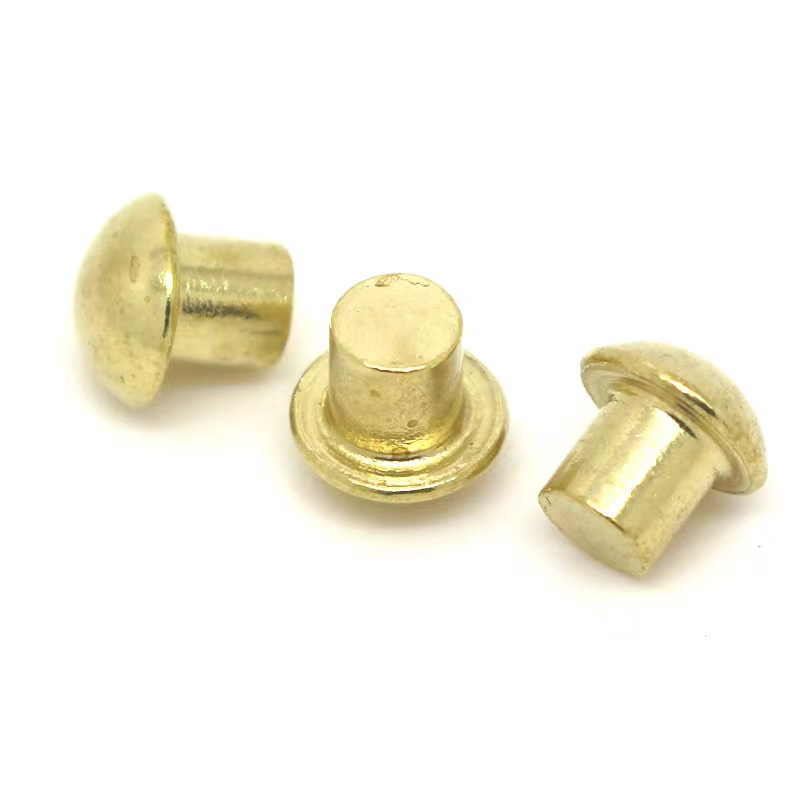
Solid Brass Rivets – When Maximum Strength Is Required
Solid brass rivets are the strongest of the three brass rivet families. They are used in structural applications where joint failure would have serious consequences.
Typical Specifications for Solid Brass Rivets
Diameter range: 1.6 mm to 12.0 mm
Length range: 3.0 mm to 60.0 mm
Head styles: Universal, countersunk, round, flat, truss
Installation: Requires bucking bar and rivet gun or hydraulic press
Setting force: Highest among brass rivets
Common Applications
Marine cleat and winch mounting
Heavy electrical busbar connections
Vintage automobile frame repairs
Architectural bronze and brass structural joints
Nuote Metals manufactures solid brass rivets to ANSI, DIN, and custom specifications.
Brass Semi‑Tubular Rivets – The Versatile General‑Purpose Choice
Brass semi‑tubular rivets offer the best balance of strength and installation efficiency. They are the most commonly specified type of brass rivets for volume production.
Typical Specifications for Brass Semi‑Tubular Rivets
Diameter range: 1.6 mm to 8.0 mm
Hollow depth: 20–35% of shank length
Setting force: 30–50% less than solid brass rivets
Recommended setting method: Pneumatic or servo press, automated riveting systems
Cycle rate: Up to 150 pieces per minute on automatic equipment
Common Applications
Electrical terminal and switch assemblies
Furniture hinge pivots
Leather belt and bag fasteners
Automotive interior trim rivets
For most industrial and commercial applications, brass semi‑tubular rivets from Nuote Metals provide the optimal combination of strength, speed, and cost.
Brass Tubular Rivets – Lightweight and Fast Setting
When the joint does not carry heavy loads and assembly speed is paramount, brass tubular rivets are the ideal solution. Their fully hollow shank requires minimal setting force.
Typical Specifications for Brass Tubular Rivets
Diameter range: 1.0 mm to 6.0 mm
Hollow depth: 100% of shank length
Setting force: 40–60% less than solid brass rivets
Recommended setting method: Manual press for low volume, automatic for high volume
Typical material thickness: 0.5 mm to 3.0 mm stack
Common Applications
Decorative nameplate attachment
Soft material joining (leather, rubber, thin plastic)
Low‑load electrical contacts
Craft and hobby assemblies
Nuote Metals advises customers to use brass tubular rivets only in non‑structural or lightly loaded joints.
Surface Finishes for Brass Rivets
While natural brass has an attractive finish, many applications require additional treatment for enhanced durability or specific aesthetics. Nuote Metals offers the following finishes for brass rivets.
| Finish | Process | Properties | Typical Use |
|---|---|---|---|
| Natural (as‑headed) | No additional treatment | Raw brass colour, may tarnish over time | Internal assemblies, cost‑sensitive applications |
| Lacquered | Clear protective coating | Prevents tarnishing, maintains brightness | Visible decorative rivets on handbags, belts, furniture |
| Antique / Oxidised | Chemical patina | Darkened, aged appearance | Vintage reproduction hardware, rustic furniture |
| Nickel‑plated | Electroplated nickel | Silver colour, increased wear resistance | Electrical terminals, modern hardware |
| Chrome‑plated | Electroplated chromium | Bright mirror finish, maximum durability | High‑end automotive and marine hardware |
| Polished | Mechanical buffing | High gloss, smooth surface | Luxury goods, musical instruments |
Nuote Metals can apply any of these finishes to solid, semi‑tubular, or tubular brass rivets.
How to Select the Right Brass Rivet for Your Assembly
Choosing among solid, semi‑tubular, and tubular brass rivets requires evaluating four key factors.
1. Load Requirements
| Load Level | Recommended Type |
|---|---|
| High structural (shear > 500 N per rivet) | Solid brass rivets |
| Medium general (100–500 N) | Brass semi‑tubular rivets |
| Light / decorative (under 100 N) | Brass tubular rivets |
2. Assembly Speed and Volume
| Production Volume | Recommended Type |
|---|---|
| Low (under 5,000) | Any type; manual or press setting |
| Medium (5,000–50,000) | Semi‑tubular or tubular for faster cycles |
| High (over 50,000) | Semi‑tubular (best for automated feeding and setting) |
3. Environmental Exposure
Indoor dry: Any brass alloy; natural or lacquered finish
Outdoor / humid: C23000 red brass or lacquered C26000
Saltwater / marine: C23000 red brass (no lacquer required)
Chemical exposure: Consult Nuote Metals engineering team
4. Aesthetic Requirements
Visible / decorative: Polished + lacquered, or antique finish
Concealed / functional: Natural or nickel‑plated
Installation Best Practices for Brass Rivets
Brass is softer than steel but more prone to work hardening. Proper installation of brass rivets requires adjusted parameters.
Recommended Setting Guidelines
Hole diameter: 0.05–0.10 mm larger than rivet shank (slightly looser than steel rivets)
Deburring: Essential – burrs can crack brass during roll formation
Setting force: Use 20–30% lower pressure than for steel rivets of the same diameter
Lubrication: Not required, but a light film of mineral oil can reduce galling on automatic setters
Tooling: Use polished, hardened steel anvils and punches to avoid marking the brass
Common Defects Specific to Brass Rivets
| Defect | Cause | Solution |
|---|---|---|
| Cracked roll | Excessive force or work‑hardened brass | Reduce pressure; use annealed brass rivets |
| Flattened head | Too much force or soft alloy | Switch to C27000 or reduce setting pressure |
| Tarnished finish after setting | Oil residue from tooling | Use clean, dry tooling; apply lacquer after setting if required |
Nuote Metals provides setting parameter sheets for each brass alloy and rivet type.
【brass rivets】FAQ – Common Questions Answered
Q1: What is the difference between solid brass rivets, semi‑tubular brass rivets, and tubular brass rivets?
A: The difference lies in the hollow depth of the shank, which affects strength and setting force. Solid brass rivets have no hollow section; they offer the highest shear and tensile strength but require the most force to install. Brass semi‑tubular rivets have a hollow cavity extending 20–40% from the tail end, reducing setting force by 30–50% while retaining 80–95% of solid rivet strength – making them the most popular choice for general manufacturing. Brass tubular rivets are fully hollow, requiring the least setting force but providing only 50–70% of solid rivet strength. Nuote Metals manufactures all three types. For structural marine or heavy electrical applications, choose solid. For high‑volume assembly of furniture, leather goods, or electrical terminals, choose semi‑tubular. For lightweight decorative attachments, choose tubular.
Q2: Are brass rivets corrosion‑resistant enough for marine use?
Yes, but the alloy matters. Standard C26000 (70/30) brass rivets perform well in fresh water and mild humidity but can undergo dezincification (selective zinc corrosion) in stagnant saltwater over long periods. For direct and continuous saltwater exposure, Nuote Metals recommends red brass rivets (C23000, 85% copper). Red brass has significantly higher copper content, making it highly resistant to dezincification and saltwater corrosion. Many boat builders use red brass solid or semi‑tubular rivets for deck hardware, railing attachments, and sail track fittings. For the highest corrosion resistance, we can also supply naval brass rivets (C46400) with added tin. Contact Nuote Metals for a corrosion resistance chart and free samples of marine‑grade brass rivets.
Q3: Can brass rivets be used for electrical connections?
Yes, and they are widely used for that purpose. Brass has approximately 28% of the electrical conductivity of pure copper (IACS), which is sufficient for many low‑to‑medium current applications such as terminal lugs, switch contacts, earthing studs, and battery connectors. Brass is also non‑magnetic and resists corrosion, making it suitable for electrical enclosures and outdoor equipment. For high‑current applications (above 50 amps), Nuote Metals recommends using solid brass rivets with larger diameters or switching to copper rivets. When using brass rivets for electrical terminations, ensure the joint is mechanically tight (proper roll formation) and consider adding a tin or nickel plating to maintain low contact resistance over time. Nuote Metals can supply brass rivets with tin plating specifically for solderable electrical connections.
Why Nuote Metals Is a Trusted Partner for Brass Rivets
Manufacturing brass rivets in solid, semi‑tubular, and tubular configurations requires precision cold‑heading, heat treatment (stress relieving), and rigorous quality control. Nuote Metals brings over two decades of experience.
ISO 9001:2015 certified – Full traceability from brass rod to finished rivet
In‑house alloy inventory – C26000, C27000, C23000, C28000, and custom grades
All three types – Solid, semi‑tubular, and tubular brass rivets under one roof
Precision cold‑heading – Diameter tolerances as tight as ±0.05 mm
Annealing and stress relieving – Prevents cracking during roll formation
Plating and finishing in‑house – Lacquering, nickel plating, antique finishing, polishing
Packaging options – Bulk, tape‑and‑reel, stick feeding, or custom labelled boxes
Engineering support – Free alloy selection, setting parameter optimisation, and failure analysis
Whether you need 1,000 solid brass rivets for a marine restoration or 1 million semi‑tubular brass rivets for an electrical component assembly line, Nuote Metals delivers consistent quality.
Contact Nuote Metals for Your Brass Rivets Requirements
From the salty spray of a marine environment to the polished surface of a luxury handbag, brass rivets deliver performance and beauty that other materials cannot match. Nuote Metals supplies all three configurations – solid, semi‑tubular, and tubular – in a wide range of alloys and finishes.
Contact Nuote Metals today:
🌐 Website: www.nuotemetal.com
📧 Email: info@notinmetal.com
📞 Phone: +86 13316629095
Request technical datasheets, free samples, or an engineering consultation. Let Nuote Metals help you select the right brass rivets – engineered for strength, finished for appearance, built to last.
Send Inquiry



X
We use cookies to offer you a better browsing experience, analyze site traffic and personalize content. By using this site, you agree to our use of cookies.
Privacy Policy