
Products
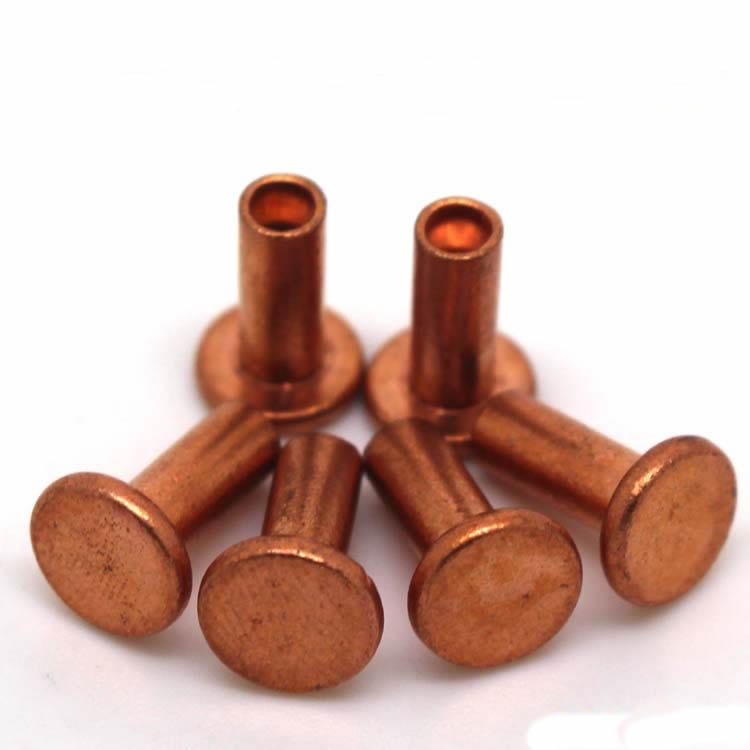
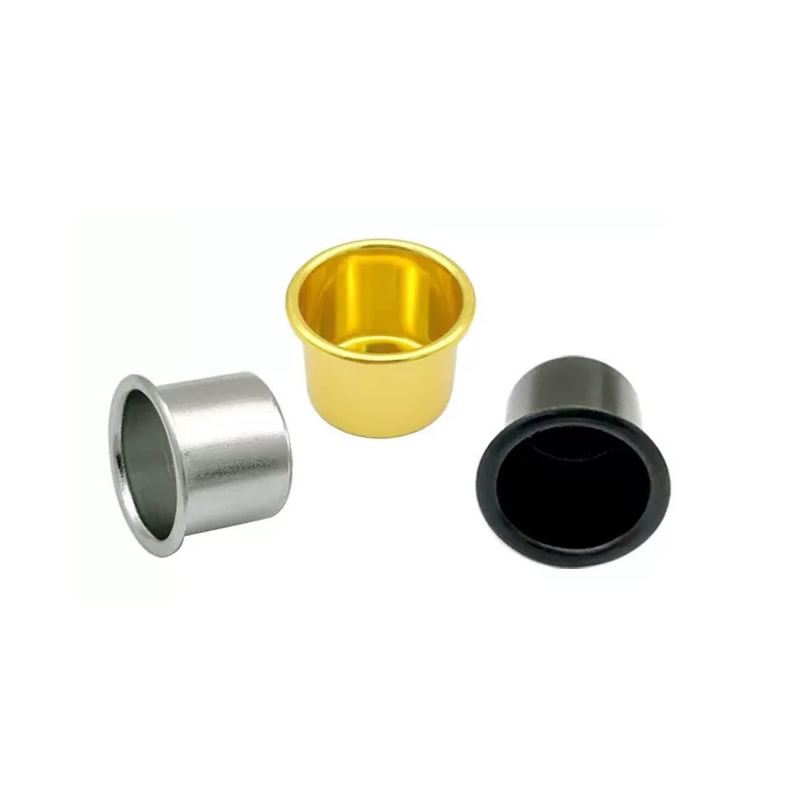
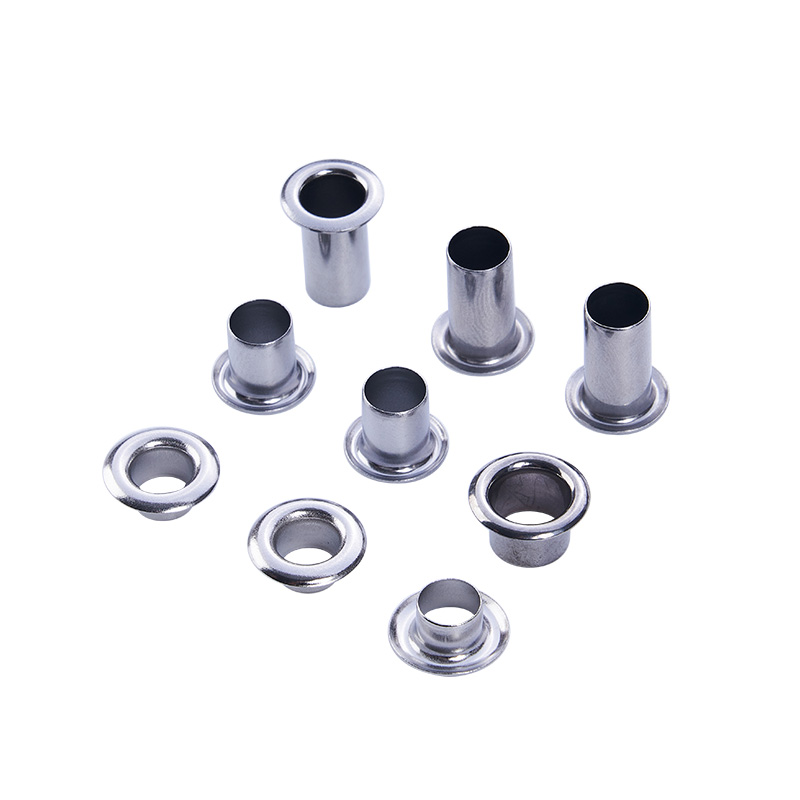
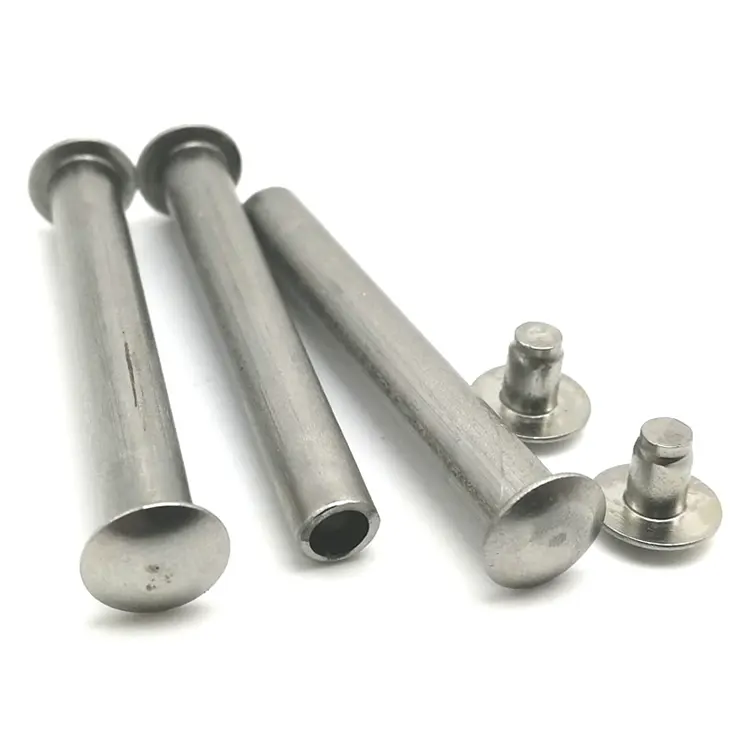
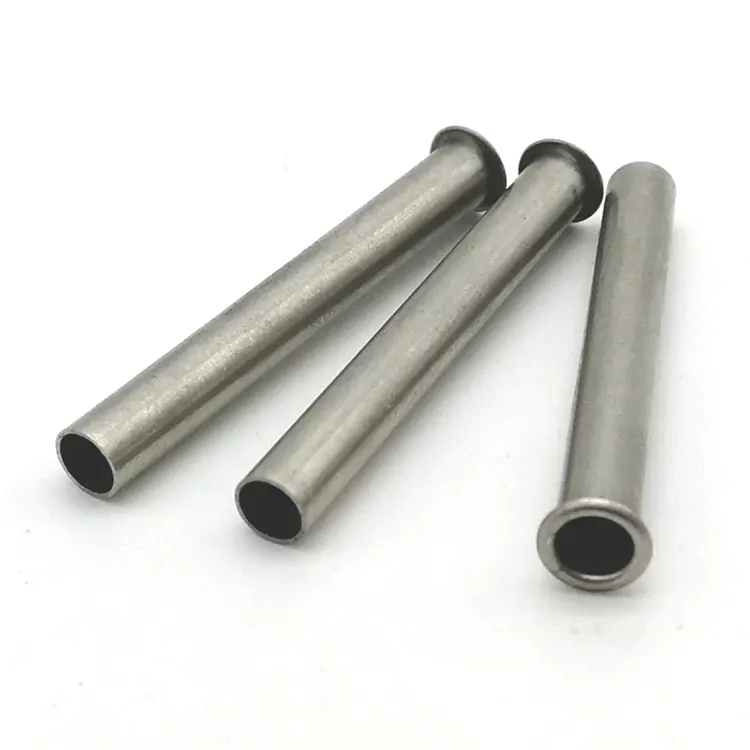

Brass Rivets
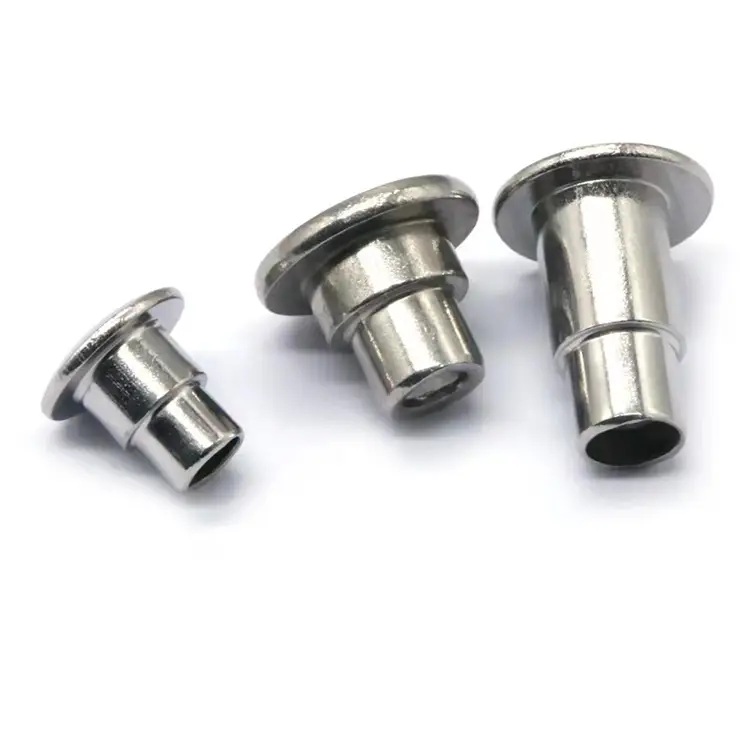
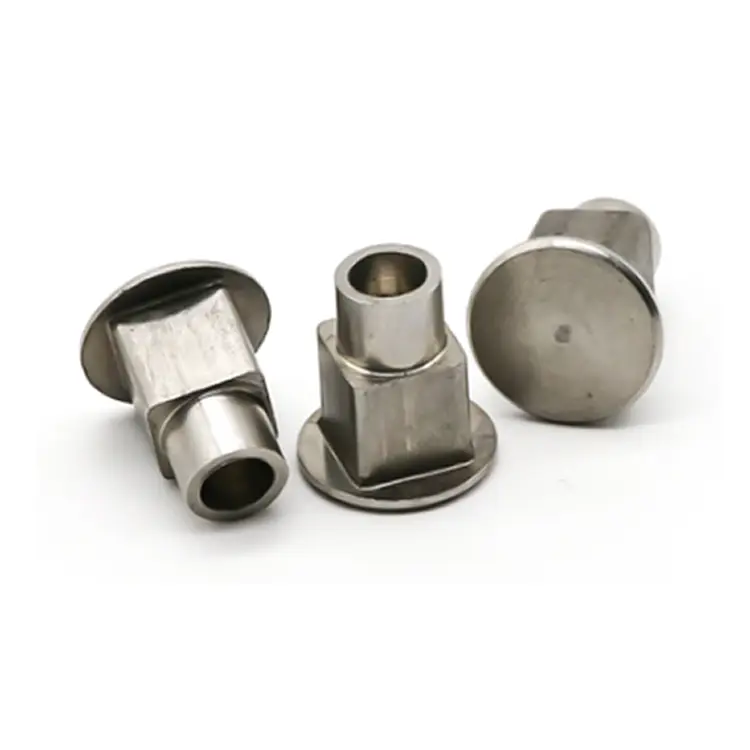
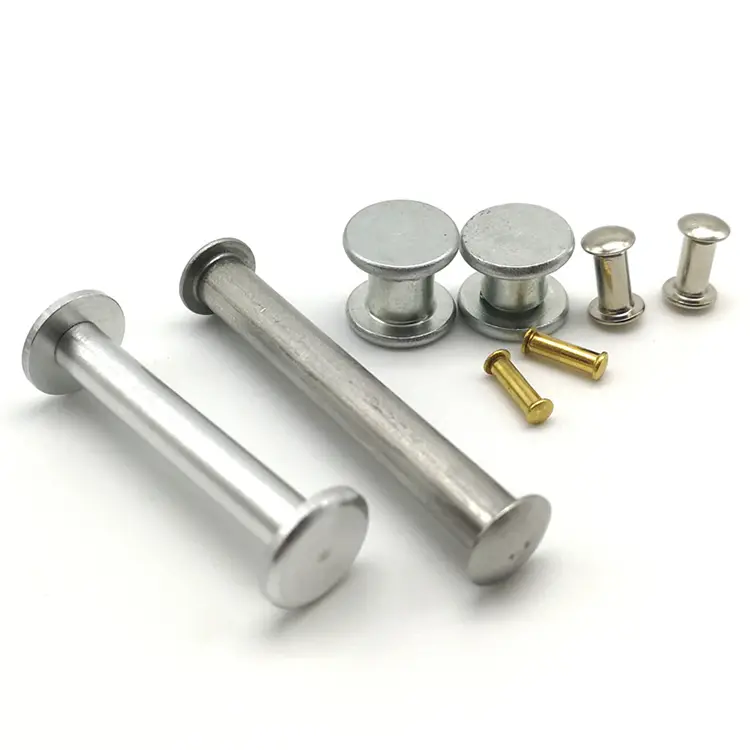
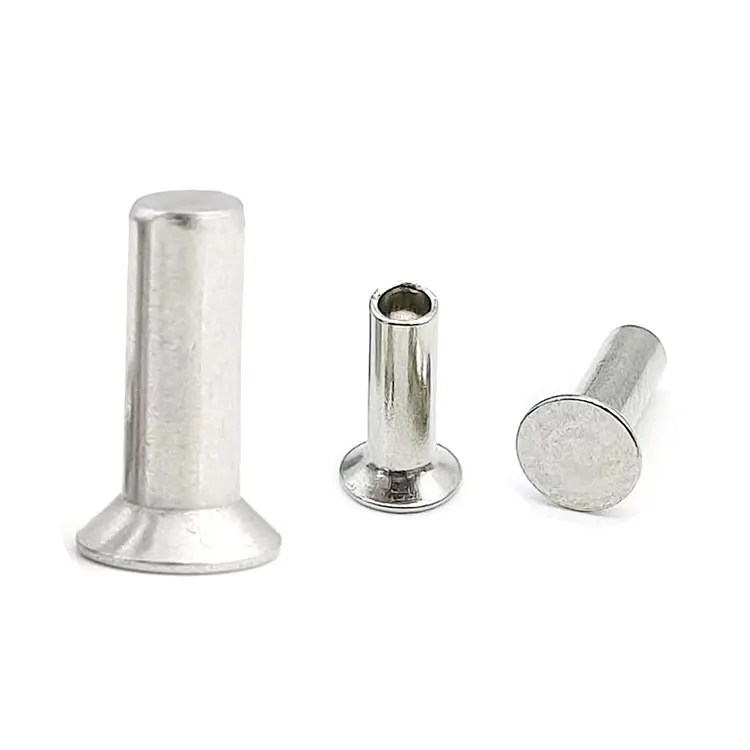
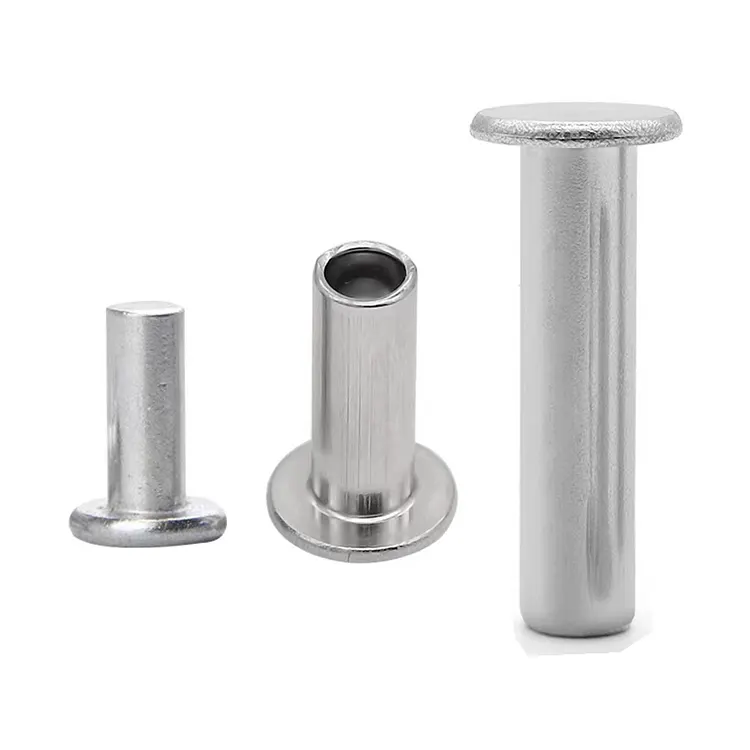
Nuote Metals manufactures brass rivets in three designs – solid, semi‑tubular, and full tubular – combining the classic advantages of brass with reliable production‑line performance. Available in 1.5–8.0mm shank diameters, with lacquered, nickel‑plated, or antique finishes. ISO 9001:2015 certified. Free samples available. Contact us for a quote.
Send Inquiry
Product Description
If you need a fastener that conducts electricity, resists corrosion, and looks good doing it, you are looking at the right material. Brass rivets offer a combination that steel cannot match – conductivity for electrical applications, natural corrosion resistance without plating dependency, and a classic gold appearance that ages gracefully.
We offer brass rivets in three designs to match your application requirements:
- Solid – Maximum strength for structural and load‑bearing assemblies
- Semi‑tubular – 25–30% of solid setting force, 80–90% of solid strength – the best balance for most applications
- Full tubular – Fully hollow, lowest setting force, ideal for soft materials and lightweight assemblies
All three designs deliver the same excellent conductivity and corrosion resistance. The choice depends on your strength requirements and production speed.
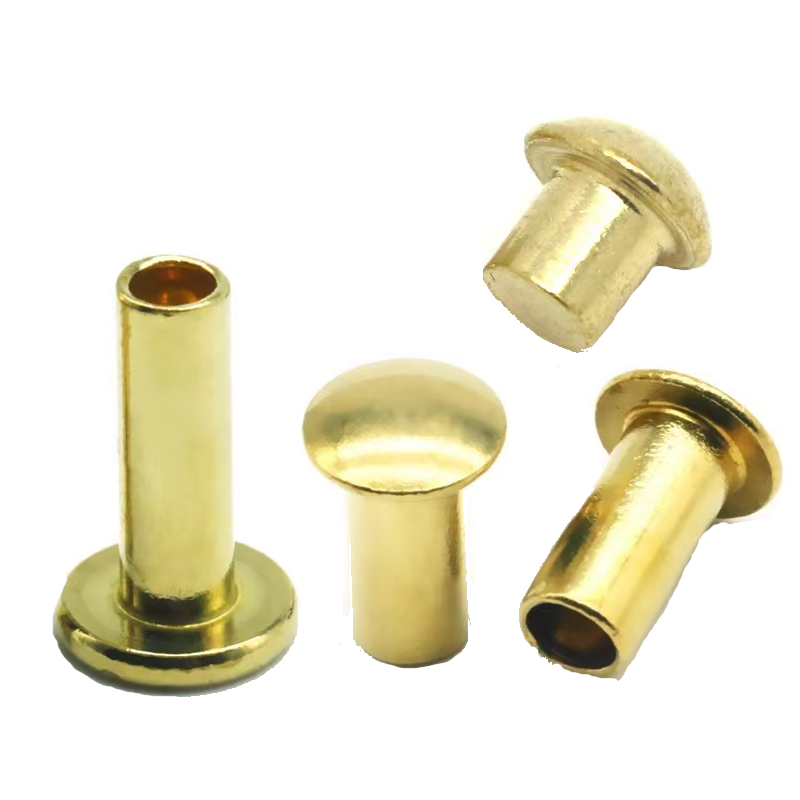
This page covers what makes brass rivets different, a real application, and how we ensure every rivet meets specification.
Solid vs. Semi‑Tubular vs. Full Tubular – The Difference That Matters
| Feature | Brass Solid Rivet | Brass Semi‑Tubular Rivet | Brass Full Tubular Rivet |
|---|---|---|---|
| Tail design | Fully solid | Partially hollow (45–55% of length) | Fully hollow (tube‑style) |
| Setting force | 100% | 25–30% of solid | 15–20% of solid |
| Shear strength | Maximum (100%) | 80–90% of solid | 60–70% of solid |
| Installation speed | Slower, requires heavy equipment | Fast, suitable for automated assembly | Fastest, lowest force required |
| Conductivity | Excellent (26–28% IACS) | Excellent (26–28% IACS) | Excellent (26–28% IACS) |
| Best for | Structural, high‑load, permanent assemblies | High‑volume production, thin materials, pivot joints | Lightweight assemblies, soft materials, decorative applications |
For most electrical, decorative, and general industrial applications, the semi‑tubular design delivers the best balance of strength and production efficiency. Choose solid for maximum structural strength. Choose semi‑tubular for most general assembly work. Choose full tubular for lightweight applications where the rivet must pass through soft materials with minimal distortion.
One Application – Lamp Holder Assembly
A lighting fixture manufacturer was using steel rivets for lamp holder assemblies. The steel rivets required plating to prevent corrosion, but the plating wore off over time, leading to rust and electrical resistance issues. The customer also wanted a more attractive appearance for their premium product line.
Nuote Metals supplied nickel‑plated brass semi‑tubular rivets – 4.0mm shank, 7.0mm round head, 10.0mm barrel length. The brass provided 26–28% IACS conductivity, ensuring reliable electrical connections. The nickel plating matched the existing silver hardware and provided 96 hours of salt spray resistance. The semi‑tubular cavity cut setting force, preventing damage to the plastic holder components. The customer tested 1,000 rivets. After 10,000 assembly cycles and thermal testing, no loosening, no corrosion. They now order our rivets in batches of 150,000 pieces.
Specifications – What You Get
Material: C2680 brass (64–68.5% Cu, balance Zn)
Shank diameter: 1.5 – 8.0mm
Design: Solid, semi‑tubular, or full tubular
Head styles: Round, flat, oval, truss, countersunk
Finishes: Natural lacquered, nickel‑plated, antique
Lengths: Custom to your material stack thickness
| Shank Diameter (mm) | Head Styles | Typical Head Diameter (mm) | Recommended Grip Range (mm) |
|---|---|---|---|
| 1.5 – 2.0 | Round / Flat / Oval | 2.8 – 4.2 | 1.0 – 3.0 |
| 2.5 – 3.0 | Round / Flat / Oval / Truss | 4.5 – 5.5 | 1.8 – 4.0 |
| 3.5 – 4.0 | Round / Flat / Oval / Truss | 5.5 – 7.2 | 2.5 – 5.0 |
| 4.5 – 5.0 | Round / Flat / Oval / Truss / Countersunk | 7.0 – 9.0 | 3.0 – 6.5 |
| 5.5 – 6.0 | Round / Flat / Oval / Truss / Countersunk | 9.0 – 10.8 | 3.5 – 8.0 |
| 6.5 – 8.0 | Round / Flat / Oval / Truss / Countersunk | 10.5 – 14.5 | 4.5 – 12.0 |
Tolerances: Shank diameter ±0.05mm, head diameter ±0.15mm, overall length ±0.15mm. Custom dimensions available upon request.
Cold Heading – How We Form Rivets
Brass is softer than steel but work‑hardens more quickly. Our cold‑heading process is optimized specifically for C2680 brass and can produce solid, semi‑tubular, and full tubular designs.
The sequence for semi‑tubular:
- Wire drawing – Brass wire is drawn to exact shank diameter (±0.02mm)
- Cut‑off – Wire is sheared to blank length
- First blow – The blank is squared and centred
- Second blow – A carbide die forms the head
- Third blow – A punch extrudes the semi‑hollow cavity (45–55% of barrel length)
- Trimming – Flash around the head edge is removed
- Tumbling – Micro‑burrs are eliminated
- Lacquering or plating – Applied as specified
For solid designs: the third blow is omitted – the shank remains fully solid.
Why cold heading matters for rivets:
- Brass work‑hardens during forming, increasing surface hardness
- The cavity depth is critical for consistent setting performance across all three designs
- Our polished carbide dies produce a smooth, blemish‑free surface – essential for visible brass rivets
Quality Control – What We Check, Why We Check It
| What | Tolerance | Why It Matters |
|---|---|---|
| Shank diameter | ±0.05mm | Must fit your hole precisely |
| Head diameter | ±0.15mm | Determines bearing surface and pull‑through resistance |
| Overall length | ±0.15mm | Must match your material stack for proper clinch |
| Cavity depth (semi‑tubular) | 45–55% of barrel | Too shallow, setting force is high; too deep, clinch is weak |
| Cavity depth (full tubular) | 75–90% of barrel | Must be consistent for even flaring |
| Head concentricity | ±0.10mm | A lopsided head looks wrong and may not seat properly |
| Plating/lacquer thickness | Verified by XRF | Must meet specification for appearance and corrosion protection |
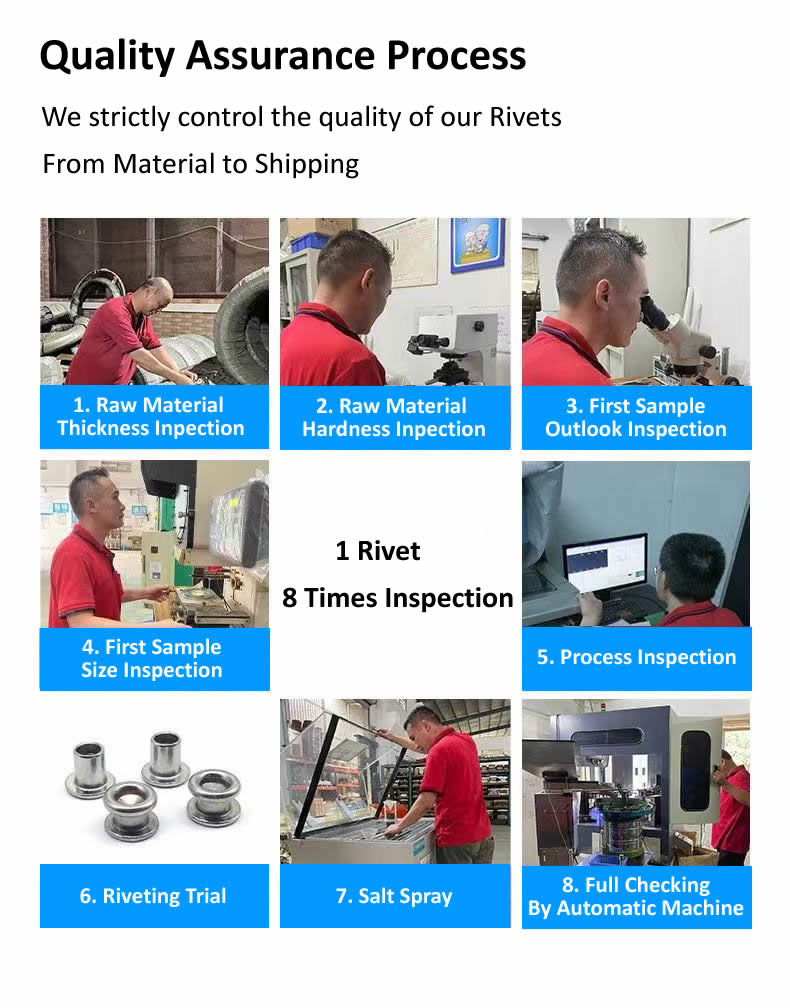
Our inspection workflow:
- Incoming wire – Spectrometer verifies brass composition; laser micrometer checks diameter (±0.02mm); hardness tested
- First article – 10 rivets measured on optical comparator; every dimension verified
- In‑process – 5 rivets every 500 pieces; any drift beyond tolerance stops the press
- Setting test – Every 2,000 pieces, set into sample material; clinch inspected for symmetry and cracks
- Plating verification – Thickness measured by XRF on every batch
- Final sorting – 100% optical inspection; AQL sample manually verified
Where They Are Used
Brass rivets are specified across a wide range of industries:
- Lighting – Lamp holders, fixture assemblies, electrical connections
- Electrical – Grounding connections, switchgear, terminal assemblies
- Leather goods – Belts, bags, straps, decorative hardware
- Furniture – Hinges, decorative trim, frame joints
- Automotive – Interior trim, electrical connections
- Marine hardware – Deck fittings, canvas attachments (with nickel plating)
- Jewellery and crafts – Permanent connections, decorative elements
What Our Customers Say – And What We Deliver

We work with manufacturers across North America, Europe, and Asia – from lighting brands to automotive suppliers to leather goods manufacturers. The images above show some of our valued partners visiting our facility, collaborating on custom projects, and sharing their experiences with brass rivets.
Beyond the relationships, every shipment also includes the documentation you need for full traceability:
- Mill test certificate – Chemical composition and tensile properties from the original coil
- Dimensional inspection report – Actual measured values of 10 rivets from the batch
- Plating/lacquer certificate – Thickness verification (if applicable)
- Certificate of Conformance – Signed by our QA manager, batch‑traceable
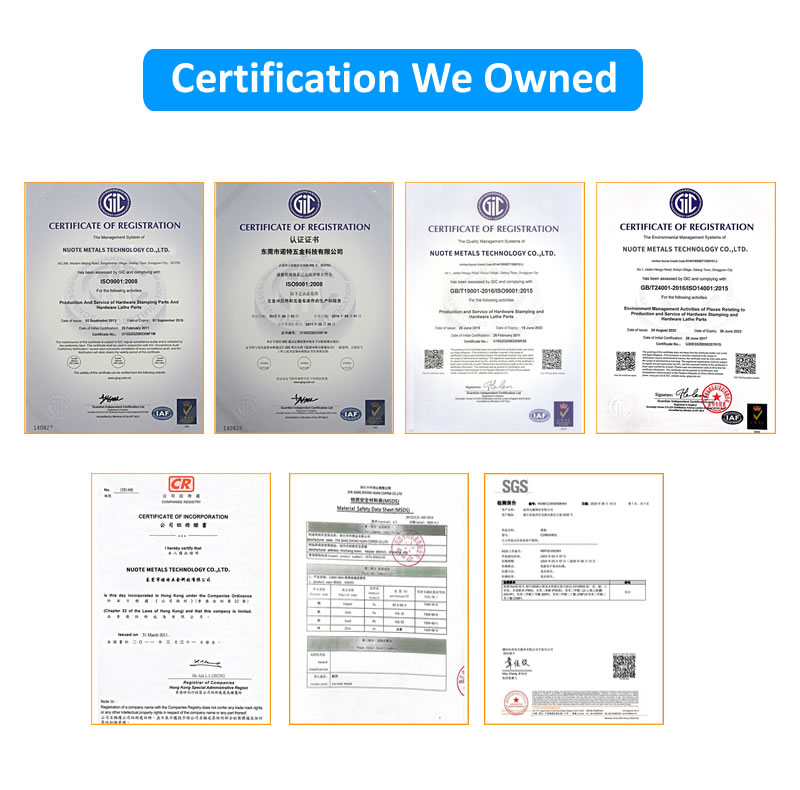
Our facility is certified to:
- ISO 9001:2015 – Quality management system
- RoHS compliance – Verified by SGS testing
- REACH compliance – Current SVHC declaration
We keep inspection records for five years. If you ever need to trace back to a specific batch, we can pull the full file.
Three Questions We Answer Often
Q1: What is the difference between C2680 and C2600 brass rivets?
A: C2680 contains approximately 65% copper and 35% zinc, while C2600 contains approximately 70% copper and 30% zinc. C2680 offers higher hardness and wear resistance, making it ideal for rivets that experience repeated stress. C2600 offers higher ductility for more complex forming. At Nuote Metals, we use C2680 as our standard brass alloy for rivets because it holds its shape better during setting and resists deformation under load.
Q2: Which design should I choose – solid, semi‑tubular, or full tubular?
A: Choose solid for maximum strength in structural, load‑bearing assemblies where failure is not an option. Choose semi‑tubular for most general applications – it offers the best balance of strength and production efficiency, with 80–90% of solid strength at 25–30% of the setting force. Choose full tubular for lightweight assemblies, soft materials (leather, plastic), or applications where the rivet must flare with minimal force.
Q3: How do I select the correct length for a brass rivet?
A: For solid brass rivets: select a length that will leave 1.2–1.5 times the shank diameter protruding past your material stack after insertion. For semi‑tubular: select a barrel length approximately 1.5–2.0mm longer than your total material stack thickness. For full tubular: select a barrel length approximately 2.0–2.5mm longer than your material stack (the thinner wall requires more length to flare evenly). For example, if you are joining two 2mm sheets (total 4mm) with a 5mm shank semi‑tubular rivet, choose a barrel length of 5.5–6.0mm. Send us your material stack thickness and rivet type, and we will recommend the exact length.
Ready to Order Brass Rivets?
We do not need a sales call. We do not need a meeting. We need three numbers from you:
- Shank diameter – from 1.5mm to 8.0mm
- Length – barrel length (semi‑tubular/full tubular) or overall length (solid) – or your total material stack thickness
- Quantity – annual or per‑order volume
And three choices:
- Design – solid, semi‑tubular, or full tubular
- Head style – round, flat, oval, truss, or countersunk
- Finish – natural lacquered, nickel‑plated, or antique
Send us your specs. We respond within 24 hours with:
- Tooling cost (if any)
- Piece price based on your quantity
- Lead time
- Sample availability
We keep it simple. No pressure. No obligation. Just a clear, competitive quote.
Hot Tags: Brass Rivets,Brass Solid Rivets,Brass tubular rivets
Related Categories
Send Inquiry
Please feel free to fill your inquiry in the form below. We will reply you in 24 hours.



X
We use cookies to offer you a better browsing experience, analyze site traffic and personalize content. By using this site, you agree to our use of cookies.
Privacy Policy