
Products
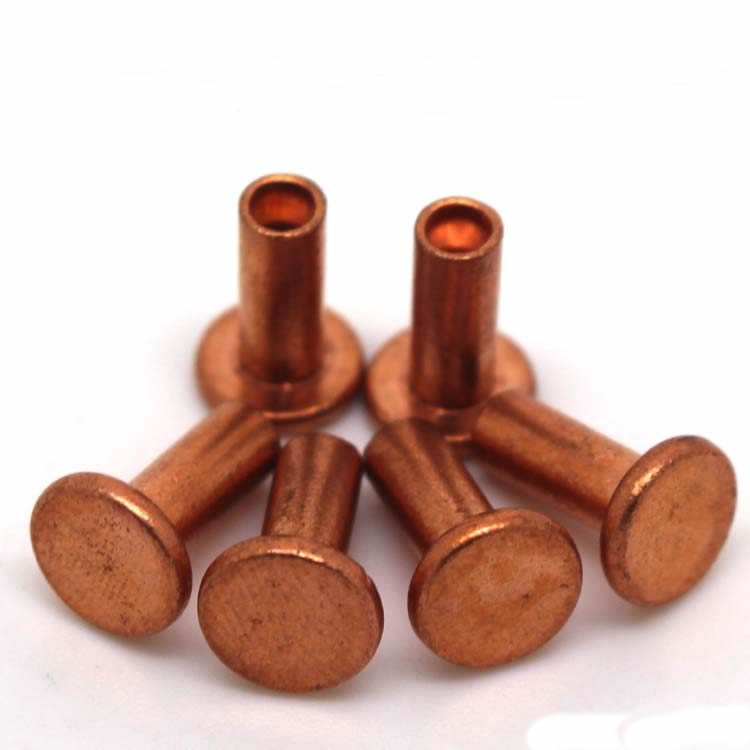
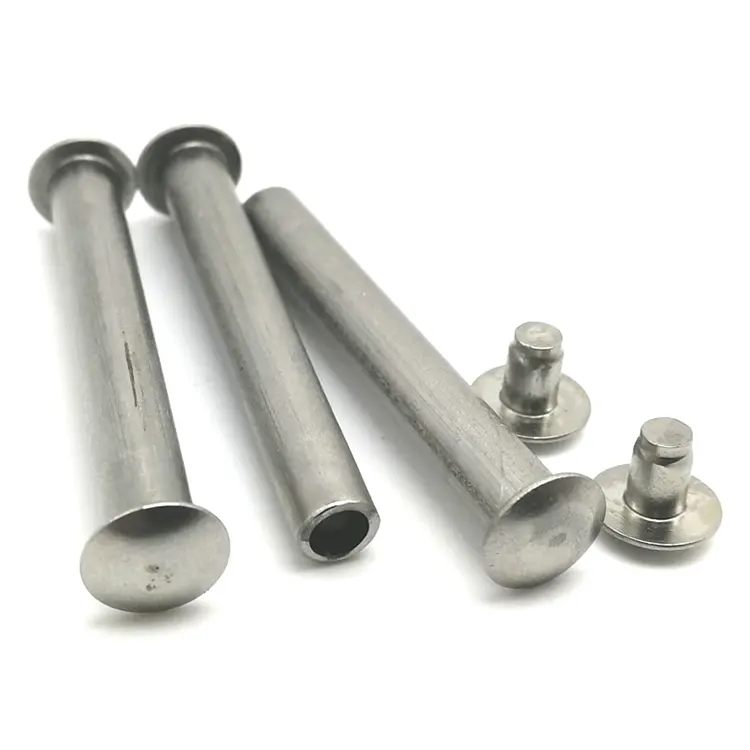
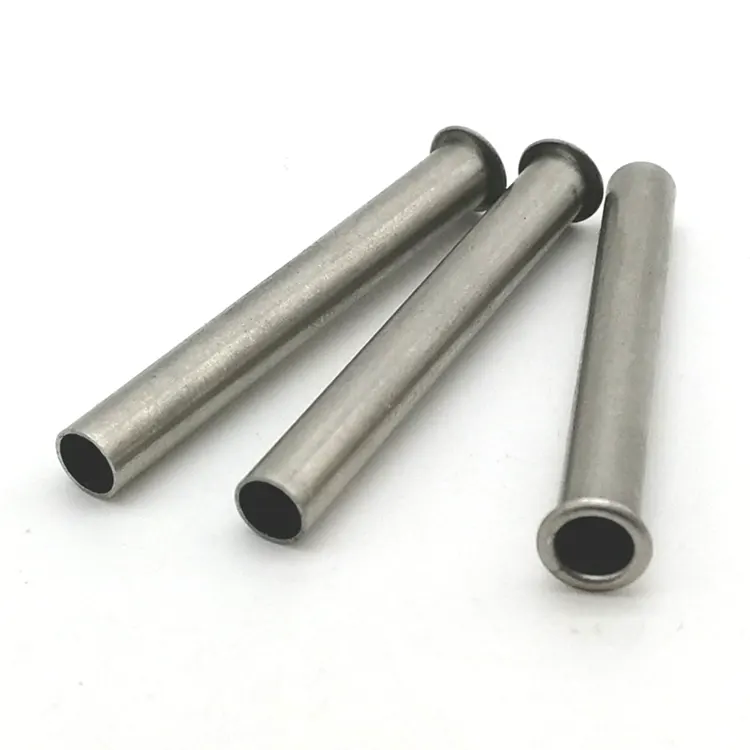

Aluminum Countersunk Head Rivets
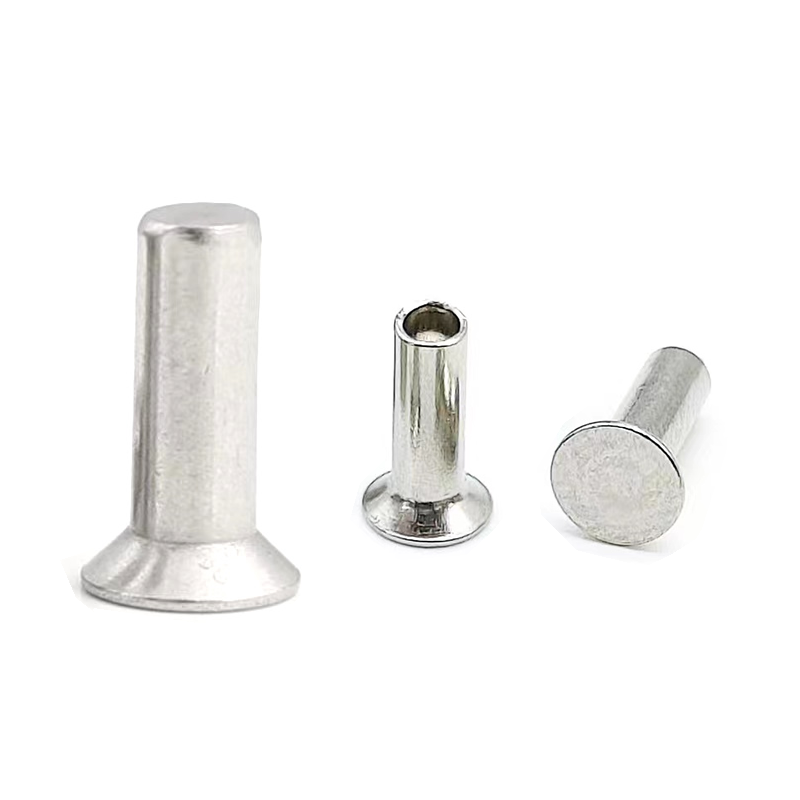
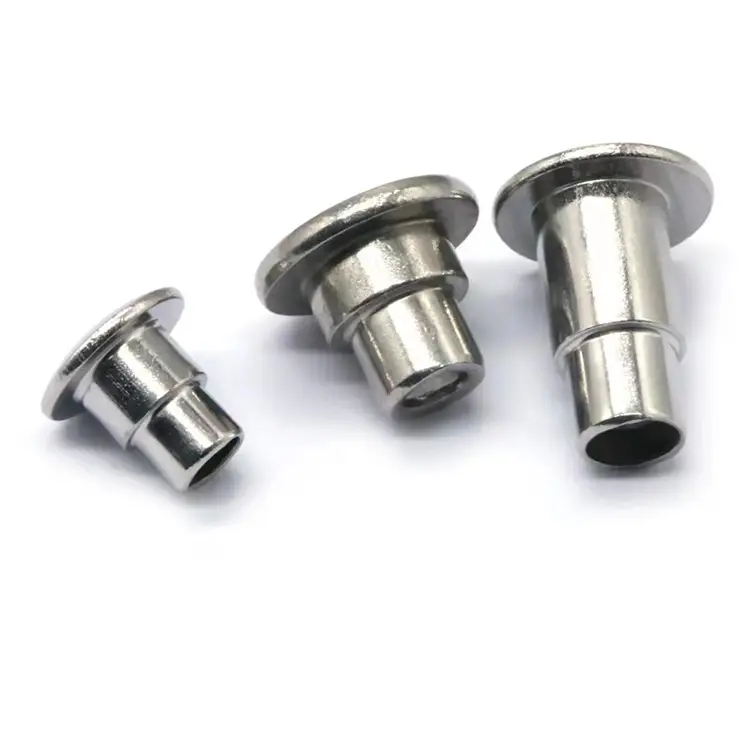
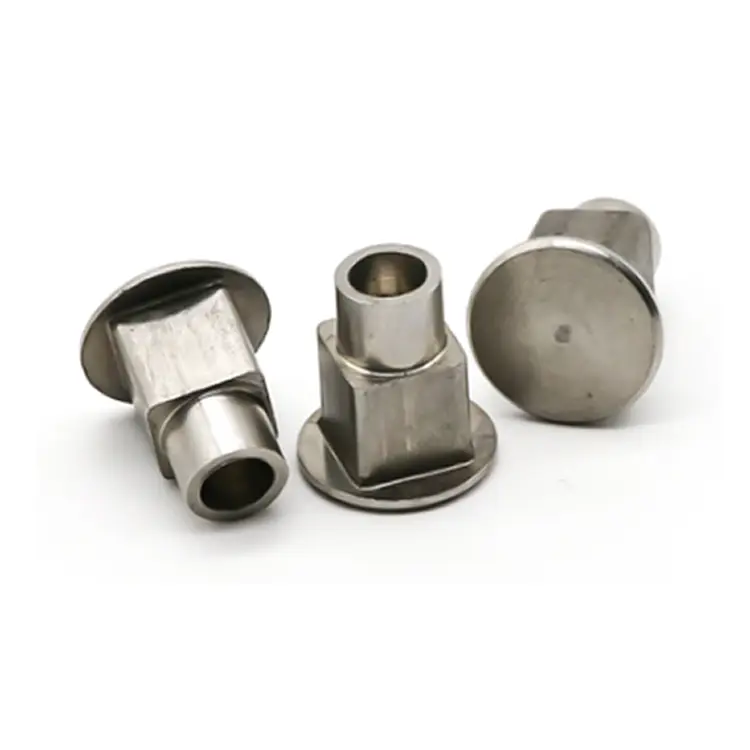
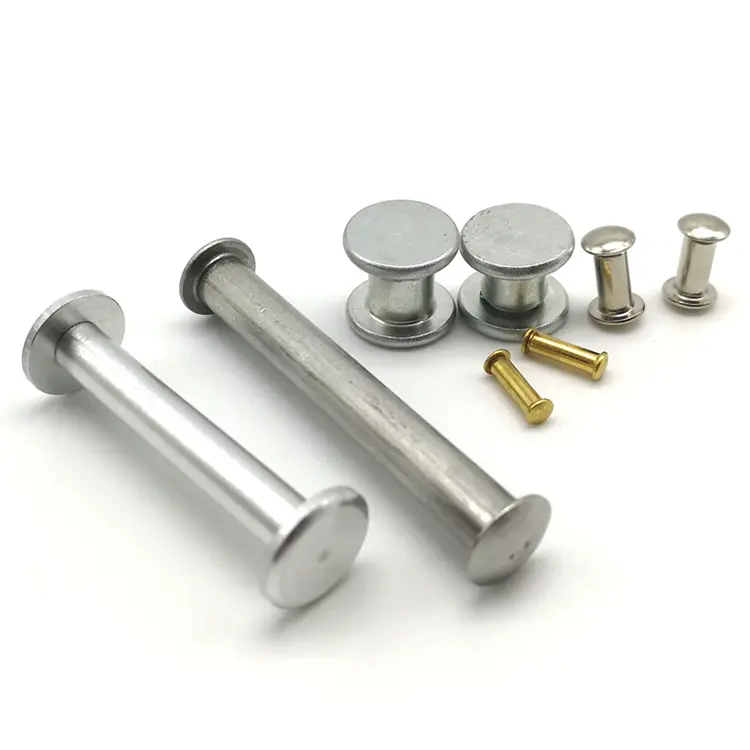
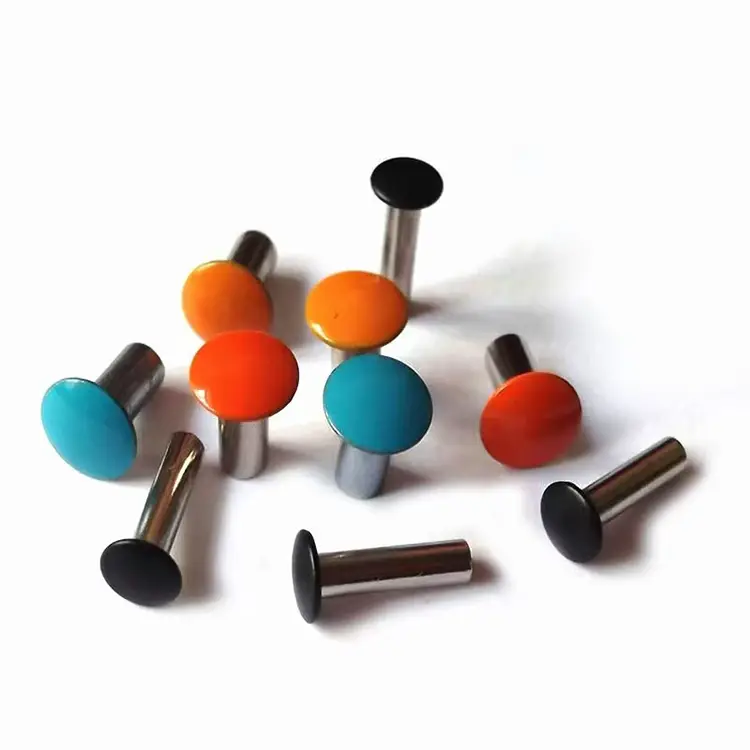
Aluminum countersunk head rivets are fasteners used to connect two or more thin sheets. Their countersunk heads allow them to sit flush with the surface after installation, minimizing protrusions and making them suitable for applications requiring smooth surfaces. Made primarily of aluminum, these rivets are lightweight, corrosion-resistant, and highly conductive, making them widely used in industries such as aviation, automotive, electronics, and construction.
Send Inquiry
Product Description
Aluminum Countersunk Head Rivets – Where Flush Finish Meets Weight Savings
Aerospace interiors, electronic enclosures, and precision instrument panels share a common demand: the surface must be perfectly flush. No protruding heads. No snag points. And in many of these assemblies, every gram matters.
Aluminum Countersunk Head Rivets from Nuote Metals address both requirements at once. The countersunk head seats completely into a pre-machined tapered hole, leaving a monolithic surface. The aluminum body weighs 65% less than steel, resists corrosion without plating, and remains non-magnetic—essential for sensitive electronics. But aluminum's softness introduces unique risks that standard steel countersunk rivets do not face.
The Aluminum-Specific Challenge – Softer Material, Higher Risk
Countersunk rivets in any material share a vulnerability: the head is thin, and the bearing surface is conical. In aluminum, three specific risks emerge.
Risk 1: Angle mismatch amplifies cracking.
Aluminum is softer than steel. When the countersink angle does not match the rivet head exactly—even by 3–5 degrees—the mismatch creates a point load on one side of the head. In aluminum, the thin head edge can crack during setting.
Risk 2: Over-setting flattens the head.
Aluminum requires only 40–60% of the setting force used for steel rivets. Operators accustomed to steel often over-set aluminum countersunk heads, destroying the flush fit.
Risk 3: Galvanic corrosion at the countersink interface.
The countersunk head sits in direct contact with the panel material. If that panel is steel, titanium, or carbon fiber, and moisture enters the joint, galvanic corrosion attacks the aluminum—hidden beneath the flush head where it is hardest to detect.
Technical Specifications – Aluminum Countersunk Head Rivets
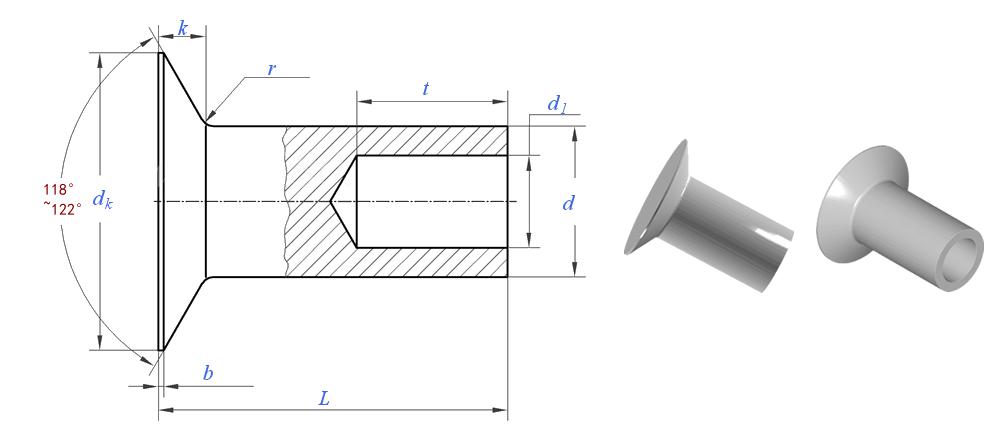
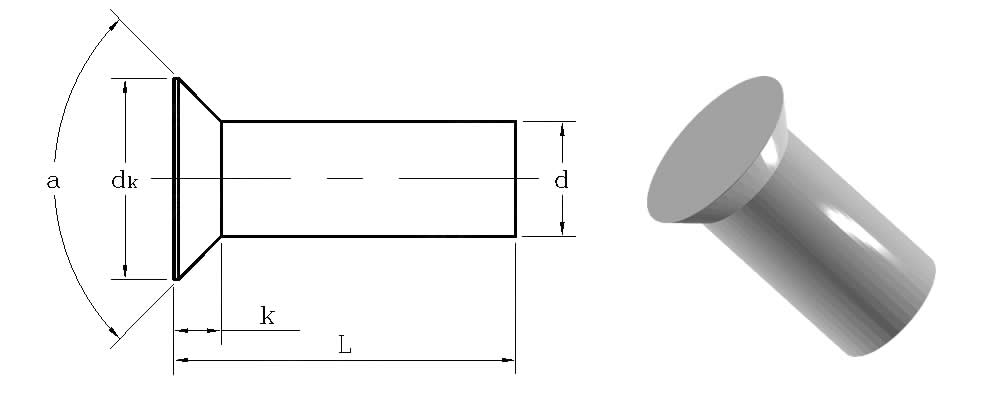
Manufactured to DIN 302 and ISO 1051 dimensions. Custom angles available.
| Parameter | Value / Range | Test Standard / Tolerance |
|---|---|---|
| Shank Diameter (d) | 1.5 – 10 mm | ±0.05mm (≤6mm) |
| Head Diameter (dk) | 1.4×d to 1.6×d | ±0.15mm |
| Head Height (k) | 0.3×d to 0.4×d | ±0.1mm |
| Countersink Angle | 90° (standard) or 120° | ±1° |
| Length (L) | 3 – 40 mm | ±0.3mm |
| Tensile Strength | 110 – 310 MPa (alloy dependent) | ASTM B316 |
| Shear Strength | 70 – 190 MPa | ASTM F606 |
| Density | 2.7 g/cm³ | – |
| Standards | DIN 302, ISO 1051 | Custom per drawing |
Alloys for countersunk applications:
2117: Aerospace-grade. Excellent fatigue resistance. Best for aircraft interiors.
6061-T6: Highest strength (310 MPa). Best for structural brackets.
5052: Best corrosion resistance. Ideal for marine and outdoor flush assemblies.
Countersunk vs. Pan Head – For Flush Aluminum Assemblies
Choose Countersunk when: The surface must be absolutely flush, the aluminum is thick enough (≥2mm) to support a clean countersink, and you can machine the angle accurately.
Choose Pan Head when: A low profile is acceptable, the aluminum is thin (<2mm), or you want to avoid the extra countersinking step. Pan head is simpler, stronger, and less prone to installation errors.
The deciding factor: If flush is mandatory and the material is thick enough, choose countersunk. If flush is preferred but not required, pan head is the safer choice.
Solid or Semi-Tubular – Which Handles Aluminum Better?
Solid countersunk aluminum rivets offer maximum shear strength (up to 190 MPa for 6061-T6) but require higher setting force—and in aluminum, excessive force is the primary cause of head cracking.
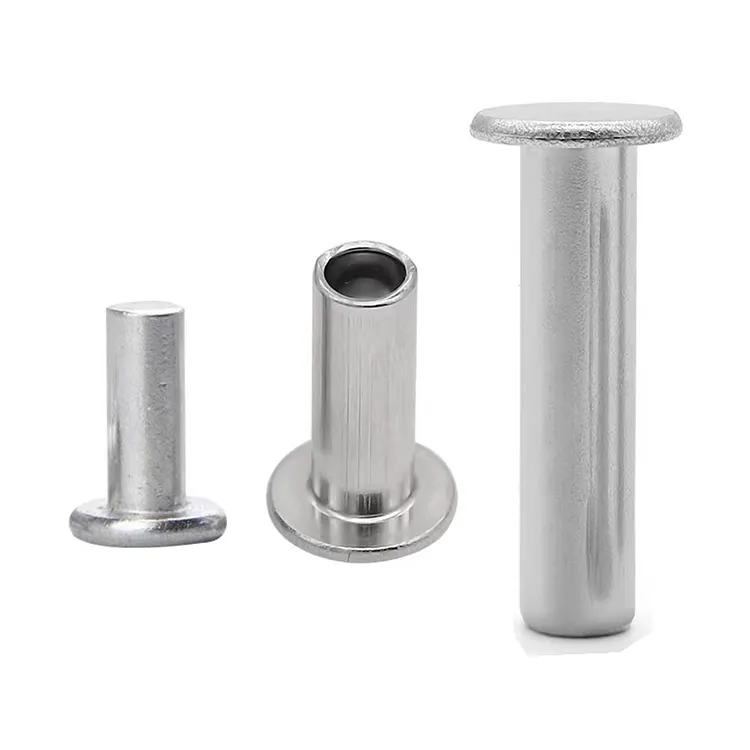
Semi-Tubular countersunk aluminum rivets reduce setting force by 50–60%, making them significantly more forgiving. The hollow tip deforms gradually, allowing the thin head to seat without cracking.
Our recommendation: For aluminum under 3mm, choose semi-tubular. For thicker aluminum or maximum shear strength, choose solid—but use a calibrated press and verify the countersink angle first.
How Nuote Metals Prevents Countersunk Aluminum Failures
Angle tolerance held to ±1°:
A 3° mismatch cracks aluminum heads. Our countersunk heads are machined to ±1° and verified with optical gauging at 10x magnification. We also supply matching countersink cutter specifications.
Fillet radius of 0.5×d minimum:
The junction between the thin head and the shank is the highest-stress area. A sharp radius will crack under load. We maintain a minimum radius of 0.5×d and polish our dies to remove micro-scratches.
Pre-production sampling on your material:
Send us your aluminum thickness, alloy, and countersink method. We produce a small batch and test it on your actual panel material. You receive a setting report with recommended force, anvil type, and photos of the installed head.
Galvanic isolation guidance:
If your rivets will contact steel, titanium, or carbon fiber, we provide written isolation recommendations to prevent hidden corrosion beneath the flush head.
This application-level engineering is why aerospace, electronics, and instrumentation customers choose Nuote Metals.

Frequently Asked Questions About Aluminum Countersunk Head Rivets
Q1: Can Aluminum Countersunk Head Rivets be used in vibrating assemblies?
A: We do not recommend them for high-vibration applications. The countersunk head has less material mass over the shank than round or pan heads, reducing pull-out resistance and vibration tolerance. For vibrating assemblies—motors, generators, portable equipment—choose round head aluminum rivets. However, if flush finish is mandatory and vibration is mild (e.g., electronic enclosures with cooling fans), countersunk rivets can work if you choose solid over semi-tubular. Nuote Metals can advise based on your vibration profile.
Q2: What countersink angle should I use for aluminum—90° or 120°?
A: For most aluminum applications, 90° is the standard and matches DIN 302. For softer alloys or thinner sheets, 120° is sometimes preferred because the wider angle reduces edge pressure and lowers cracking risk. The critical rule is consistency: the countersink cutter and the rivet head must match exactly. At Nuote Metals, we supply both 90° and 120° rivets and can recommend the correct angle based on your alloy, thickness, and setting method.
Q3: How do I prevent galvanic corrosion under a flush aluminum countersunk rivet?
A: Prevention depends on the dissimilar metal: (1) For steel or titanium, use chromate conversion coating (Alodine)—conductive and reduces galvanic potential. (2) For carbon fiber, isolate with a fiberglass or nylon barrier at the countersink. (3) For copper or brass, avoid direct contact in wet environments unless a transition washer is used. (4) Seal the joint edge with corrosion-inhibiting sealant. Nuote Metals can supply chromate-finished rivets and provide written isolation guidance for your material combination.
Hot Tags: Aluminum Countersunk Head Rivets Manufactuer,Countersunk Head Rivets Supplier,China Aluminium Rivets Supplier
Product Tag
Related Categories
Send Inquiry
Please feel free to fill your inquiry in the form below. We will reply you in 24 hours.



X
We use cookies to offer you a better browsing experience, analyze site traffic and personalize content. By using this site, you agree to our use of cookies.
Privacy Policy