Products
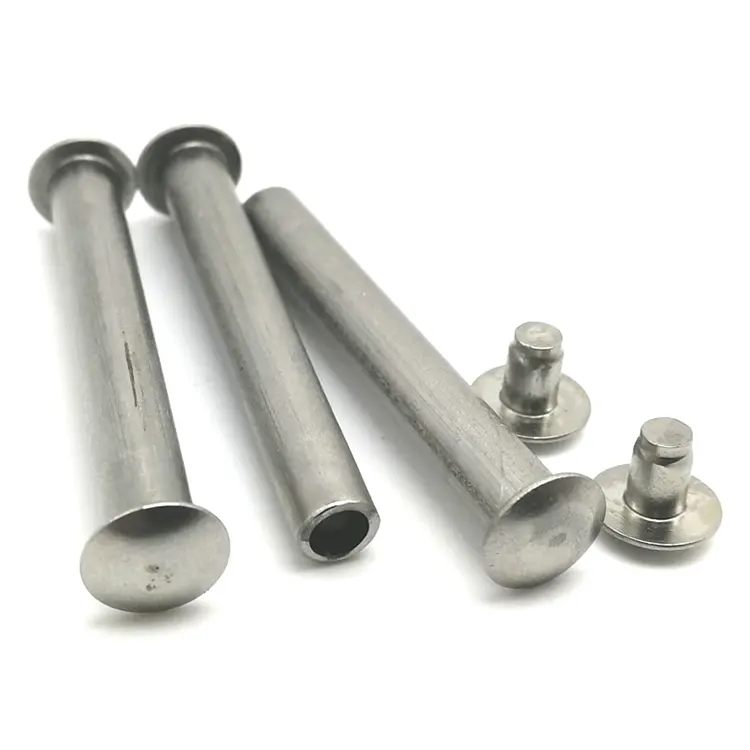
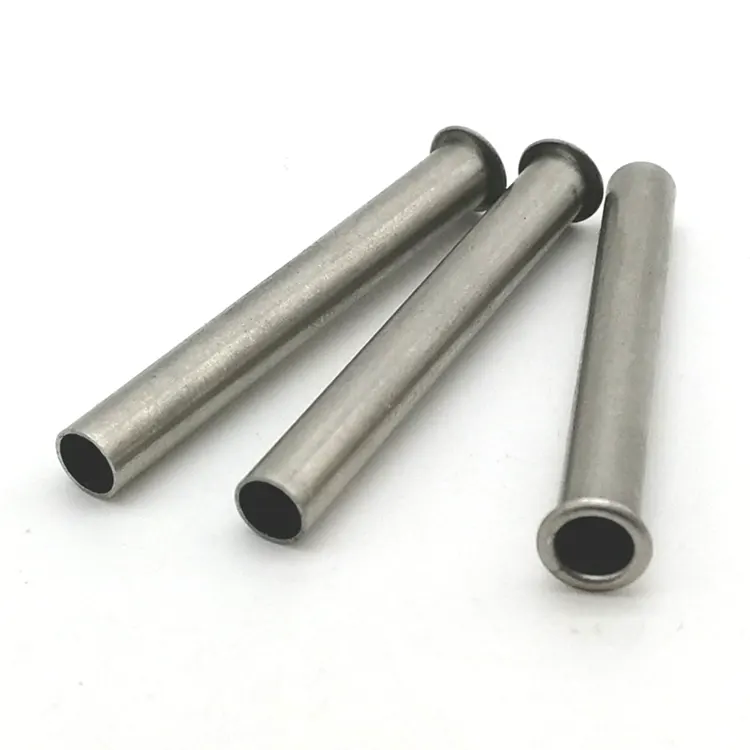

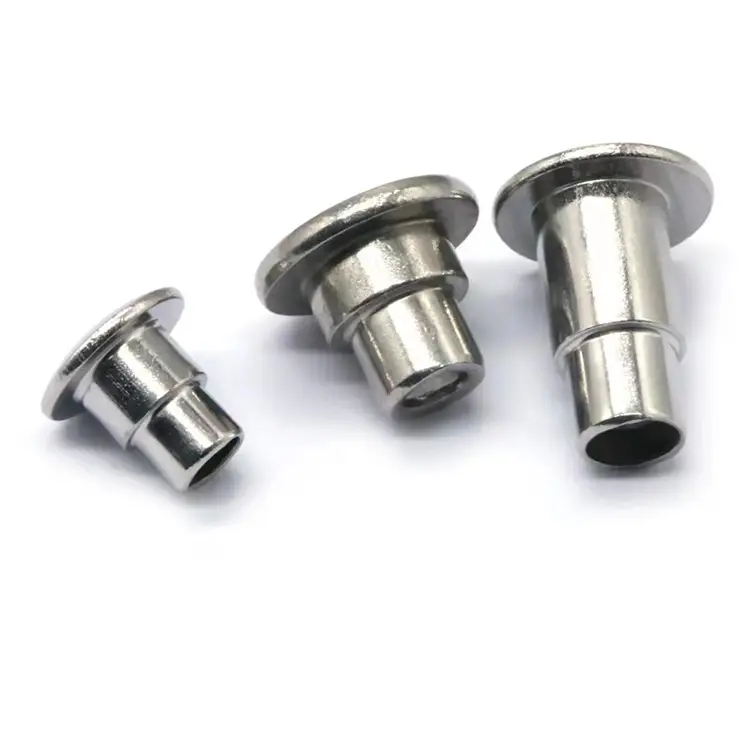
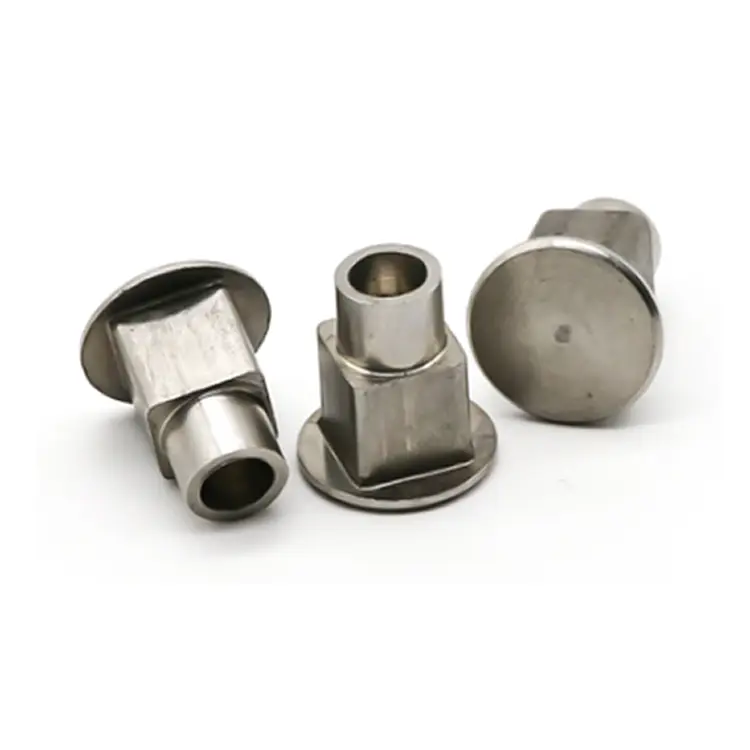
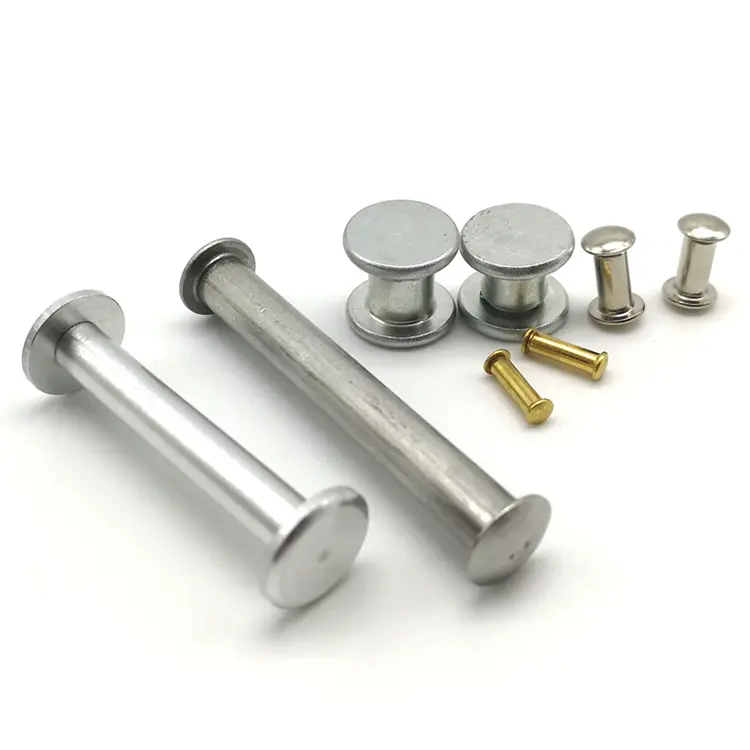
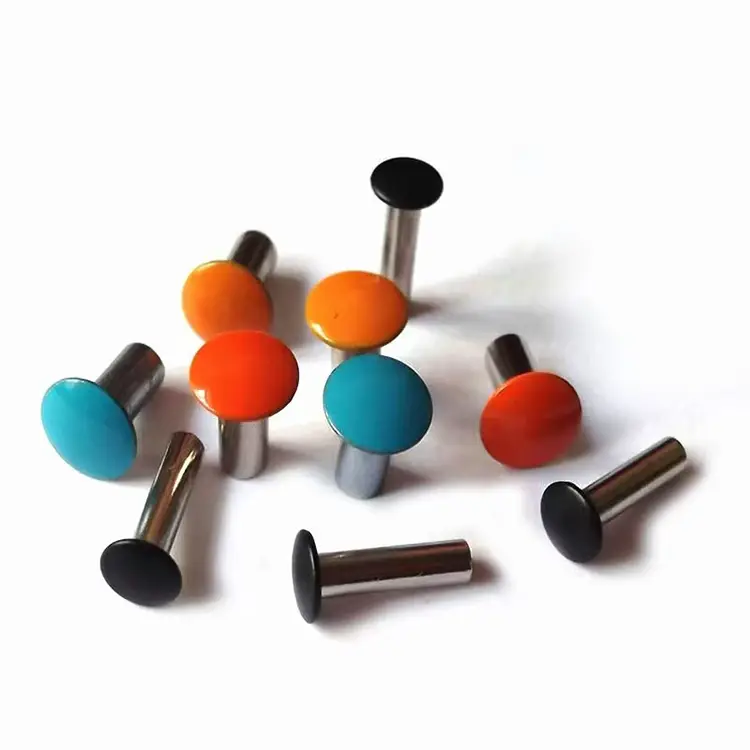
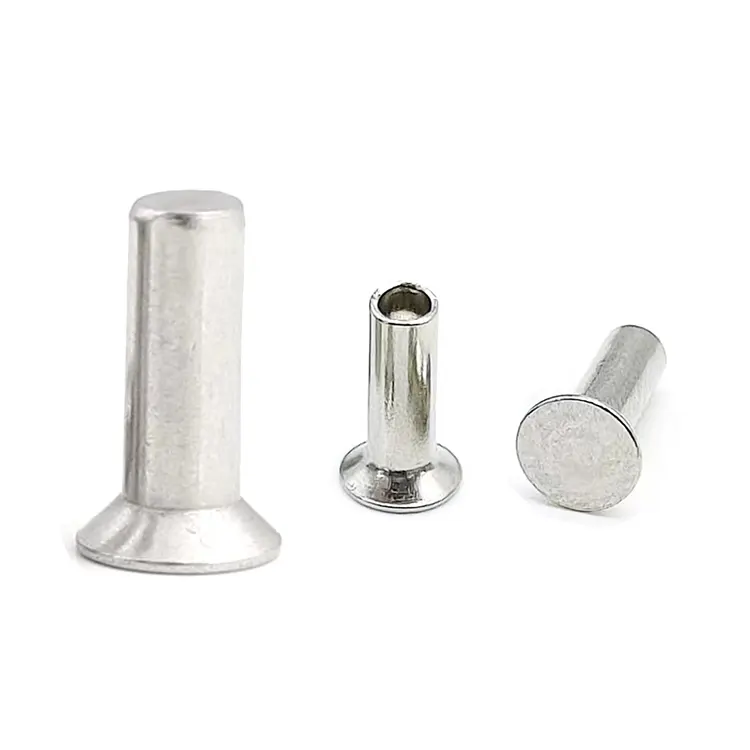
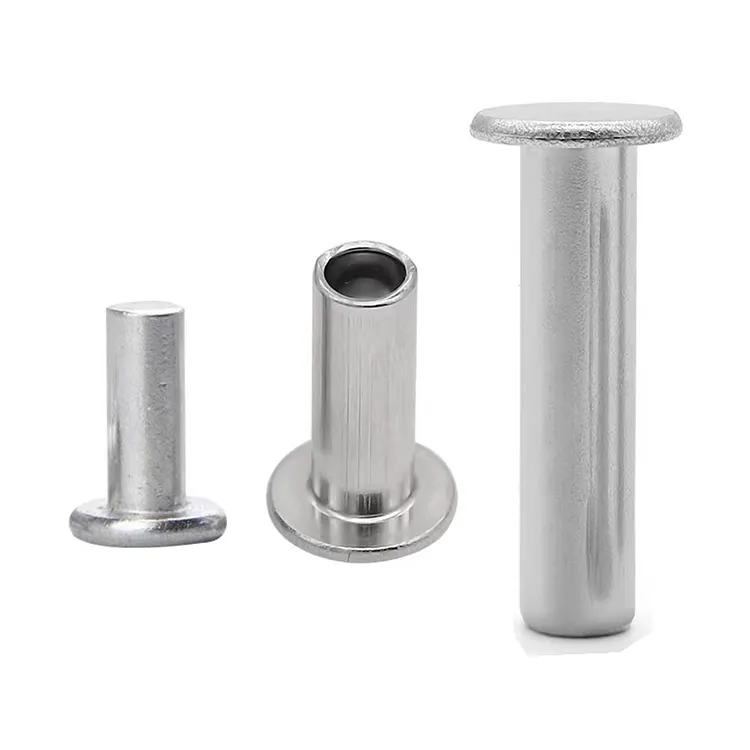
Aluminum Mushroom Head Rivets
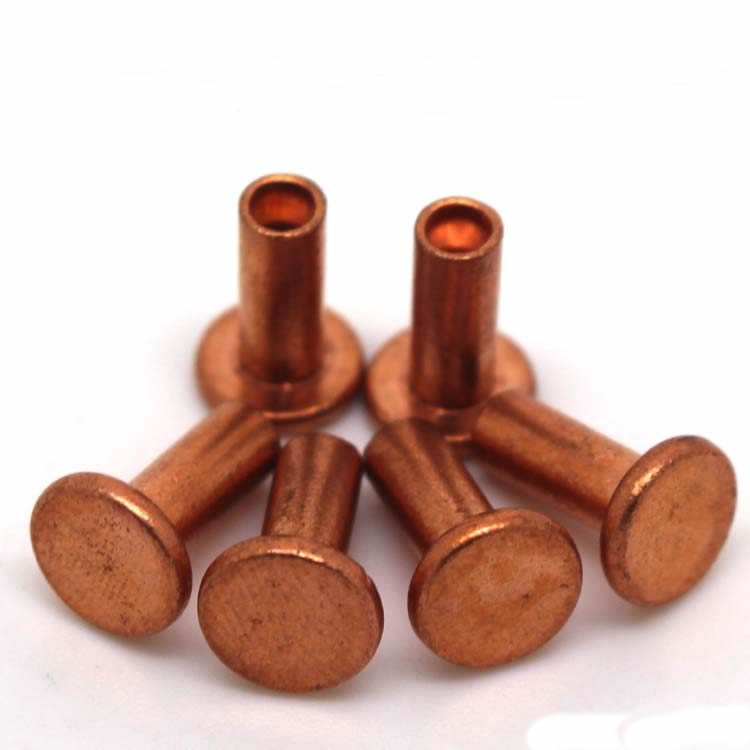
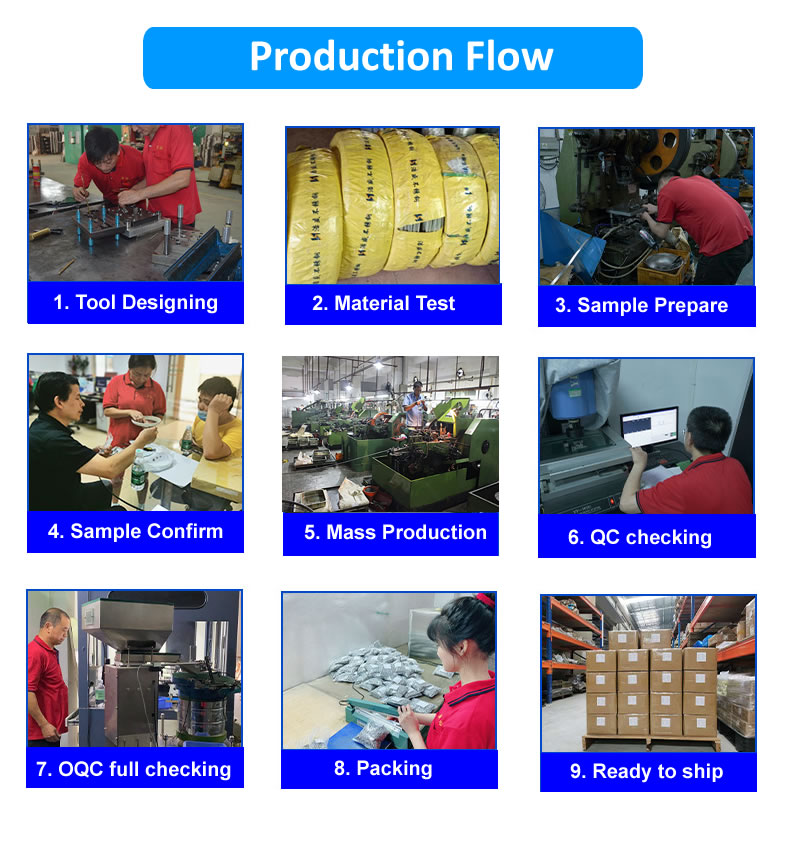
Aluminum mushroom head rivets, thanks to their lightweight, corrosion-resistant, aesthetically pleasing, and practical features, play an important role in numerous applications. Nuote Metals, a Chinese rivet manufacturer, specializes in the production of aluminum mushroom-head rivets. We possess thousands of molds for various rivet specifications and over 40 riveting machines, capable of producing tens of millions of rivets daily. We welcome your inquiries.
Send Inquiry
Product Description
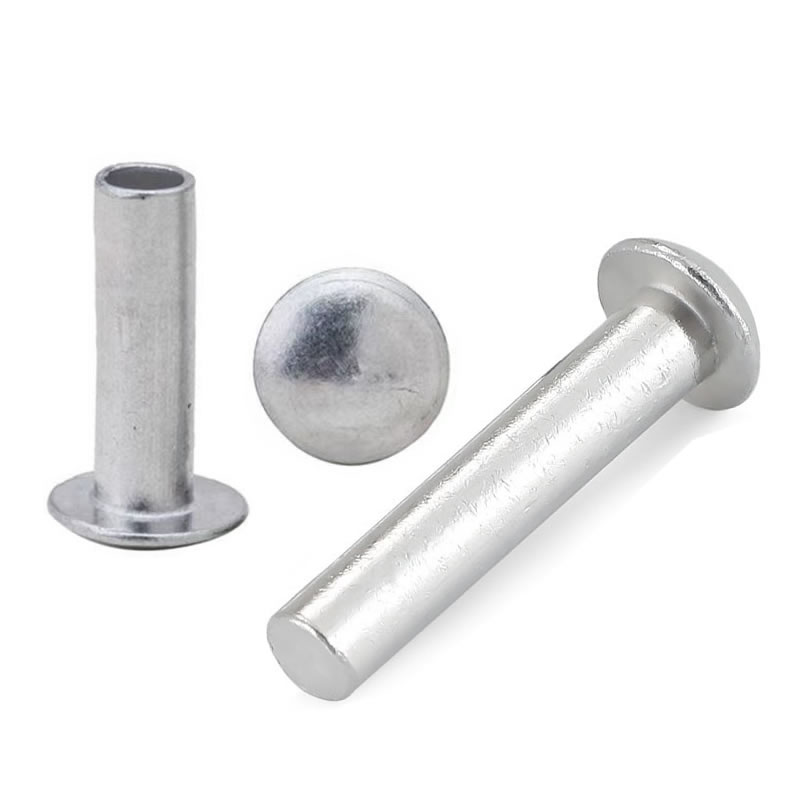
Aluminum mushroom head rivets solve a familiar problem: thin panels need a wide bearing area to prevent pull-through, but adding a separate washer to every rivet increases weight, cost, and assembly time. The mushroom head integrates that washer into the rivet itself—2.0× to 2.5× the shank diameter—while the aluminum body weighs 65% less than steel.
But there is a critical warning that most suppliers won't tell you: aluminum mushroom head rivets are not a direct substitute for steel or stainless steel in every application. If the mating panel is steel, copper, or carbon fiber, galvanic corrosion can destroy the joint from the inside—hidden beneath the wide head where you cannot see it. This article explains where aluminum mushroom heads work best, where they fail, and how to specify them correctly.
The Galvanic Corrosion Trap – Why Aluminum Mushroom Heads Need Special Attention
The mushroom head's wide underside sits in direct contact with the panel surface. If that panel is a dissimilar metal and moisture enters the joint, a galvanic cell forms. Aluminum becomes the anode and corrodes preferentially—often unnoticed until the joint fails.
High-risk combinations (avoid direct contact outdoors):
Aluminum rivet + steel panel
Aluminum rivet + copper or brass panel
Aluminum rivet + carbon fiber composite
Acceptable combinations (dry indoor use):
Aluminum rivet + aluminum panel (ideal—no galvanic mismatch)
Aluminum rivet + coated or painted steel (coating acts as barrier)
Aluminum rivet + stainless steel with isolation washer
Nuote Metals' recommendation: For any outdoor or humid application involving dissimilar materials, use a nylon isolation washer, chromate conversion coating (Alodine), or anodized finish on the rivet. We provide written isolation guidance with every order.
Technical Specifications
| Parameter | Value / Range | Test Standard / Tolerance |
|---|---|---|
| Shank Diameter (d) | 2 – 12 mm | ±0.05mm (≤6mm) |
| Head Diameter (dk) | 2.0×d to 2.5×d | ±0.2mm |
| Head Height (k) | 0.4×d to 0.5×d | ±0.1mm |
| Length (L) | 4 – 50 mm | ±0.3mm |
| Tensile Strength | 110 – 310 MPa (alloy dependent) | ASTM B316 |
| Shear Strength | 70 – 190 MPa | ASTM F606 |
| Density | 2.7 g/cm³ | – |
| Conductivity | 237 W/m·K (6061-T6) | ASTM E1461 |
| Standards | DIN 674 / DIN 675, ISO 1051 | Custom per drawing |
Alloys for wide-head applications:
5052: Best corrosion resistance. Ideal for roofing and outdoor panels.
6061-T6: Highest strength (310 MPa). Best for transportation and structural brackets.
1100: Most ductile and conductive. Best for electrical and decorative use.
Aluminum Mushroom Head vs. Stainless Steel + Washer – Total Cost Comparison
Many buyers currently use a stainless steel rivet with a separate washer. Here is how aluminum mushroom head compares over the life of the assembly.
| Factor | Stainless Steel + Washer | Aluminum Mushroom Head | Advantage |
|---|---|---|---|
| Weight per 1,000 pcs | ~7.8 kg (rivet) + ~2.1 kg (washers) | ~2.7 kg (integral head) | Aluminum – 73% lighter |
| Parts per joint | 2 (rivet + washer) | 1 (rivet only) | Aluminum – simpler |
| Assembly time | Higher – washer handling | Lower – single part | Aluminum – faster |
| Galvanic risk with aluminum panel | High – stainless is cathodic | None – same material | Aluminum – safer |
| Outdoor corrosion resistance | Excellent (stainless) | Good (5052 with anodize) | Stainless – better in harsh marine |
| Cost per 1,000 joints | Higher (two parts) | Lower (one part) | Aluminum – cheaper |
When stainless still wins: High-vibration structural joints, marine environments with constant salt spray, and applications where maximum shear strength is required. For lightweight panels, roofing, signage, and transportation interiors, aluminum mushroom head is the better total-cost choice.
Installation – Three Rules for Aluminum Mushroom Heads
Aluminum is softer than steel. Over-setting is the most common cause of failure.
1. Use semi-tubular for sheets under 2mm. The hollow tip reduces setting force by 50–60%, preventing the wide head from warping or dimpling the panel.
2. Match the anvil to the head diameter. A flat anvil equal to or larger than the mushroom head prevents cupping. A smaller anvil concentrates force and deforms the wide edge.
3. Reduce force to 40–60% of steel settings. Aluminum flows easily. If you use steel-rivet pressure, the dome will flatten and the flush appearance will be lost.
Nuote Metals provides recommended force curves and anvil specifications with every aluminum mushroom head order. For critical projects, we produce a pre-production sample batch and test it on your actual panel material.
How Long Will Aluminum Mushroom Head Rivets Last Outdoors?
Service life depends on alloy and finish.
5052 with anodized finish: 10–15 years in moderate outdoor environments (rain, humidity, occasional salt). The anodized layer adds 5–10μm of protection.
5052 mill finish: 5–8 years. The natural oxide layer protects, but appearance degrades.
6061 with chromate conversion: 8–12 years. Chromate is conductive and corrosion-resistant—best for electrical grounding outdoors.
1100 mill finish: 3–5 years. Soft and less corrosion-resistant. Indoor use only.
For marine or coastal environments: Aluminum mushroom heads are not recommended unless isolated from dissimilar metals and coated with anodize or paint. Stainless steel or copper rivets are better choices for constant salt spray.
Nuote Metals – Aluminum Mushroom Head Manufacturing Support
Nuote Metals has manufactured aluminum fasteners for over 20 years from our ISO 9001:2015 certified factory in China. For mushroom head rivets specifically, we provide:
Wide-head tooling for aluminum flow – multi-stage forming with polished dies and a minimum fillet radius of 0.5×d to prevent cracking.
Pre-production sampling – we test on your actual panel material and provide a setting report with force curves, anvil type, and photos.
Galvanic isolation guidance – written recommendations for dissimilar-metal joints, including washer specs and coating options.
Full traceability – ASTM B316 material certificates with every shipment.
This application-level support is why roofing, transportation, and signage customers choose Nuote Metals for aluminum mushroom head rivets.
Frequently Asked Questions
Q1: Can Aluminum Mushroom Head Rivets replace stainless steel rivets with washers in outdoor roofing?
A: Only if the roofing panel is also aluminum and you use an anodized or chromate finish. For aluminum roofing, mushroom head rivets eliminate the washer, reduce weight by 73%, and avoid galvanic mismatch. For steel or copper roofing, do not use aluminum rivets outdoors—galvanic corrosion will attack the aluminum. In those cases, use stainless steel or copper rivets with washers. Nuote Metals can advise based on your panel material and exposure conditions.
Q2: Why do my aluminum mushroom head rivets crack during setting?
A: Cracking almost always comes from excessive setting force or a sharp fillet radius at the head-shank junction. Aluminum requires only 40–60% of the force used for steel. If you use steel-rivet settings, the wide mushroom head will crack at the edge or flatten. At Nuote Metals, we maintain a minimum fillet radius of 0.5×d and polish our dies to remove micro-scratches. If you share your rivet dimensions and setting pressure, we can recommend a corrected force curve.
Q3: Do Aluminum Mushroom Head Rivets conduct electricity?
A: Yes—aluminum conducts both heat and electricity. 1100 and 6061 alloys offer thermal conductivity up to 237 W/m·K. However, aluminum forms a natural oxide layer that increases electrical contact resistance over time. For grounding applications, choose chromate conversion coating (Alodine)—it is conductive and prevents oxide buildup. For heat sink or thermal transfer applications, mill finish 6061 is suitable. Nuote Metals can supply both finishes and provide conductivity data on request.
Hot Tags: Aluminum Mushroom Head Rivets,China Aluminium Rivets,Aluminium Rivets Supplier
Related Categories
Send Inquiry
Please feel free to fill your inquiry in the form below. We will reply you in 24 hours.



X
We use cookies to offer you a better browsing experience, analyze site traffic and personalize content. By using this site, you agree to our use of cookies.
Privacy Policy