
Why Do Engineers Choose Copper Tubular Rivets for Conductivity, Thermal Management, and Living Patina?
Copper is one of the oldest fastener materials known to industry. But the combination of copper with a fully tubular shape is surprisingly modern. At Nuote Metals, we manufacture copper tubular rivets for customers who need more than mechanical joining – they need electrical continuity, heat dissipation, or a surface that ages beautifully. This guide focuses exclusively on the tubular configuration: fully hollow, lightweight, and low‑force setting.
What Makes a Copper Tubular Rivet Different?
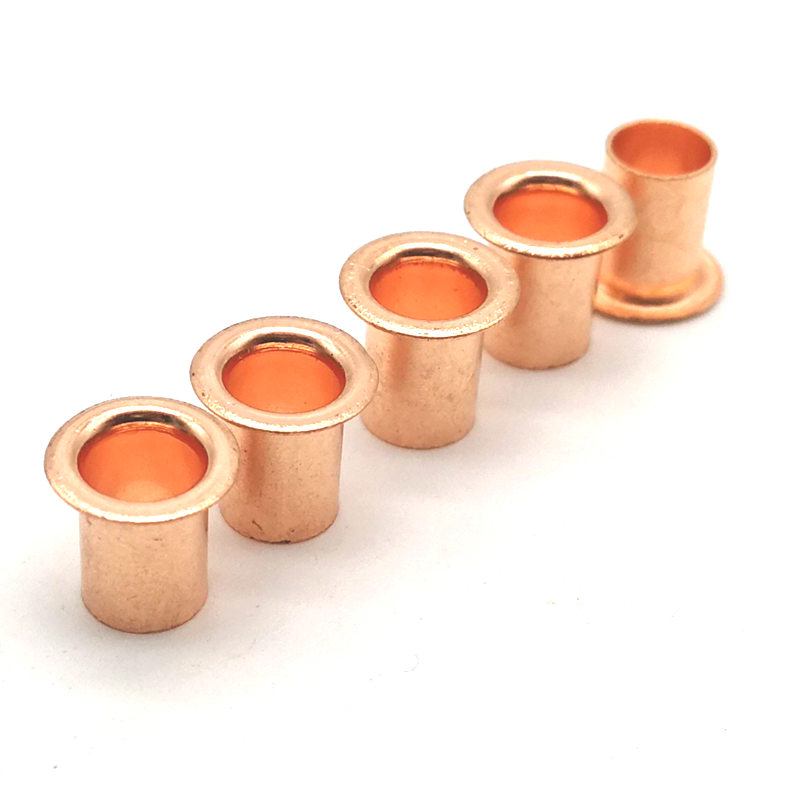
A copper tubular rivet is a permanent fastener with a pre‑formed head and a shank that is hollow from tail to head. Wall thickness typically ranges from 0.20 mm to 0.45 mm, depending on diameter. During installation, the thin copper wall rolls outward with very low force, creating a clean, uniform curl.
Three properties set copper apart from aluminum, steel, or brass:
Electrical conductivity: 100% IACS (International Annealed Copper Standard). No other common fastener metal comes close.
Thermal conductivity: 401 W/m·K – ideal for heat sinks and cooling assemblies.
Natural corrosion resistance: Forms a protective green patina (basic copper carbonate) in outdoor atmospheres.
When you combine these properties with a tubular shape, you get a fastener that carries current, transfers heat, sets with light pressure, and adds almost no weight.
Copper Tubular vs. Other Materials – A Practical Comparison
The table below places copper tubular rivets alongside aluminum and brass tubular rivets – all fully hollow, same diameter.
| Property | Copper (C11000) | Aluminum (5056) | Brass (C2680) |
|---|---|---|---|
| Electrical conductivity (% IACS) | 100% | 61% | 28% |
| Thermal conductivity (W/m·K) | 401 | 237 | 120 |
| Shear strength (MPa) | 140–180 | 100–130 | 150–190 |
| Corrosion in salt spray (ASTM B117) | Good (patina forms) | Very good (5056) | Moderate (dezincification risk) |
| Setting force (relative) | Low | Low | Low |
| Aesthetic aging | Red → brown → green | Matte silver (anodized) | Gold → dark brown |
Our observation: For pure electrical or thermal duty, copper is unmatched. For saltwater immersion, 316 stainless steel tubular is better. For decorative gold colour indoors, brass is cheaper. Choose copper when conductivity or patina matters.
Four Real Applications Where Copper Tubular Rivets Excel
Busbar and Grounding Connections
A power distribution panel needs permanent, low‑resistance joints. Bolts loosen over time. Solid copper rivets work but require high setting force. Nuote Metals supplied C11000 copper tubular rivets to a switchgear manufacturer. The tubular shape reduced setting force by 40%, and the hollow centre allowed a visual inspection of full roll formation. Contact resistance measured below 0.1 mΩ after 1,000 thermal cycles.
LED Heat Sink Attachment
Thermal management is critical for high‑power LEDs. An automotive lighting maker used aluminium rivets to attach finned heat sinks to LED boards. Aluminium’s thermal conductivity (237 W/m·K) was acceptable, but they wanted better. Switching to copper tubular rivets increased the thermal path efficiency by nearly 70%. The lower setting force also prevented cracking of the ceramic LED substrate.
Heritage Roofing and Flashing
A historic building restoration required fasteners that would match the existing copper roof. Stainless steel was visually wrong. Solid copper rivets were authentic but slow to install. The contractor used copper tubular rivets from Nuote Metals – same material, same patina development, but 50% faster setting. After three years, the rivets are indistinguishable from the original solid ones.
Antimicrobial Touch Surfaces
Copper’s natural antimicrobial property (tested per EPA and ISO 22196) is valuable for high‑touch products. A manufacturer of public handrails embedded copper tubular rivets as decorative and functional elements. The rivets kill >99.9% of bacteria within two hours. The tubular shape allowed a low profile and did not interfere with the handrail’s smooth surface.
Technical Parameters – Our Factory Standards
Nuote Metals manufactures copper tubular rivets from C11000 (ETP copper) and C12200 (phosphorus deoxidised copper) . The table below shows our standard dimensional range.
| Parameter | Available Range | Tolerance |
|---|---|---|
| Shank outside diameter (d) | 1.6 mm – 8 mm | ±0.05 mm |
| Wall thickness | 0.20 mm – 0.45 mm (depending on d) | ±0.03 mm |
| Flange diameter | 3 mm – 16 mm | ±0.10 mm |
| Overall length (head to tail) | 2.5 mm – 12 mm | ±0.10 mm |
| Head style | Flat, round, countersunk | ±0.10 mm |
For diameters below 2 mm, tubular becomes difficult to form. We recommend semi‑tubular copper rivets for very small sizes.
Available finishes:
Natural (as‑formed) – bright red‑orange, will patina outdoors
Lacquered – clear coating prevents tarnishing (indoor use)
Tin‑plated – solderable, prevents surface oxidation
Antique / oxidised – dark brown pre‑patina for vintage look
All finishes are RoHS compliant.
Installation – Copper’s Unique Behaviour
Copper is soft and ductile, which makes setting easy – but it also marks easily.
Recommended Setting Force
For a 3 mm shank, 1.5 – 2.5 mm material stack: 400 – 700 N. Use a pneumatic or servo press. A hand press works for low volume.
Hole Preparation
Hole diameter = shank OD + 0.05 to 0.10 mm. Deburring is essential – a sharp burr will split the thin copper wall.
Tooling
Use polished, hardened steel anvils. Rough or dirty tooling leaves permanent marks on the soft copper surface. A shallow‑concave anvil produces a clean, even curl.
Common Mistakes
| Mistake | Consequence | Correction |
|---|---|---|
| Hole too large (OD +0.20 mm) | Wavy, weak curl | Reduce hole size |
| Burr on hole edge | Split barrel | Deburr both sides |
| Flat anvil | Crushed, flattened curl | Switch to concave anvil |
| Multiple strikes | Work hardening, cracking | Single stroke only |
【copper tubular rivets】FAQ
Q1: Can I use copper tubular rivets outdoors? Will they turn green?
A: Yes, and the green patina is a feature, not a defect. Copper exposed to air and moisture forms a brown oxide (cuprite) first, then over several years a green carbonate (basic copper carbonate). This patina is stable, non‑porous, and stops further corrosion. For outdoor applications like roofing, flashing, or garden products, the patina is desirable. If you want to keep the bright copper colour, specify lacquered copper tubular rivets – but the lacquer will eventually wear off outdoors. Nuote Metals recommends natural (unlacquered) copper for any outdoor application where long‑term corrosion resistance is required.
Q2: What is the difference between C11000 and C12200 copper for tubular rivets?
A: C11000 (electrolytic tough pitch) is the standard high‑conductivity copper – 100% IACS. It is soft, easy to set, and suitable for most electrical and decorative applications. C12200 (phosphorus deoxidised) contains a small amount of phosphorus (0.015–0.040%) as a deoxidiser. It has slightly lower conductivity (85–90% IACS) but better weldability and resistance to hydrogen embrittlement. It is also more resistant to corrosion in certain water conditions. Our recommendation: For general electrical and decorative use, use C11000. For plumbing, water contact, or any application that involves welding or brazing near the rivet, use C12200.
Q3: How do I calculate the correct length for a copper tubular rivet?
A: Copper is soft and rolls easily, so you need less protruding material than for steel. Use this formula: Barrel Length = Material Stack Thickness + (0.4 to 0.7) × Shank Diameter. Example: total stack 2.0 mm, shank diameter 3.0 mm. Use the middle of the range: 0.55 × 3.0 = 1.65 mm. Total length = 2.0 + 1.65 = 3.65 mm. Round up to the nearest standard length (e.g., 3.8 mm or 4.0 mm). For very soft materials (thin fabric, rubber), use 0.4 × d. For harder stacks (leather, rigid plastic), use 0.7 × d. Nuote Metals can send free sample rivets in two adjacent lengths for you to test – just tell us your stack thickness.
Quality and Transparency
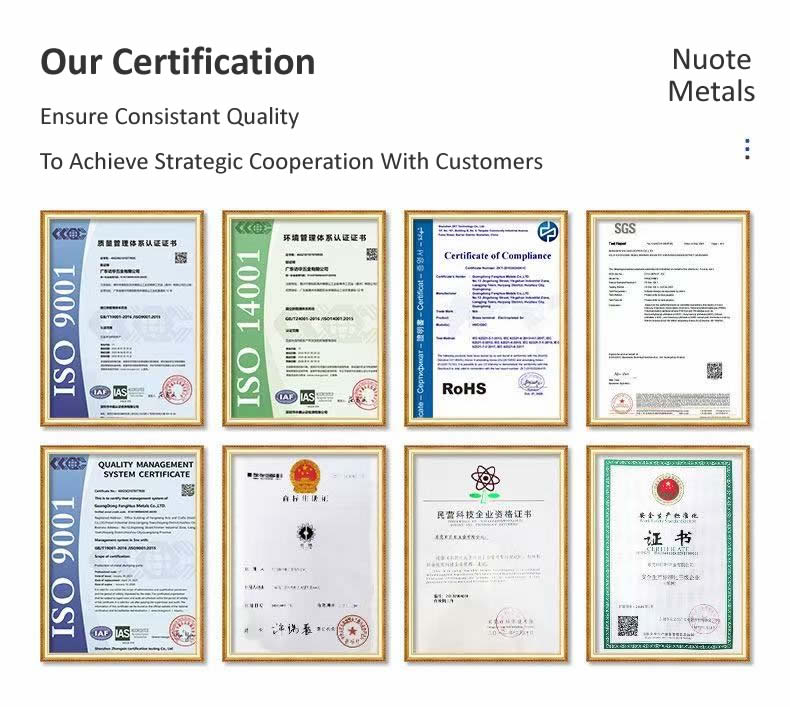
Nuote Metals operates under ISO 9001:2015. Each batch of copper tubular rivets is traceable to the raw material certificate (heat number), production press log, and final inspection report. We perform AQL sampling per ISO 2859 – critical dimensions at 1.0, major at 2.5. RoHS declarations are included at no extra charge.
Our customer policies:
- Free samples (stocked sizes) – pay only courier
- Custom lengths and flange shapes – tooling ready in 10 days
- MOQ 20,000 pieces for standard sizes; lower for first orders
- Lead time: stock 3–5 days; custom 15–20 days
We have supplied copper tubular rivets to customers in 30+ countries, including power distribution, lighting, heritage construction, and medical device industries.
Send Inquiry



X
We use cookies to offer you a better browsing experience, analyze site traffic and personalize content. By using this site, you agree to our use of cookies.
Privacy Policy