
Why Do We at Nuote Metals Recommend Aluminum Rivets for Lightweight, Corrosion‑Resistant Assemblies?
From aircraft fuselages to electric vehicle battery trays, aluminum rivets hold together some of the most weight‑sensitive structures ever built. We have supplied millions of these fasteners to aerospace tier‑ones, marine fabricators, and electronics manufacturers. Over the years, we have learned exactly where aluminum rivets outperform steel – and where they do not. Here is our experience‑based guide.
The Three Aluminum Rivet Types We Manufacture
We produce aluminum rivets in three configurations. The table below shows how they differ.
| Type | Hollow Depth | Setting Force (vs. solid Al) | Our Recommendation For |
|---|---|---|---|
| Solid | None | Baseline | Primary aircraft structure, high‑load marine hardware |
| Semi‑Tubular | 20–40% of shank | 30–40% less | General assembly, automotive components, electronics enclosures |
| Tubular | 100% of shank | 50–60% less | Lightweight decorative parts, soft material joining, low‑load assemblies |
Our rule of thumb: For structural integrity, go solid. For high‑volume production, semi‑tubular is the workhorse. For craft and low‑load jobs, tubular saves time and money.
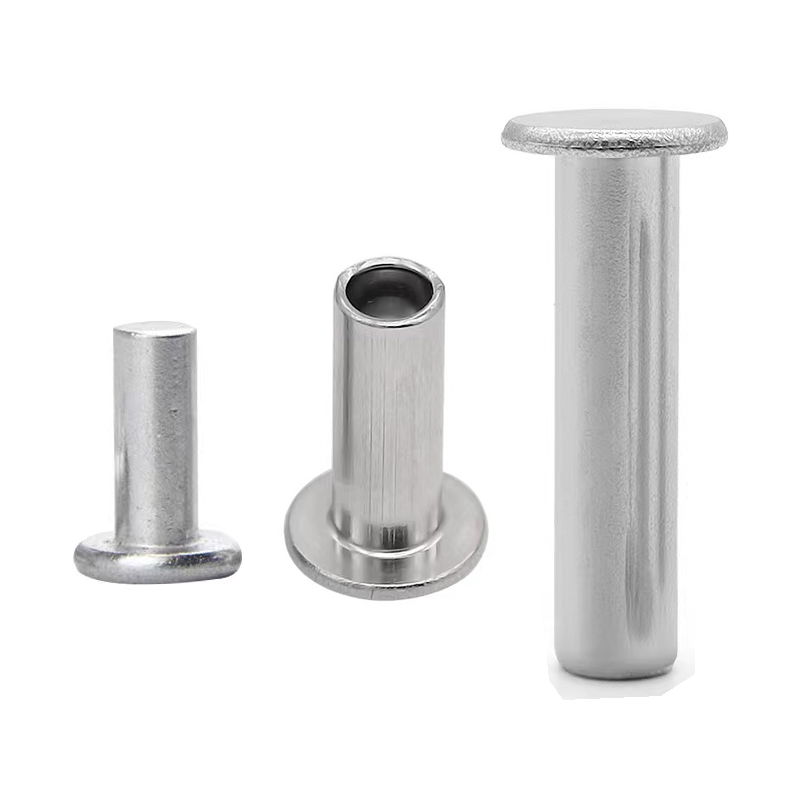
What Makes Aluminum Rivets Different – From Our Production Floor
Aluminum is not just lighter steel. Its unique properties solve specific engineering problems.
Four Properties That Matter to Our Customers
Weight savings: Aluminum weighs about one‑third as much as steel. Replacing steel rivets with aluminum can cut fastener weight by 65% – critical for aerospace and racing.
Natural corrosion resistance: Aluminum forms a protective oxide layer. In most atmospheres, it outperforms plain steel and even some coated steels.
Non‑magnetic: Essential for electronics, MRI rooms, and military applications where magnetic interference is unacceptable.
Good thermal and electrical conductivity: About 61% of copper (IACS) – sufficient for many electrical grounding and heat transfer applications.
One Trade‑Off to Remember
Aluminum is softer than steel. That means lower strength for the same diameter. Designers must account for this by using larger diameters or more rivets. We help customers make that calculation.
Our Aluminum Alloy Guide – Which Grade Should You Specify?
Not all aluminum is the same. We stock five common alloys for aluminum rivets because each serves a different purpose.
| Alloy (UNS) | Common Name | Shear Strength (MPa) | Best Application | Why We Recommend It |
|---|---|---|---|---|
| 1100 | Commercially pure | 55–70 | Decorative rivets, soft material joining, craft work | Softest, easiest to set, excellent ductility |
| 5056 | Marine grade | 200–220 | Boat hardware, saltwater applications, magnesium joints | High corrosion resistance, good strength |
| 6061 | Structural | 180–200 | General purpose, automotive, electronics | Balanced strength and workability |
| 2017 | Duralumin (heat‑treated) | 250–280 | Aircraft structural rivets (high strength) | High strength, but requires heat treatment |
| 2024 | Aircraft grade | 270–310 | Primary aerospace structure (wings, fuselage) | Highest strength, limited corrosion resistance (needs cladding) |
Our advice for most buyers: Use 5056 aluminum rivets for marine or outdoor applications. Use 6061 for general industrial work. Use 1100 for soft materials or decorative jobs. For aerospace, we will discuss 2017 or 2024 with you in detail.
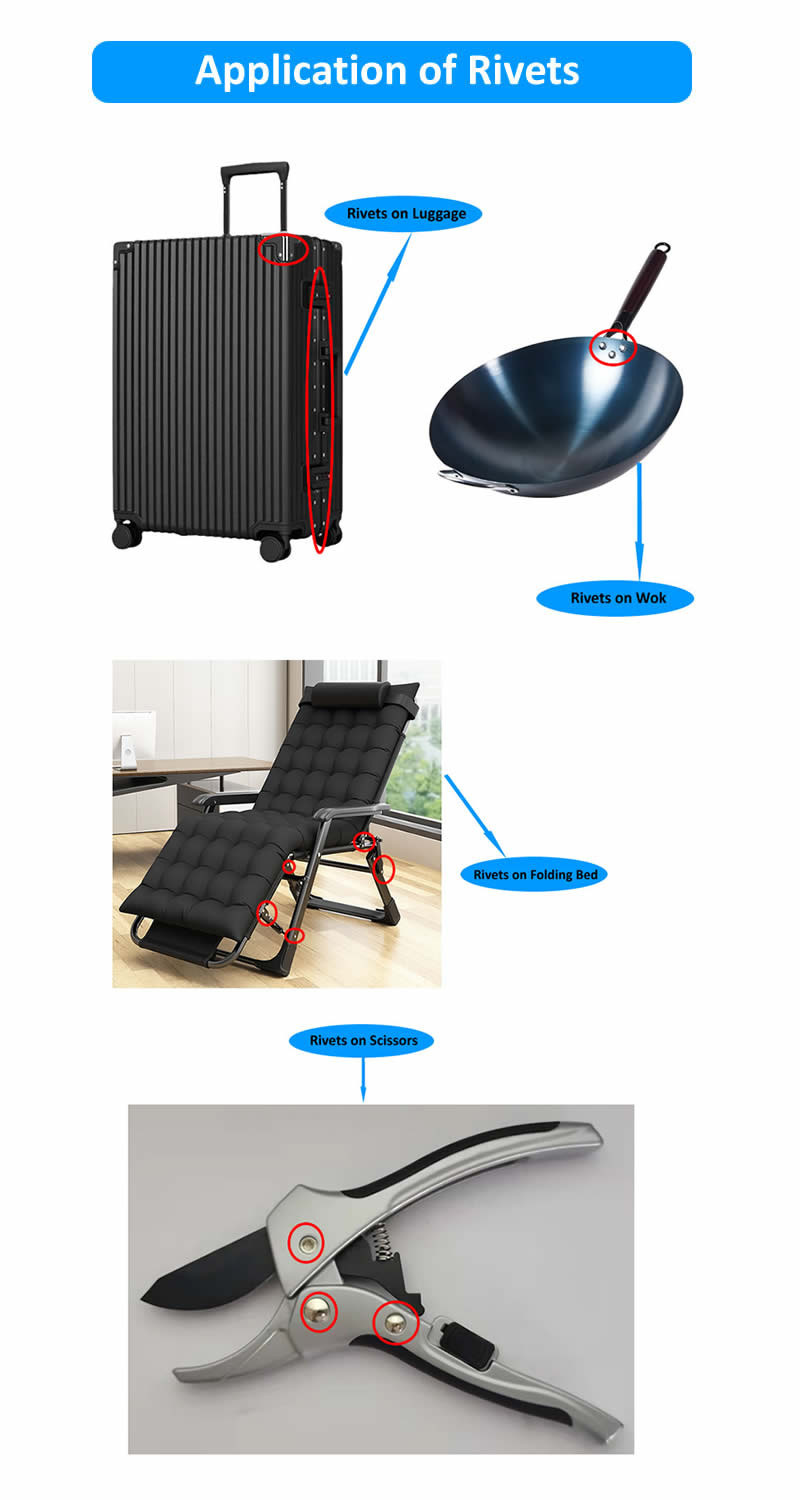
Where Our Customers Use Aluminum Rivets (Real Examples)
We have shipped aluminum rivets to every continent. Here are the most common applications.
Aerospace and Aviation
Aircraft fuselage skins – Solid aluminum rivets (2017, 2024) are the standard for primary structure.
Interior panels – Semi‑tubular aluminum rivets fasten lightweight cabin components.
Wing ribs and spars – High‑strength solid aluminum rivets.
Automotive and Electric Vehicles
Battery tray assemblies – Semi‑tubular aluminum rivets join lightweight battery enclosures.
Interior trim – Tubular aluminum rivets for non‑structural attachments.
Heat shields – Aluminum rivets resist heat and save weight.
Marine and Boat Building
Boat hulls and decks – 5056 aluminum rivets resist saltwater corrosion.
Pontoon and dock hardware – Semi‑tubular aluminum rivets for fast assembly.
Electronics and Enclosures
Consumer electronics housings – Small aluminum semi‑tubular rivets for laptops, power supplies.
Electrical junction boxes – Non‑magnetic, non‑sparking aluminum rivets.
General Manufacturing
Lighting fixtures – Tubular aluminum rivets for quick assembly.
Signage and displays – Decorative aluminum rivets with coloured finishes.
Aluminum vs. Steel vs. Stainless – A Quick Comparison From Our Lab
We produce all three, so we can be objective. Here is how aluminum rivets compare.
| Property | Aluminum (5056) | Steel (low carbon) | Stainless 304 |
|---|---|---|---|
| Weight (density g/cm³) | 2.66 | 7.85 | 8.00 |
| Shear strength (MPa) | 200–220 | 300–350 | 500–550 |
| Corrosion resistance (general) | Good | Poor (needs plating) | Excellent |
| Corrosion resistance (saltwater) | Excellent (5056) | Poor | Excellent (316 better) |
| Non‑magnetic | Yes | No (magnetic) | Yes (annealed) |
| Setting force required | Low | Medium | High |
| Typical cost | Low‑Medium | Low | High |
Our simple rule: If weight is the priority, choose aluminum. If strength is the priority, choose steel. If both weight and strength matter, we will help you calculate the right diameter and spacing.
Our Installation Tips – Learned From Decades of Customer Support
Aluminum is forgiving, but it has quirks. Here is what works.
Hole Preparation
Drill or punch the hole 0.05–0.10 mm larger than the rivet shank.
Deburr thoroughly. A sharp burr can crack soft aluminum during roll formation.
Setting Pressure
Use 20–30% lower pressure than you would for a steel rivet of the same diameter.
Aluminum work‑hardens quickly. Use a single, clean stroke rather than multiple hits.
Tooling
Polished, hardened steel anvils and punches. Rough tooling leaves marks on the soft aluminum surface.
Keep tooling clean – aluminum can gall and stick to punches.
Common Mistakes We Have Helped Customers Fix
| Mistake | Consequence | Our Fix |
|---|---|---|
| Too much pressure | Flattened, cracked head | Reduce force by 20–30% |
| Burred hole | Split shank or cracked roll | Deburr both sides |
| Wrong alloy for saltwater | Corrosion (pitting) of 6061 in marine use | Switch to 5056 |
| Multiple setting hits | Work hardening and cracking | Use single‑stroke press |
We include a one‑page setting guide with every sample order. Just ask.
【aluminum rivets】FAQ – Answers to the Three Questions We Hear Most
Q1: What is the difference between solid, semi‑tubular, and tubular aluminum rivets – and which one should I use?
A: At Nuote Metals, we make all three. The difference is the hollow depth, which affects strength and setting force. Solid aluminum rivets have no hollow section – they offer the highest shear strength (200–310 MPa depending on alloy) and are used for primary aircraft structure, heavy marine hardware, and load‑bearing joints. Aluminum semi‑tubular rivets have a hollow cavity extending 20–40% from the tail, reducing setting force by 30–40% while retaining 80–95% of solid rivet strength. They are the most popular choice for automotive, electronics, and general assembly. Aluminum tubular rivets are fully hollow – they set with very low force but provide only 50–70% of solid rivet strength. Use them for lightweight decorative attachments, soft materials (leather, plastic), and low‑load assemblies. Our recommendation: For structural joints, choose solid. For high‑volume production, choose semi‑tubular. For crafts or non‑structural work, choose tubular.
Q2: Are aluminum rivets strong enough for structural applications like aircraft or bridges?
Yes, but with the right alloy and design. Aluminum rivets have been used in aircraft since the 1920s. Modern aerospace relies on 2017 and 2024 aluminum rivets for primary fuselage, wing, and empennage structures. These heat‑treated alloys offer shear strengths of 250–310 MPa – comparable to mild steel but at one‑third the weight. For bridges or heavy load‑bearing structures, however, steel or stainless steel rivets are usually preferred because aluminum has lower fatigue strength and a lower melting point. Our advice: If your application is in aerospace, marine, or automotive – where weight savings justify careful engineering – aluminum rivets are excellent. For heavy civil structures (bridges, cranes), we recommend steel or stainless steel. Tell us your loads, and we will calculate the required rivet size and spacing.
Q3: Can I use aluminum rivets outdoors or in saltwater? What alloy should I choose?
A: Yes, but you must choose the right alloy. 5056 aluminum rivets are specifically designed for marine and outdoor use. They contain magnesium and chromium, which provide excellent resistance to saltwater corrosion. In contrast, 6061 aluminum rivets are fine for indoor or mild outdoor use but will pit and corrode in direct saltwater exposure within months. 2024 aluminum rivets (high‑strength aerospace alloy) have poor corrosion resistance and must be clad with pure aluminum or painted if used outdoors. Our recommendation: For any outdoor application within 5 km of saltwater, specify 5056 aluminum rivets. For general outdoor use away from salt (roofing, signage), 6061 with a painted or anodized finish is sufficient. We can also supply anodized aluminum rivets in clear, gold, or black for added protection and aesthetics. Free samples of 5056 vs. 6061 are available – test them in your environment.
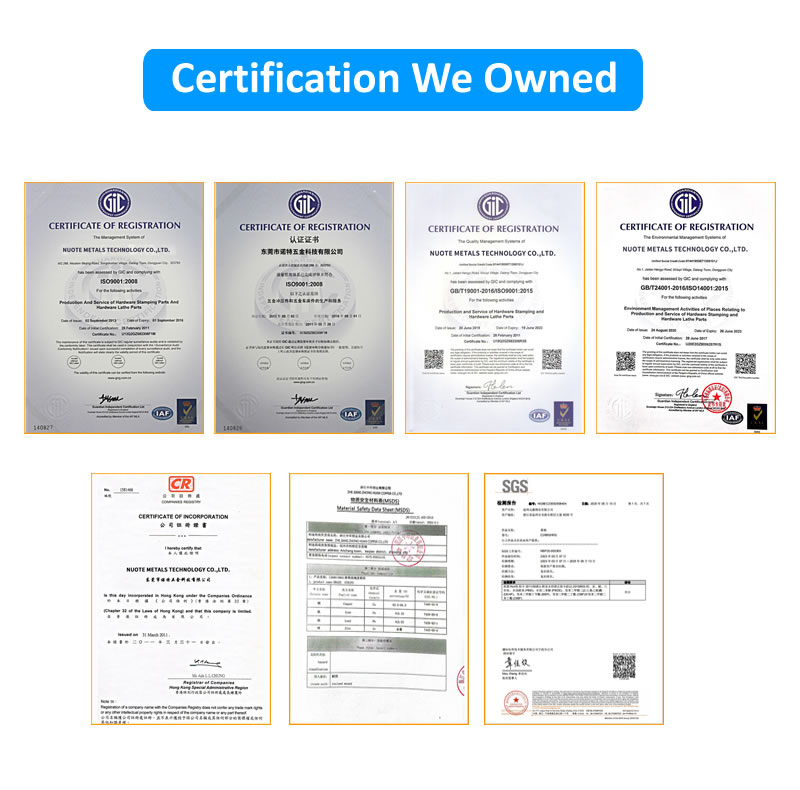
Why Our Customers Trust Nuote Metals for Aluminum Rivets
We are not a reseller. We manufacture aluminum rivets on modern cold‑heading equipment, controlling quality from raw coil to finished part.
One‑stop shop – Solid, semi‑tubular, and tubular aluminum rivets from the same production line.
Alloys in stock – 1100, 5056, 6061, 2017, 2024. No long lead times for standard grades.
In‑house finishing – Anodizing (clear, gold, black), chromate conversion, and polishing.
ISO 9001:2015 certified – Full traceability on every batch.
Engineering support – We answer your technical questions before and after the sale.
And because we also manufacture steel rivets, stainless steel rivets, brass rivets, and copper rivets, we can advise you honestly when aluminum is the right choice – and when it is not.
Contact Nuote Metals – Let Us Help You With Your Aluminum Rivet Project
You now have the technical details. But every application has its own demands. Tell us about your material stack, environment, and production volume. We will reply with a specific alloy and type recommendation, technical datasheets, and free samples of the right aluminum rivets.
Contact Nuote Metals today:
🌐 Website: www.nuotemetal.com
📧 Email: info@notinmetal.com
📞 Phone: +86 13316629095
Let us lighten your assembly without compromising strength.
Send Inquiry



X
We use cookies to offer you a better browsing experience, analyze site traffic and personalize content. By using this site, you agree to our use of cookies.
Privacy Policy