
Products
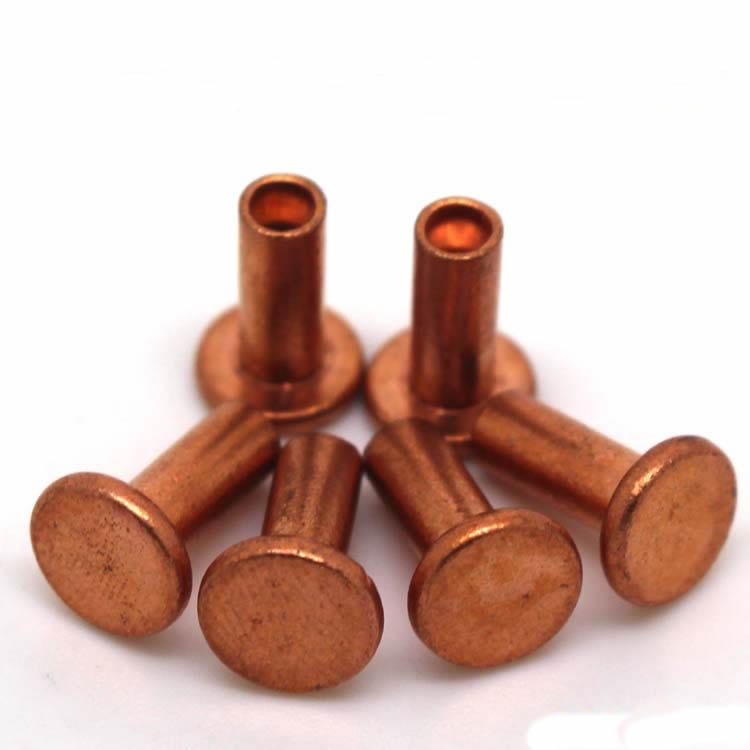
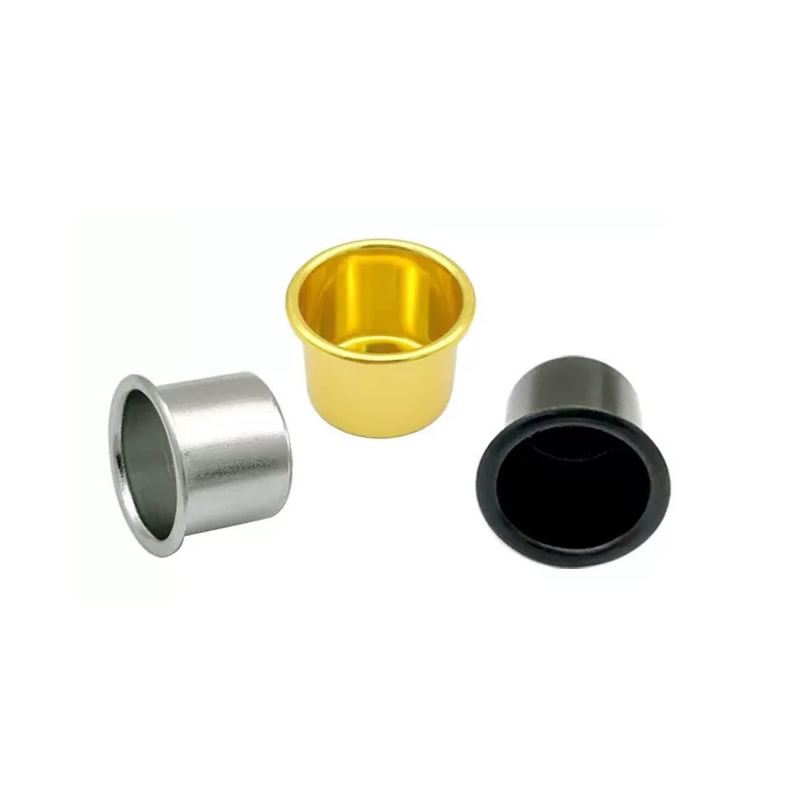
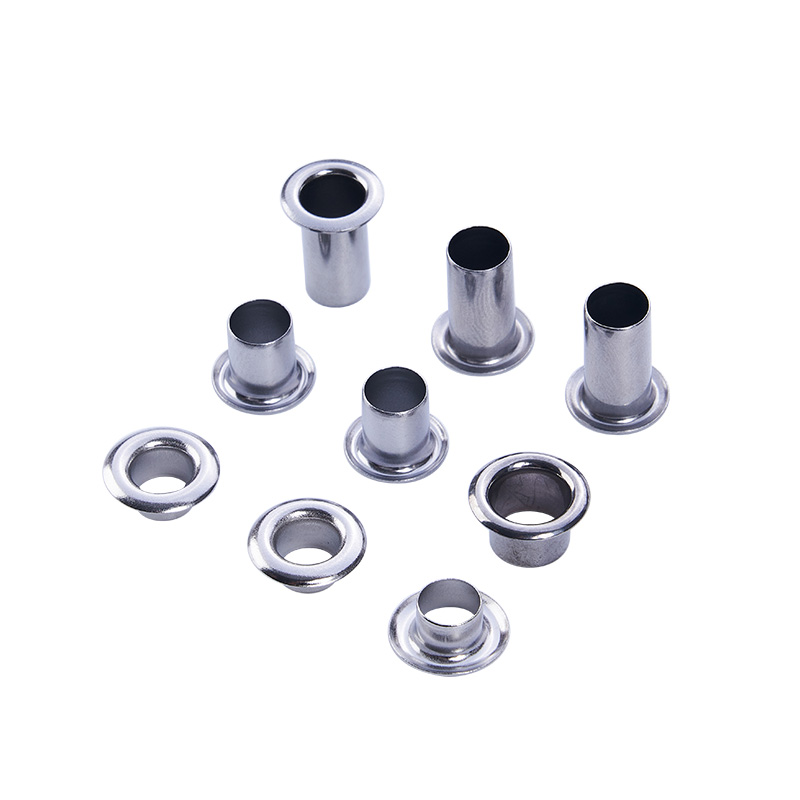
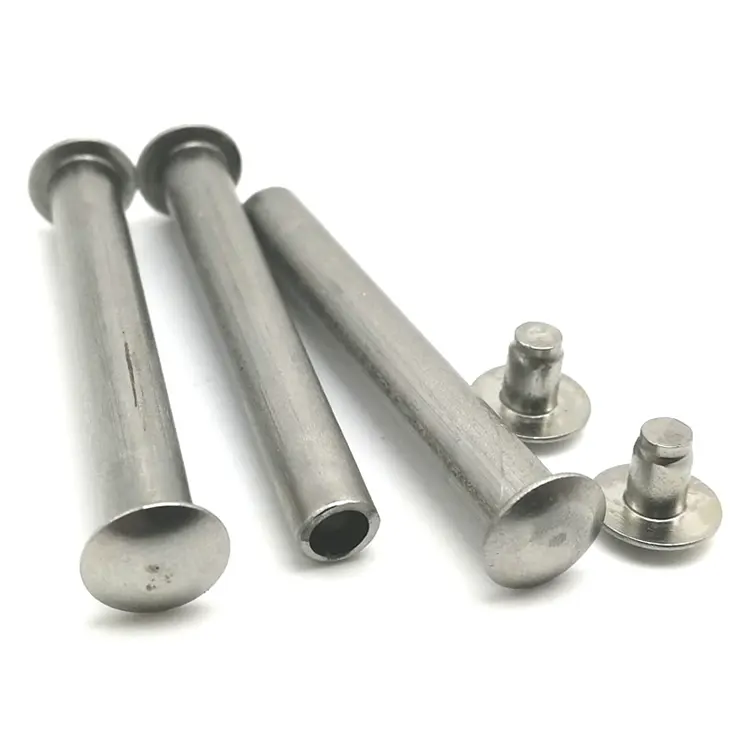
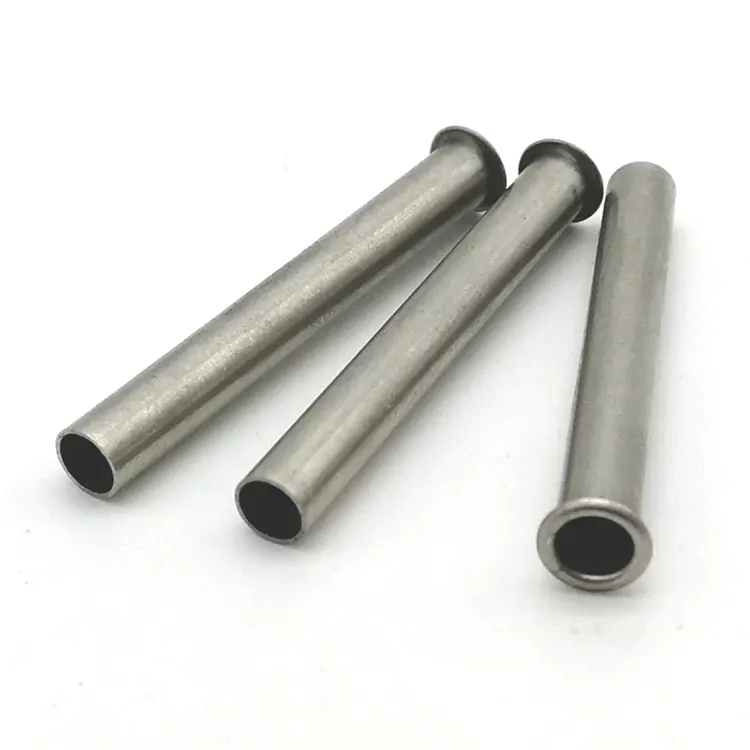

Aluminum Rivets
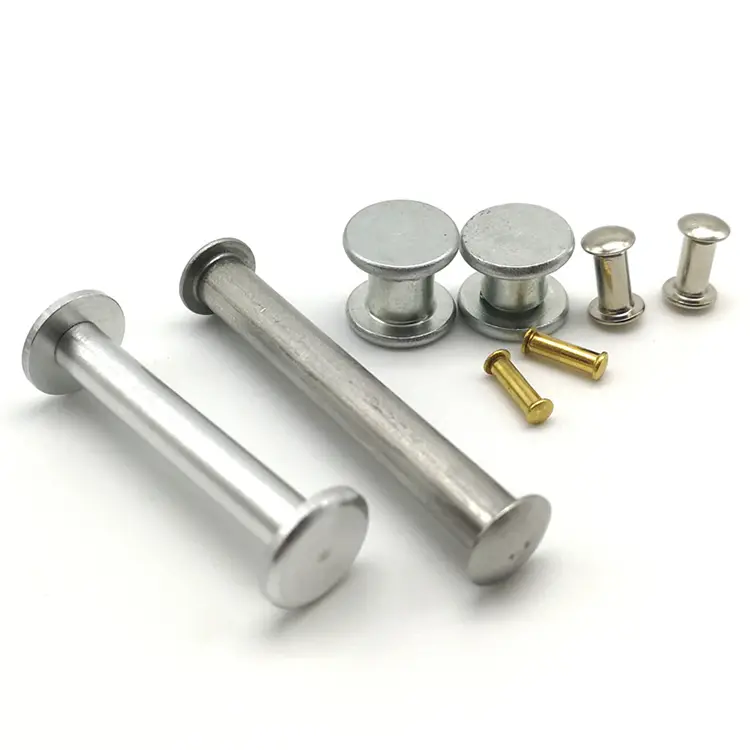
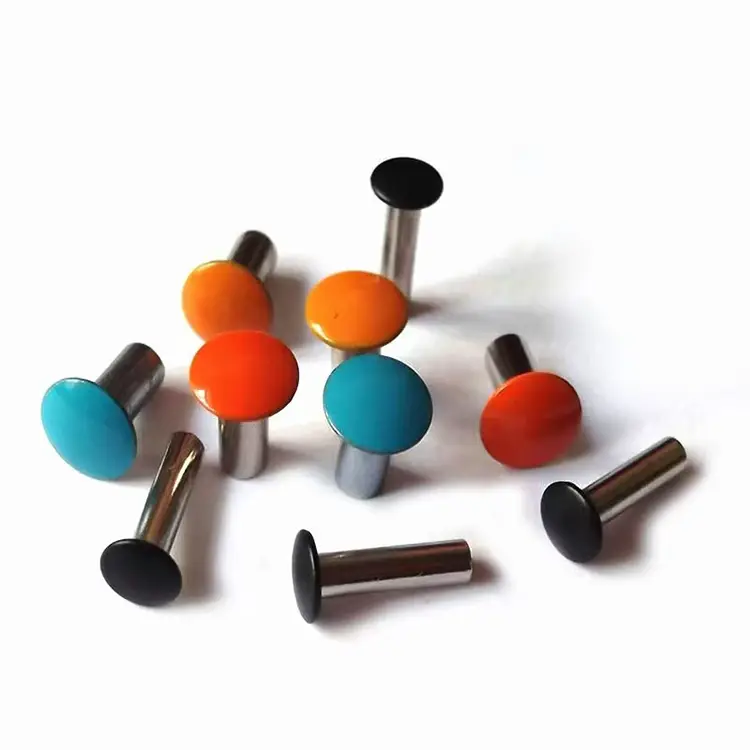
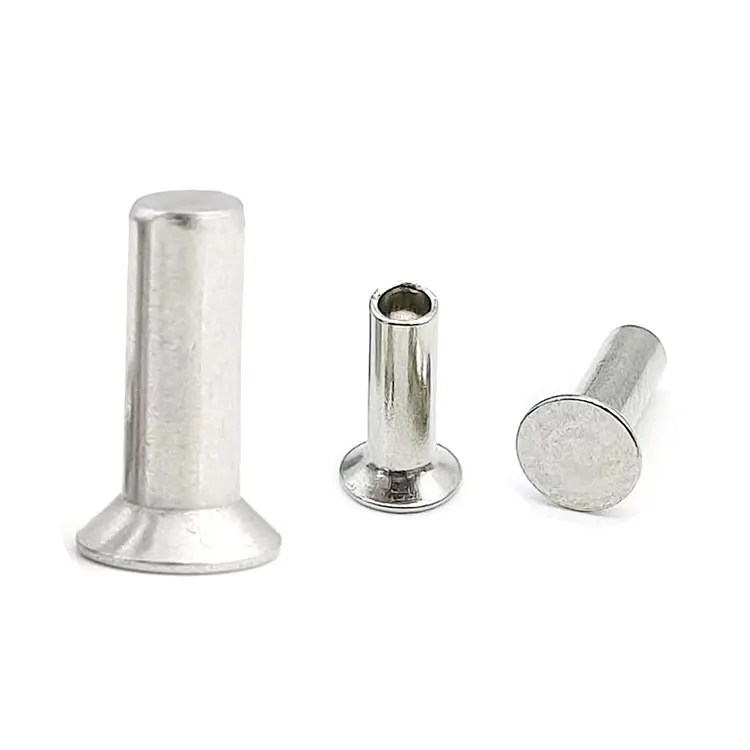
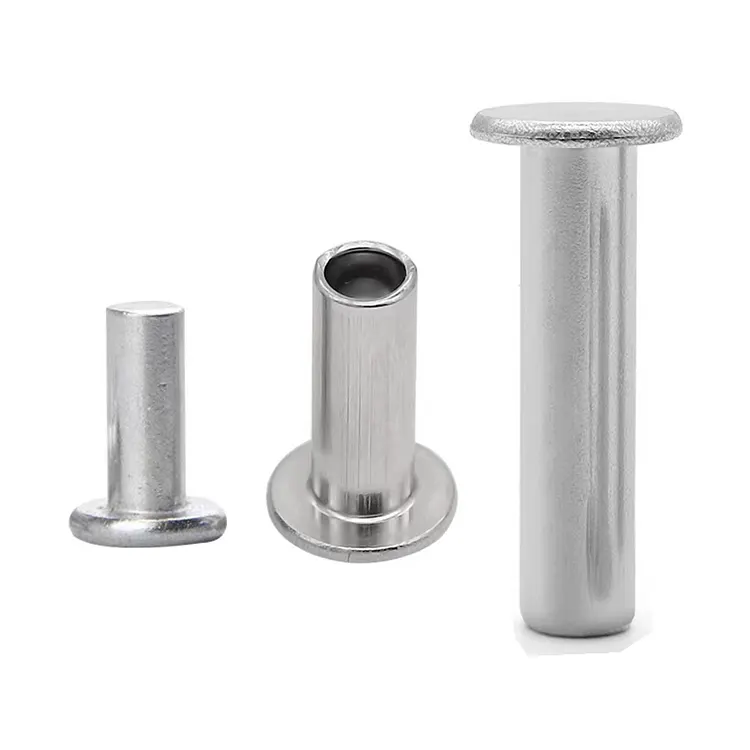
Nuote Metals manufactures aluminum rivets in solid, semi‑tubular, and full tubular designs – delivering the lightest weight of any common rivet material at one‑third the weight of steel. Available in pure aluminum and 5052/5056 alloys, 1.5–8.0mm shank diameters, with anodized or plain finish.
Send Inquiry
Product Description
Aluminum rivets weigh roughly one‑third of what steel rivets weigh. That difference changes product performance – longer flight time for drones, lower fuel consumption for vehicles, reduced user fatigue for portable equipment, easier handling for large structures. When your design is weight‑sensitive, aluminum is not a luxury. It is the only sensible choice.
The Weight Question – Why Aluminum Matters
Every kilogram you add to a product has a cost. In aerospace, it is fuel. In automotive, it is emissions. In drones, it is flight time. In portable equipment, it is user fatigue.
Aluminum rivets deliver the same holding function as steel rivets – but at one‑third the weight.
The math is simple:
- A steel 5mm rivet weighs approximately 1.8g
- An aluminum 5mm rivet weighs approximately 0.6g
- For every 1,000 rivets, you save 1.2kg of weight
For a product with 500 rivets, that is 600g saved – no design change, just a material change
| Material | Weight (5mm rivet) | Weight vs. Steel | Impact on Product |
|---|---|---|---|
| Steel | 1.8g | 100% | Heaviest |
| Stainless steel | 1.8g | 100% | Heaviest |
| Brass | 1.9g | ~105% | Heaviest |
| Aluminum | 0.6g | ~33% | Lightest |
For products where every gram matters – drones, aircraft interiors, camping gear, automotive lightweighting – aluminum is not just an option. It is the logical choice.
What We Make – Three Designs, Two Material Families
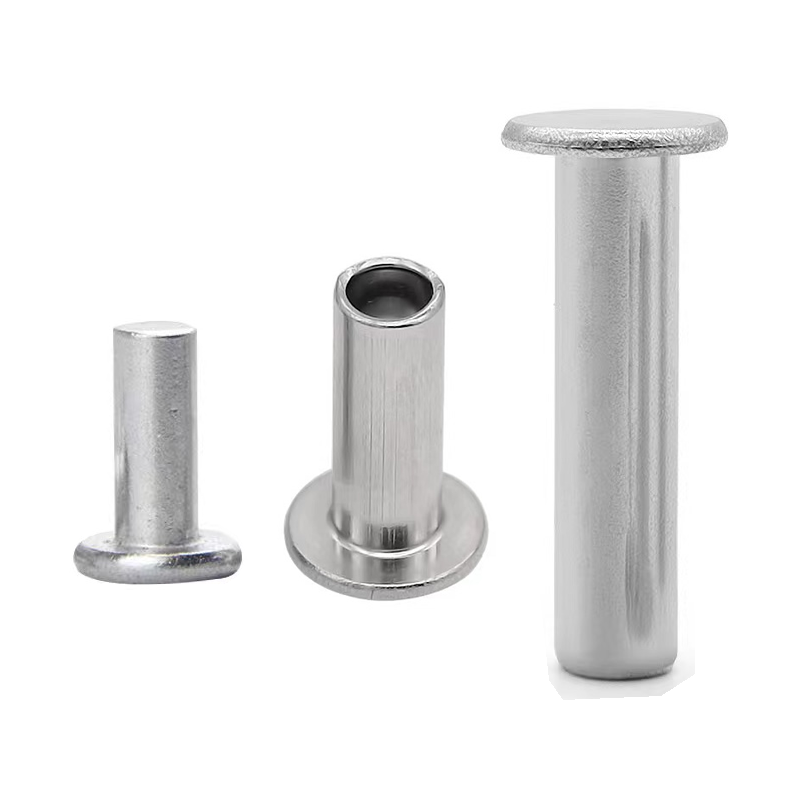
| Feature | Aluminum Solid Rivet | Aluminum Semi‑Tubular Rivet | Aluminum Full Tubular Rivet |
|---|---|---|---|
| Tail design | Fully solid | Partially hollow (45–55% of length) | Fully hollow (tube‑style) |
| Setting force | 100% | 25–30% of solid | 15–20% of solid |
| Shear strength | Maximum (100%) | 80–90% of solid | 60–70% of solid |
| Installation speed | Slower, requires heavy equipment | Fast, suitable for automated assembly | Fastest, lowest force required |
| Best for | Structural, load‑bearing assemblies | High‑volume production, thin materials | Lightweight assemblies, soft materials |
We offer two material categories:
- Pure aluminum (1100 / 1050) – High ductility, excellent corrosion resistance, lowest weight. Ideal for non‑structural applications, decorative trim, and lightweight assemblies where strength requirements are moderate.
- Aluminum alloys (5052 / 5056) – Higher strength than pure aluminum. 5052 offers good general‑purpose strength (220–280 MPa). 5056 offers higher strength (280–350 MPa) with superior corrosion resistance – ideal for marine and high‑stress applications.
When to choose pure aluminum: your application is non‑structural, weight is critical, and strength requirements are low – such as decorative trim, lightweight housings, or non‑load‑bearing assemblies.
When to choose aluminum alloys: your application requires higher strength, structural integrity, or corrosion resistance – such as drone frames, automotive components, marine hardware, or load‑bearing assemblies.
Pure Aluminum vs. Aluminum Alloy – Which Is Right for You?
| Material | Tensile Strength | Ductility | Corrosion Resistance | Best For |
|---|---|---|---|---|
| Pure aluminum (1100/1050) | Low (60–100 MPa) | High (excellent formability) | Excellent | Decorative, non‑structural, lightweight housings |
| 5052 alloy | Moderate (220–280 MPa) | Good | Good | General purpose, moderate load applications |
| 5056 alloy | High (280–350 MPa) | Fair | Excellent (marine‑grade) | High‑strength, marine, outdoor, structural |
Choose pure aluminum for decorative applications, lightweight enclosures, and non‑structural assemblies where strength is not a primary concern.
Choose 5052 alloy for general‑purpose applications requiring moderate strength and good corrosion resistance.
Choose 5056 alloy for higher‑strength requirements and marine or saltwater exposure.
Real Application – Drone Frame Assembly
A drone manufacturer was using steel rivets to assemble carbon fibre frames and motor mounts. Each drone used 120 rivets, adding nearly 200g to total weight – reducing flight time by almost two minutes. The customer needed to reduce weight without compromising strength.
Nuote Metals supplied 5056 aluminum alloy semi‑tubular rivets – 3.0mm shank, 5.5mm round head, 6.0mm barrel length, clear anodized finish. The aluminum rivets weighed one‑third of the steel rivets – weight saving per drone: 130g. Additional flight time: approximately 1.5 minutes. The semi‑tubular cavity prevented damage to the carbon fibre frame. The anodized finish provided corrosion protection.
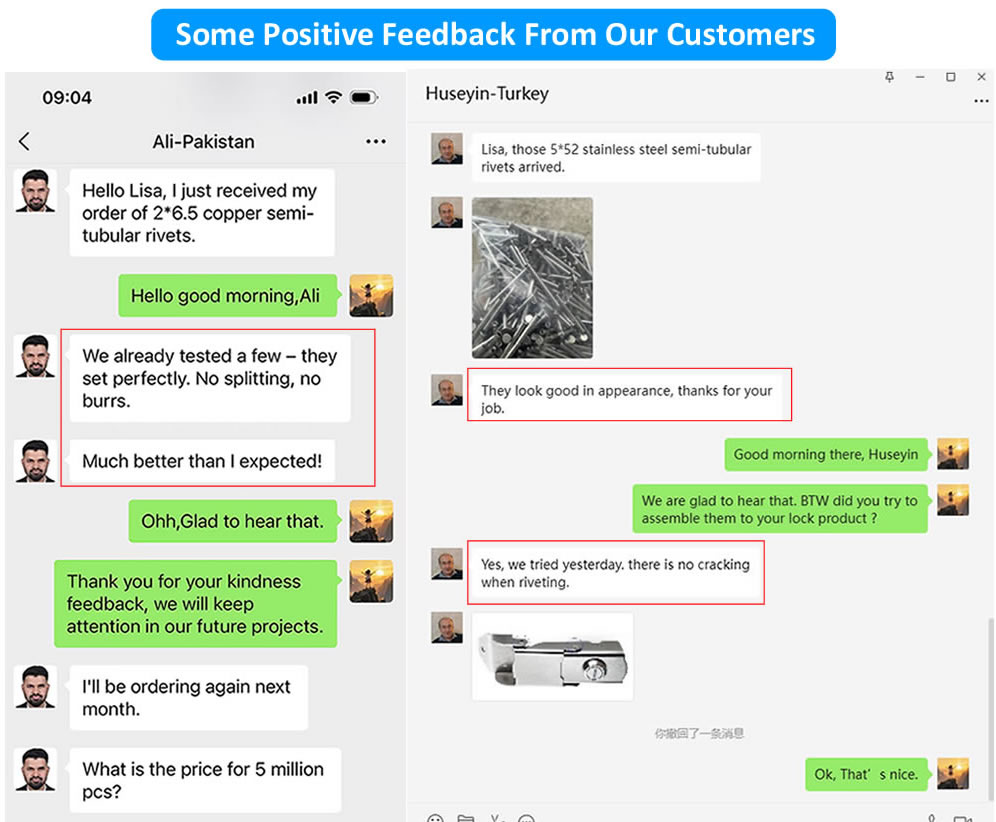
The customer tested the rivets across 50 drones. After 500 flight hours and vibration testing, no loosening, no corrosion. They now order aluminum rivets in batches of 200,000 pieces.
Standard Options – Sizes, Materials, Head Styles
Shank diameters: 1.5 – 8.0mm
Materials: Pure aluminum (1100/1050), 5052 alloy, 5056 alloy
Design: Solid, semi‑tubular, or full tubular
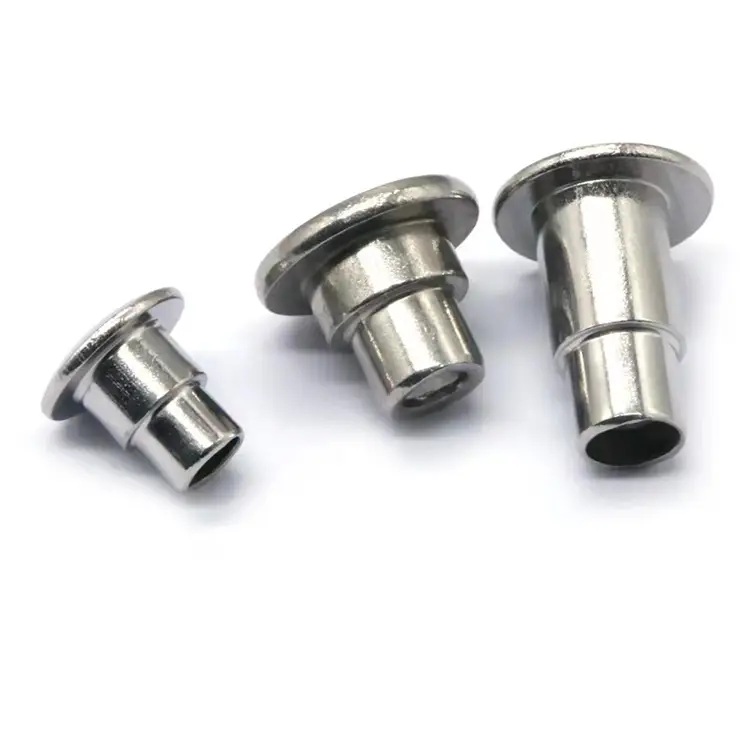
Head styles: Round, flat, oval, truss, countersunk
Finishes: Plain (as‑formed), clear anodized, color anodized
Lengths: Custom to your material stack thickness
| Shank (mm) | Head Styles | Typical Head Dia (mm) | Grip Range (mm) |
|---|---|---|---|
| 1.5 – 2.0 | Round / Flat / Oval | 2.8 – 4.2 | 1.0 – 3.0 |
| 2.5 – 3.0 | Round / Flat / Oval / Truss | 4.5 – 5.5 | 1.8 – 4.0 |
| 3.5 – 4.0 | Round / Flat / Oval / Truss | 5.5 – 7.2 | 2.5 – 5.0 |
| 4.5 – 5.0 | Round / Flat / Oval / Truss / Countersunk | 7.0 – 9.0 | 3.0 – 6.5 |
| 5.5 – 6.0 | Round / Flat / Oval / Truss / Countersunk | 9.0 – 10.8 | 3.5 – 8.0 |
| 6.5 – 8.0 | Round / Flat / Oval / Truss / Countersunk | 10.5 – 14.5 | 4.5 – 12.0 |
Tolerances: Shank ±0.05mm, head ±0.15mm, length ±0.15mm. Custom dimensions available.
How We Build Rivets – Cold Heading for Lightweight Strength
Aluminum is softer than steel and brass, making it easier to head – but it also requires careful handling to avoid tool marks, galling, and inconsistent forming.
What makes aluminum different:
- Softer but stickier – Aluminum does not spring back like steel. It flows more easily, which means we can form complex head shapes with less tool wear. But it also tends to stick to tooling surfaces. Our heading dies are polished to mirror finish to prevent aluminum build‑up.
- No work‑hardening concerns – Unlike stainless steel that work‑hardens and cracks, aluminum work‑hardens in a controlled, predictable way. This makes it the most forgiving material for cold heading.
- Anodizing compatibility – The natural oxide layer on aluminum takes anodizing well. We recommend anodized finish for outdoor or corrosive environments – it thickens the oxide layer and provides additional corrosion protection.
The sequence:
- Wire drawing – Aluminum wire drawn to exact shank diameter (±0.02mm)
- Cut‑off – Sheared to blank length
- First blow – Blank is squared and centred
- Second blow – Carbide die forms the head
- Third blow – Punch creates the cavity (semi‑tubular or full tubular) or is omitted (solid)
- Trimming – Flash removed
- Tumbling – Micro‑burrs eliminated
- Anodizing or plain finish – Applied as specified
Quality Checks – What We Verify, Why It Matters
| Check | Tolerance | Risk If Missed |
|---|---|---|
| Shank diameter | ±0.05mm | Rivet doesn't fit your hole |
| Head diameter | ±0.15mm | Pull‑through or uneven bearing |
| Overall length | ±0.15mm | Weak clinch or buckled barrel |
| Cavity depth (semi‑tubular) | 45–55% of barrel | Setting force too high or clinch weak |
| Cavity depth (full tubular) | 75–90% of barrel | Uneven flaring |
| Anodizing thickness (if specified) | Verified | Inadequate corrosion protection |
| Surface finish | Pass/fail | No scratches, tool marks, or galling |
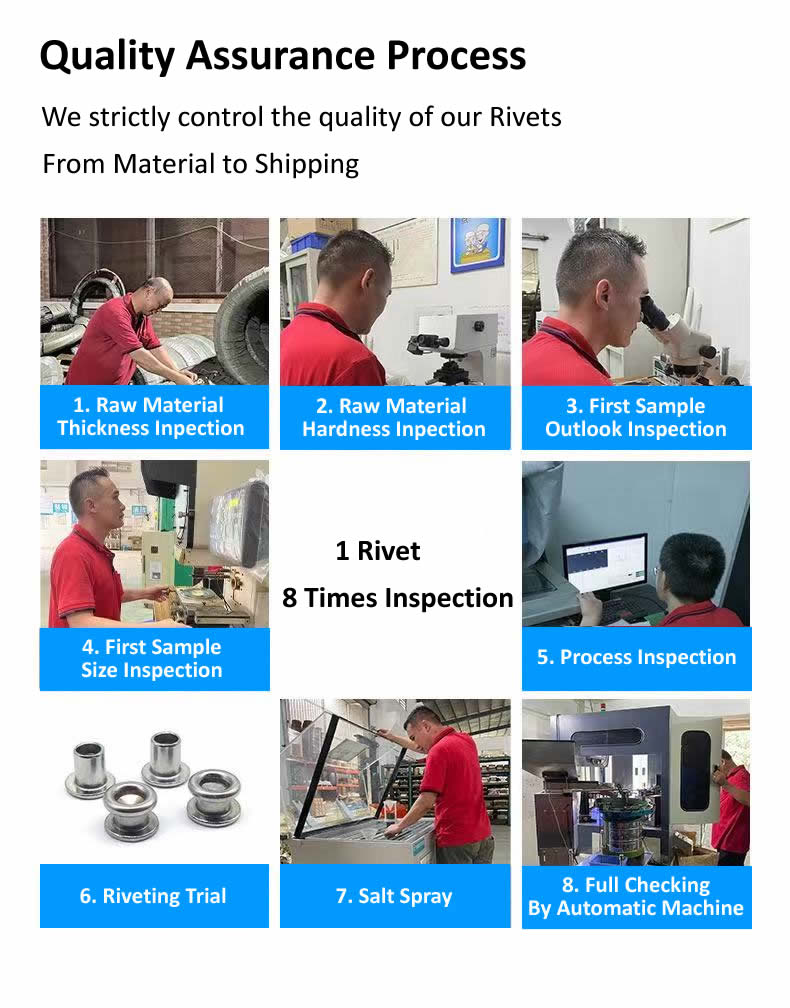
Our process: incoming wire check (spectrometer verifies material grade) → first article inspection (10 pieces, every dimension verified) → in‑process checks (5 pieces every 500) → setting test (every 2,000 pieces) → anodizing verification (if specified) → 100% optical sorting → AQL manual sample.
Where Aluminum Rivets Are Used
Aluminum rivets are the preferred choice for weight‑sensitive assemblies:
- Drones and UAVs – Frame assemblies, motor mounts, lightweight structures
- Aerospace – Interior panels, seat components, non‑structural assemblies
- Automotive – Body panels, interior trim, lightweight structures
- Sporting goods – Bicycles, camping equipment, backpacks
- Marine – Boat interiors, deck hardware, non‑structural connections
- Consumer electronics – Laptop chassis, device enclosures
- Medical equipment – Lightweight frames, portable devices
- Industrial equipment – Lightweight guards, panels, components
Built for the Toughest Environments – And the Lightest Designs
Every shipment includes:
- Mill test certificate – Chemical composition, tensile properties
- Dimensional inspection report – Actual measured values
- Anodizing certificate – Thickness verification (if specified)
- Certificate of Conformance – Signed, batch‑traceable
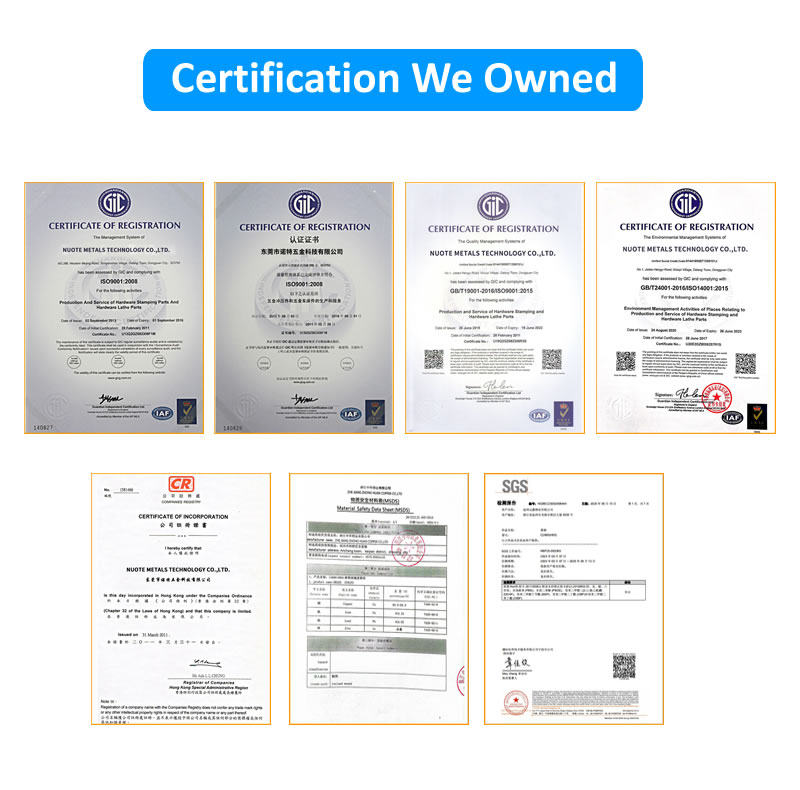
Certified to: ISO 9001:2015, RoHS, REACH
Three Questions We Answer Often
Q1: What is the difference between pure aluminum and aluminum alloy rivets?
A: Pure aluminum (1100/1050) offers high ductility and excellent corrosion resistance but lower strength – ideal for non‑structural, decorative, and lightweight applications. Aluminum alloys (5052/5056) offer significantly higher strength – 5052 for general purpose, 5056 for marine and high‑stress applications. Choose pure aluminum for lightweight trim and housings; choose aluminum alloys for structural assemblies and load‑bearing connections.
Q2: Which design of rivets should I choose – solid, semi‑tubular, or full tubular?
A: Semi‑tubular rivet is the default choice for most applications – 80–90% of solid strength at 25–30% of the setting force. Choose solid rivet when you need maximum strength. Choose full tubular rivet when you are working with soft materials or need minimal setting force. Aluminum's lightweight nature makes semi‑tubular the most popular choice – it preserves weight savings while offering easy installation.
Q3: Do aluminum rivets corrode? How do I prevent it?
A: Aluminum forms a natural oxide layer that protects against corrosion. In freshwater and most indoor environments, aluminum performs well with no additional protection. For outdoor applications, we recommend anodized finish (clear or colour) which thickens the oxide layer and enhances corrosion protection. For continuous saltwater exposure, choose 5056 alloy with anodized finish – or consider switching to stainless steel if the environment is extreme.
Let’s Reduce the Weight of Your Product Together
If you are designing for weight reduction, aluminum rivets are one of the most effective changes you can make – no redesign, no additional parts, just a material upgrade.
Here is what we need to get started:
- Shank diameter – 1.5mm to 8.0mm
- Length – barrel length or overall length, or your total material stack thickness
- Quantity – annual or per‑order volume
Plus four choices:
- Material – pure aluminum (1100/1050), 5052 alloy, or 5056 alloy
- Design – solid, semi‑tubular, or full tubular
- Head style – round, flat, oval, truss, or countersunk
- Finish – plain, clear anodized, or color anodized
Send us your specs. We respond within 24 hours with:
- Tooling cost (if any)
- Piece price based on your quantity
- Lead time
- Sample availability
We keep it straightforward – pricing up front, no sales pressure, no follow‑up calls.
Send your requirements to Nuote Metals – we will take it from there.
Hot Tags: Aluminum Rivets China,Aluminium Rivets Supplier,China Aluminium Rivets Manufacturer
Related Categories
Send Inquiry
Please feel free to fill your inquiry in the form below. We will reply you in 24 hours.



X
We use cookies to offer you a better browsing experience, analyze site traffic and personalize content. By using this site, you agree to our use of cookies.
Privacy Policy