
Products
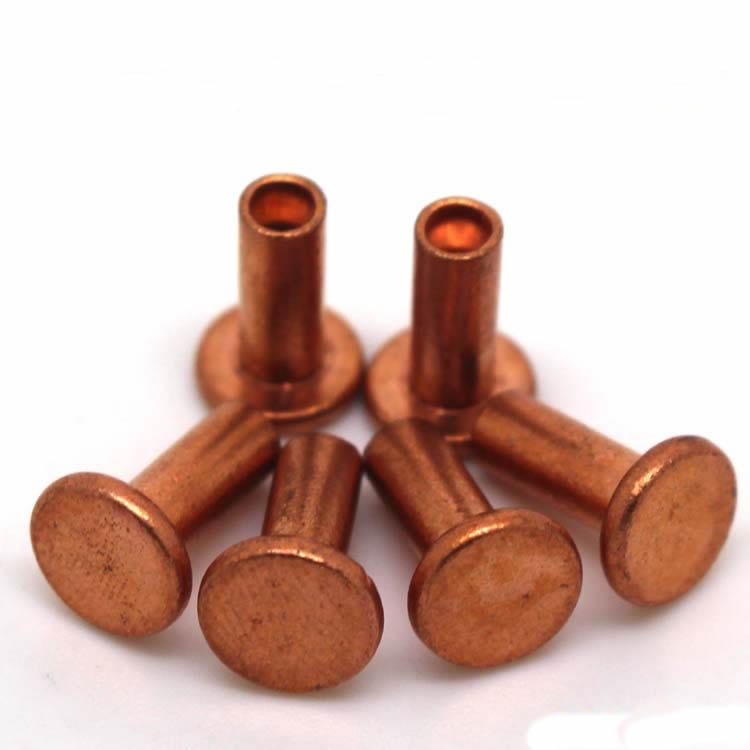
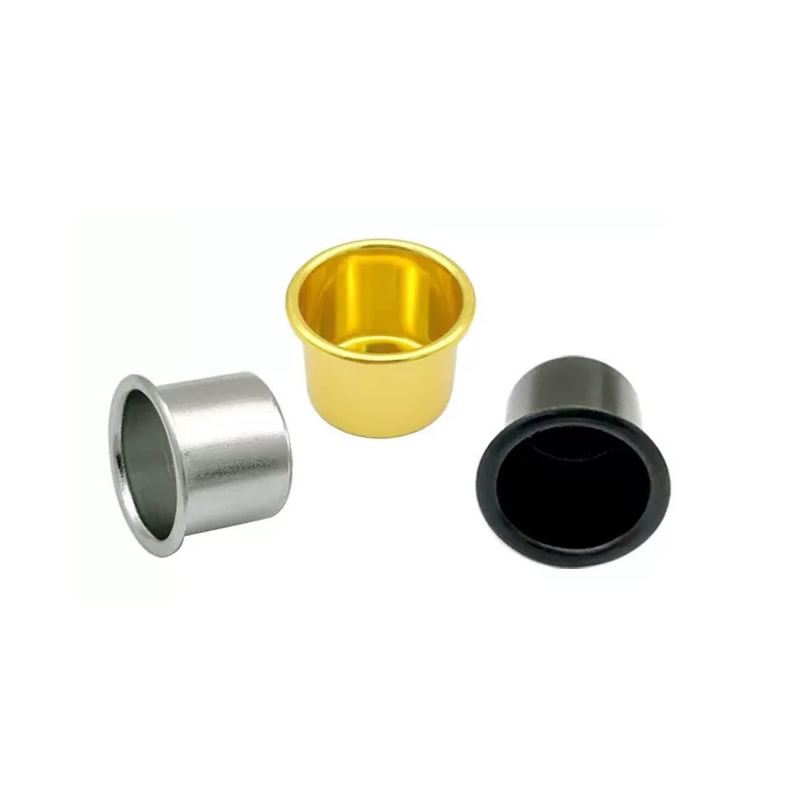
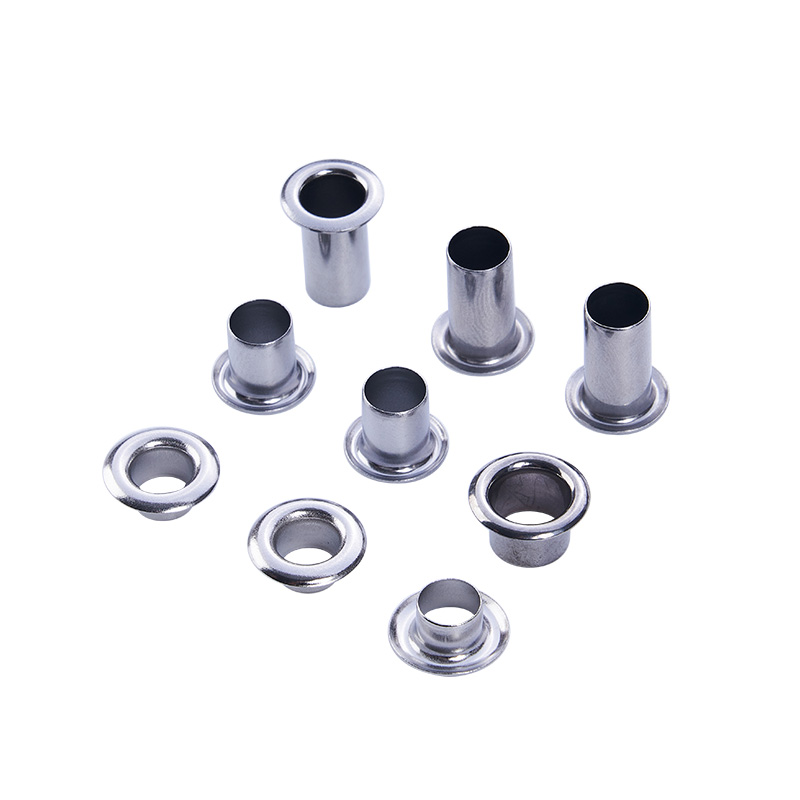
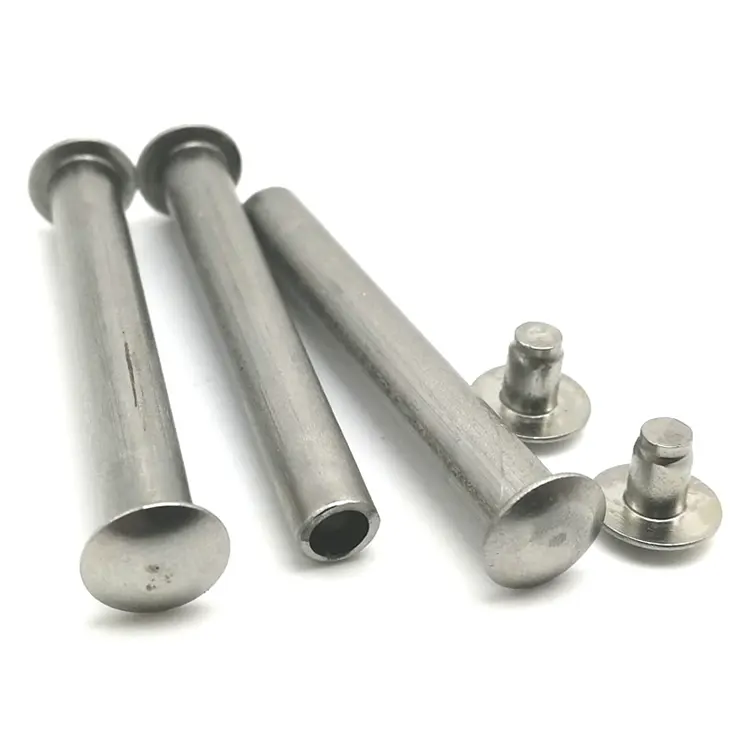
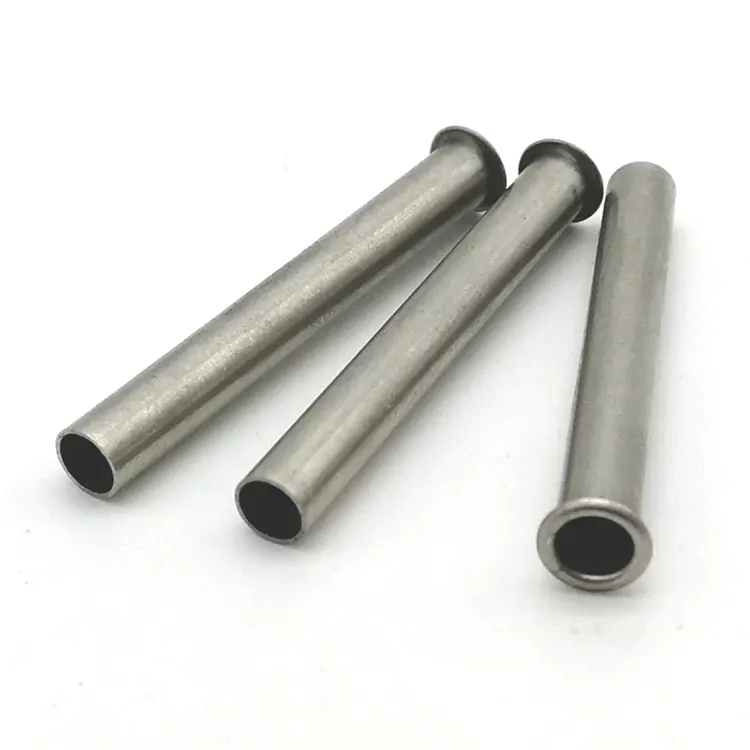
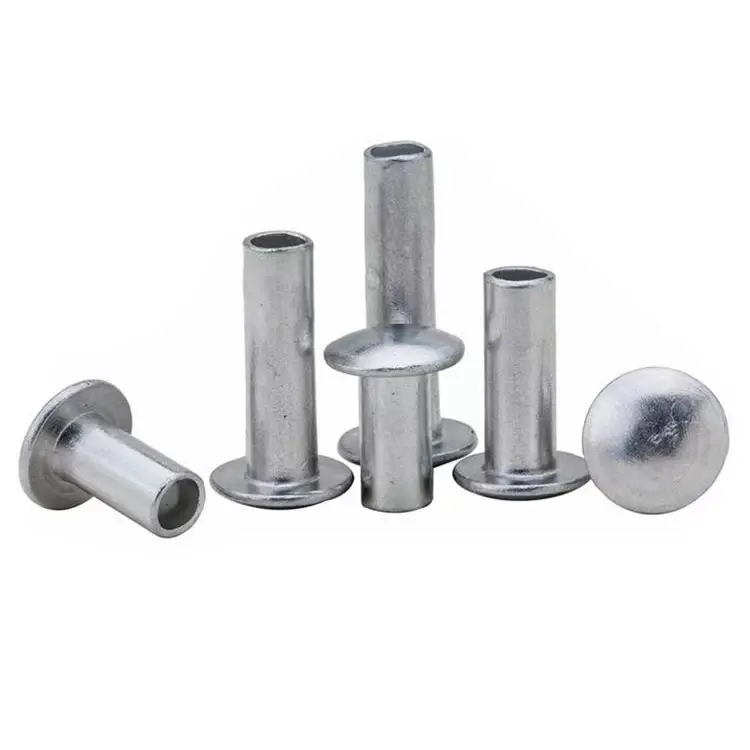
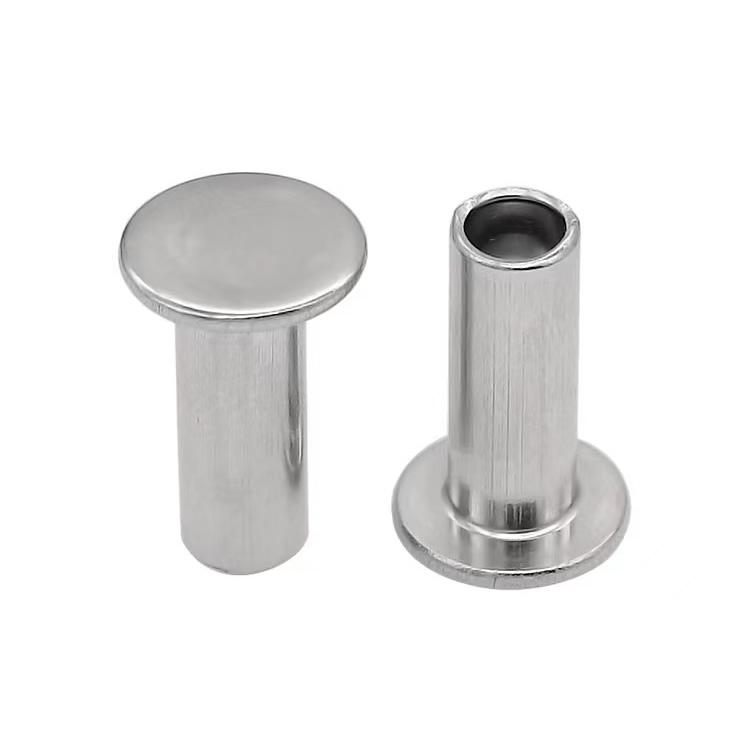
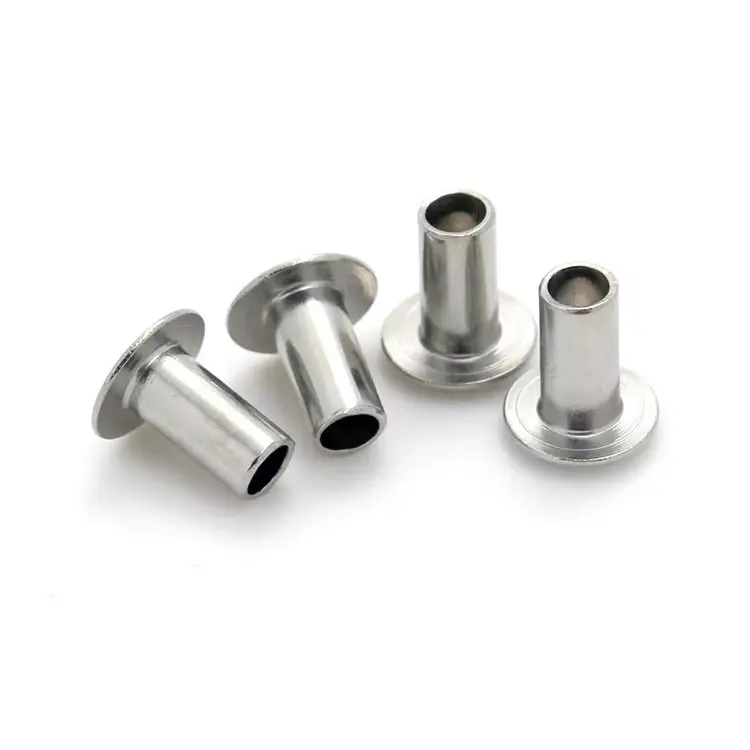
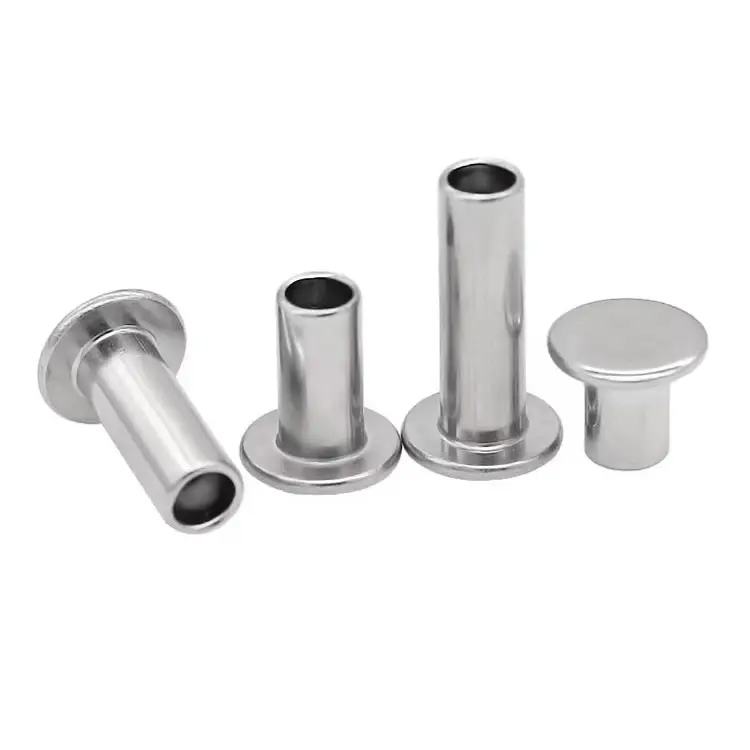
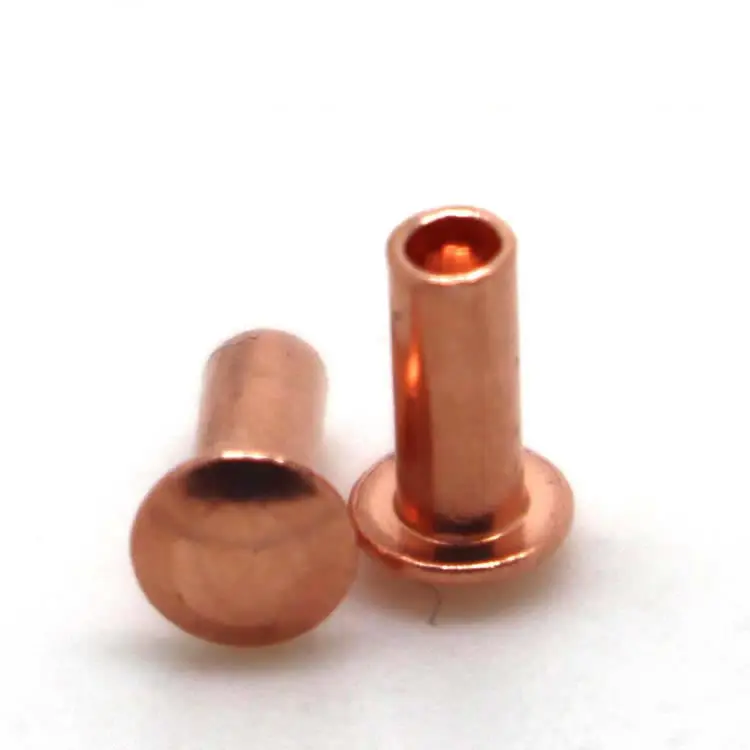
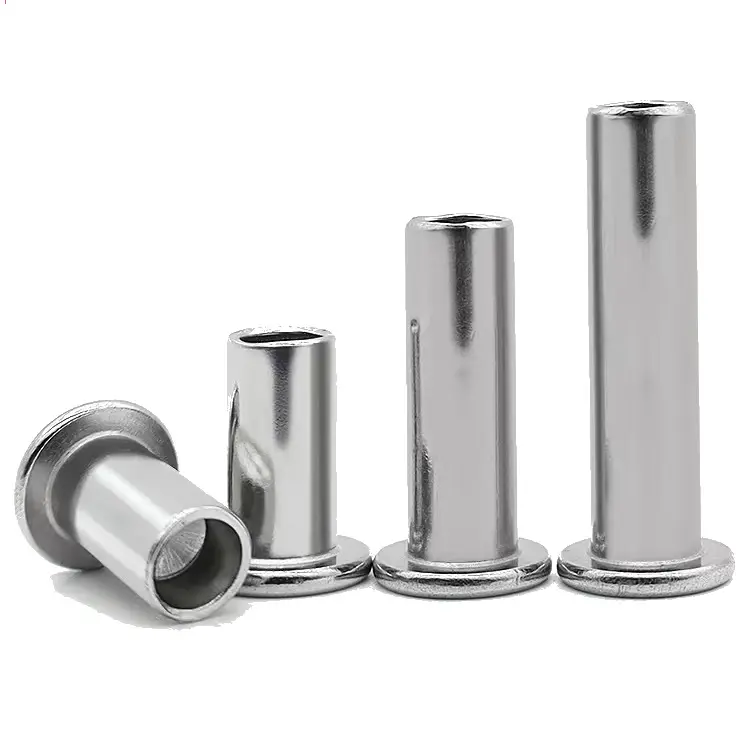
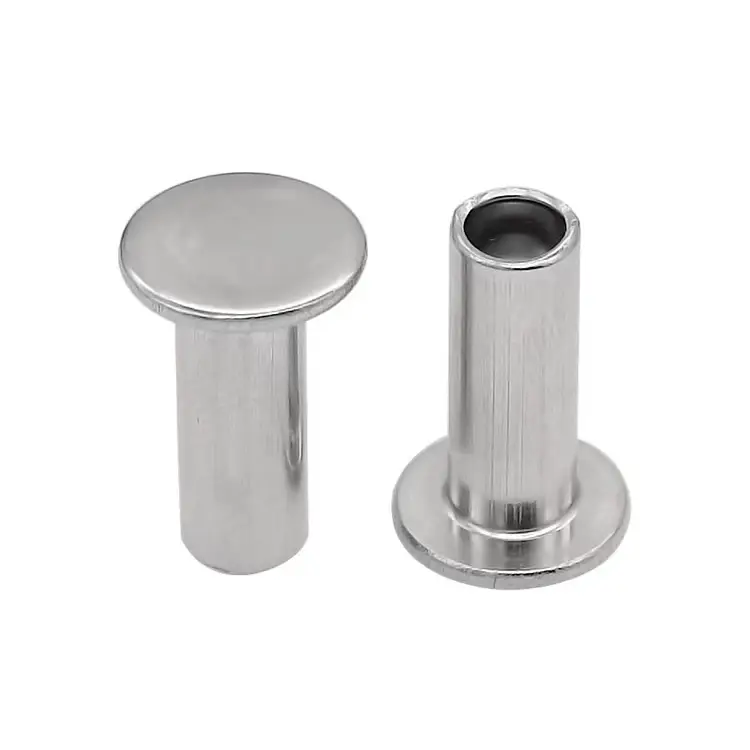
Aluminum Semi Tubular Rivets
From our Dongguan facility, Nuote Metals manufactures aluminum semi tubular rivets for applications where weight matters. At one-third the weight of steel, our aluminum rivets deliver strength without the mass—ideal for aerospace, automotive, marine, and portable equipment. Available in 5052 and 5056 grades, 1.5–8.0mm shank diameters, with round, flat, oval, truss, and countersunk heads. Naturally corrosion-resistant and non-magnetic. ISO 9001:2015 certified. Free samples available. Contact us for a quote.
Send Inquiry
Product Description
The Weight Question – Why Aluminum Matters
Every kilogram you add to a product has a cost. In aerospace, it is fuel. In automotive, it is emissions. In marine, it is performance. In portable equipment, it is user fatigue.
Aluminum semi tubular rivets weigh approximately one-third of what steel rivets weigh. That is not a small difference—it changes the way products are designed, handled, and operated.
Consider this:
- A steel 5mm rivet weighs approximately 1.8g
- An aluminum 5mm rivet weighs approximately 0.6g
- For every 1,000 rivets, you save 1.2kg of weight
For a product with 500 rivets, that is 600g saved—no design change, just a material change. In industries where every gram counts, that is significant.
Three Numbers That Define Aluminum Semi Tubular Rivets
| Property | 5052 Aluminum | 5056 Aluminum |
|---|---|---|
| Weight vs. steel | ~35% | ~35% |
| Tensile strength | 220 – 280 MPa | 280 – 350 MPa |
| Corrosion resistance | Excellent (natural oxide) | Excellent |
| Non‑magnetic | Yes | Yes |
| Best for | General lightweight assemblies | High‑strength lightweight applications |
5052 – The workhorse of aluminum rivets. Good strength, excellent corrosion resistance, and widely available. Choose this for most applications.
5056 – Higher strength than 5052, with similar corrosion resistance. Choose this when you need the light weight of aluminum but the application demands higher shear strength.
One Application Where Weight Savings Changed Everything – Drones
A drone manufacturer had a problem. Each drone used 120 rivets to assemble the carbon fibre frame and motor mounts. Steel rivets added nearly 200g to the total weight, reducing flight time by almost two minutes.
They switched to aluminum semi tubular rivets – 3.0mm shank, 5.5mm round head, 6.0mm barrel length, 5056 grade, clear anodized. The aluminum rivets weighed one‑third of the steel rivets. Weight saving per drone: 130g. Additional flight time: approximately 1.5 minutes.
The semi‑tubular cavity reduced setting force, preventing damage to the carbon fibre frame. The 5056 grade delivered the strength needed for motor mount connections. The clear anodized finish matched the existing hardware appearance.
The drone manufacturer has since used over one million rivets across their entire drone line.
Where Aluminum Semi Tubular Rivets Make Sense
Choose aluminum when:
- Weight is critical – Every gram matters. This is not just about shipping costs; it is about product performance. A lighter drone flies longer. A lighter backpack carries easier. A lighter car goes further.
- Corrosion exposure is moderate – Aluminum forms a natural oxide layer that protects against corrosion. In freshwater, humidity, and rain, aluminum performs well. For saltwater exposure, consider 5056 grade or switch to stainless steel.
- Non‑magnetic is required – Aluminum is non‑magnetic, making it suitable for electronics, MRI equipment, and sensitive instruments.
- Cost is a factor – Aluminum is more expensive than steel but less expensive than brass or stainless steel. For applications that require lightweight and corrosion resistance at a moderate cost, aluminum is the sweet spot.
Consider alternatives when:
- Maximum strength is required – Steel has higher tensile strength. For structural joints under heavy load, steel is the better choice.
- Saltwater exposure is continuous – Stainless steel offers superior saltwater resistance.
- Conductivity is required – Brass or copper is better for electrical applications.
Aluminum vs. Steel vs. Brass – A Quick Comparison
| Feature | Aluminum | Steel | Brass |
|---|---|---|---|
| Weight | Lightest (one‑third of steel) | Heavy | Heavy |
| Strength | Moderate (280–350 MPa) | Highest (400–500 MPa) | Moderate (315–390 MPa) |
| Corrosion resistance | Good (natural oxide) | Depends on plating | Good (natural) |
| Magnetic | Non‑magnetic | Magnetic | Non‑magnetic |
| Conductivity | Good | Poor | Excellent |
| Appearance | Silver, matte | Silver/black (plated) | Gold, warm |
| Cost | Medium | Lowest | Highest |
| Best for | Lightweight, moderate strength, non‑magnetic | Heavy‑duty, cost‑sensitive | Electrical, decorative |
How to Specify Aluminum Semi Tubular Rivets – A Quick Selection Guide
Step 1 – Choose the grade
| If your application... | Choose |
|---|---|
| Needs good general strength and corrosion resistance | 5052 |
| Needs higher strength and excellent corrosion resistance | 5056 |
Step 2 – Choose the shank diameter
| Material Stack Thickness | Recommended Shank Diameter |
|---|---|
| 0.5 – 1.5mm | 1.5 – 2.5mm |
| 1.5 – 3.0mm | 2.5 – 4.0mm |
| 3.0 – 5.0mm | 4.0 – 6.0mm |
| 5.0 – 8.0mm | 6.0 – 8.0mm |
Step 3 – Choose the barrel length
- Measure your total material stack thickness.
- Add 1.5–2.0mm for clinch formation.
- Example: 3mm stack + 1.5mm = 4.5mm barrel length.
Step 4 – Choose the head style
- Round – visible joints, traditional appearance
- Flat – clearance‑limited assemblies
- Oval – decorative, smooth appearance
- Truss – soft materials, wide bearing surface
- Countersunk – flush surface requirements
Step 5 – Choose the finish
- Natural (anodized) – clear or colour anodized for corrosion protection
- Plain – as‑stamped, no coating
How We Make Rivets – From Wire to Finished Part
We cold‑head aluminum semi tubular rivets from 5052 and 5056 aluminum wire.
What we control:
- Wire quality – Every coil is tested for composition and hardness before it reaches our headers.
- Heading – Three progressive blows form the head, extrude the shank, and create the semi‑hollow cavity.
- Trimming – Removes any flash around the head edge.
- Tumbling – Removes micro‑burrs.
- Anodizing – Applied as specified for corrosion protection and appearance.
What we verify:
- Shank diameter – ±0.05mm
- Cavity depth – 45–55% of barrel length
- Head geometry – Diameter, height, and concentricity
- Hardness – Matches the grade specification
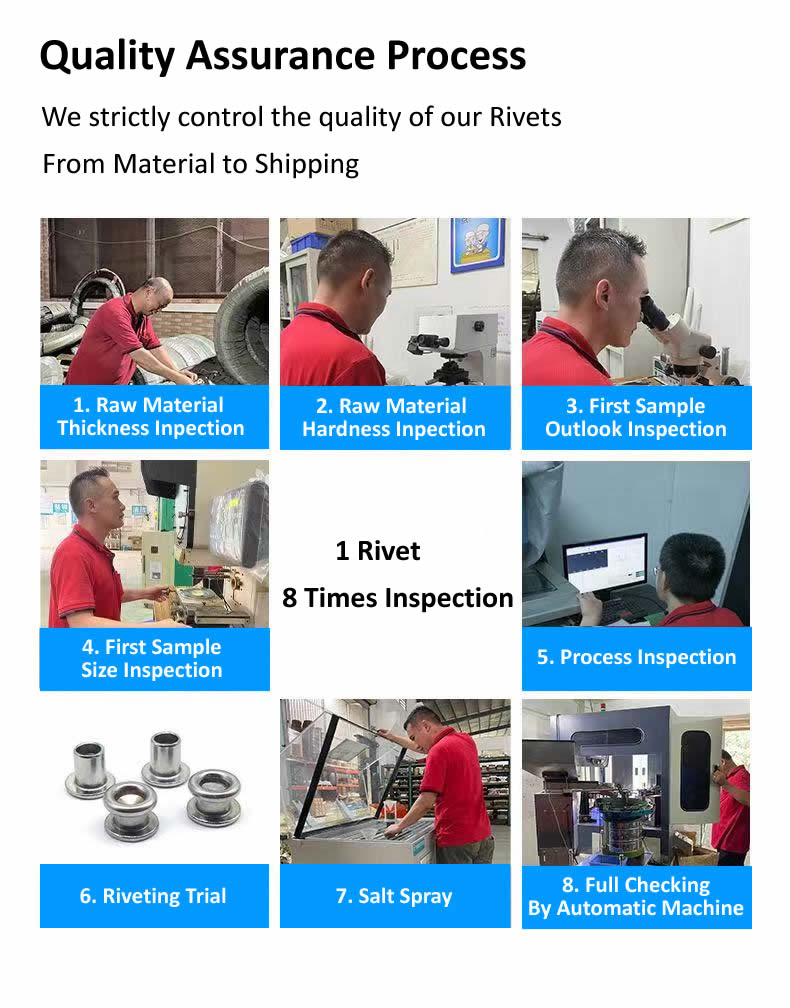
Our Quality Control – One Rivet, Eight Checks
- Raw material diameter check – Laser micrometer, ±0.02mm
- Raw material hardness check – Rockwell tester
- First article appearance check – 20× magnification for defects
- First article dimensional check – Optical comparator verification
- In‑process checks – 5 rivets every 500 pieces
- Test setting – Every 2,000 pieces, set into sample material
- Salt spray test (if required) – ASTM B117
- Final outgoing inspection – Optical sorting + AQL manual verification
Where Aluminum Semi Tubular Rivets Are Used
They are the preferred choice for lightweight assemblies:
- Aerospace – Interior panels, seat components, non‑structural assemblies
- Automotive – Body panels, interior trim, lightweight structures
- Marine – Boat interiors, deck hardware, non‑structural connections
- Consumer electronics – Laptop chassis, device enclosures, lightweight assemblies
- Sporting goods – Bicycles, camping equipment, backpacks
- Medical equipment – Lightweight frames, portable devices
- Industrial equipment – Lightweight guards, panels, components
Our Certifications and Honors
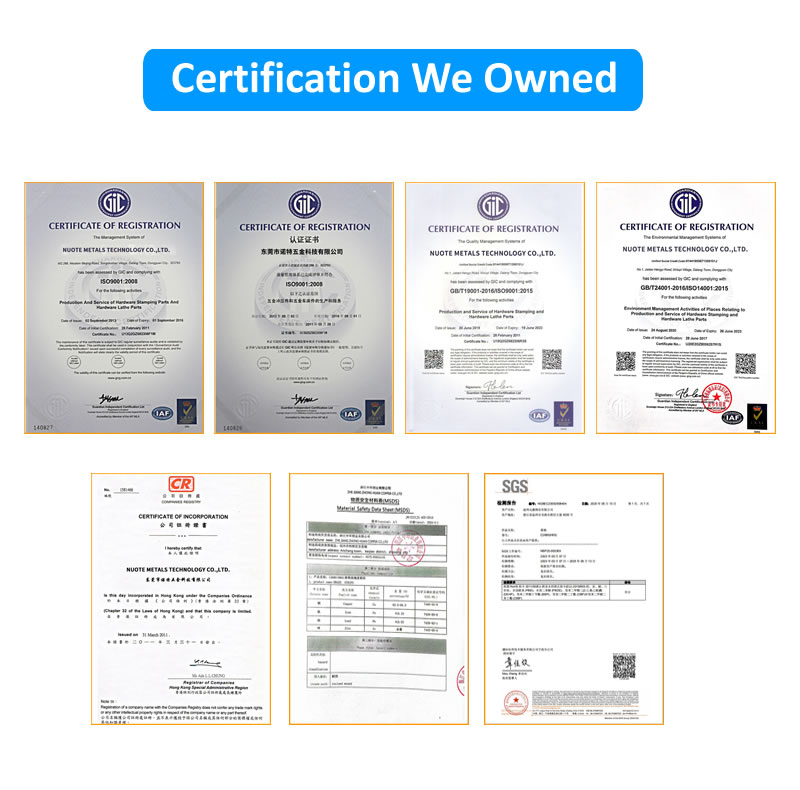
Nuote Metals maintains:
- ISO 9001:2015 – Quality management system
- RoHS compliance – Verified by third‑party testing
- REACH compliance – SVHC declaration current
- SGS test reports – Available upon request for specific batches
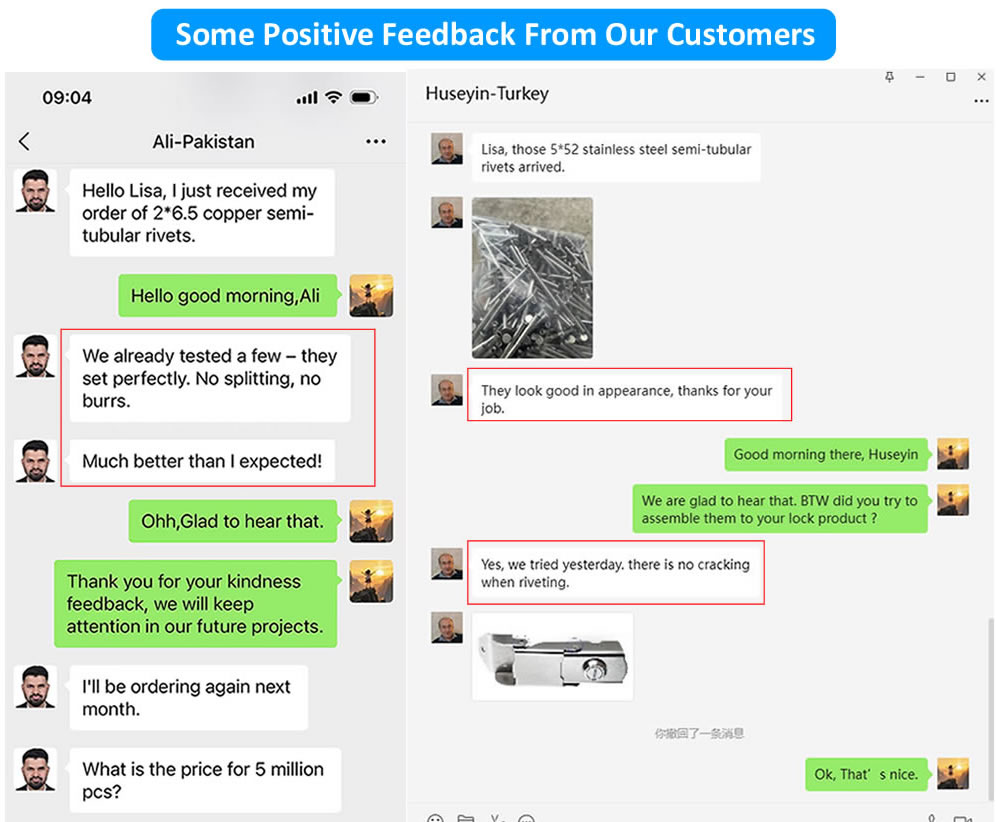
Three Questions We Answer Often
Q1: Why choose aluminum rivets over steel or stainless steel?
A: The single biggest advantage is weight. Aluminum rivets weigh one‑third of steel, which directly affects product performance—longer flight time for drones, lower fuel consumption for vehicles, reduced user fatigue for portable equipment. Aluminum is also naturally corrosion‑resistant and non‑magnetic, which steel cannot offer without plating. Choose aluminum rivets when weight matters; choose steel rivets when cost is the only priority; choose stainless steel rivets when saltwater exposure is continuous.
Q2: What is the difference between 5052 and 5056 aluminum for aluminum semi tubular rivets?
A: 5056 aluminum has higher magnesium content, giving it greater tensile strength (280–350 MPa vs 220–280 MPa for 5052). It is also more corrosion‑resistant, making it the preferred choice for marine and high‑stress applications. For most general lightweight applications, 5052 provides sufficient strength at a lower cost. For the drone case above, the customer chose 5056 because the motor mounts required higher strength. We stock both grades and can recommend based on your specific application.
Q3: Do aluminum rivets corrode? How can I prevent corrosion?
A: Aluminum forms a natural oxide layer that protects against corrosion. In freshwater and most indoor environments, aluminum performs well with no additional protection. For outdoor applications, we recommend anodized finish (clear or colour) which thickens the oxide layer and enhances corrosion protection. For continuous saltwater exposure, we recommend switching to 5056 grade with anodized finish, or consider stainless steel if the environment is extreme.
Start Your Lightweight Design with Aluminum Semi Tubular Rivets
If you are designing for weight reduction, aluminum semi tubular rivets are one of the most effective changes you can make—no redesign, no additional parts, just a material upgrade.
What we offer you:
- Two grades – 5052 and 5056 aluminum
- Wide shank range – 1.5mm to 8.0mm
- Multiple head styles – Round, oval, flat, truss, countersunk
- Custom lengths – Barrel length to your exact material stack
- Anodized finish – Clear or colour, for enhanced corrosion protection
- ISO 9001:2015 – Full quality system with traceable documentation
Send us your specs – Shank diameter, barrel length, head style, grade, finish, and quantity.
We respond within 24 hours – with tooling cost (if any), piece price, and lead time.
We ship samples – 20–50 free pieces for you to test on your actual material.
Ready to reduce weight without compromising strength? Send your inquiry to Nuote Metals.
Hot Tags: Aluminum Semi Tubular Rivets,China Aluminum Rivets,China Semi Tubular Rivets Factory
Product Tag
Related Categories
Send Inquiry
Please feel free to fill your inquiry in the form below. We will reply you in 24 hours.



X
We use cookies to offer you a better browsing experience, analyze site traffic and personalize content. By using this site, you agree to our use of cookies.
Privacy Policy