
Products
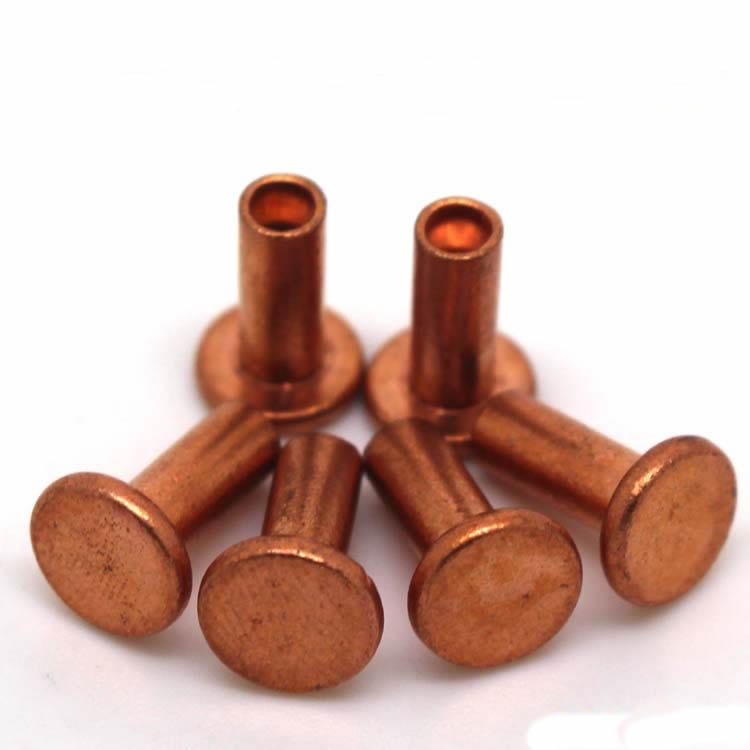
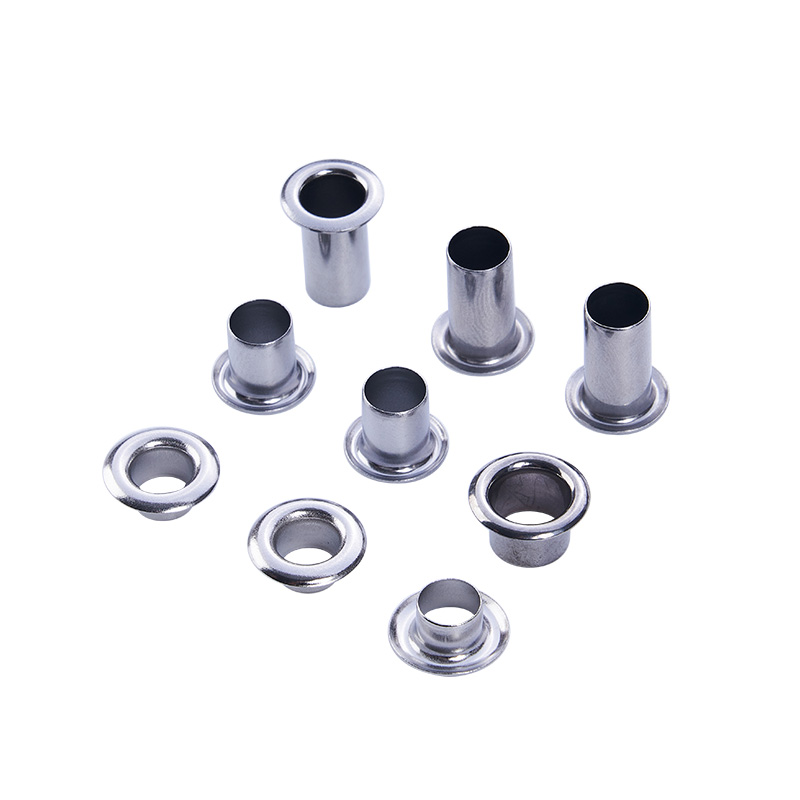
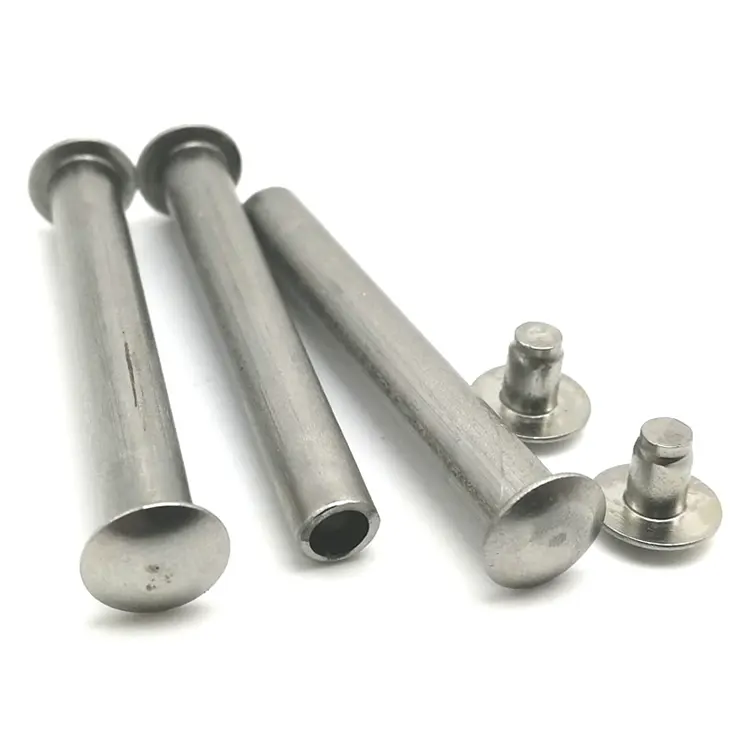
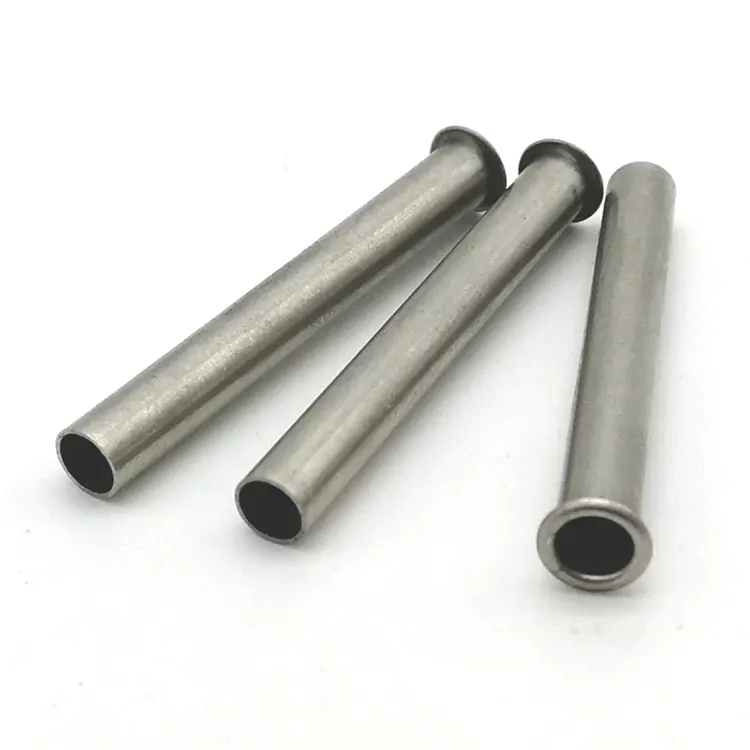
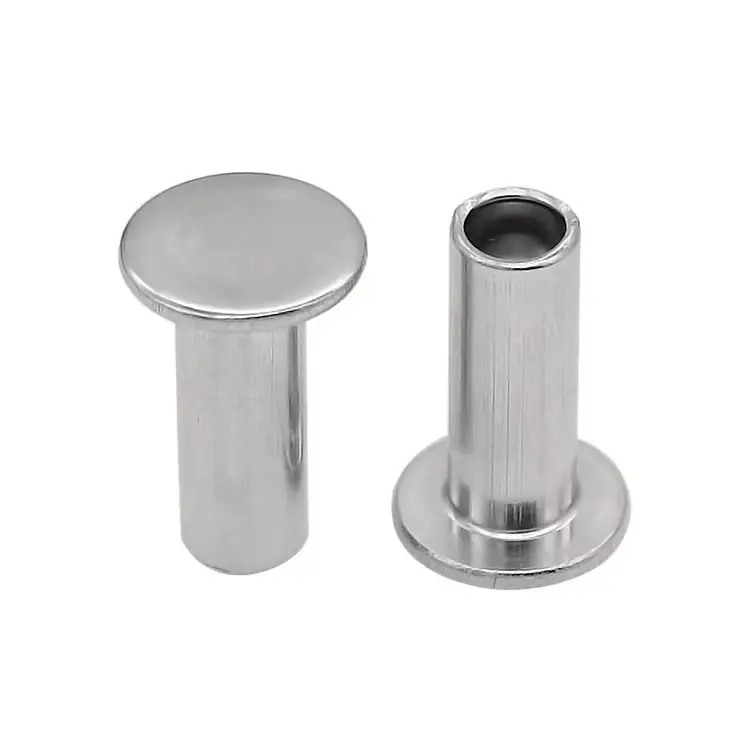
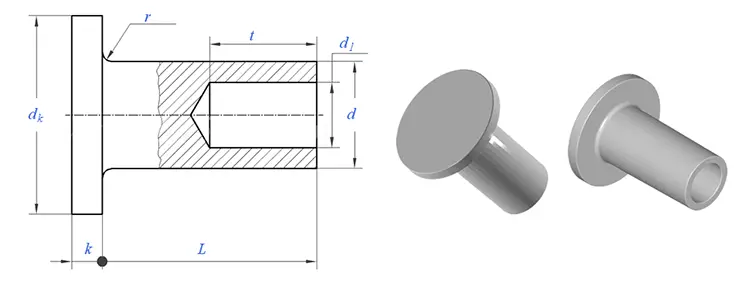
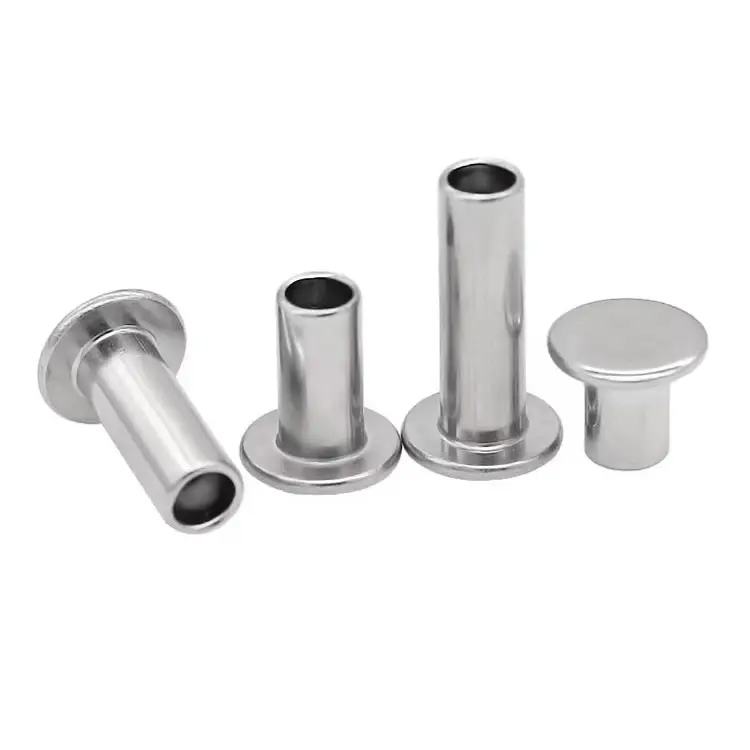
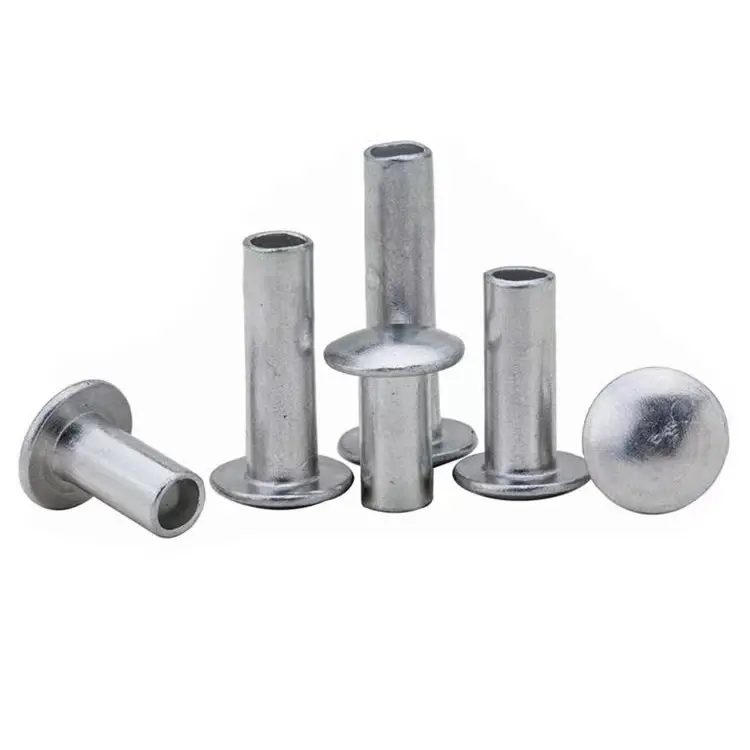
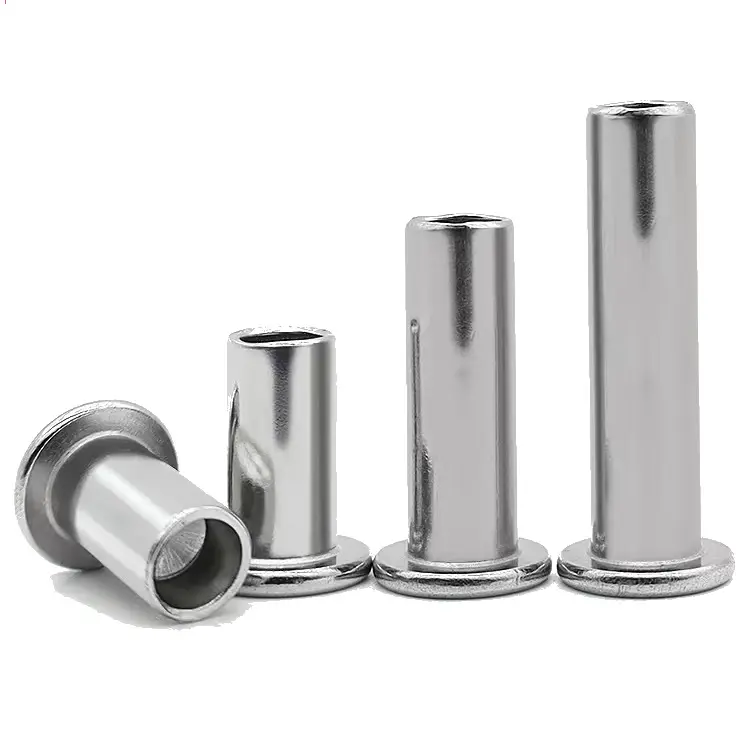
Flat Head Semi Tubular Rivets
Not every assembly has room for a rivet head that stands proud. For sliding mechanisms, tight clearances, and flush‑finish applications, Nuote Metals offers flat head semi tubular rivets – the lowest‑profile standard rivet head on the market. Available in steel, stainless steel, brass, copper, and aluminum, with shank diameters from 1.5mm to 8.0mm. The semi‑hollow cavity reduces setting force by up to 70%, while the flat head sits nearly flush with the material surface. ISO 9001:2015 certified. Free samples available. Contact us for a quote.
Send Inquiry
Product Description
Every rivet head style was designed to solve a specific problem.
- Round head – maximum strength, visible, traditional
- Oval head – decorative, slightly raised
- Truss head – wide bearing surface for soft materials
- Countersunk head – zero protrusion (requires tapered hole)
- Flat head – sits lower than any non‑countersunk head
The flat head semi tubular rivets exists for one reason: clearance. When a protruding head causes problems—scraping, snagging, stacking interference, or simply a design that demands a clean surface—the flat head is the solution.
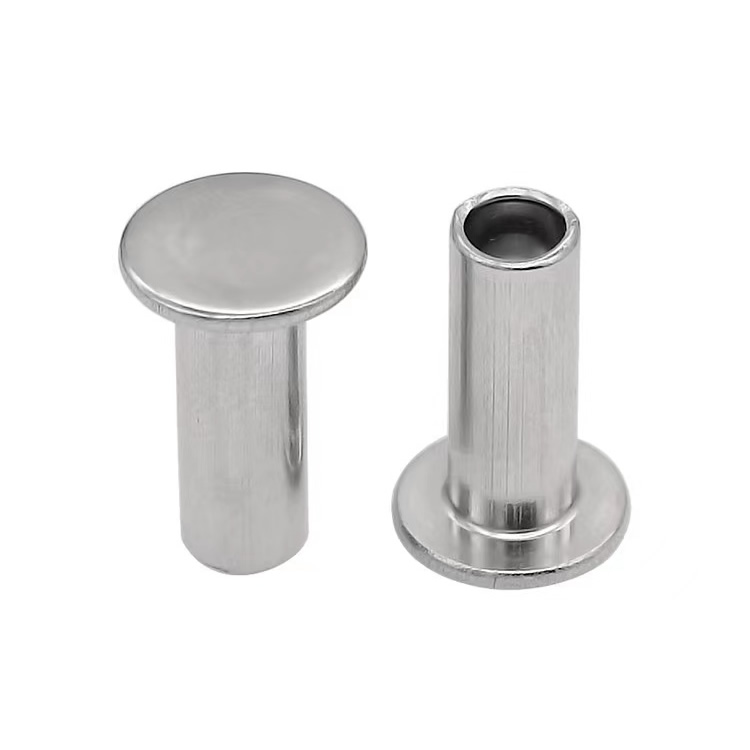
The numbers tell the story:
| Head Style | Head Height (as % of shank diameter) | Typical Protrusion Above Surface |
|---|---|---|
| Round head | 60–70% | 2.5–3.5mm (for 5mm shank) |
| Oval head | 50–60% | 2.0–3.0mm |
| Truss head | 30–40% | 1.5–2.5mm |
| Flat head | 15–25% | 0.8–1.2mm (for 5mm shank) |
That 1.2mm difference might not sound like much—but in a sliding mechanism, a stacked assembly, or a clearance‑limited enclosure, 1.2mm is the difference between a part that works and a part that fails.
This is why the flat head exists. It is not about strength. It is not about appearance. It is about making things fit.
Five Materials – Choose What Fits Your Assembly
| Material | Key Advantage | Best For | Common Finishes |
|---|---|---|---|
| Low‑carbon steel | Strongest, most cost‑effective | Industrial equipment, furniture, drawer slides | Zinc‑plated, nickel‑plated, black oxide |
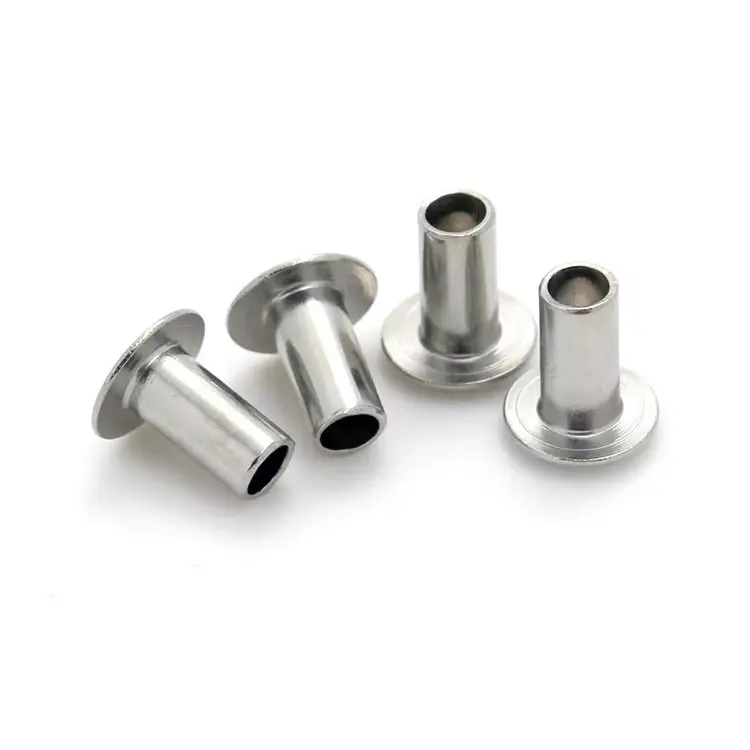
| Stainless steel (304/316) | Permanent corrosion resistance | Medical, marine, outdoor | Passivated (standard) |
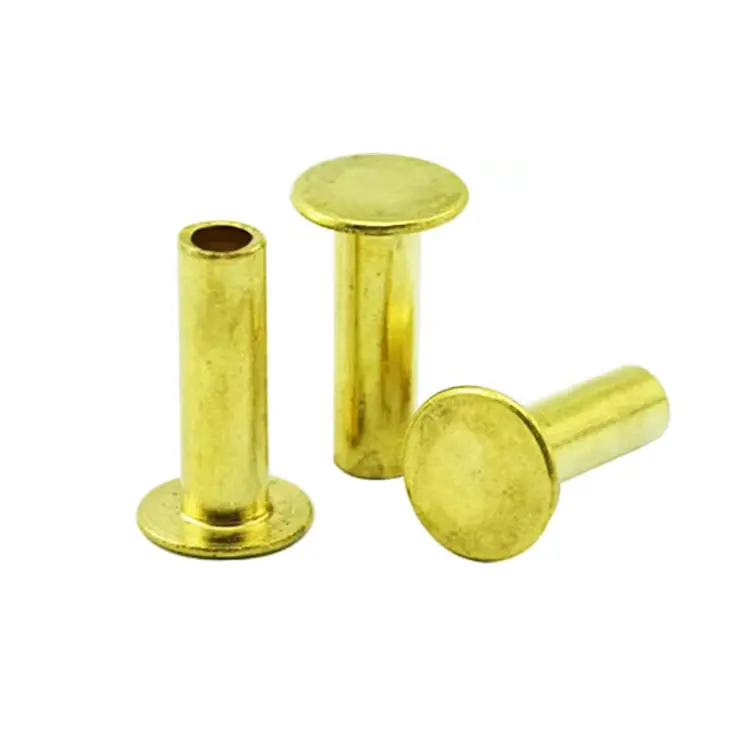
| Brass (C2680) | Non‑magnetic, decorative | Electronics, architectural hardware | Lacquered, nickel‑plated, antique |
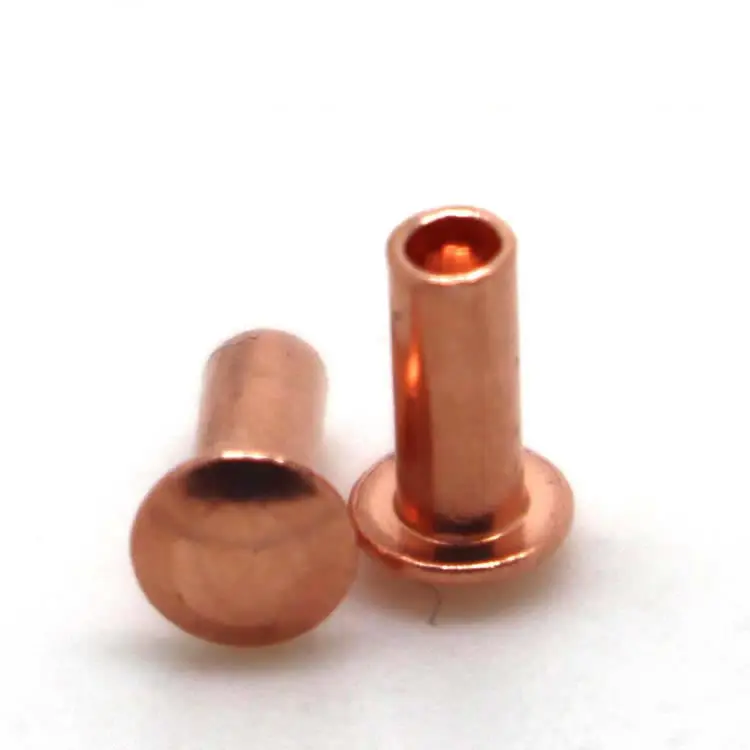
| Copper | Highest electrical/thermal conductivity | High‑current electrical connections, heat transfer applications | Plain, tin‑plated |
| Aluminum (5052/5056) | Lightest, non‑magnetic | Aerospace, portable equipment | Anodized, plain |
One Application – Drawer Slides
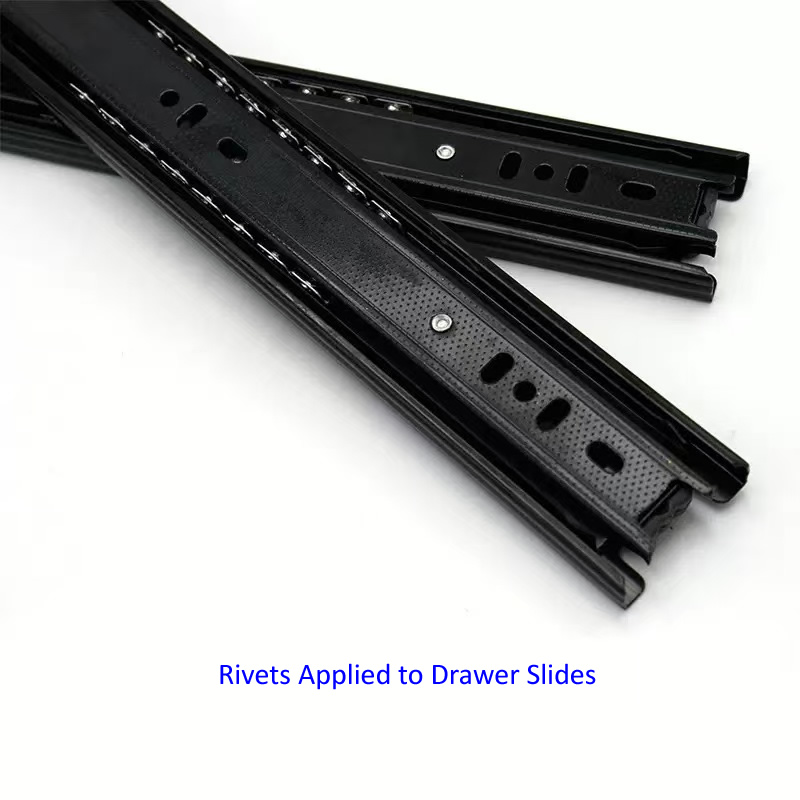
A cabinet manufacturer was using round head rivets to assemble drawer slides. The round heads protruded 2.5mm above the slide surface—just enough to catch on the drawer frame during opening and closing. Customers complained about sticking drawers and scratched finishes.
Nuote Metals supplied flat head semi tubular rivets – 4.0mm shank, 8.0mm flat head, 8.0mm barrel length, zinc‑plated steel. The flat head sat only 0.9mm above the surface—low enough to clear the drawer frame. The semi‑hollow cavity reduced setting force, preventing distortion of the thin slide material.
The cabinet manufacturer has since used over 600,000 flat head semi tubular rivets with zero clearance complaints.
Available Sizes – Standard Shank Diameters
| Shank Diameter (mm) | Typical Head Diameter (mm) | Typical Barrel Lengths (mm) | Recommended Grip Range (mm) |
|---|---|---|---|
| 1.5 | 3.0 – 3.5 | 3.0, 4.0, 5.0 | 1.0 – 2.5 |
| 2.0 | 4.0 – 4.5 | 4.0, 5.0, 6.0 | 1.5 – 3.0 |
| 2.5 | 5.0 – 5.5 | 4.5, 5.5, 6.5 | 1.8 – 3.5 |
| 3.0 | 6.0 – 6.5 | 5.0, 6.0, 7.0, 8.0 | 2.0 – 4.0 |
| 3.5 | 7.0 – 7.5 | 5.5, 6.5, 8.0, 10.0 | 2.5 – 4.5 |
| 4.0 | 8.0 – 8.5 | 6.0, 8.0, 10.0, 12.0 | 2.5 – 5.0 |
| 4.5 | 9.0 – 9.5 | 6.0, 8.0, 10.0, 12.0 | 3.0 – 5.5 |
| 5.0 | 10.0 – 10.5 | 8.0, 10.0, 12.0, 15.0 | 3.0 – 6.5 |
| 5.5 | 11.0 – 11.5 | 8.0, 10.0, 12.0, 15.0 | 3.5 – 7.0 |
| 6.0 | 12.0 – 12.5 | 10.0, 12.0, 15.0, 20.0 | 4.0 – 8.0 |
| 6.5 | 13.0 – 13.5 | 10.0, 12.0, 15.0, 20.0 | 4.5 – 9.0 |
| 7.0 | 14.0 – 14.5 | 12.0, 15.0, 20.0, 25.0 | 5.0 – 10.0 |
| 7.5 | 15.0 – 15.5 | 12.0, 15.0, 20.0, 25.0 | 5.5 – 11.0 |
| 8.0 | 16.0 – 16.5 | 12.0, 15.0, 20.0, 25.0, 30.0 | 6.0 – 12.0 |
Custom Sizes welcome to send us the drawing.
How We Build Rivets
Flat heads are harder to form than round heads. The metal wants to wrinkle at the sharp transition from shank to head. Our process prevents that.
Our cold‑heading sequence:
- Wire drawing – Raw material drawn to exact shank diameter (±0.02mm)
- Cut‑off – Sheared to blank length
- First blow – Blank is squared and centred
- Second blow (pre‑forming) – Die begins the flat head shape with a controlled corner radius
- Third blow (coining) – Flat die compacts the head to final thickness, ensuring perfect flatness
- Fourth blow (cavity extrusion) – Punch creates the semi‑hollow cavity at 45–55% depth
- Trimming – Flash removed
- Tumbling – Micro‑burrs eliminated
- Plating or coating – Applied as specified
What we verify:
| What | Tolerance | Why It Matters |
|---|---|---|
| Shank diameter | ±0.05mm | Must fit your hole precisely |
| Head diameter | ±0.15mm | Determines bearing surface |
| Head height | ±0.05mm | Critical for flush fit |
| Overall length | ±0.15mm | Must match your material stack |
| Cavity depth | 45–55% of barrel | Optimal clinch formation |
| Head flatness | ±0.05mm | Ensures flush seating |
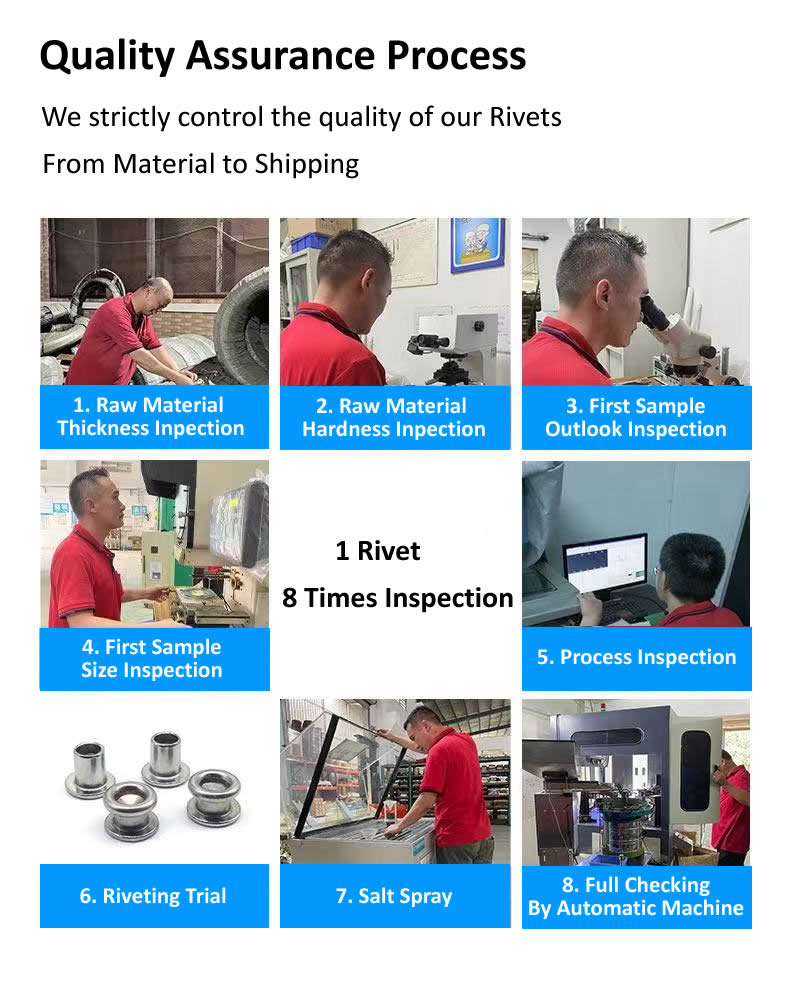
One Rivet, Eight Checks – Quality Assurance
- Raw material diameter check – Laser micrometer, ±0.02mm
- Raw material hardness check – Rockwell tester
- First article appearance check – 20× magnification for cracks, wrinkles, flash
- First article dimensional check – Optical comparator verification
- In‑process checks – 5 rivets every 500 pieces
- Test setting – Every 2,000 pieces, set into sample material
- Salt spray test (if required) – ASTM B117
- Final outgoing inspection – Optical sorting + AQL manual verification
Where Flat Head Semi Tubular Rivets Are Used
- Drawer slides – Low‑profile assemblies where clearance is critical
- Aerospace interiors – Panel assemblies, seat components
- Electronics enclosures – Tight‑clearance chassis assemblies
- Furniture – Sliding mechanisms, flush surfaces
- Automotive – Interior trim, panel attachments
- Industrial equipment – Control panels, machine guards
- Luggage – Handle tracks, sliding mechanisms
What We Can Prove – Certifications & Documentation

We do not ask you to trust our claims. We provide third‑party verification.
- ISO 9001:2015 – Certified quality management system
- RoHS compliance – Verified by SGS testing
- REACH compliance – Current SVHC declaration
- SGS test reports – Available per batch on request
Every shipment of flat head semi tubular rivets includes a dimensional inspection report and material certificate. If you need additional testing—salt spray, tensile, or metallurgical analysis—we can provide it.

Three Questions We Answer Often
Q1: What is the difference between a flat head semi tubular rivet and a countersunk head rivet?
A: A flat head sits proud of the surface (approximately 0.8–1.2mm for a 5mm shank). A countersunk head sits flush or below the surface, but it requires a pre‑drilled taper (countersink) in the material. The flat head semi tubular rivet needs no special hole preparation—just a straight hole. If your clearance allows 0.8–1.2mm of protrusion, the flat head is faster and less expensive than countersunk. If you need zero protrusion, countersunk is the right choice.
Q2: Can flat head semi tubular rivets be used in sliding applications without catching?
A: Yes. The low profile is specifically designed for sliding and clearance‑limited assemblies. At 0.8–1.2mm for a 5mm shank, the flat head is low enough to clear most sliding surfaces. For the drawer slide case above, the 0.9mm head height cleared the drawer frame completely. If your clearance is tighter than 0.8mm, we recommend switching to countersunk rivets.
Q3: What materials are available for flat head semi tubular rivets?
A: We manufacture flat head semi tubular rivets in five material families:
- Low‑carbon steel – Strongest, most cost‑effective, zinc or nickel plated
- Stainless steel (304/316) – Permanent corrosion resistance
- Brass (C2680) – Non‑magnetic, decorative
- Copper – Highest electrical/thermal conductivity
- Aluminum (5052/5056) – Lightest, non‑magnetic
Ready to Solve Your Clearance Problem?
If you are designing for tight spaces, flat head rivets are the answer. They take up less room than any other non‑countersunk head.
Three steps to get flat head rivets in your assembly:
Send us your specs – Shank diameter, barrel length (or material stack thickness), material, finish, and quantity.
We respond within 24 hours – with tooling cost (if any), piece price, and lead time.
We ship samples – 20–50 free pieces for you to test on your actual material.
Not sure about barrel length? Send us your material stack thickness. We will calculate the exact length.
Hot Tags: Flat Head Semi Tubular Rivets,Flat Head Semi Tubular Rivets Factory,China Flat Head Rivets
Related Categories
Send Inquiry
Please feel free to fill your inquiry in the form below. We will reply you in 24 hours.



X
We use cookies to offer you a better browsing experience, analyze site traffic and personalize content. By using this site, you agree to our use of cookies.
Privacy Policy