
Products
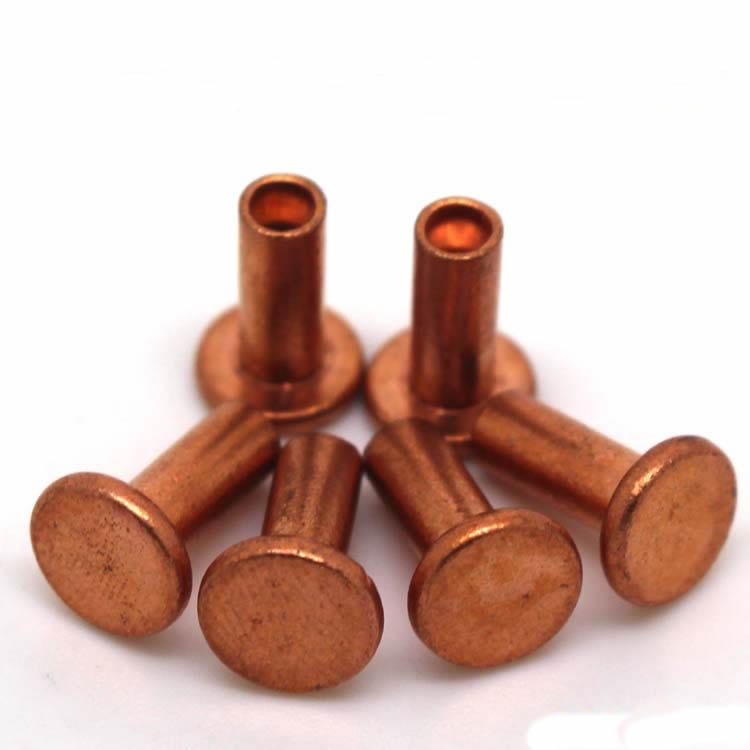
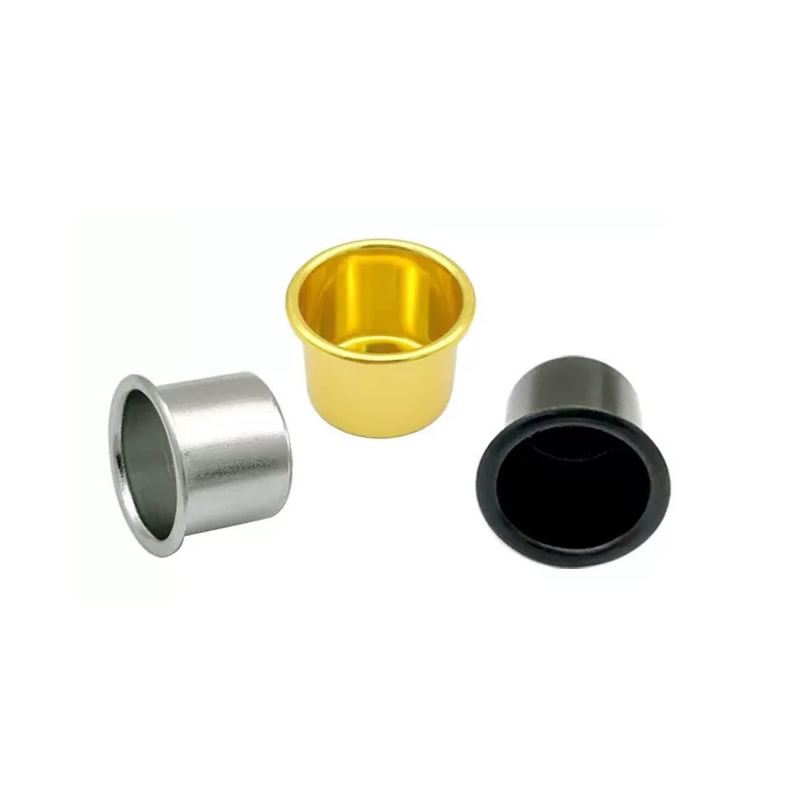
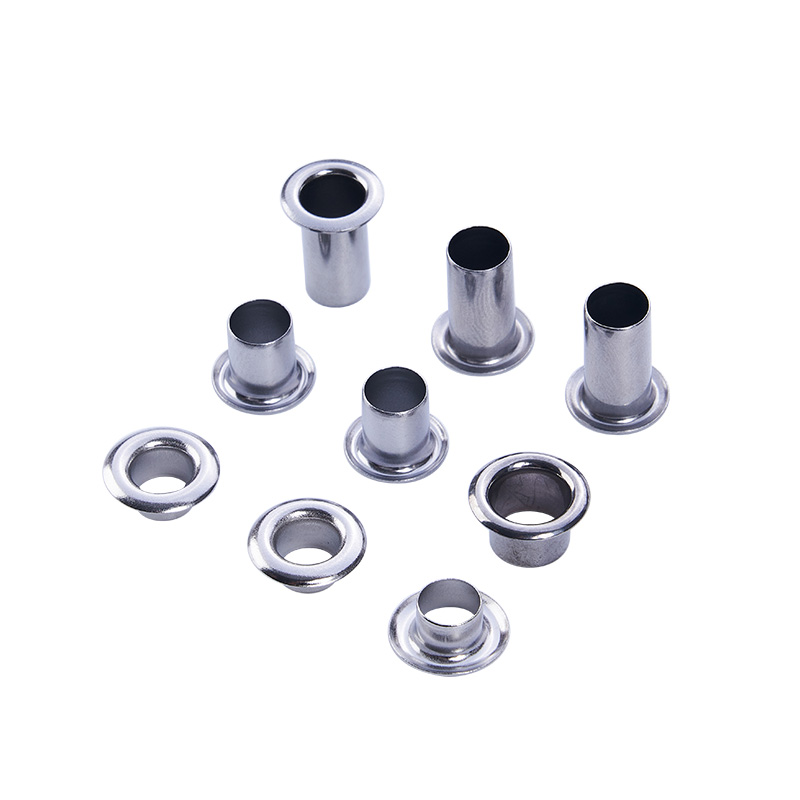
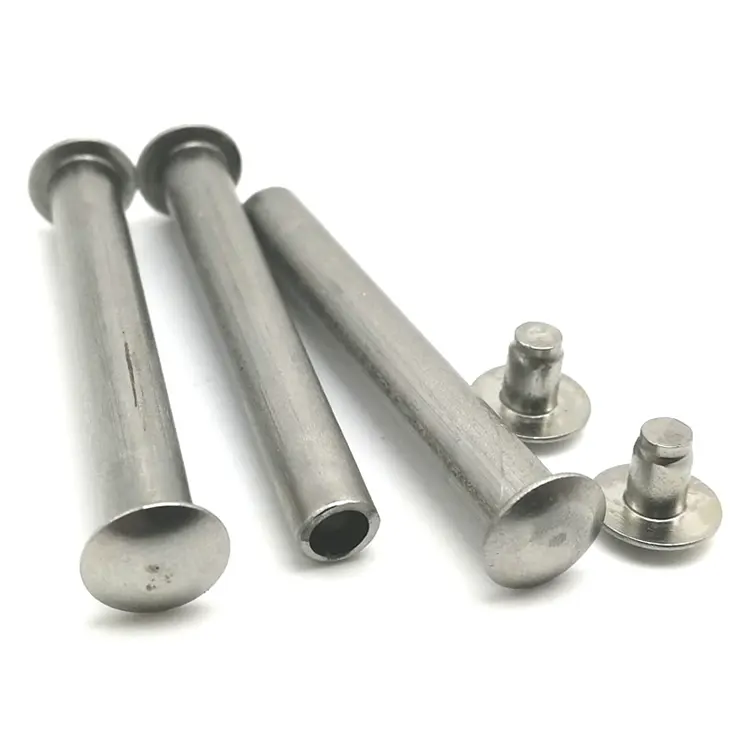
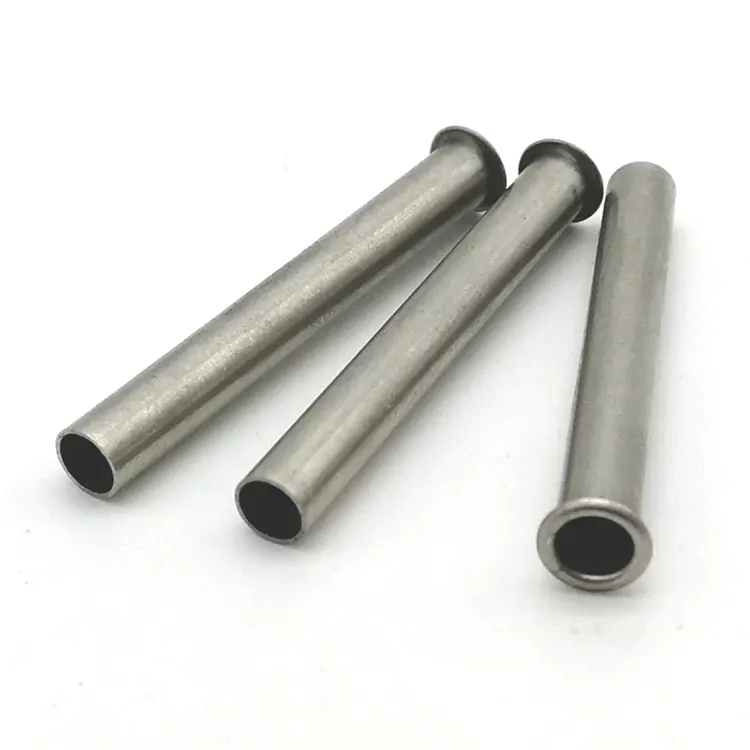
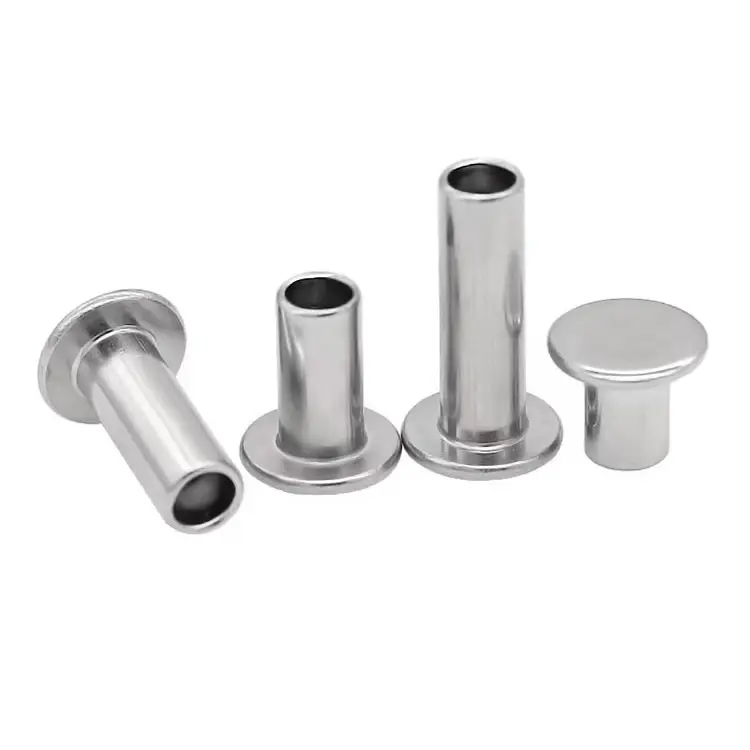
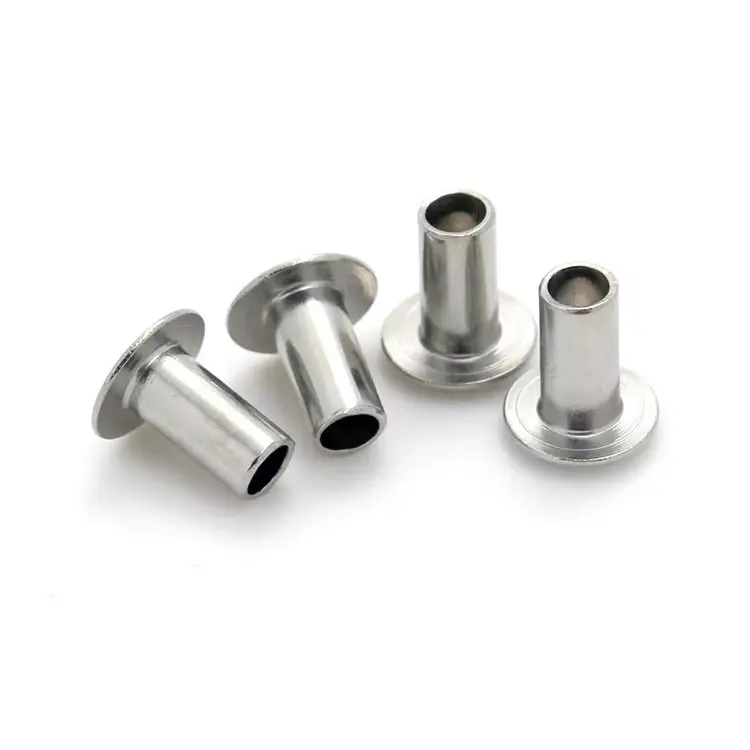
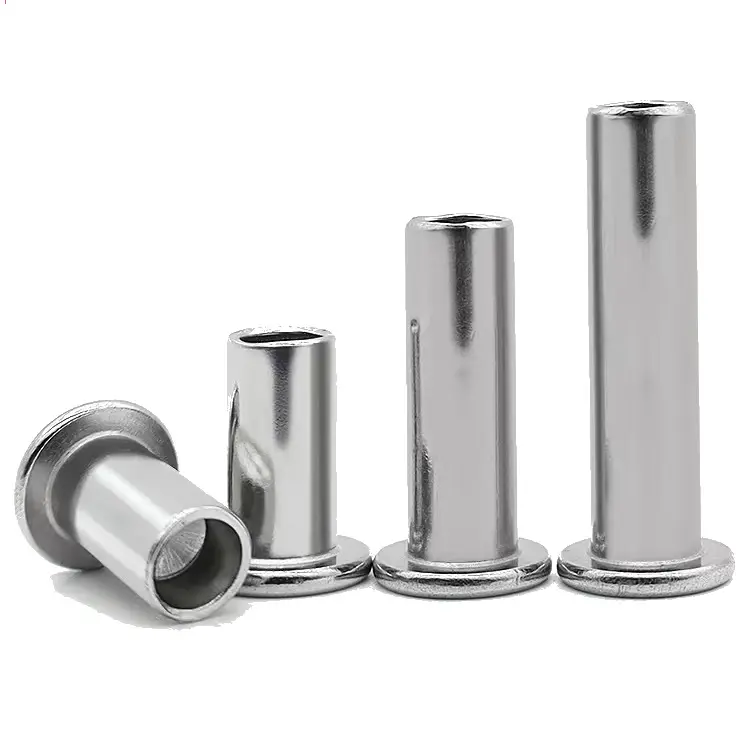
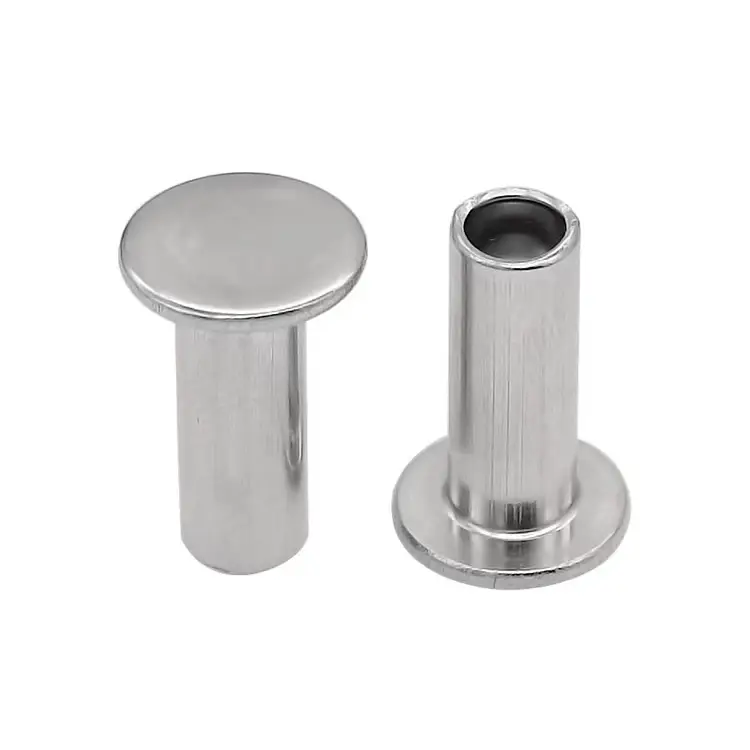
Stainless Steel Semi Tubular Rivets
For marine, outdoor, and chemical environments where standard rivets fail, Nuote Metals delivers stainless steel semi tubular rivets engineered for permanent corrosion resistance and production-friendly installation. The semi-hollow cavity reduces setting force by up to 70% compared to solid rivets, while 304 and 316 stainless steel provide rust-proof durability. Available in 1.5–8.0mm shank diameters with round, flat, oval, truss, and countersunk heads. Passivated as standard. ISO 9001:2015 certified. Free samples available. Contact us for a quote.
Send Inquiry
Product Description
For assemblies exposed to moisture, salt spray, or harsh chemicals, standard steel rivets will eventually rust and fail. Stainless steel semi tubular rivets offer the ideal combination of marine‑grade corrosion resistance and low‑force installation. The semi‑hollow cavity reduces setting force by approximately 70% compared to solid rivets, while the stainless body provides long‑term durability in demanding environments.
Nuote Metals manufactures stainless steel rivets from 304 and 316 grades using high‑speed cold heading. Our process ensures consistent cavity depth, smooth head geometry, and burr‑free shearing. With over ten years of production experience and full ISO 9001:2015 certification, our stainless rivets are trusted by marine equipment manufacturers, automotive suppliers, and outdoor gear brands worldwide.
What Makes a Semi‑Tubular Rivet Different
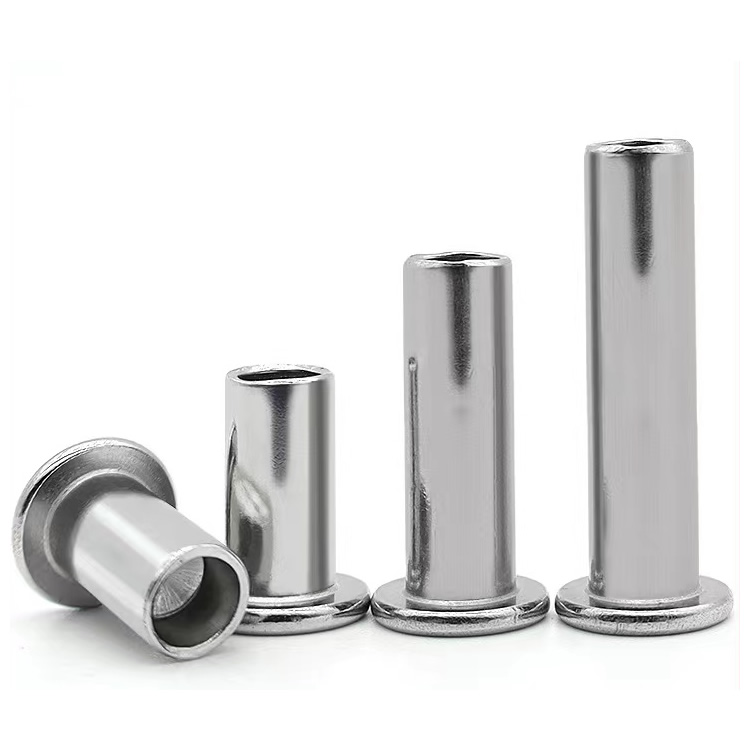
The defining feature of a semi‑tubular rivet is the shallow cavity at the tail end—typically 45–55% of the barrel length. During installation, only the thin wall of this hollow section rolls outward to form the clinch. This is fundamentally different from a solid rivet, where the entire shank must deform.
The hollow design reduces the metal volume that must be deformed, lowering setting force by 30–60% compared to a solid rivet of the same diameter. For semi tubular rivets, this means faster installation, lighter tooling requirements, and reduced risk of damaging delicate components.
| Feature | Stainless Steel Semi Tubular Rivet | Solid Stainless Steel Rivet |
|---|---|---|
| Tail design | Partially hollow (cavity depth 45–55% of length) | Fully solid throughout |
| Setting force | Approximately 25–30% of solid rivet force | High (requires heavy press or bucking bar) |
| Installation speed | Fast, suitable for automated assembly | Slower, requires more force and time |
| Shear strength | 80–90% of solid rivet | 100% (reference) |
| Corrosion resistance | Excellent (material itself) | Excellent (material itself) |
| Best for | High‑volume production, thin materials, outdoor assemblies | Extreme structural loads, heavy‑duty applications |
For most marine, automotive, outdoor, and industrial applications, stainless steel rivets deliver more than enough strength while keeping production efficient.
304 vs. 316 Stainless Steel – Which Grade Do You Need?
We manufacture stainless steel semi tubular rivets in two grades:
| Property | 304 Stainless Steel | 316 Stainless Steel |
|---|---|---|
| Key alloying elements | 18% Cr, 8% Ni | 16% Cr, 10% Ni, 2% Mo |
| Key advantage | Excellent general corrosion resistance | Molybdenum adds superior chloride resistance |
| Salt spray resistance | 200 – 500 hours (ASTM B117) | 1,000+ hours (ASTM B117) |
| Food‑grade | Yes | Yes, higher acid resistance |
| Best for | General outdoor, rain, sun, moderate humidity | Marine, coastal, salt spray, chemical exposure |
| Cost | More economical | Premium grade, higher cost |
Choose 304 stainless steel for general outdoor applications—awnings, tarpaulins, camping gear, and industrial textiles exposed to rain and sun but not continuous saltwater.
Choose 316 stainless steel for marine environments, coastal installations, chemical plants, and any application where salt spray or chlorides are present. The molybdenum in 316 provides the extra protection needed where 304 would eventually pit.
Stainless Steel vs. Carbon Steel vs. Brass – Which Rivet Is Right for You?
| Feature | Stainless Steel | Carbon Steel (Plated) | Brass |
|---|---|---|---|
| Corrosion resistance | Excellent (material itself) | Depends on plating | Good (natural) |
| Long‑term durability | Excellent – no coating to wear off | Limited – plating wears over time | Good – tarnishes but doesn't rust |
| Strength | Very high | High | Moderate |
| Appearance | Silver, stays bright | Silver/black, plating may wear | Gold, develops patina |
| Setting force | Moderate (semi‑tubular reduces by 70%) | Low (semi‑tubular) | Low (semi‑tubular) |
| Cost | Higher | Lowest | Medium |
| Best for | Marine, outdoor, medical, food, permanent installations | Budget‑conscious indoor industrial | Decorative, indoor, leather goods |
Choose stainless steel rivets when your application demands permanent corrosion resistance, long service life, and a clean appearance that does not stain surrounding materials.
Technical Specifications – Material Properties and Head Styles
Material Properties
| Property | 304 Stainless Steel | 316 Stainless Steel |
|---|---|---|
| Material | SUS304 (AISI 304) | SUS316 (AISI 316) |
| Tensile strength | 620 – 750 MPa | 620 – 750 MPa |
| Hardness | HRB 80–95 | HRB 80–95 |
| Corrosion resistance | 200 – 500 hrs salt spray | 1,000+ hrs salt spray |
| Magnetic | Slightly (if cold worked) | Slightly (if cold worked) |
| Best for | General outdoor, moderate humidity | Marine, coastal, chemical |
Passivated as standard – included at no extra charge. Removes free iron particles from the surface and restores the chromium oxide layer. Without passivation, these particles can rust and create red stains.
Custom Manufacturing – Tailored to Your Specifications
Stainless steel semi tubular rivets are manufactured to order rather than stocked as standard sizes. We produce each batch according to customer specifications.
- Shank diameter – Custom from 1.5mm to 8.0mm
- Head style – Round, oval, flat, truss, or countersunk
- Barrel length – Based on your material stack thickness
- Grade – 304 or 316 stainless steel
- Finish – Passivated as standard
Custom sizes available upon request. No tooling charge for most custom orders.
Head Styles Available
| Head Style | Head Diameter / Shank | Profile | Best For |
|---|---|---|---|
| Round | 1.6 – 1.8 : 1 | Tall dome | Metal‑to‑metal, high shear, visible joints |
| Oval | 1.6 – 1.8 : 1 | Smooth, slightly raised dome | General purpose, visible joints, decorative finishes |
| Flat | 2.0 – 2.5 : 1 | Low, flat top | Clearance‑limited, sliding surfaces, flush applications |
| Truss | 2.2 – 2.8 : 1 | Extra‑wide, low dome | Soft materials, oversized holes, wide bearing surface |
| Countersunk | 1.8 – 2.0 : 1 | Tapered, flush fit | Flush surface requirements |
Watch How We Make Rivets
Our cold‑heading presses form stainless steel semi tubular rivets from wire in a single continuous sequence—drawing, cutting, heading, cavity extrusion, and trimming. The video shows the entire process from wire feeding to finished rivet ejection, with real‑time quality monitoring at every stage.
One Real Customer Example – Boat Cover Manufacturer in Florida
This is one of many applications for stainless steel semi tubular rivets. We include it to show real production use, not to suggest limitation.
A boat cover manufacturer in Florida used brass hollow rivets—they tarnished and lost their roll strength after one season. The salt spray from coastal conditions corroded the brass, and the weakened rivets failed under tension. The customer needed a fastener that would hold up to continuous saltwater exposure without staining their white canvas covers.
Nuote Metals supplied 316 stainless steel semi tubular rivets – 4.0mm shank diameter, 6.5mm round head, 8.0mm barrel length, passivated finish. The 316 grade provided 1,000+ hours of salt spray resistance, ensuring the rivets would not corrode even after prolonged coastal exposure. The semi‑hollow cavity reduced setting force, preventing damage to the canvas during installation. The passivated surface guaranteed no free iron remained to cause rust staining.
After two seasons of continuous saltwater exposure, zero failures, zero rust, zero stains. The customer has since placed multiple reorders totalling over 1.5 million pieces and now specifies our rivets for all their coastal product lines.
Our In‑House Inspection Equipment

We maintain a full range of calibrated inspection equipment to verify every batch of rivets:
Digital calipers – For quick dimensional checks during production
Micrometers – For precision measurement of shank diameter and wall thickness
2.5D image measuring system – For full contour measurement and concentricity verification
Profile projector (optical comparator) – For cavity depth, head angle, and edge radius inspection
Laser micrometer – For high‑speed, non‑contact diameter measurement
Rockwell hardness tester – For verifying raw material hardness
Salt spray test chamber – For corrosion resistance testing (ASTM B117) on every batch
Spectrometer – For material composition verification of incoming coils
All equipment is calibrated annually by accredited third‑party labs. Inspection records are retained for five years.
Our Certifications and Honors
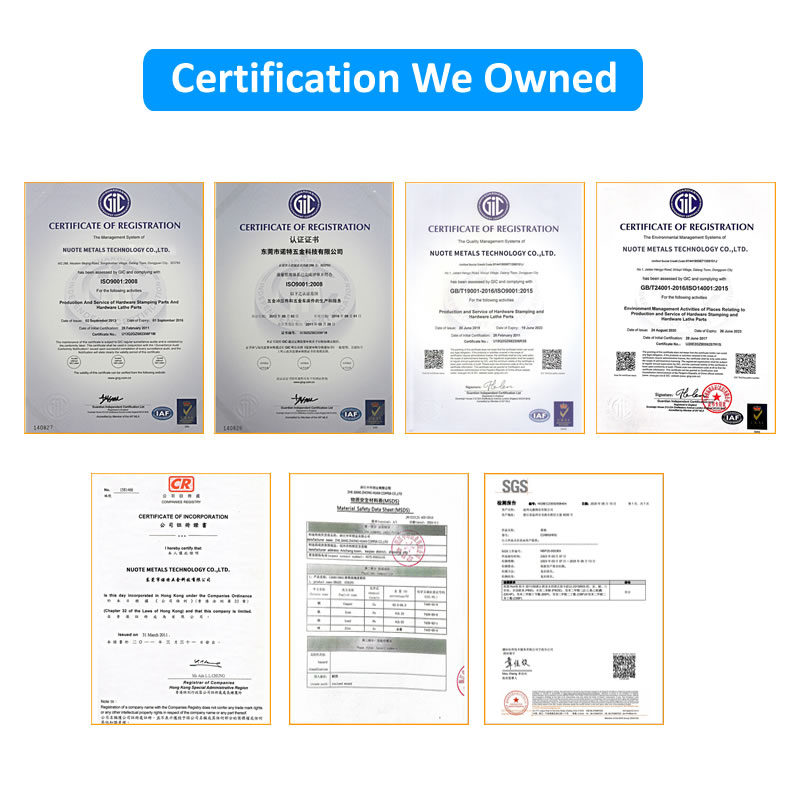
Nuote Metals maintains the following certifications and accreditations:
- ISO 9001:2015 – Quality management system
- RoHS compliance – Verified by third‑party testing
- REACH compliance – SVHC declaration current
- ASTM B117 – Salt spray testing compliance
- SGS test reports – Available upon request for specific batches
All certifications and test reports are available upon request.
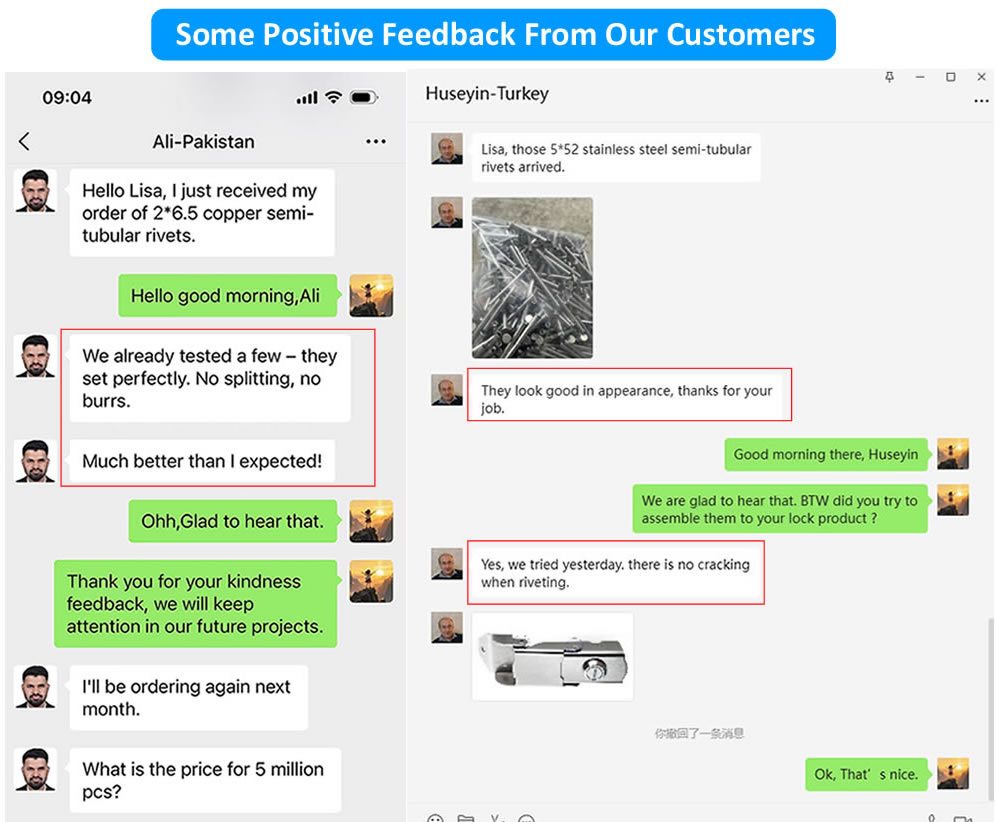
What Our Customers Say – Real Feedback
Where Stainless Steel Semi Tubular Rivets Are Used
They provide a reliable fastening solution across various industries:
Marine and boating – Boat covers, sails, canvas enclosures, dock hardware
Automotive – Interior trim, body panels, convertible tops
Outdoor gear – Tents, tarpaulins, awnings, camping equipment
Medical equipment – Sterilization trays, hospital beds, surgical drapes
Electronics – Component mounting, chassis assembly, circuit board standoffs
Furniture manufacturing – Hinge assemblies, frame joints, outdoor furniture
Aerospace – Interior trim, non‑structural fastening
Industrial equipment – Machinery guards, control panels, conveyor components
How We Work – Practical Information
- Samples – 20–50 free pieces for custom orders (customer pays shipping)
- Trial order – 10,000 pieces recommended for first‑time validation
- MOQ – 2,000 pieces (304 stainless), 5,000 pieces (316 stainless)
- Lead time (custom) – 10–12 business days
- Tooling charges – None for most custom orders
Three Questions We Answer Often
Q1: What is the difference between a stainless steel semi tubular rivet and a solid stainless steel rivet? When should I choose the semi‑tubular version?
A: The fundamental difference is the hollow cavity in the tail. A stainless steel semi tubular rivet has a shallow cavity at the tip, requiring only 25–30% of the force needed for a solid rivet of the same diameter. This makes it faster to install and gentler on surrounding materials. Solid rivets offer slightly higher shear strength (semi‑tubular retains 80–90% of solid rivet strength) but require heavy equipment and more time. For most marine, automotive, outdoor, and industrial applications—including the boat cover case above—semi‑tubular rivets provide more than enough strength while keeping production efficient. Choose solid rivets only for extreme structural loads where maximum shear strength is the only priority.
Q2: Do stainless steel semi tubular rivets rust? Why do they sometimes show rust stains?
A: Stainless steel does not rust—the material itself is corrosion‑resistant. However, during manufacturing (stamping, forming), microscopic particles of free iron can transfer from tooling onto the surface. These iron particles can rust, creating red stains—even though the rivet itself is stainless. That is why we include passivation at no extra charge. Passivation removes these free iron particles and restores the true corrosion‑resistant surface. Many suppliers treat passivation as an optional extra. We do not.
Q3: How do I select the correct barrel length for a stainless steel semi tubular rivet?
A: Select a barrel length approximately 1.5–2.0mm longer than your total material stack thickness. For example, if you are joining two 2mm sheets (total 4mm), choose a barrel length of 5.5–6.0mm. This extra length provides enough material for the hollow section to roll outward and form a secure clinch without bottoming out. If the barrel is too short, the clinch will be weak. Too long, and the barrel may crumple. Rivet length is measured from the underside of the rivet head to the end of the body. Send us your material stack thickness, and we will recommend the exact barrel length.
Get Your Stainless Steel Semi Tubular Rivets Quote Today
We understand that finding a reliable stainless steel rivet supplier can be challenging—especially when you need consistent quality, specific dimensions, and traceable documentation.
That is why we make it simple.
- Send us your specification – shank diameter, barrel length, head style, grade (304 or 316), and quantity. Include a drawing if you have one.
- We respond within 24 hours – with tooling cost (if any), piece price, lead time, and sample policy.
- We deliver what we promise – certified materials, inspected dimensions, and passivated surfaces—every batch.
Request your quote now. No pressure. No obligation. Just a clear, competitive quotation.
Contact Nuote Metals today.
Hot Tags: Stainless Steel Semi Tubular Rivets,China Semi Tubular Rivets,China Stainless Steel Rivets
Product Tag
Related Categories
Send Inquiry
Please feel free to fill your inquiry in the form below. We will reply you in 24 hours.



X
We use cookies to offer you a better browsing experience, analyze site traffic and personalize content. By using this site, you agree to our use of cookies.
Privacy Policy