
Are Aluminum Tubular Rivets the Missing Piece in Your Lightweight Assembly Strategy?
Weight reduction is no longer just an aerospace obsession. Electric vehicles, portable electronics, and even sports equipment manufacturers are scrutinizing every gram. At Nuote Metals, we have watched engineers specify steel or solid aluminum rivets out of habit – while a fully hollow aluminum tubular rivet would do the job better, faster, and lighter.
This article walks through what aluminum tubular rivets actually are, where they outperform heavier alternatives, and how to qualify them for your production line.
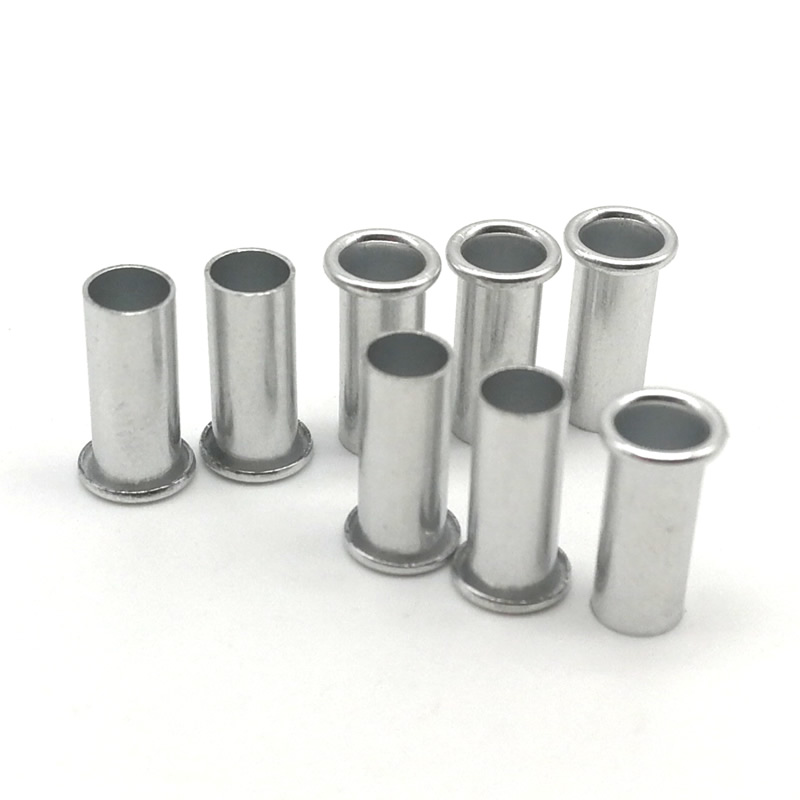
What Exactly Is an Aluminum Tubular Rivet?
Unlike solid rivets (100% material) or semi‑tubular rivets (partially hollow), an aluminum tubular rivet has a shank that is hollow from the tail all the way to the head. The wall thickness is typically 0.20–0.35 mm. During installation, this thin wall rolls outward with very low force, creating a clean, uniform secondary head.
Think of it as a metal tube with a pre‑formed cap. The hollow center means less material, less weight, and less setting energy.
At Nuote Metals, we produce aluminum tubular rivets from three common alloys: 1100 (soft, decorative), 5056 (marine‑grade, corrosion resistant), and 6061 (general purpose). The table below summarizes their differences.
| Alloy | Temper | Shear Strength (MPa) | Corrosion Resistance | Typical Use |
|---|---|---|---|---|
| 1100 | H12 | 55–70 | Low (indoor only) | Decorative, crafts, low‑load |
| 5056 | H32 | 100–130 | Very good (marine) | Electronics, outdoor, general purpose |
| 6061 | T4 | 110–140 | Good | Automotive, industrial, structural |
For 80% of customers, 5056 aluminum tubular rivets are the right answer.
Three Real‑World Scenarios Where Aluminum Tubular Rivets Excel
We are not talking about theoretical advantages. Here are actual applications where customers switched to aluminum tubular rivets and saw measurable improvements.
Portable Electronics – Eliminating Cracking and Weight
A medical device manufacturer was using solid aluminum rivets to attach internal brackets to a thin magnesium housing. The setting force cracked 1.5% of the housings – an expensive scrap rate. Nuote Metals supplied 5056 aluminum tubular rivets with a 3 mm shank. The setting force dropped by nearly half, cracks disappeared, and each device shed 1.2 grams of fastener weight. Over a 500,000‑unit run, that is over half a ton of weight saved.
Automotive Interior Trim – High Speed, Low Force
An automotive tier‑one supplier needed to attach fabric trim to plastic door panels – 800,000 assemblies per year. Steel semi‑tubular rivets were over‑specified: the trim carried almost no load. Switching to 6061 aluminum tubular rivets cut the press cycle time by 35% and eliminated rust stains on the light‑colored fabric. The cost per rivet also dropped by 40%.
Leather Goods and Backpacks – No Crushing, No Rust
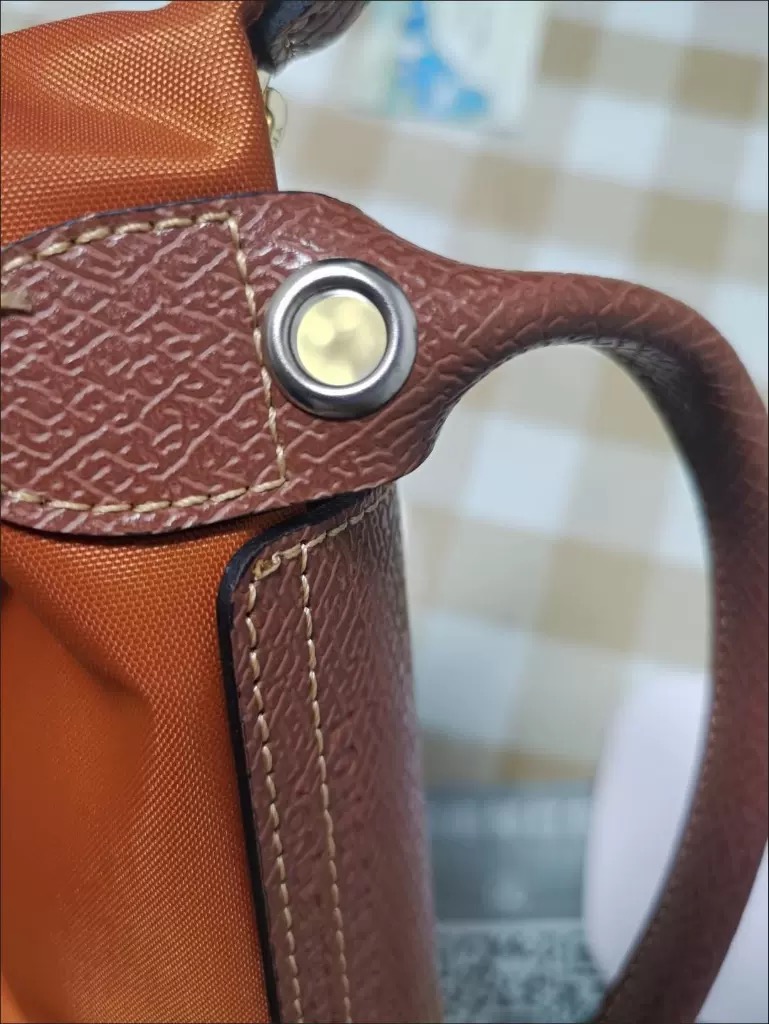
A backpack brand wanted a lightweight, non‑rusting rivet for strap attachments. Steel tubular rivets corroded after outdoor use; solid aluminum rivets required too much force and crushed the nylon webbing. Nuote Metals recommended 5056 aluminum tubular rivets with a clear anodized finish. The rivets set cleanly through 3 mm of webbing plus 2 mm of leather, added almost no weight, and have shown zero corrosion after two years of field use.
Technical Parameters You Can Actually Use
No vague marketing claims. Here are the numbers we work with daily at Nuote Metals.
Dimensional Range and Tolerances
- Shank outside diameter: 1.6 mm to 8 mm (±0.05 mm)
- Wall thickness: 0.20 mm to 0.40 mm (±0.03 mm)
- Flange diameter: 3 mm to 16 mm (±0.10 mm)
- Overall length: 2.5 mm to 12 mm (±0.10 mm)
For shank diameters under 2 mm, we generally recommend semi‑tubular instead – the wall becomes too thin to form reliably.
Installation – What Works and What Does Not
Because the wall is thin, setting aluminum tubular rivets is different from setting solid or semi‑tubular rivets.
Critical Success Factors
- Hole diameter: Shank OD + 0.05 to 0.10 mm. Too tight and the wall buckles. Too loose and the curl is uneven.
- Deburring: Essential. A raised burr will split the thin wall.
- Anvil profile: Use a shallow‑concave anvil. A flat anvil crushes the curl.
- Stroke: Single, firm stroke. Never re‑strike the same rivet – aluminum work‑hardens and cracks.
Recommended Setting Force (5056 alloy, 2–3 mm stack)
The table below shows typical force ranges for common shank diameters.
| Shank Diameter | Force Range (N) | Recommended Setting Tool |
|---|---|---|
| 3 mm | 400 – 650 | Pneumatic press |
| 4 mm | 600 – 900 | Servo or pneumatic press |
| 5 mm | 800 – 1,200 | Hydraulic or servo press |
These forces are roughly half of what a solid aluminum rivet of the same diameter would require.
Quality and Documentation – What We Provide
Nuote Metals operates under ISO 9001:2015. Every batch of aluminum tubular rivets includes a lot number that traces back to the raw material mill certificate, production press log, and final inspection report. We perform AQL sampling per ISO 2859 – critical dimensions at 1.0, major at 2.5, minor at 4.0.
We also provide RoHS declarations for all finishes (mill, clear anodized, gold/black anodized, chromate conversion) at no extra charge.
Where Aluminum Tubular Rivets Are Not the Right Choice
We want you to specify correctly, not just buy from us. Do not use aluminum tubular rivets when:
- The joint will see more than 50 N of shear force (about 5 kg of static load)
- The material stack exceeds 4 mm total thickness
- The environment includes continuous saltwater immersion (use 316 stainless steel tubular instead)
- You need a high‑strength structural joint (use solid or semi‑tubular)
For those cases, Nuote Metals manufactures solid and semi‑tubular rivets in aluminum, steel, stainless, brass, and copper. We will tell you honestly which type fits your application.
Getting Started with a Sample Kit
The fastest way to validate aluminum tubular rivets for your assembly is to test them. Nuote Metals offers free samples of stocked sizes – you pay only the courier charge. Provide your material stack thickness and desired shank diameter, and we will calculate the recommended barrel length and send you three adjacent lengths for testing.
Contact us with your stack thickness, environment, and annual volume. We will reply within one business day with a specific alloy and finish recommendation, technical datasheets, and a sample offer.
Send Inquiry



X
We use cookies to offer you a better browsing experience, analyze site traffic and personalize content. By using this site, you agree to our use of cookies.
Privacy Policy