
Are Half Tubular Rivets the Most Underestimated Fastener in Modern Manufacturing?
A curious shift is occurring across manufacturing sectors. After years of aggressive promotion for blind rivets, self-piercing rivets, and adhesive bonding, many production engineers are quietly returning to a fastener that has been around for over a century: the half tubular rivet. At Nuote Metals, we have observed a measurable increase in inquiries and orders for this fastener type over the past 18 months—particularly from the automotive, furniture, and electronics industries.
This is not a nostalgia-driven trend. The data suggests a pragmatic re-evaluation of what actually works on the production floor.
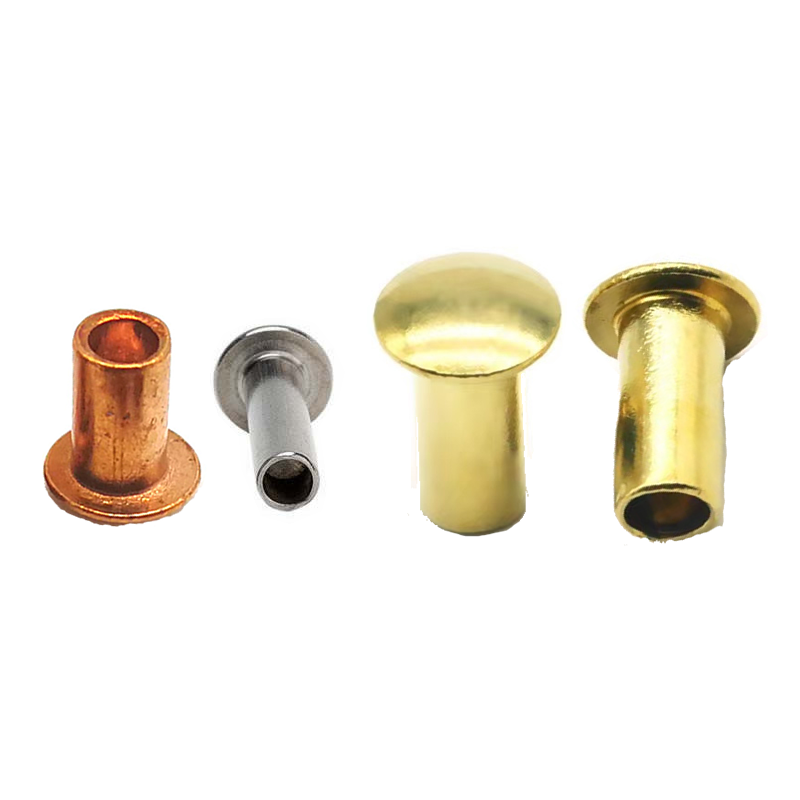
The Numbers Behind the Return
According to our internal sales data at Nuote Metals, orders for half tubular rivets increased by approximately 30% in the second half of 2024 compared to the same period the previous year. The majority of these orders came from:
- Automotive interior component suppliers
- Office furniture and seating manufacturers
- Appliance housing assembly lines
- Electronics control panel fabricators
A major automotive supplier recently replaced plastic clips with half tubular rivets in their seat assembly line. Their reported failure rate dropped from 1.2% to 0.08% per 1,000 assemblies.
In another instance, a furniture manufacturer reported a 20% increase in production output after switching from screw-and-nut assemblies to our rivets on their chair frame lines.
Why Now? The Practical Advantages
The return to half tubular rivets is not driven by marketing campaigns. It is driven by three measurable advantages that directly affect production outcomes.
Lower Setting Force Means Faster Assembly
A half tubular rivet requires approximately one-quarter of the setting force compared to a solid rivet of the same diameter. This means lighter pneumatic tools, reduced operator fatigue, and fewer press maintenance cycles. For automated lines, this translates into faster cycle times.
| Shank Diameter | Half Tubular Rivet (tons) | Solid Rivet (tons) |
|---|---|---|
| 3 mm | 0.8 – 1.5 | 3.0 – 5.0 |
| 5 mm | 1.5 – 3.0 | 5.0 – 8.0 |
Unlike screws that can back out under vibration, they create a permanent joint. Unlike adhesives, their performance does not degrade with temperature or humidity changes. The clinch formed by the hollow tail expands uniformly, creating a predictable clamping force that remains consistent across thousands of assemblies.
Pivot Capability
Because the swelling of the rivet is confined to the tail only, half tubular rivets can be set to a loose fit when required. This makes them suitable for hinges, folding mechanisms, and rotating assemblies—applications where other permanent fasteners fail.
Common Misconceptions We Encounter
Despite its long history, half tubular rivets are often misunderstood. Here are three misconceptions we address regularly at Nuote Metals.
Misconception 1: "They Are Weaker Than Solid Rivets"
This is true only if comparing the same diameter. However, a half tubular rivet retains 80–95% of the shear strength of a solid rivet while requiring significantly less force to set. For the majority of industrial applications, this strength is more than sufficient. The trade-off is favourable: slightly lower strength for dramatically faster installation.
Misconception 2: "They Are Only for Soft Materials"
they are commonly used in leather, fabric, and plastic assemblies. But they are also found in automotive brake linings, clutch facings, and aircraft interiors. The material selection—steel, stainless steel, brass, copper, or aluminium—determines the final strength and suitability. The fastener type itself is not the limiting factor.
Misconception 3: "Installation Requires Expensive Equipment"
they can be set with manual tools, pneumatic rivet guns, or hydraulic presses. For high-volume production, automated orbital riveting systems are available. The capital investment is comparable to or lower than other automated fastening methods.
Real Applications from Our Factory Records
Automotive Seat Trim Assembly
A car seat manufacturer approached Nuote Metals with a recurring problem: plastic clips used to secure foam-backed vinyl were snapping during installation and failing under thermal cycling. The rejection rate was 1.2%.
We recommended 4 mm universal head half tubular rivets in zinc-plated steel. The rivets were installed using a pneumatic press, with a setting time of approximately 0.6 seconds per rivet. After installation, the seats underwent thermal cycling tests from -20°C to 80°C and repeated ingress/egress testing.
The rejection rate dropped to 0.08%. The manufacturer has since converted all seat trim lines to our rivets and reported a 15% reduction in installation time per seat.
Industrial Padlock Locking Mechanism
A padlock manufacturer required a rivet to secure an internal locking plate within a zinc-die-cast body. The clearance hole in the body was larger than the rivet shank, and a secondary washer was adding unnecessary assembly steps and cost.
We supplied 304 stainless steel truss head half tubular rivets with a shank diameter of 4 mm and barrel length of 6 mm. The truss head—with a diameter 2.2 to 2.8 times the shank—bridged the oversized hole and prevented pull-through without requiring a separate washer.
The padlock passed 50,000 cycle tests with zero loosening. The customer eliminated the secondary washer and reduced assembly time by 12 seconds per unit.
Technical Parameters – Our Factory Standards
At Nuote Metals, we manufacture rivets to the following specifications.
Dimensional Range
| Parameter | Range | Tolerance |
|---|---|---|
| Shank diameter | 2 mm – 10 mm | ±0.05 mm |
| Barrel length | 4 mm – 30 mm | ±0.15 mm |
| Head diameter | 1.6 – 2.8 × shank diameter | ±0.10 mm |
| Hollow depth | 30–50% of shank length | ±5% |
Available Materials
| Material | Key Properties | Best For |
|---|---|---|
| Low-carbon steel | High strength, needs plating | Cost-sensitive general assembly |
| Stainless steel (304/316) | Excellent corrosion resistance | Marine, medical, outdoor |
| Brass (C2680) | Good corrosion resistance, aesthetic | Electrical terminals, leather goods |
| Aluminium (5052/5056) | Lightweight, corrosion-resistant | Aerospace, electronics, lightweight structures |
| Copper | Excellent conductivity, thermal transfer | Electrical busbars, heat sinks |
Installation Considerations
Hole Preparation
The hole diameter should be 0.05–0.10 mm larger than the rivet shank. An oversized hole results in uneven clinch formation. An undersized hole can split the hollow tail.
Setting Tools
They can be set using:
- Manual hammer setting (low volume)
- Pneumatic rivet guns (medium volume)
- Hydraulic or pneumatic presses (high volume)
- Automated orbital riveting systems (very high volume)
Quality Control Points
- Visual inspection of clinch formation
- Pull-out force testing per application specification
- Consistency monitoring on automated lines
Half Tubular Rivets – FAQ
Q1: What is the difference between half tubular and full tubular rivets?
A: The difference is the depth of the hollow section. A half tubular rivet has a hollow cavity that extends only 30–50% of the shank length from the tail end. A full tubular rivet is hollow throughout the entire shank. they offer higher shear strength (80–95% of solid) while still reducing setting force by approximately 70%. Full tubular rivets provide only 50–70% of solid rivet strength. For applications requiring load capacity with high-speed assembly—such as automotive brake linings or furniture frames—half tubular rivets are the correct choice.
Q2: Can they be used as pivot points or for loose joints?
Yes. they can be fastened to a loose fit depending on the application. Since the swelling of the rivet is only at the tail, they can function as pivot points where movement is preferred. This makes them ideal for hinges, folding mechanisms, and rotating assemblies. Applications include furniture pivots, electrical terminal connections, and mechanical linkages. The setting pressure can be controlled to achieve the desired tightness.
Q3: How does Nuote Metals ensure consistent quality across large production runs?
A: At Nuote Metals, quality control begins at the raw material stage. Each batch is traceable to the mill certificate. During production, we perform dimensional inspections at set intervals—typically 10 samples per 1,000 pieces. We measure shank diameter, barrel length, head diameter, and hollow depth. Final inspection includes clinch formation testing on representative samples. We also provide full documentation, including inspection reports, mill certificates, and RoHS declarations, with every shipment.
A Measured Return to Proven Technology
Half tubular rivets are not a new solution. They are a proven solution that offers measurable advantages over many alternatives for certain applications. The current trend toward their increased use appears to be driven by practical considerations: lower setting force, consistent joint quality, and suitability for both structural and pivot applications.
At Nuote Metals, we continue to manufacture them in steel, stainless steel, brass, copper, and aluminium, with head styles including flat, round, countersunk, truss, universal, and pan. Our ISO 9001:2015 certification ensures traceability and quality consistency.
The fastener that has served manufacturing for over a century continues to be a relevant choice in modern assembly.
Send Inquiry



X
We use cookies to offer you a better browsing experience, analyze site traffic and personalize content. By using this site, you agree to our use of cookies.
Privacy Policy