
Products
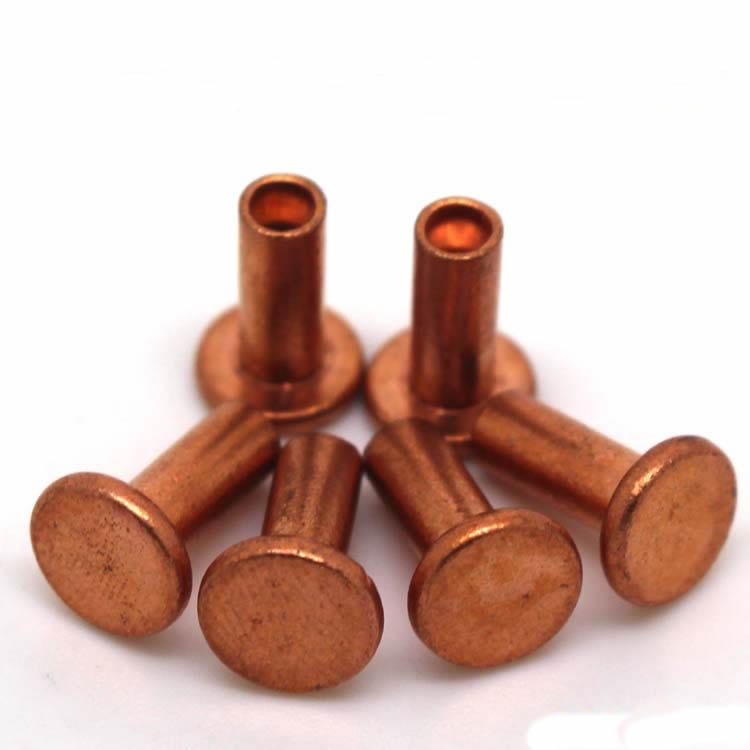
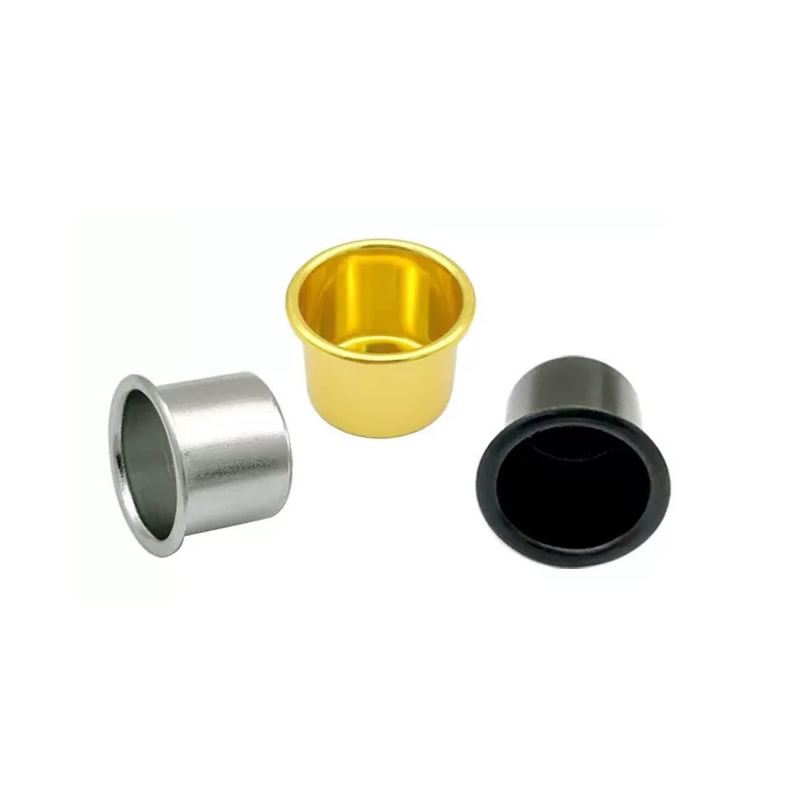
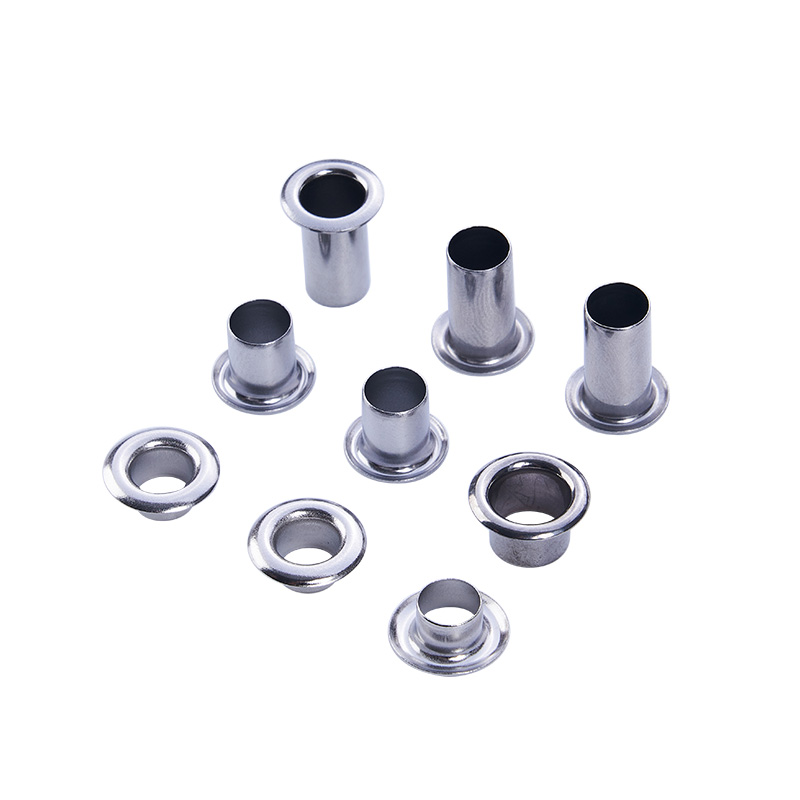
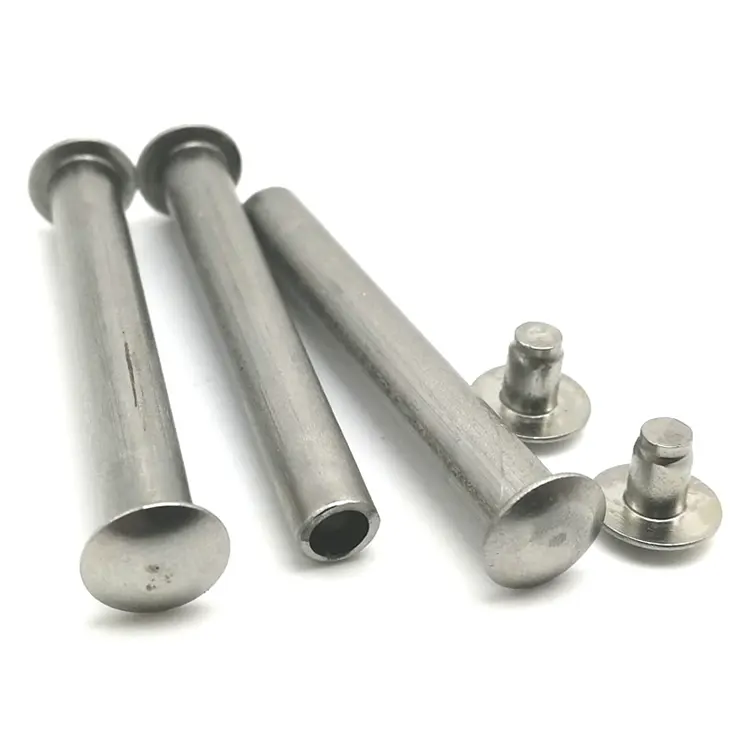
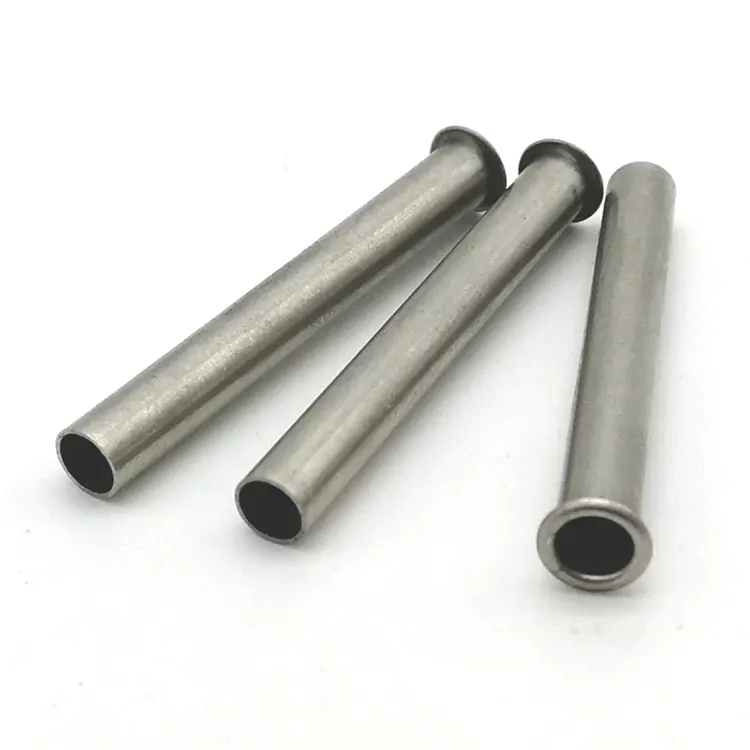
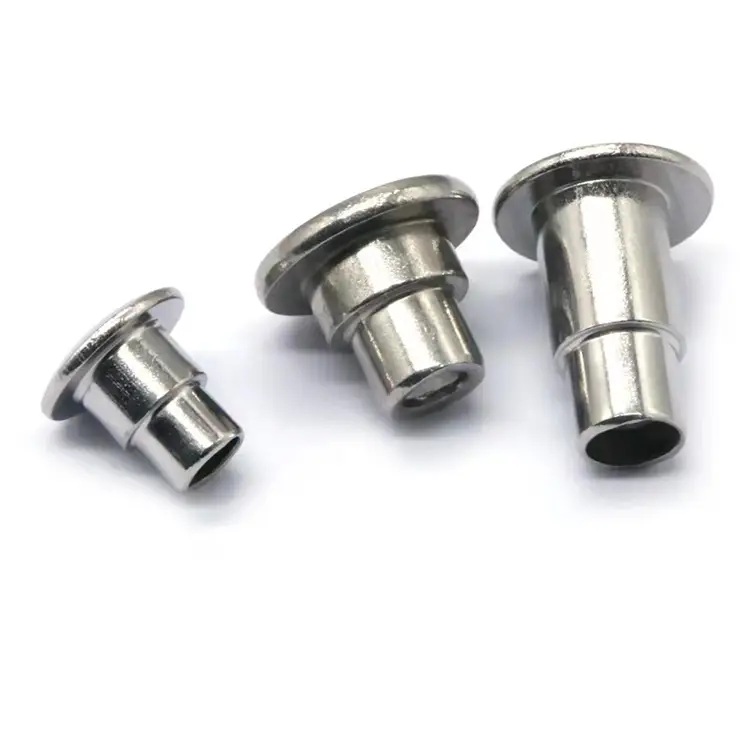
Half Tubular Rivets
Nuote Metals is a China-based manufacturer of half tubular rivets – the production‑friendly alternative to solid rivets that reduces setting force by up to 70% while retaining 80–90% of solid rivet strength. Available in 1.5–8.0mm shank diameters, five material families, multiple head styles, and custom lengths. ISO‑certified quality, full traceability, and free samples available – contact us to get started.
Send Inquiry
Product Description
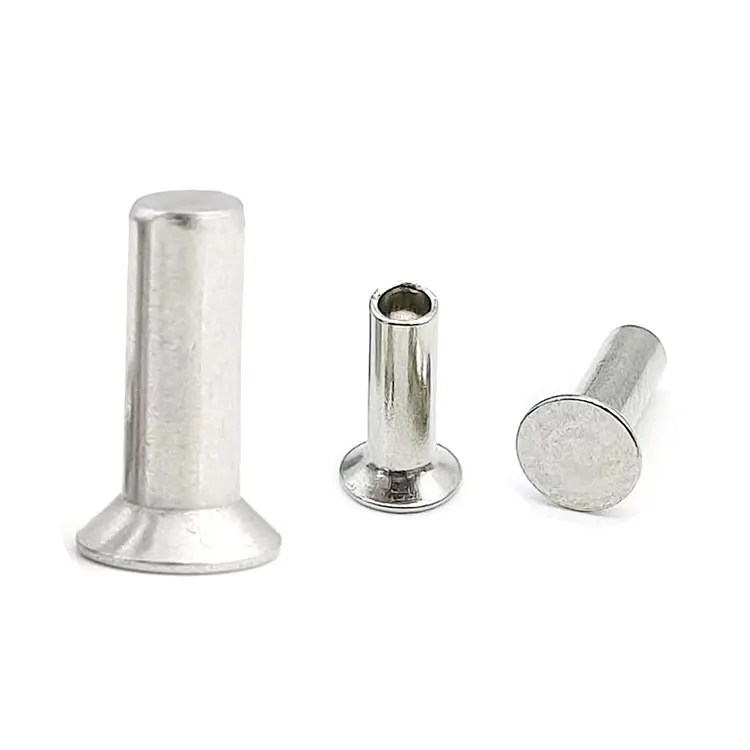
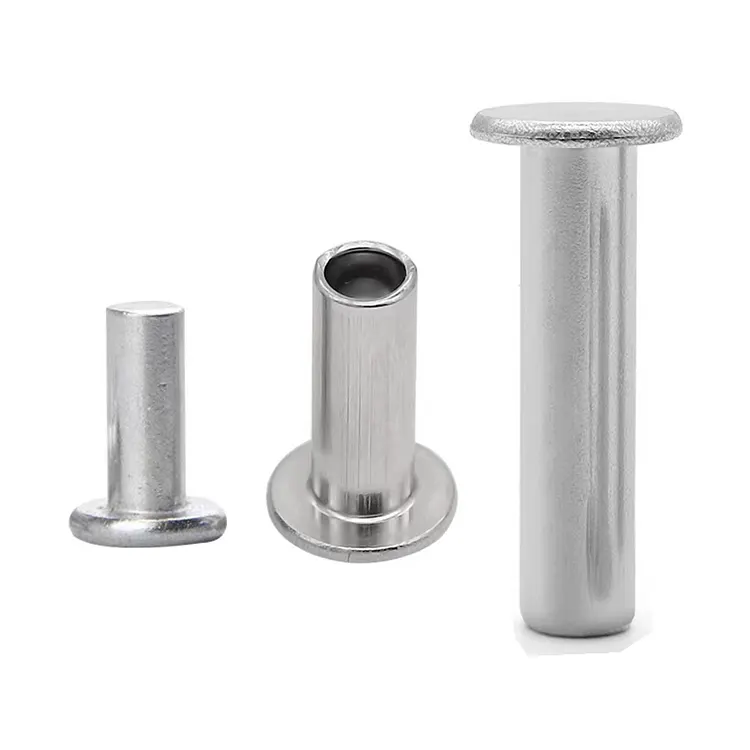
Half tubular rivets are what you specify when you need the strength of a solid rivet but your production line cannot afford the heavy presses, slow cycles, and high setting forces that solid rivets demand. The half‑tubular design – a shallow cavity at the tail end, typically 45–55% of the barrel length – means only the thin wall of the hollow section rolls outward during installation. The result: faster assembly, lighter tooling, and a consistent clinch every time.
When your assembly line runs at speed and your joints still need to hold, half tubular rivets deliver.
Half‑Tubular vs. Solid vs. Full Tubular – Choosing the Right Design
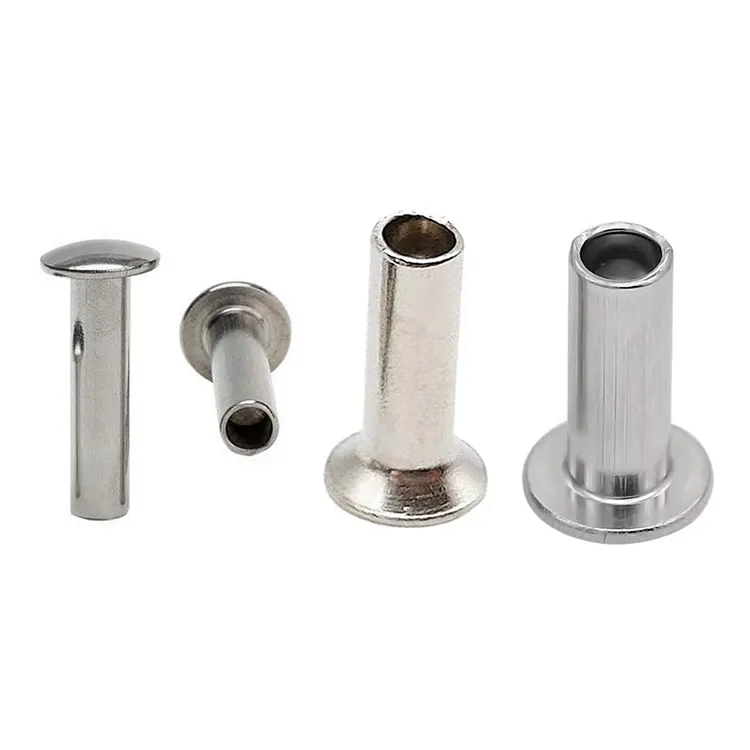
The defining feature of a half‑tubular rivet is the shallow cavity at the tail end – typically 45–55% of the barrel length. During installation, only the thin wall of this hollow section rolls outward to form the clinch. This is fundamentally different from a solid rivet (fully solid) and a full tubular rivet (fully hollow).
| Feature | Half Tubular Rivet | Solid Rivet | Full Tubular Rivet |
|---|---|---|---|
| Tail design | Partially hollow (45–55% of length) | Fully solid | Fully hollow (tube‑style) |
| Setting force | 25–30% of solid rivet force | 100% | 15–20% of solid |
| Shear strength | 80–90% of solid rivet | 100% (reference) | 60–70% of solid |
| Installation speed | Fast, suitable for automated assembly | Slower, requires heavy equipment | Fastest, lowest force required |
| Best for | High‑volume production, thin materials, pivot joints | Extreme structural loads, heavy‑duty applications | Soft materials, lightweight assemblies, bushings |
For most industrial, furniture, automotive, and hardware applications, the half‑tubular rivet delivers the best balance of strength and production efficiency.
Materials & Head Styles – What We Offer
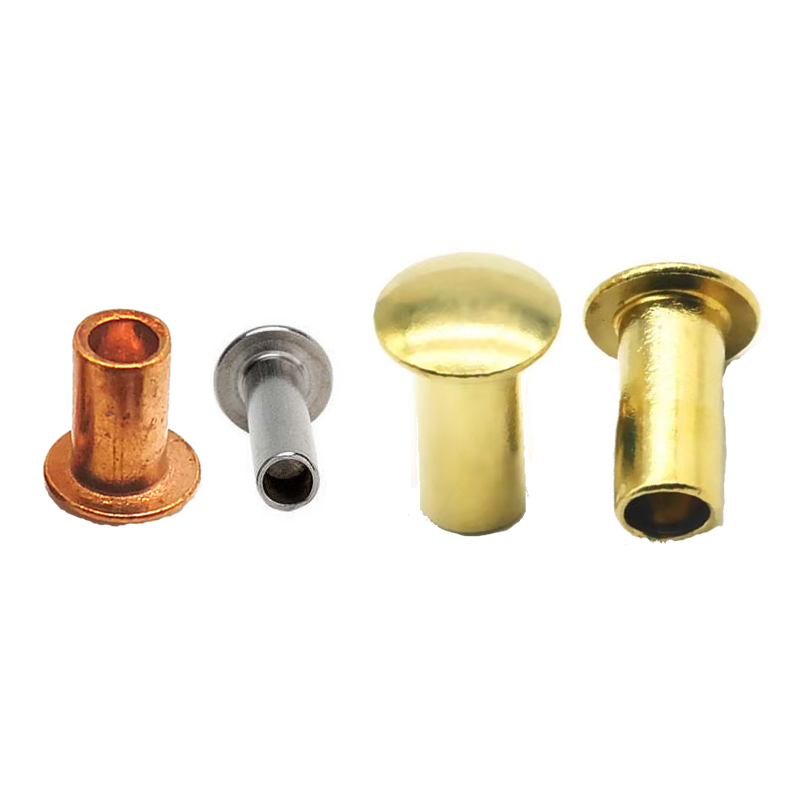
They are available in five material families and eight head styles to match your application requirements.
| Material | Strength | Corrosion Resistance | Best Application |
|---|---|---|---|
| Low‑carbon steel | Highest | Depends on finish | Industrial, cost‑sensitive |
| Stainless steel (304/316) | Very high | Excellent | Marine, outdoor, medical |
| Brass (C2680) | Moderate | Good | Decorative, electrical, leather goods |
| Copper (C11000) | Moderate | Good | Electrical, thermal, antimicrobial |
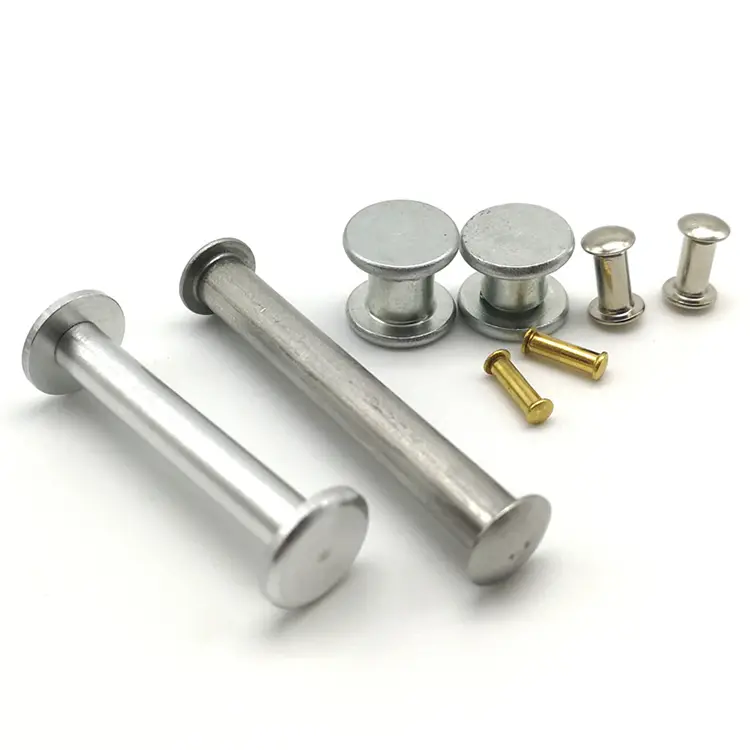
| Aluminum (5052/5056) | Moderate | Good | Lightweight, non‑magnetic |
Head styles available:
| Head Style | Best For |
|---|---|
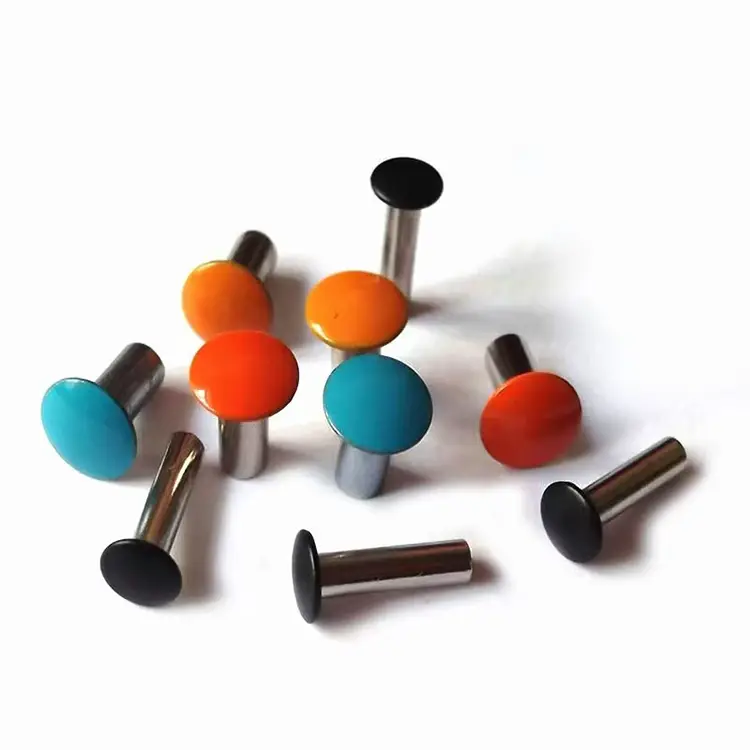
| Round | Metal‑to‑metal, high shear, visible joints |
| Flat | Clearance‑limited, sliding surfaces |
| Oval | Decorative, general purpose |
| Truss | Soft materials, oversized holes |
| Pan | Visible assemblies, moderate clearance |
| Universal | Mixed materials, general purpose |
| Mushroom | Leather, fabric, soft materials |
| Countersunk | Flush surfaces, zero protrusion |
Finishes: Zinc‑plated, black oxide, passivated, lacquered, nickel‑plated, antiqued, anodized, plain – depending on material.
One Real Application – Aluminum Clothes Drying Rack
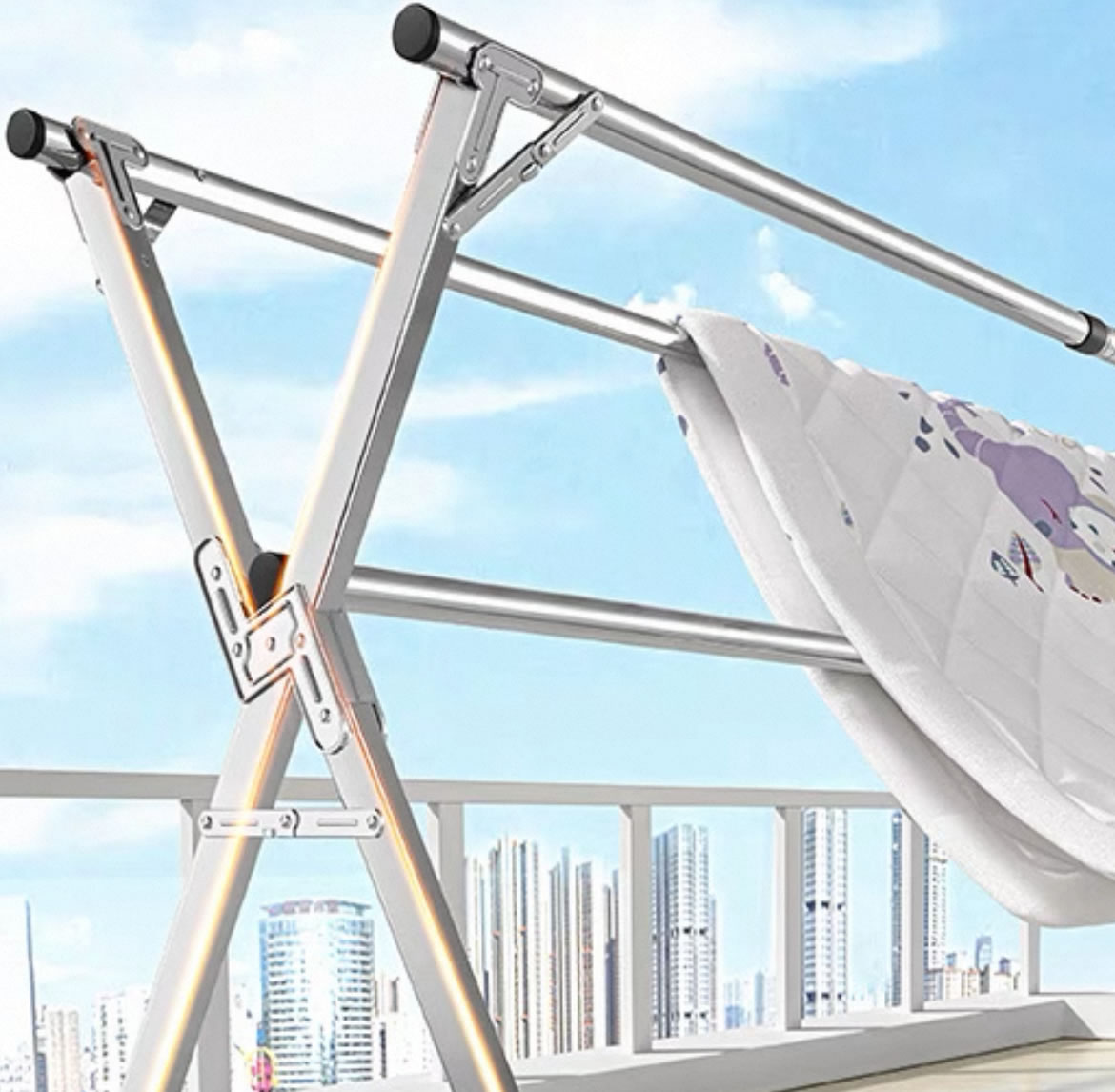
A manufacturer of portable clothes drying racks was using aluminum rivets to assemble the scissor‑hinge joints on their folding racks. The existing rivets were solid aluminum – they worked, but the assembly line was slower than the customer wanted. The high setting force required careful press setup, and any misalignment caused the thin aluminum tubing to distort. The customer wanted faster assembly without sacrificing joint strength.
We analyzed the failure mode: the solid rivets were over‑specified for this application. The load on the hinge joints was moderate – a few kilograms of wet clothes – and the distortion risk was high because the tubing was thin. The solution was a half‑tubular design that would reduce setting force while still providing more than enough strength.
Nuote Metals supplied aluminum half tubular semi‑tubular rivets – 4.0mm shank, 7.0mm round head, 10.0mm barrel length, plain finish. The half‑tubular cavity reduced setting force by over 60%, eliminating the tubing distortion. The aluminum material matched the rack frame. The round head provided a clean, consistent appearance.
The customer tested 1,000 rivets across 500 racks. After 10,000 folding cycles with a 15kg load, no distortion, no loosening. Assembly speed increased by 35%, and reject rates dropped to near zero. They now order half tubular rivets in batches of 300,000 pieces annually.
How Rivets Are Specified – What We Need From You
They are custom‑produced to your exact requirements. Here is what we need to get your specification right.
The dimensions we need:
- Shank diameter – 1.5mm to 8.0mm
- Barrel length – measured from the underside of the head to the end of the shank. We calculate this from your material stack thickness.
- Head style – round, flat, oval, truss, pan, universal, mushroom, or countersunk
- Head diameter – matched to your bearing surface requirement
The choices you make:
- Material – steel, stainless, brass, copper, or aluminum
- Design – solid or semi‑tubular
- Finish – zinc, passivated, lacquered, nickel, anodized, antique, etc.
If you are not sure about barrel length or head diameter: Send us your material stack thickness or a sample part. We will recommend the optimal dimensions. We do not charge for engineering advice.
Sample lead time: 5–10 days for standard specifications. Custom tooling: 15–20 days.
From Raw Material to Finished Rivet – Our Production Workflow
Half tubular rivets are formed through cold heading – a process that shapes metal at room temperature using high‑speed presses and precision dies. Here is how we do it, step by step.
Material Procurement – We purchase certified wire from approved mills. Each coil comes with a mill test certificate and heat number for full traceability. We do not accept coils without proper documentation.
Incoming Material Inspection – Every coil is checked for diameter (laser micrometer, ±0.02mm) and hardness (Rockwell tester). For steel, we require HRB 70–85. Spectrometer verifies material composition. Any coil outside specification is rejected before it reaches the production floor.
Cold Heading – The wire feeds into a multi‑station cold header. In a single continuous sequence:
- Wire is drawn to exact shank diameter
- Cut to precise blank length
- First blow squares the blank
- Second blow forms the head (any of eight head styles)
- Third blow extrudes the semi‑hollow cavity at 45–55% depth
Tumbling & Deburring – Rivets are tumbled to remove micro‑burrs and prepare the surface for plating.
Plating or Coating – Zinc, passivation, lacquer, nickel, anodizing, or other finishes are applied as specified. Plating thickness is verified by XRF.
Final Inspection – 100% optical sorting for critical dimensions. AQL sample manually verified. Dimensional report and certificate issued with every batch.
What makes cold heading work for half tubular rivets:
- The cavity depth must be precise – too shallow, and setting force remains high; too deep, and the clinch is weak.
- Cold heading work‑hardens the material, increasing surface hardness by 15–20% without heat treatment.
- Consistency is built into the process – every rivet matches the first.
Quality Control – What We Check, Why It Matters
| Check | Tolerance | Risk If Missed |
|---|---|---|
| Shank diameter | ±0.05mm | Rivet doesn't fit your hole |
| Head diameter | ±0.15mm | Pull‑through or uneven bearing |
| Head height | ±0.15mm | Inconsistent appearance, may not clear components |
| Barrel length | ±0.15mm | Weak clinch or buckled barrel |
| Cavity depth | 45–55% of barrel | Setting force too high or clinch weak |
| Hollow wall thickness | ±0.02mm | Uneven flaring, weak clinch |
| Plating thickness | Verified by XRF | Rust, corrosion |
Our inspection process:
- Incoming wire – Diameter and hardness checked before production starts. Spectrometer verifies material composition.
- First article – 10 rivets measured on optical comparator. Every dimension verified – shank, head, barrel length, cavity depth.
- In‑process – 5 rivets every 500 pieces. Critical dimensions checked with digital calipers. Any drift stops the press.
- Setting test – Every 2,000 pieces, set into sample material. Clinch inspected for symmetry, tightness, and cracks.
- Final sorting – 100% optical inspection. AQL sample manually verified.
What Our Customers Say – Real Feedback
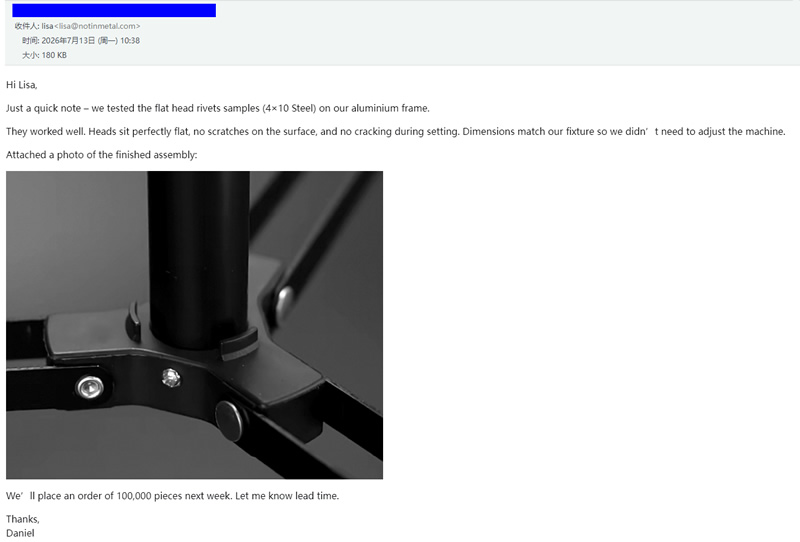
We don't just claim quality – we let our customers speak for us. The images above show real feedback from customers who have used our half tubular rivets in their production lines. From furniture manufacturers to electronics assemblers, they share their experiences with our product quality, delivery reliability, and technical support.
Your Order – What We Send You
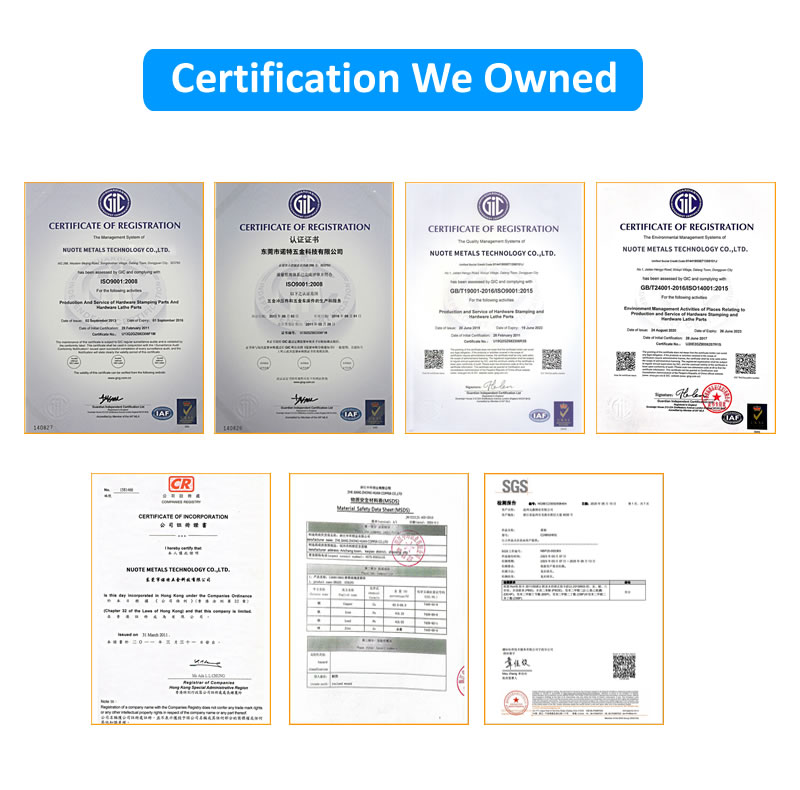
When your rivets arrive, you receive more than just the product. We include a complete record of what was made and how it was verified.
What you will find in the box:
- Rivets in sealed poly bags – Labeled with part number, batch number, and quantity. No loose parts, no guessing.
- Material certificate – Chemical composition and tensile properties from the original coil. Traceable to the heat number.
- Inspection sheet – Actual measurements of 10 rivets from your batch. We record shank diameter, head diameter, head height, barrel length, and cavity depth.
- Finish certificate – For plated rivets, XRF thickness verification.
- Conformance document – Signed by our QA manager, with a unique batch number for traceability.
- We keep copies for five years – but we recommend you keep yours as well.
Certified to: ISO 9001:2015, RoHS, REACH
Three Questions We Answer Often
Q1: I am using half tubular rivets and they keep cracking during setting. What is causing this and how can I fix it?
A: Cracking during setting is one of the most common issues we hear about. Here are the most likely causes and solutions:
Cause 1: Wrong material for the application. Stainless steel work‑hardens rapidly and is more prone to cracking than steel or brass. If you are using stainless half tubular rivets and experiencing cracks, consider switching to low‑carbon steel or brass – they are more forgiving during setting.
Cause 2: Cavity depth is too deep. If the cavity exceeds 55% of the barrel length, the remaining wall thickness is too thin to support the rolling action. The solution is simple – we can adjust the cavity depth to 45–50% of barrel length. Send us your current rivet and we will measure the cavity depth.
Cause 3: Setting force is too high. Half tubular rivets only need 25–30% of the force required for solid rivets. If your press is set too high, the hollow wall will crack rather than roll smoothly. Reduce setting force by 30% and test again.
Cause 4: Material stack thickness is incorrect. If the barrel length is too short, the hollow section bottoms out before the clinch is fully formed. The barrel length should be 1.5–2.0mm longer than your total material stack thickness. Measure your stack thickness and send it to us – we will verify the barrel length.
If none of these solve the problem, send us a sample of your cracked rivets and your material stack. We will analyze the failure and recommend a specific fix – at no charge.
Q2: Can I use them in outdoor applications?
A: Yes, with the right material and finish. For outdoor applications, we recommend:
Stainless steel (304 or 316) with passivated finish for permanent corrosion resistance
Zinc‑plated steel with yellow chromate for 96 hours of salt spray resistance (suitable for sheltered outdoor use)
Aluminum with anodized finish for lightweight outdoor assemblies
Q3: How do I select the correct barrel length for a half tubular rivet?
A: Select a barrel length approximately 1.5–2.0mm longer than your total material stack thickness. For example, if you are joining two 2mm sheets (total 4mm), choose a barrel length of 5.5–6.0mm. This extra length provides enough material for the hollow section to roll outward and form a secure clinch without bottoming out. If the barrel is too short, the clinch will be weak. Too long, and the barrel may crumple. Send us your material stack thickness, and we will recommend the exact length.
Hot Tags: Half Tubular Rivets,China Half Tubular Rivets,Half Tubular Rivets Manufacturer
Related Categories
Send Inquiry
Please feel free to fill your inquiry in the form below. We will reply you in 24 hours.



X
We use cookies to offer you a better browsing experience, analyze site traffic and personalize content. By using this site, you agree to our use of cookies.
Privacy Policy