
Nuote Metals Sends 200 Stainless Steel Eyelet Sample Sets to Australia
Sample Shipment Overview – 200 Sets to Perth
Nuote Metals dispatched 200 sample sets of stainless steel eyelets to a metal products manufacturer in Perth, Australia, on October 28, 2026. The buyer supplies coastal solar mounting frames and modular building facade panels across Western Australia. They requested the samples to evaluate a material switch: replacing their current nickel-plated brass eyelets with AISI 304 stainless steel.
Sample details:
| Item | Specification |
|---|---|
| Product | Stainless steel eyelets – deep drawn, flat flange |
| Material | AISI 304 stainless steel |
| Sizes per set | 4mm, 5mm, 6mm inner diameter |
| Pieces per set | 6 pieces (2 per size) |
| Total sets | 200 sets (1,200 pieces) |
| Shipping | DHL express, 4–6 working days |
| Purpose | Fit test, flaring trial, 500-cycle assembly test, and salt spray verification |
The buyer’s current brass eyelets require nickel plating to resist coastal salt spray. Plating wear on assembly tooling has caused appearance complaints on facade panels. They are testing AISI 304 to eliminate plating entirely.
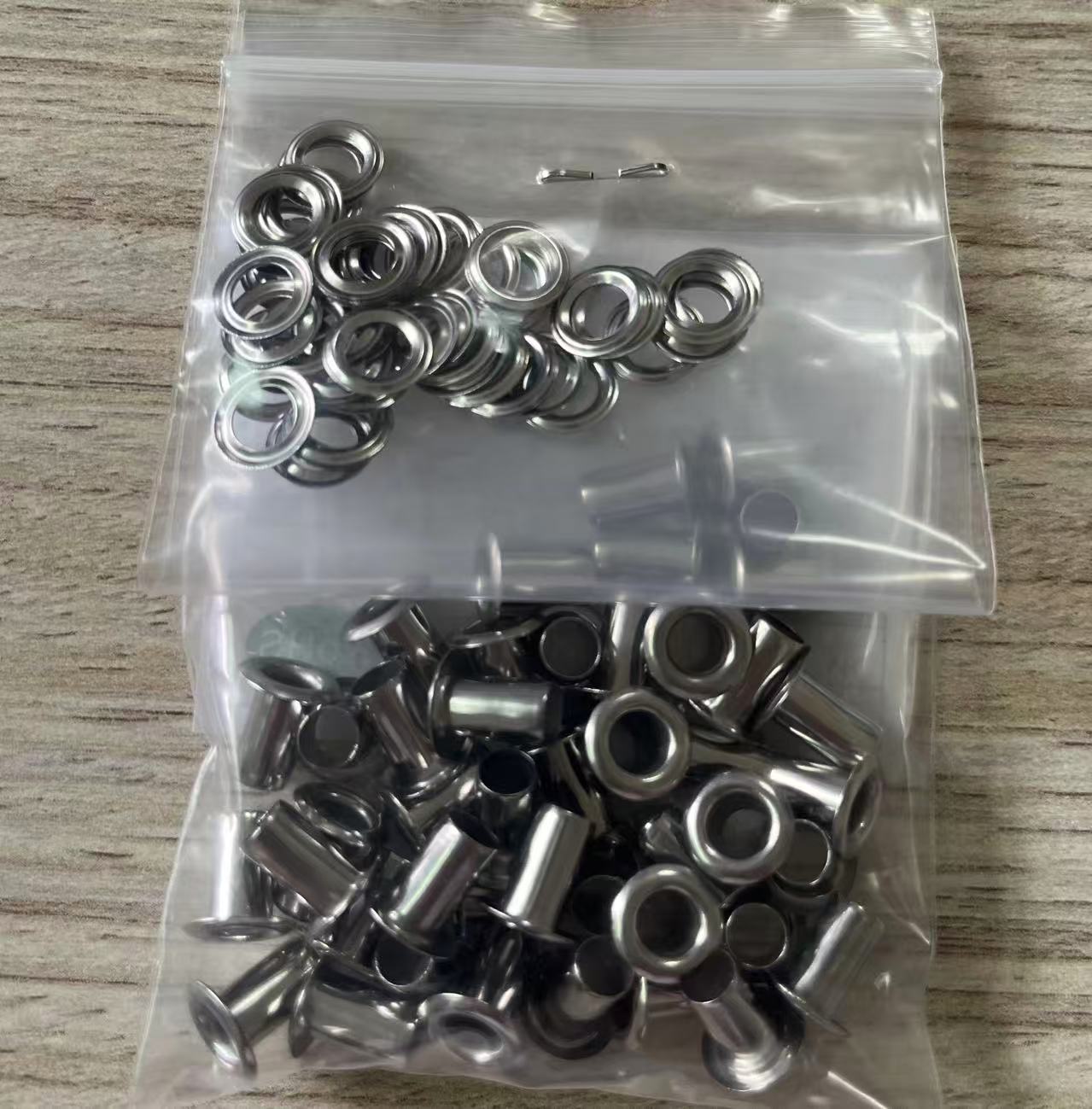
Material Comparison – Nickel-Plated Brass vs AISI 304
This is the core question the Perth buyer is testing. Both materials are viable for eyelets, but they behave differently in coastal and long-life applications.
| Comparison Item | Brass + Nickel Plating | AISI 304 Stainless Steel |
|---|---|---|
| Salt spray resistance | 48 hours (plating dependent) | ≥72 hours, no red rust |
| Plating failure risk | Yes – chipping, wear, discolouration | None – no coating to fail |
| Appearance over 10 years | Plating wear exposes brass | Maintains original surface |
| Weight per piece (5mm) | ~1.9 g | ~1.6 g |
| Flaring behaviour | Softer, easier to set | Higher setting force required |
| Tooling wear | Plating can transfer to dies | Cleaner on tooling |
| Unit cost | Lower | Higher |
| Recyclability | Mixed metals, harder to separate | Single material |
What the buyer is verifying: whether the higher unit cost of AISI 304 is offset by eliminating plating inspection, appearance complaints, and long-term replacement.
Product Specification – AISI 304, Three Sizes
All stainless steel eyelets are produced by deep drawing from AISI 304 strip.
| Parameter | Specification | Tolerance / Method |
|---|---|---|
| Material | AISI 304 (UNS S30400) | Mill certificate + XRF |
| Inner diameter | 4.0 / 5.0 / 6.0 mm | ±0.05mm |
| Barrel length | 6.0 / 7.0 / 8.0 mm | ±0.10mm |
| Flange diameter | 8.0 / 9.5 / 11.0 mm | ±0.15mm |
| Wall thickness | 0.4 / 0.5 / 0.6 mm | ±0.03mm |
| Surface finish | Natural, no plating | Visual |
| Salt spray resistance | ≥72 hours (no red rust) | ASTM B117 |
Why AISI 304 for coastal Western Australia:
- No plating to chip or discolour on facade panels
- Resists salt-laden air along the Perth coastline
- Single-material construction simplifies end-of-life recycling
Certificates & Testing Included with the Samples
Documents enclosed in every set:
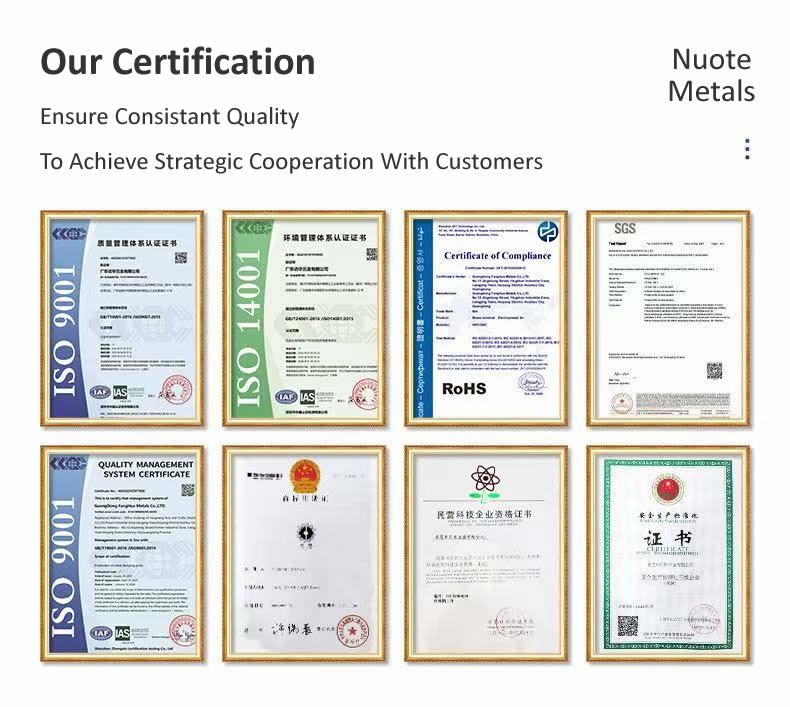
- Mill test certificate for AISI 304 strip – traceable to heat number
- XRF chemical composition verification report
- Dimensional inspection report – 10 pieces per size measured
- Salt spray test summary – 72 hours, ASTM B117
- ISO 9001:2015 certificate copy (TÜV SÜD)
- RoHS and REACH compliance declarations
Transparency: The mill certificate lists the actual heat number and chemical composition of the strip used. We do not issue generic certificates.
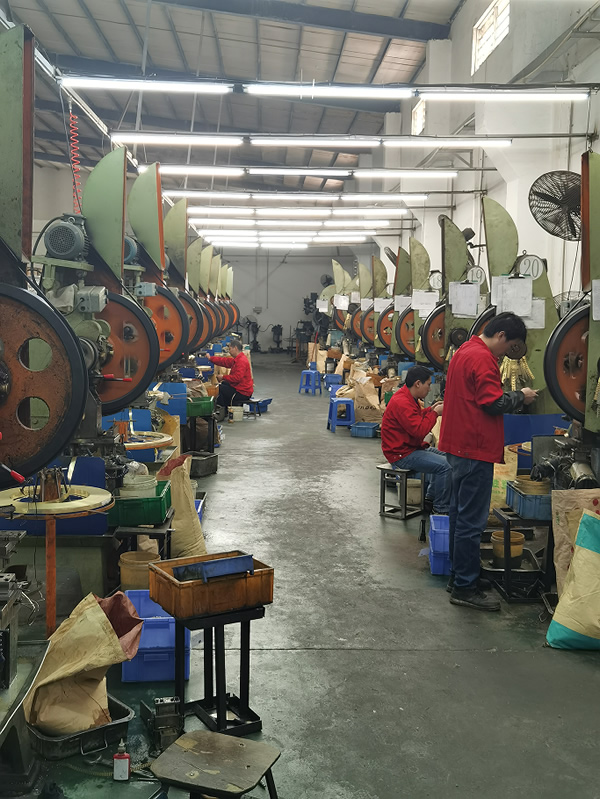
Production & Quality Control – Deep Drawing
Deep drawing from strip
Stainless steel eyelets are formed through progressive dies from flat AISI 304 strip. AISI 304 work-hardens during drawing, so intermediate annealing is controlled to prevent flange cracking.
In-process inspection
Inner diameter, barrel length, and flange diameter are checked every 30 minutes with pin gauges and digital callipers.
Final verification
100% visual inspection for burrs, laps, and surface defects. Random samples undergo flaring and dimensional checks before packing.
Buyer’s own test plan
The sample sets are sized for bench testing, including the buyer’s 500-cycle assembly and disassembly trial to assess tooling wear and flange deformation.
Transparent Sample Policy for Australian Buyers
Sample sets are free – buyer pays only express shipping (typically US$50–US$90 to Australia)
Mixed-size sets accepted – no requirement to order a single size
Full documentation included – mill certificate, XRF report, dimensional data, and salt spray summary at no extra charge
No purchase commitment – sample evaluation does not require a PO
FAQ – Stainless Steel Eyelets for Australian Buyers
Q1: What is the MOQ for these stainless steel eyelets after the 500-cycle test is approved?
A1: Standard MOQ is 20,000 pieces per size. For first-time Australian buyers, we accept trial orders from 5,000 pieces per size. The 200 sample sets cover three sizes; production MOQ applies separately to each size the buyer selects. Stock sizes (4mm, 5mm, 6mm inner diameter) ship in 7–10 days. Custom sizes require 15–20 working days after sample approval. The buyer is not required to order all three sizes – they can proceed with the single size that passes their cycle test.
Q2: Will the higher setting force of AISI 304 damage our existing flaring tooling?
A2: AISI 304 requires approximately 15–25% higher setting force than nickel-plated brass of the same wall thickness. Most standard eyelet setting presses can accommodate this with a pressure adjustment. The main consideration is tooling tip wear: stainless steel is more abrasive than brass, so we recommend checking the setting punch every 20,000–30,000 cycles rather than every 50,000. The sample sets include all three wall thicknesses so the buyer can measure actual force requirements on their own press before committing. If force proves excessive, we can supply a thinner wall variant (0.35mm instead of 0.4mm) for testing.
Q3: How do you verify AISI 304 grade and dimensional consistency before shipment?
A3: We verify grade at three points. Incoming strip is checked against the mill certificate using XRF. A raw material sample is retained from each heat number. Finished stainless steel eyelets are spot-checked with XRF before packing. Dimensional consistency is verified by pin gauges and laser micrometer on 10 pieces per size per lot. The mill certificate and XRF results are included in the sample documentation. If third-party testing finds a grade mismatch, we replace the batch at our cost.
Q4: Is AISI 304 sufficient for Perth’s coastal environment, or should we specify AISI 316?
A4: For facade panels and solar mounting frames within a few kilometres of the coast, AISI 304 with ≥72 hours salt spray resistance is generally sufficient, provided the surface is not subject to constant salt deposition or frequent chloride cleaning. For direct beachfront installation, splash zones, or regular cleaning with chloride-based agents, AISI 316 offers higher resistance due to its molybdenum content. The sample pack includes 72-hour salt spray data so the buyer can compare against their project specification. If their facade projects include beachfront sites, we can supply an AISI 316 sample set for side-by-side testing.
Send Inquiry



X
We use cookies to offer you a better browsing experience, analyze site traffic and personalize content. By using this site, you agree to our use of cookies.
Privacy Policy