
Products
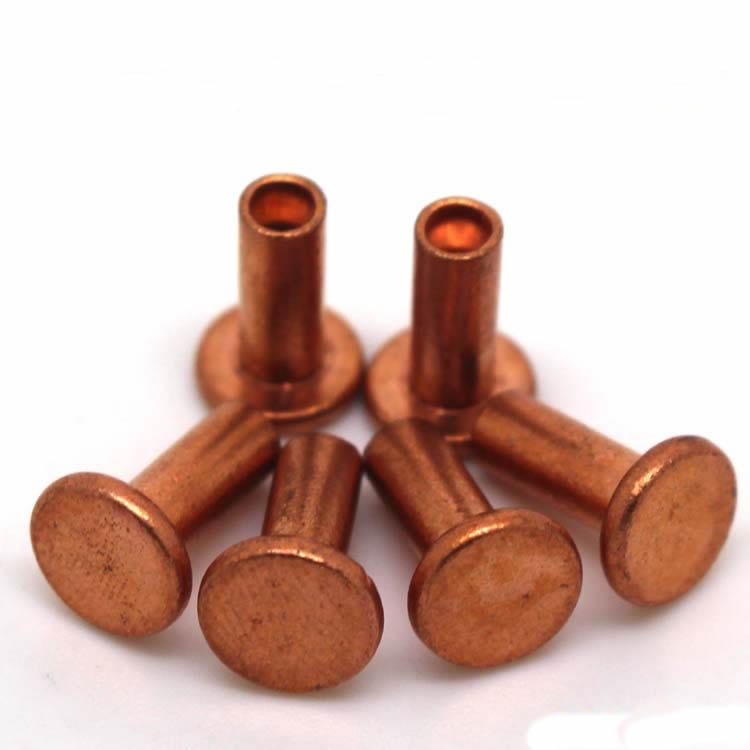
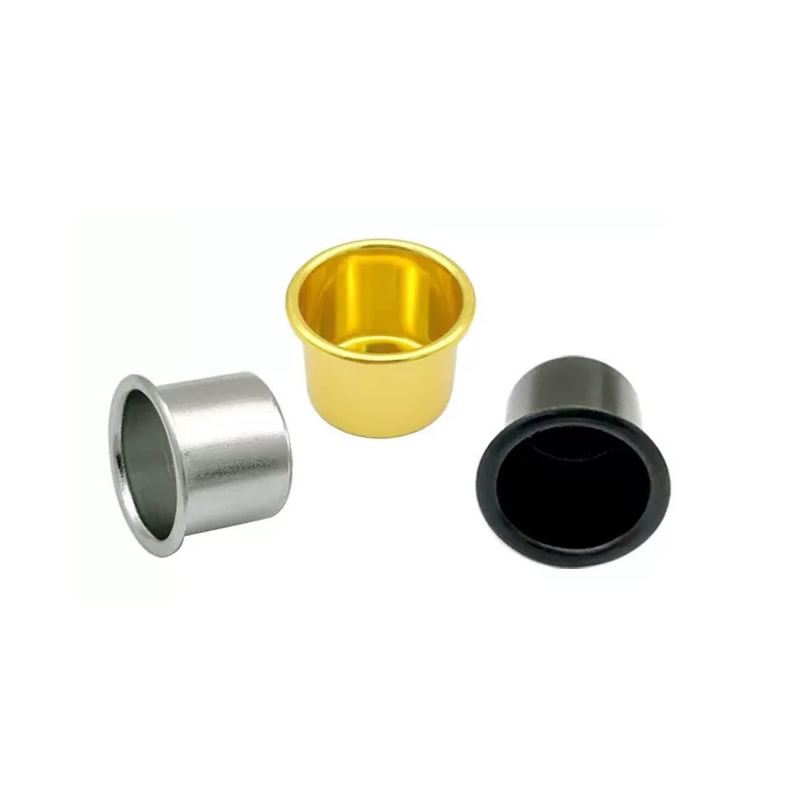
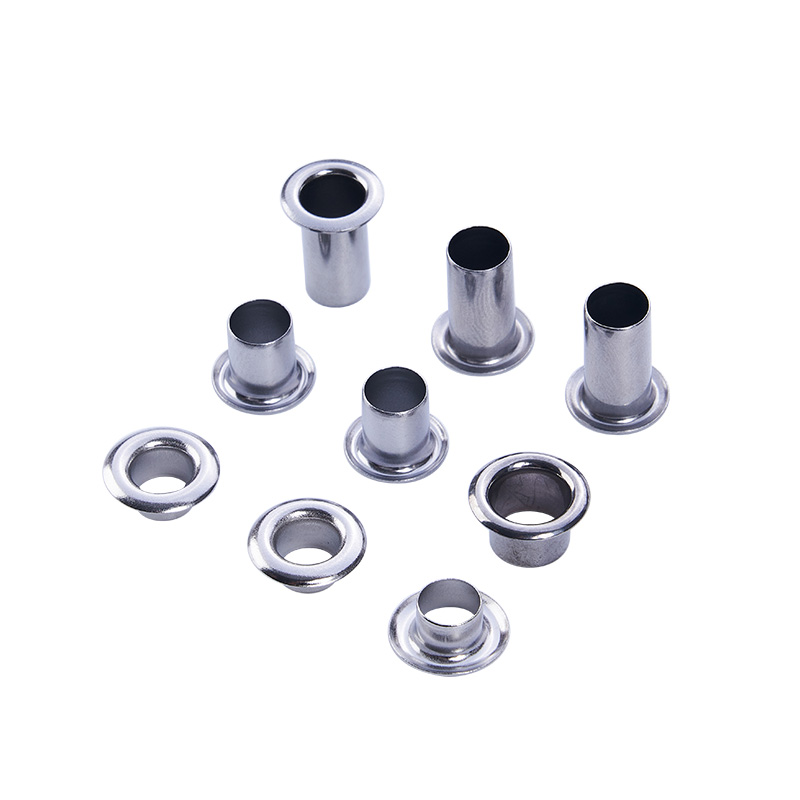
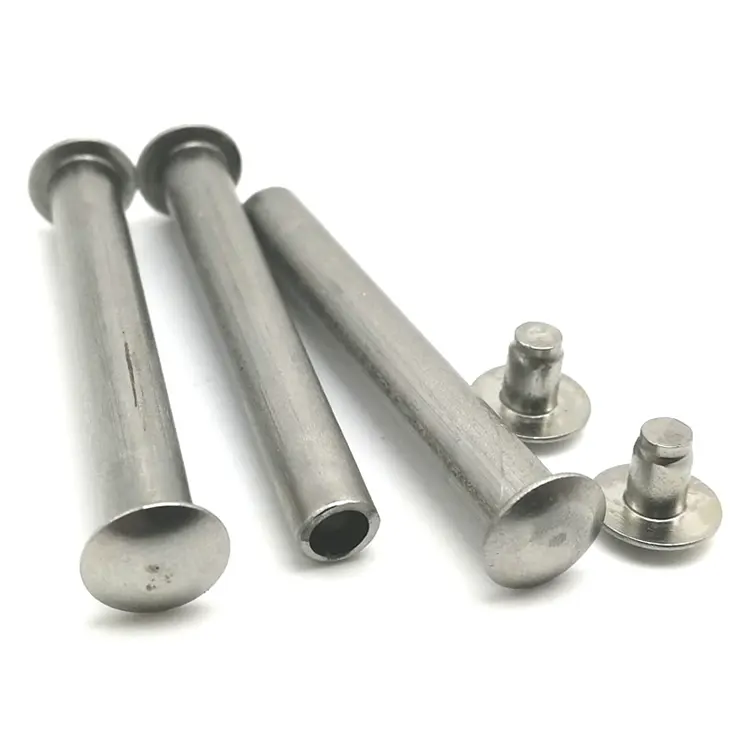
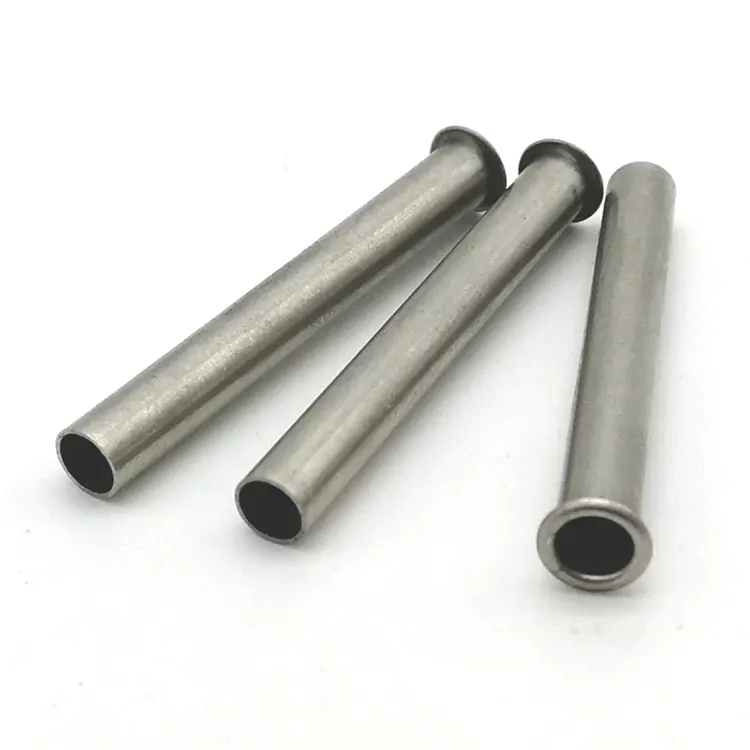
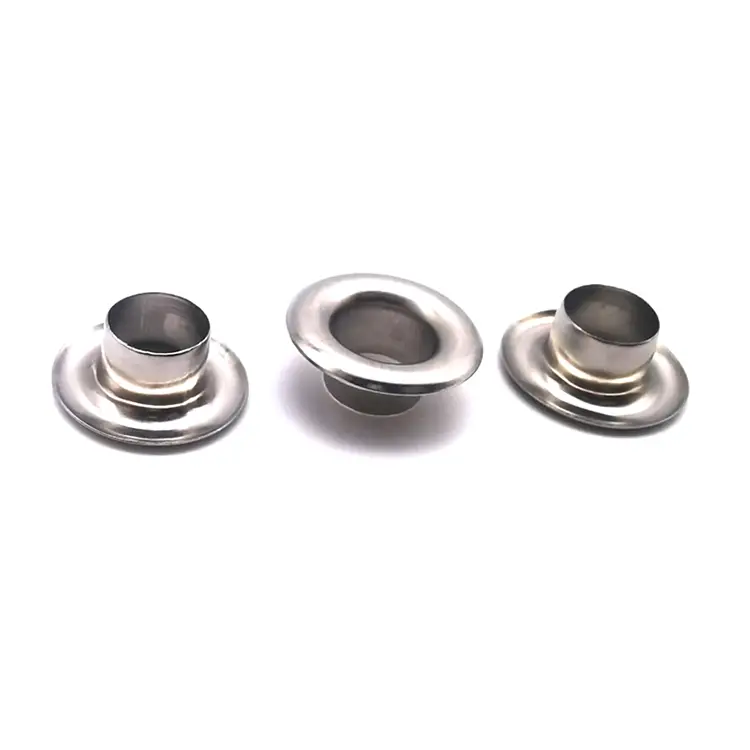
Stainless Steel Eyelets
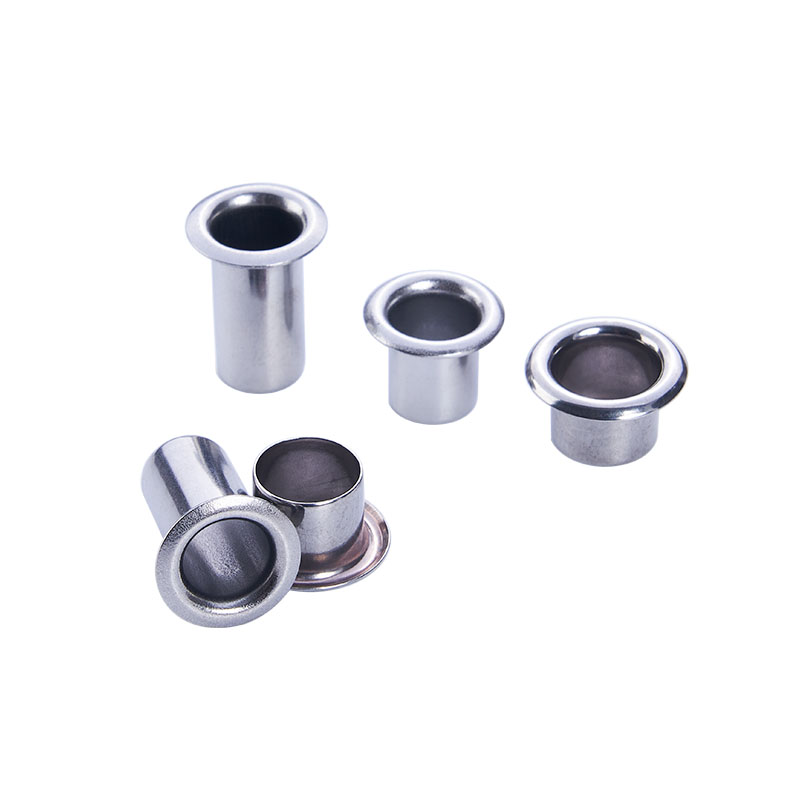
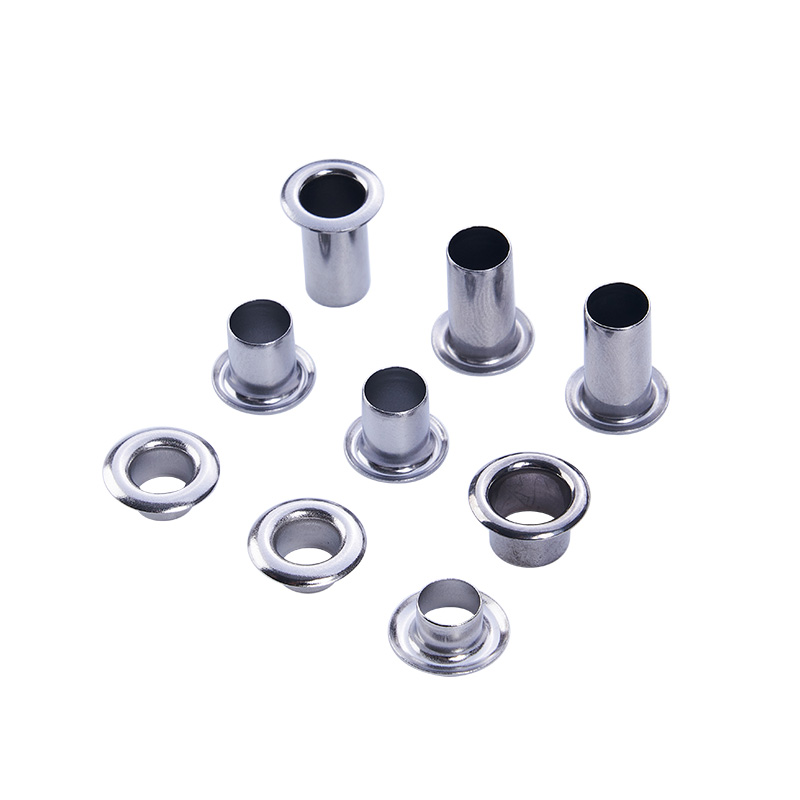
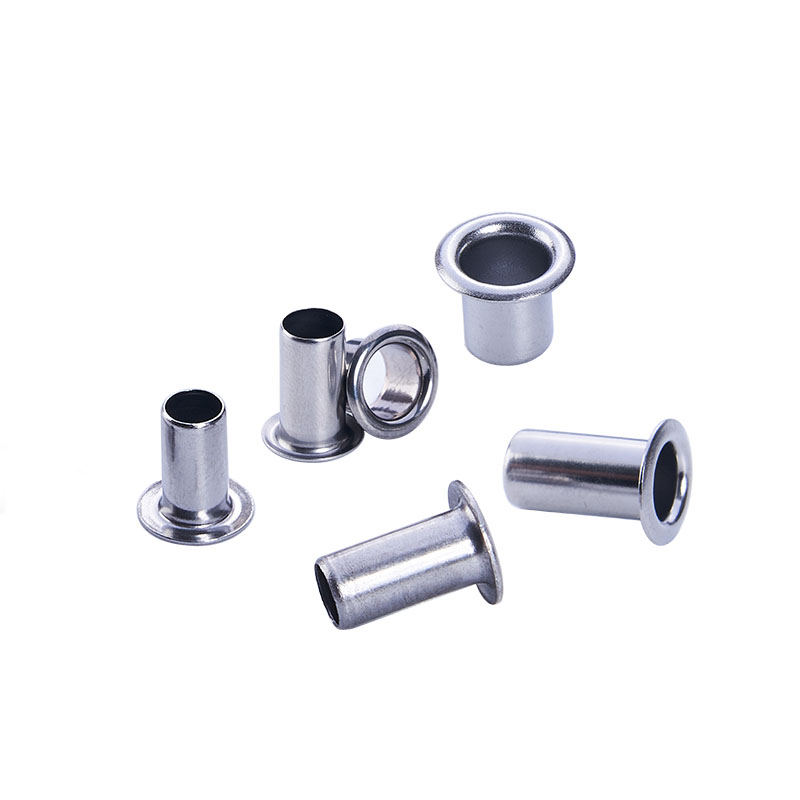
Nuote Metals (Dongguan, China) manufactures stainless steel eyelets in 304 and 316 grades—permanent corrosion resistance and food-grade safety in one component. Our deep-drawn stainless eyelets eliminate plating failure, tarnishing, and contamination risks. Used by edible oil packaging companies and marine equipment manufacturers worldwide. Passivated as standard, FDA-compliant, with full ISO 9001:2015 certification. Custom shank diameters and total lengths available. Free samples for testing. Contact us for a quote.
Send Inquiry
Product Description
In marine, coastal, food-grade, or chemical environments, ordinary eyelets fail. Brass tarnishes and leaves green stains. Zinc-plated steel corrodes once the coating wears through. Only stainless steel eyelets offer the combination of permanent corrosion resistance, food-grade safety, and high strength that demanding applications require.
Nuote Metals manufactures eyelets from 304 and 316 stainless steel using progressive deep drawing—a process that produces a seamless, burr‑free barrel with consistent wall thickness. With over ten years of production experience and ISO 9001:2015 certification, our stainless eyelets are trusted by food equipment manufacturers, marine suppliers, and industrial textile producers worldwide.
What Are Stainless Steel Eyelets?
They are metal rings used to reinforce holes in leather, canvas, fabric, and industrial materials. Unlike plated steel or brass, stainless steel contains chromium that forms a passive oxide layer—this layer is self-healing, meaning scratches and wear do not expose bare metal to rust.
Key advantages of them:
- Permanent rust resistance – No plating to wear off; the material itself is corrosion-proof
- Food-grade safe – 304 and 316 grades meet FDA and food-contact standards; do not leach harmful substances
- High strength – Resists deformation under heavy load or impact
- Clean, silver appearance – Does not tarnish, fade, or stain fabrics or food products
- Temperature resistance – Performs in extreme heat and cold
- Hygienic and easy to clean – Non-porous surface, suitable for food and medical applications
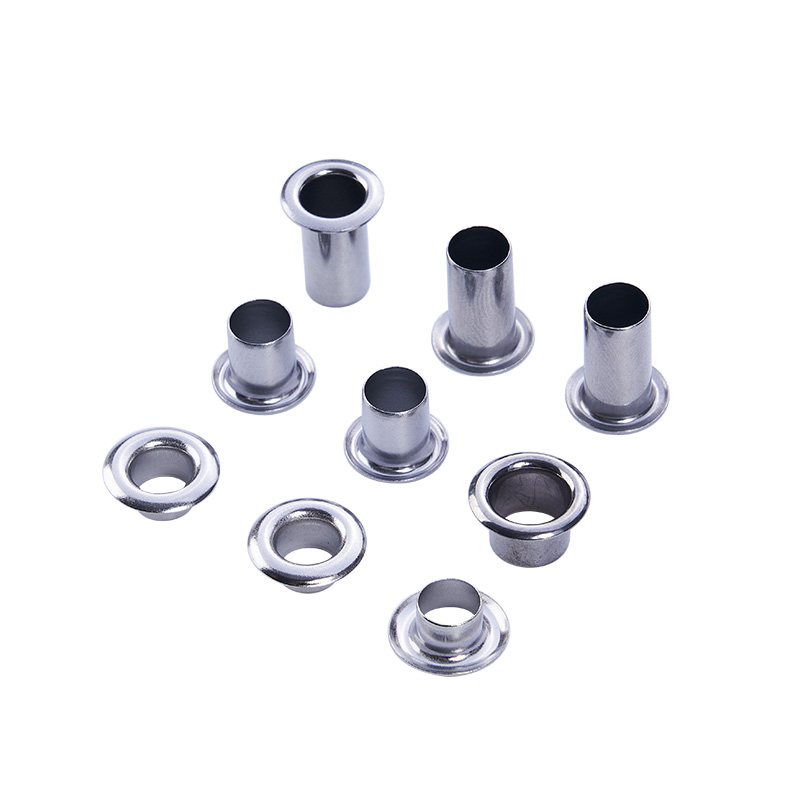
304 vs. 316 Stainless Steel – Which Grade Do You Need?
We manufacture stainless steel eyelets in two grades:
| Property | 304 Stainless Steel | 316 Stainless Steel |
|---|---|---|
| Key alloying elements | 18% Cr, 8% Ni | 16% Cr, 10% Ni, 2% Mo |
| Key advantage | Excellent general corrosion resistance | Molybdenum adds superior chloride resistance |
| Salt spray resistance | 200 – 500 hours (ASTM B117) | 1,000+ hours (ASTM B117) |
| Food-grade | FDA-compliant | FDA-compliant, higher acid resistance |
| Best for | General outdoor, rain, sun, moderate humidity, food contact | Marine, coastal, salt spray, chemical exposure, acidic foods |
| Cost | More economical | Premium grade, higher cost |
Choose 304 stainless steel for general outdoor applications and food-contact uses where salt exposure is minimal—including edible oil canisters, industrial textiles, and camping gear.
Choose 316 stainless steel for marine environments, coastal installations, chemical plants, and any application where salt spray or chlorides are present. The molybdenum in 316 provides the extra protection needed where 304 would eventually pit.
Stainless Steel vs. Brass vs. Steel – Which Eyelet Is Right for You?
| Feature | Stainless Steel Eyelets | Brass Eyelets | Steel Eyelets (Plated) |
|---|---|---|---|
| Corrosion resistance | Excellent (material itself) | Good (natural) | Depends on plating |
| Long-term durability | Excellent – no coating to wear off | Good – tarnishes but doesn't rust | Limited – plating wears over time |
| Food-grade safe | Yes (304/316) | No (lead content, tarnishing) | No (plating may leach) |
| Strength | Very high | Moderate | High |
| Appearance | Silver, stays bright | Gold, develops patina | Silver/black, plating may wear |
| Cost | Higher | Medium | Lowest |
| Best for | Food equipment, marine, outdoor, medical, permanent installations | Decorative, indoor, leather goods | Budget-conscious industrial, indoor use |
Choose stainless steel when your application demands permanent corrosion resistance, food-grade safety, long service life, and a clean appearance that does not stain surrounding materials.
Technical Specifications – Material and Finishes
Material Properties
| Property | 304 Stainless Steel | 316 Stainless Steel |
|---|---|---|
| Material | SUS304 (AISI 304) | SUS316 (AISI 316) |
| Key alloy | 18% Cr, 8% Ni | 16% Cr, 10% Ni, 2% Mo |
| Tensile strength | 620 – 750 MPa | 620 – 750 MPa |
| Hardness | HRB 80–95 | HRB 80–95 |
| Corrosion resistance | 200 – 500 hrs salt spray | 1,000+ hrs salt spray |
| Food-grade | FDA-compliant | FDA-compliant |
| Magnetic | Slightly (if cold worked) | Slightly (if cold worked) |
| Best for | Food equipment, general outdoor | Marine, coastal, chemical, acidic foods |
Custom Manufacturing – Tailored to Your Specifications
SS eyelets are manufactured to order rather than stocked as standard sizes. We produce each batch according to customer specifications.
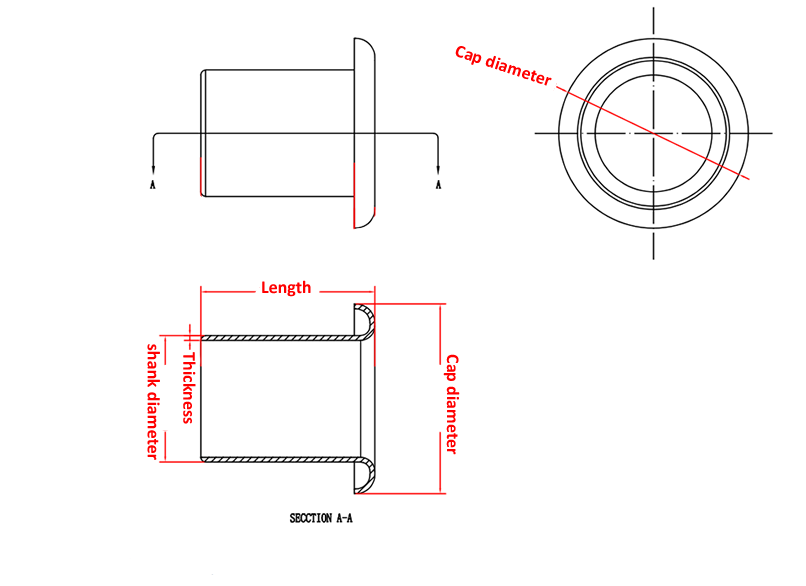
- Shank diameter – Custom from 1.0mm upward
- Cap diameter – Matched to your requirements
- Total length – Based on your material thickness
- Grade – 304 or 316 stainless steel
- Finish – Passivated as standard (included at no extra charge)
Custom sizes available upon request. No tooling charge for most custom orders.
Passivation is included at no extra charge. It removes free iron from the surface and restores the chromium oxide layer—essential for both corrosion resistance and food-grade safety.
Watch How We Make Eyelets
Our progressive deep‑drawing presses transform stainless steel sheet into finished eyelets in a single continuous sequence—blanking, three-stage drawing, piercing, flanging, and separating. The video shows the entire process from coil feeding to finished parts, with real-time quality monitoring at every stage.
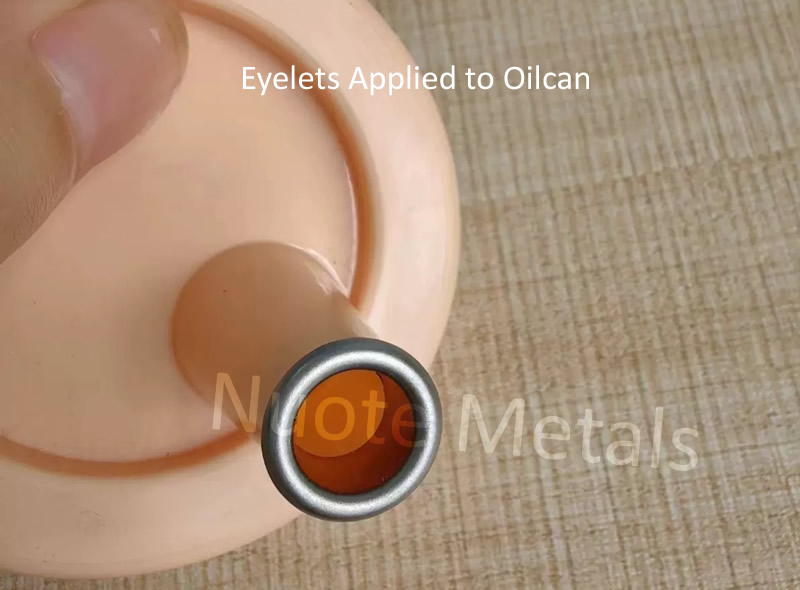
One Real Customer Example – Stainless Steel Eyelets for Edible Oil Canisters (Food-Grade Packaging Application)
A manufacturer of edible oil packaging in China needed eyelets for the oil spout attachment on their 5-liter canisters. The previous eyelets were zinc-plated steel—the plating wore off over time, exposing raw steel to the oil. Rust particles contaminated the product. The customer switched to brass, but the brass tarnished and left discoloration around the spout. They needed a material that would not rust, would not tarnish, and would not contaminate edible oil.
Nuote Metals supplied SUS304 eyelets – 4.0mm shank diameter, 6.5mm cap diameter, 5.5mm total length, passivated finish – totalling 500,000 pieces. The 304 stainless delivered food-grade safety (no leaching). The passivated surface prevented any free iron contamination. The eyelets maintained a clean, bright appearance even after months of oil contact.
After one year of production, zero contamination issues, zero returns, zero complaints. The customer has since placed reorders totalling over 2 million pieces and now specifies our SUS304 eyelets for all their oil canister products.
Our In-House Inspection Equipment
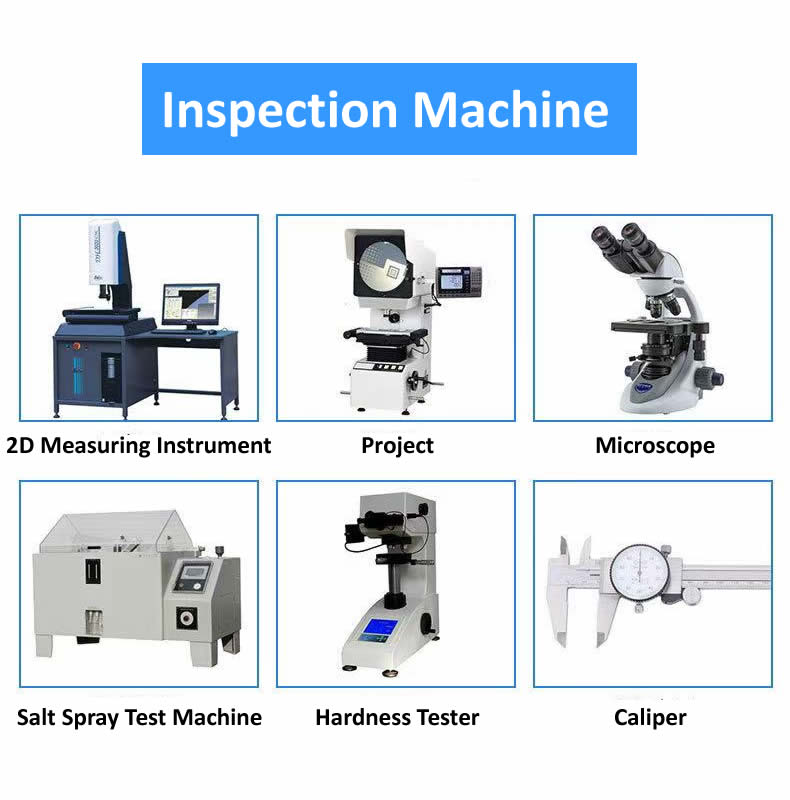
We maintain a full range of calibrated inspection equipment to verify every batch of eyelets:
- Digital calipers – For quick dimensional checks during production
- Micrometers – For precision measurement of shank diameter and wall thickness
- 2.5D image measuring system – For full contour measurement and concentricity verification
- Profile projector (optical comparator) – For cavity depth, cap diameter, and edge radius inspection
- Laser micrometer – For high-speed, non-contact diameter measurement
- Rockwell hardness tester – For verifying raw material hardness
- Salt spray test chamber – For corrosion resistance testing (ASTM B117) on every batch
- Spectrometer – For material composition verification of incoming coils
All equipment is calibrated annually by accredited third‑party labs. Inspection records are retained for five years.
How We Ensure Quality – What We Check and Why
We do not inspect eyelets just to tick a box. Every check is designed to prevent a specific failure that could affect your production line or end product.
| What we check | Why it matters | What happens if we miss it |
|---|---|---|
| Shank diameter | Must match your hole size for proper fit | Eyelet won't insert, or wobbles loose |
| Cap diameter | Determines pull‑through resistance | Eyelet pulls through material under load |
| Total length | Must be correct for your material stack | Clinch is too weak or barrel crumples |
| Passivation | Removes free iron that causes rust staining | Eyelet rusts despite being "stainless" |
| Clinch formation | Verifies the eyelet rolls correctly | Eyelet fails in the field |
| Burr-free edge | Prevents damage to material | Abrades fabric or cuts fingers |
Every batch of stainless steel eyelets is tested on your actual material before shipment. We do not guess—we verify.
Partner Collaboration – Customers Who Trust Us
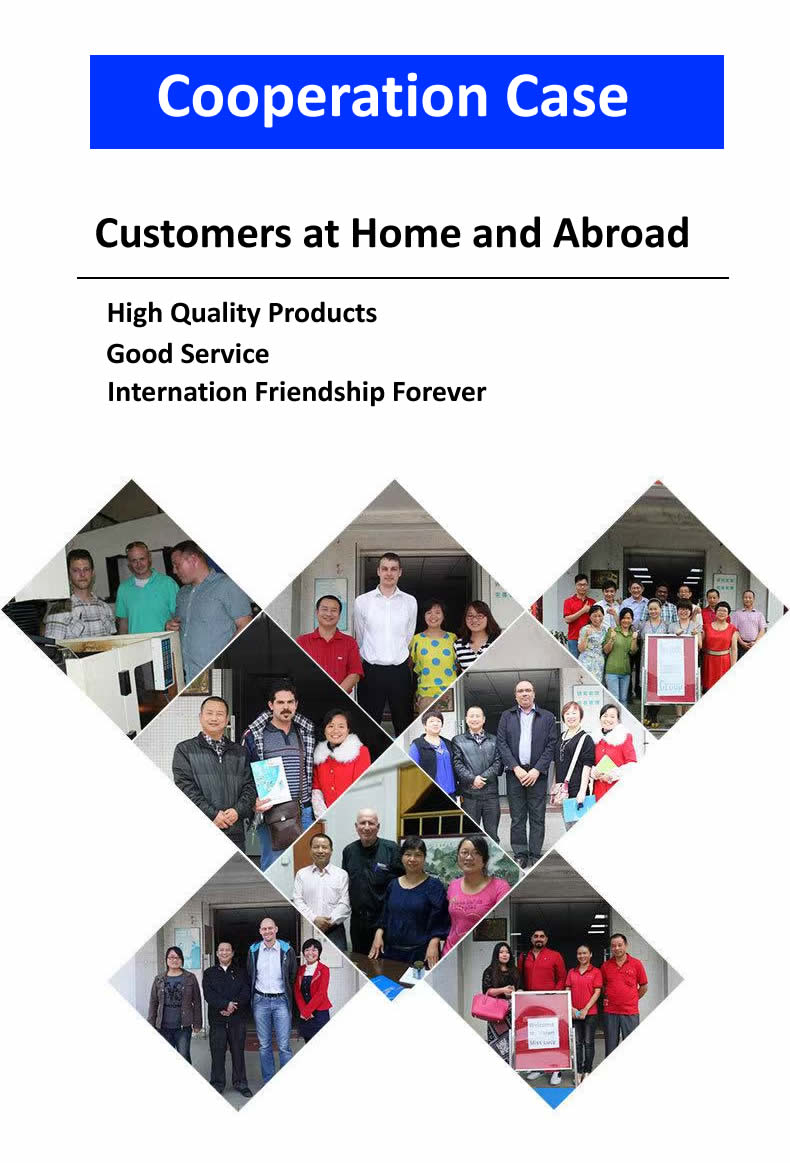
We work with manufacturers across the globe—from packaging companies to marine suppliers to outdoor gear brands. The images above show some of our valued partners visiting our facility and collaborating on custom eyelet projects.
Our Certifications and Honors
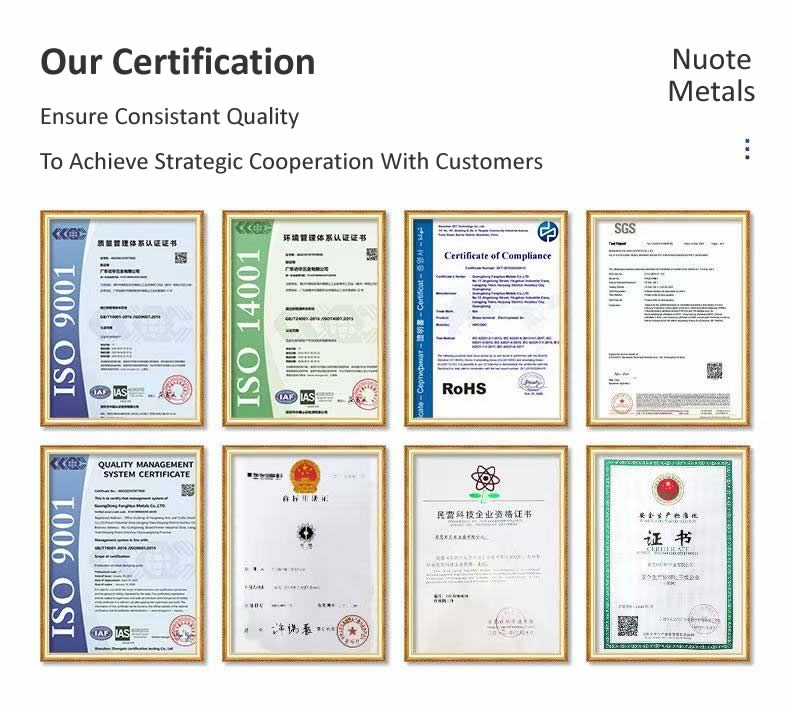
Nuote Metals maintains the following certifications and accreditations:
- ISO 9001:2015 – Quality management system certified by TÜV SÜD
- RoHS compliance – Verified by SGS third-party testing
- REACH compliance – SVHC declaration current
- FDA food-contact compliance – For 304 and 316 stainless steel grades
- ASTM A967 – Passivation standard compliance
- SGS test reports – Available upon request for specific batches
All certifications and test reports are available for download or upon request. We believe in full transparency—what we claim, we can prove.
Where Stainless Steel Eyelets Are Used
They are the preferred choice for applications where corrosion resistance and food-grade safety are non‑negotiable:
- Food packaging – Edible oil canisters, food containers, beverage equipment
- Marine and boating – Boat covers, sails, canvas enclosures, dock hardware
- Outdoor gear – Tents, tarpaulins, awnings, camping equipment
- Medical equipment – Sterilization trays, hospital beds, surgical drapes
- Automotive – Upholstery, convertible tops, interior trim
- Industrial textiles – Conveyor belts, filtration systems, protective curtains
- Architectural – Building facades, sunshades, tensile structures
- Electronics – Cable management, shielding, equipment enclosures
Your Order – What's Inside the Box
- Eyelets in sealed poly bags – Labeled with part number, batch number, and quantity
- Mill test certificate (MTC) – Traceable to raw material coil
- Dimensional inspection report – 10 eyelets measured from the batch
- Passivation certificate – Verification of free iron removal (ASTM A967)
- Salt spray test certificate – ASTM B117 results (if requested)
- Certificate of Conformance – Signed by QA manager, batch‑traceable
Nuote Metals is ISO 9001:2015 certified. RoHS and REACH declarations are provided on request. FDA food-contact compliance documentation is available for 304 and 316 grades.
How We Work – Practical Information
- Samples – 20–50 free pieces for custom sizes (customer pays shipping)
- Trial order – 10,000 pieces recommended for first‑time validation
- MOQ – 2,000 pieces (304 stainless), 5,000 pieces (316 stainless)
- Lead time (custom) – 10–12 business days
- Tooling charges – None for most custom orders
Three Questions We Answer Often
Q1: Can stainless steel eyelets be used for food packaging? Are they safe for edible oil contact?
A: Yes. 304 and 316 stainless steel are both FDA-compliant for food contact. They do not leach harmful substances into oil or food products. For the edible oil canister case above, the customer chose 304 stainless because it provides the required food-grade safety while remaining cost‑effective. Passivation is essential—it removes free iron particles that could otherwise contaminate food.
Q2: Do stainless steel eyelets rust? Why do they sometimes show rust stains?
A: Stainless steel does not rust—the material itself is corrosion-resistant. However, during manufacturing (stamping, forming), microscopic particles of free iron can transfer from tooling onto the surface. These iron particles can rust, creating red stains—even though the eyelet itself is stainless. That is why we include passivation at no extra charge. Passivation removes these free iron particles and restores the true corrosion-resistant surface. Many suppliers treat passivation as an optional extra. We do not.
Q3: What is the difference between SUS304 and SUS316 eyelets? Which one should I choose for a food packaging application?
A: The key difference is molybdenum content. 316 contains 2–3% molybdenum, which provides superior resistance to chlorides and acids. For most food packaging applications (including edible oil), 304 stainless is sufficient—it is FDA-compliant and offers excellent corrosion resistance. Choose 316 for acidic foods, saltwater exposure, or chemical environments. For the oil canister case, 304 was the right choice because the customer needed food-grade safety at the most economical cost.
Your Stainless Steel Eyelets – Designed for Corrosion Resistance and Food-Grade Safety
We understand why you are here. If you were looking for cheap eyelets, you would not be looking at stainless steel. You are here because standard materials have failed you—either by corroding, contaminating your product, or staining your fabric.
Eyelets from Nuote Metals solve all three problems—permanently. No plating to wear off. No staining. No contamination.
What we offer you:
- Material choices – 304 or 316 stainless, both food-grade safe
- Custom sizes – Shank diameter, total length, and cap diameter to your exact specifications
- Passivated as standard – Free iron removed, corrosion protection restored
- ISO 9001:2015 – Full quality system with traceable documentation
Send us your inquiry with your specifications. We will respond within 24 hours with:
- Tooling cost (if any)
- Piece price based on your quantity
- Lead time
- Free sample policy
No pressure. No obligation. Just a clear, competitive quotation.
Contact Nuote Metals today.
Hot Tags: Stainless Steel Eyelets,Stainless Steel Eyelets Manufacturer,China Stainless Steel Eyelets
Product Tag
Related Categories
Send Inquiry
Please feel free to fill your inquiry in the form below. We will reply you in 24 hours.



X
We use cookies to offer you a better browsing experience, analyze site traffic and personalize content. By using this site, you agree to our use of cookies.
Privacy Policy