
Why Choose Brass Hollow Rivets?
When you think of hollow rivets, you probably think of the common aluminum ones used for light assembly, or the steel ones for strength. But there's another option that serves a different purpose: brass hollow rivets.
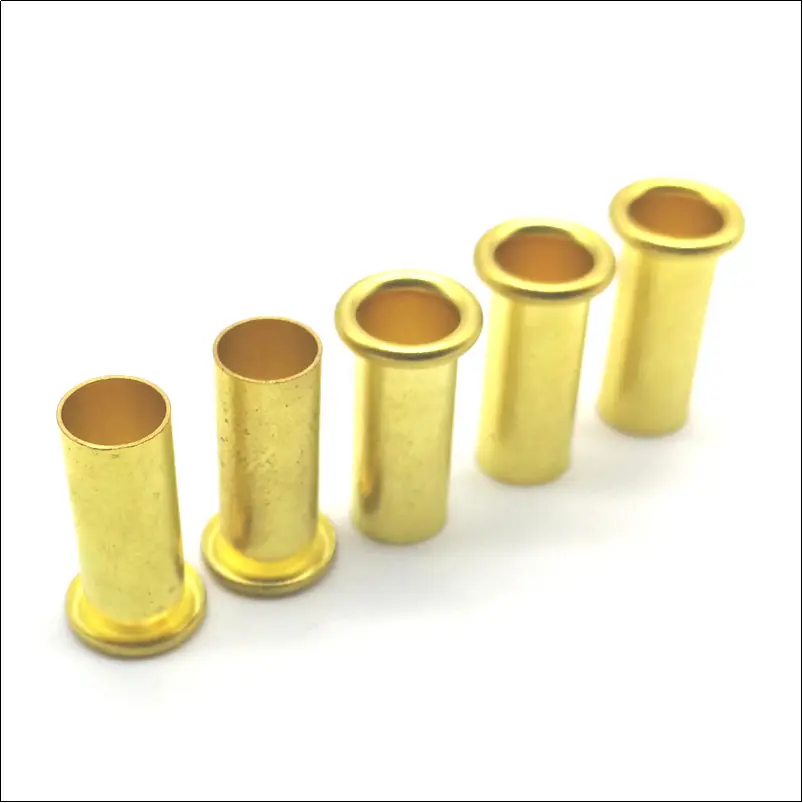
So why choose brass? It comes down to three things that aluminum and steel can't all offer together: looks, corrosion resistance, and conductivity. Brass has a gold-like color that looks premium and works well for decorative items, leather goods, or vintage-style hardware. It also resists tarnishing better than plain steel and doesn't corrode as quickly. Most importantly, brass is an excellent conductor of electricity. This makes brass hollow rivets a top choice in electrical applications,like securing components on circuit boards or making connections in control panels—where the rivet itself might need to carry a small current.
Other hollow rivets have their jobs. Aluminum hollow rivets are light and good for general use where weight matters. Steel hollow rivets are the strongest for heavy-duty jobs. But if you need a combination of decent strength, good looks, no rust, and electrical conductivity, brass is the answer.
Working with the Warm Metal
I run a small specialty press line at our shop, and we handle all the brass orders. There's a distinct feel to working with brass hollow rivets. The raw material itself is heavier than aluminum and has that rich color. When we form them, the brass is softer, so the press doesn't need as much force. You hear a cleaner, slightly higher-pitched click compared to the duller thud of steel.
My main focus is on the finish. Because brass is often chosen for its appearance, we can't have any scratches or tool marks on the rivet heads. We run them through a special tumbling process that polishes them to a consistent, bright shine. For some orders, we even apply a clear lacquer coating to prevent tarnishing and keep that "new" look.
The setting process is the same as with any other hollow rivets—you use a rivet gun to pull the mandrel and flare out the back. But with brass, you have to be a bit more careful not to over-set it, as the softer metal can sometimes distort if too much force is applied.
We recently had an interesting order from a maker of high-end audio equipment. They needed small brass hollow rivets to secure grounding straps inside their amplifiers. They needed the electrical conductivity, but they also insisted on brass because, as they put it, "it looks correct for the inside of our units." Even parts no customer would ever see had to meet their aesthetic standard. It showed me that for some, these aren't just fasteners; they're part of the product's character.
So, while they might not be the everyday choice, brass hollow rivets solve specific problems that other materials can't. They prove that even the most functional part can have a bit of style and a special job to do.
Previous:Let's Talk About CNC Turning
Send Inquiry



X
We use cookies to offer you a better browsing experience, analyze site traffic and personalize content. By using this site, you agree to our use of cookies.
Privacy Policy