
Products
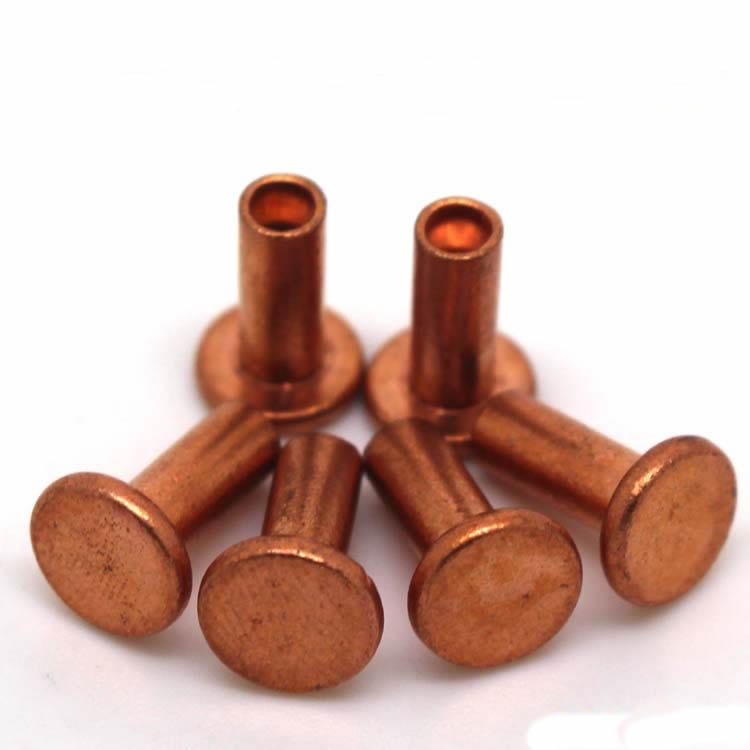
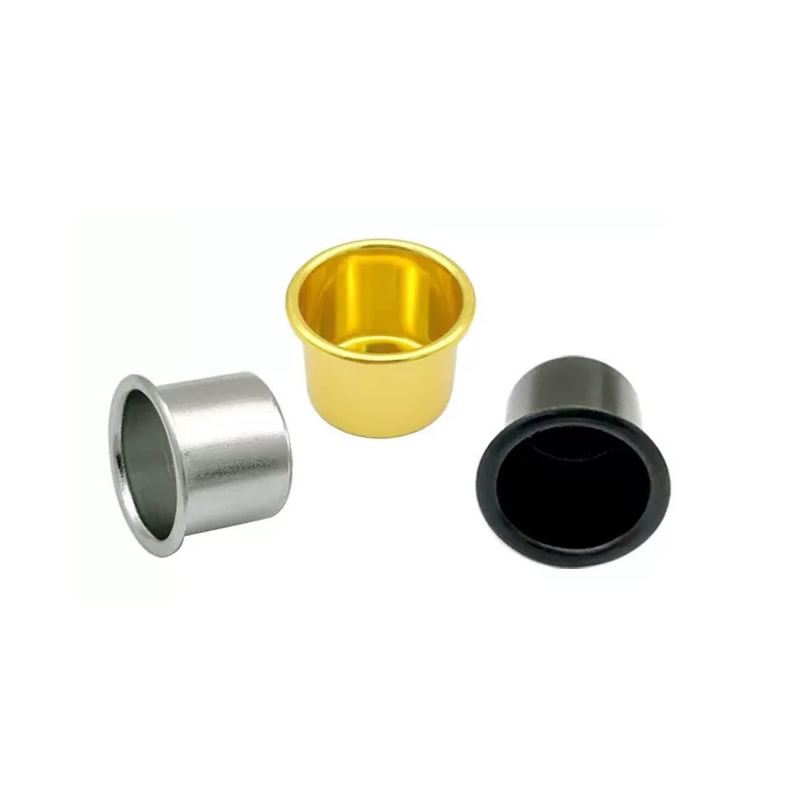
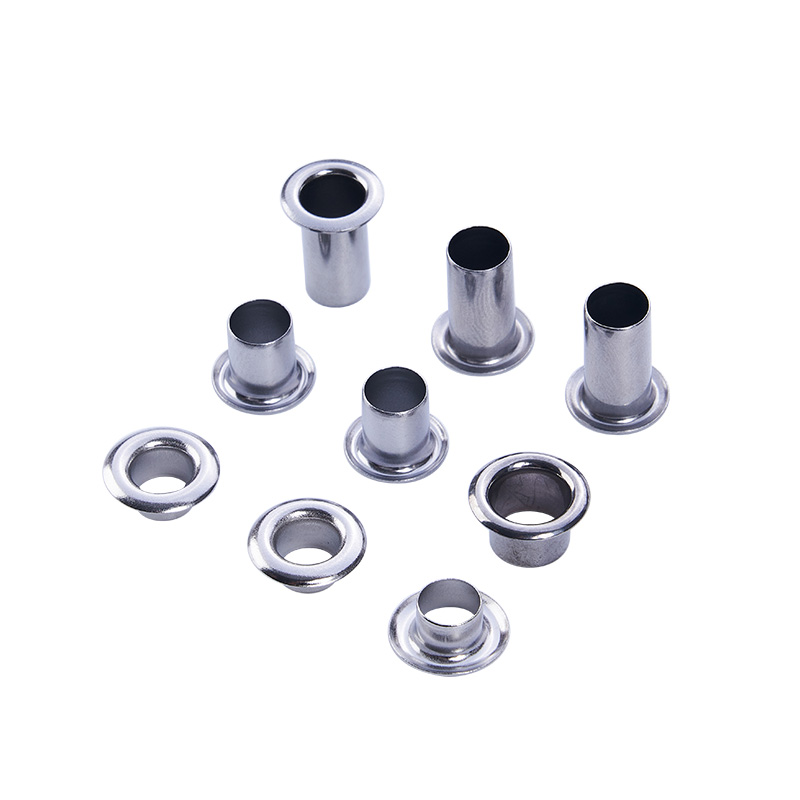
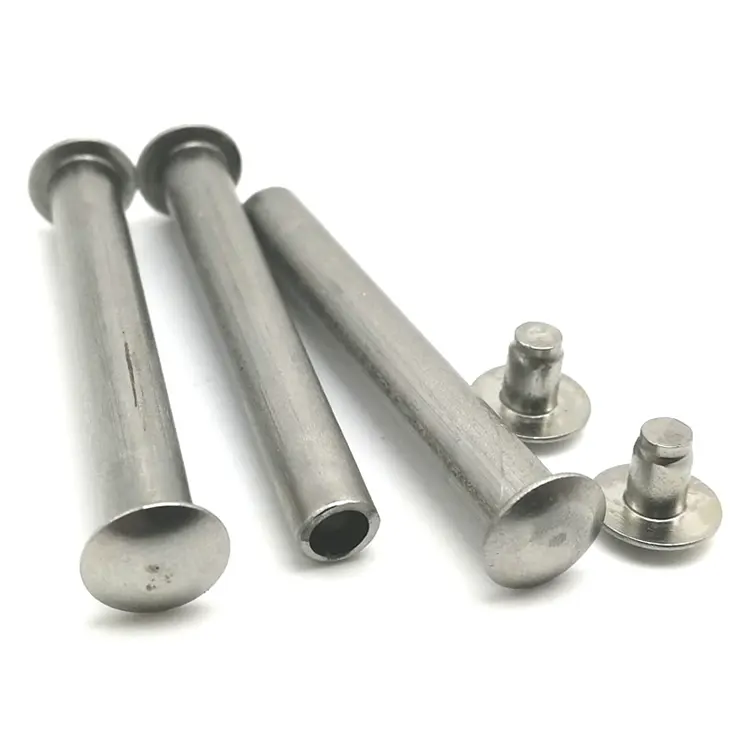
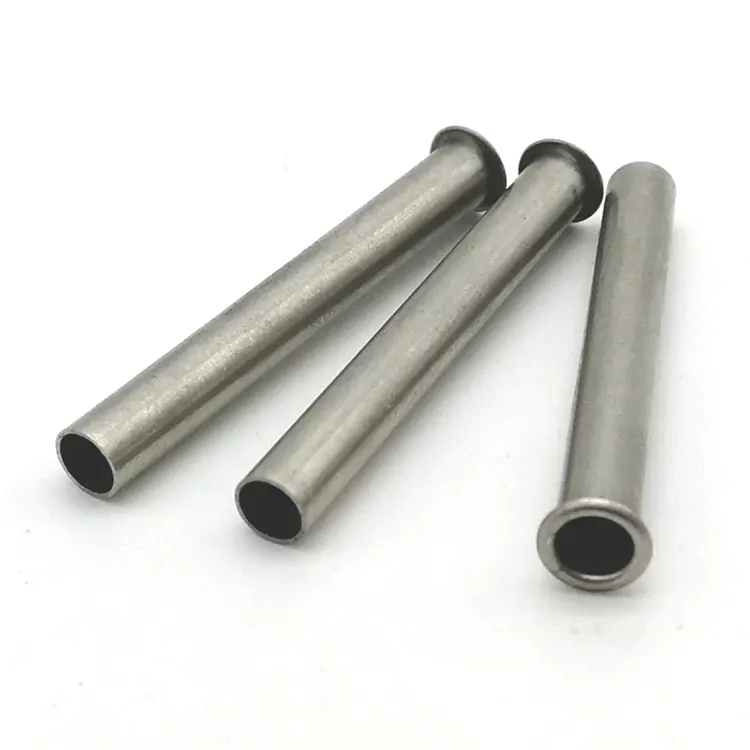
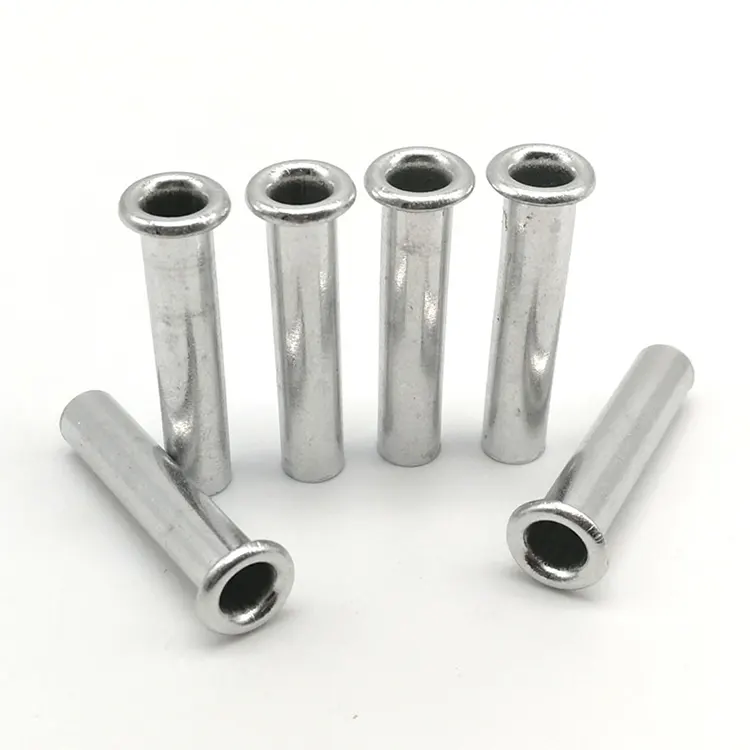
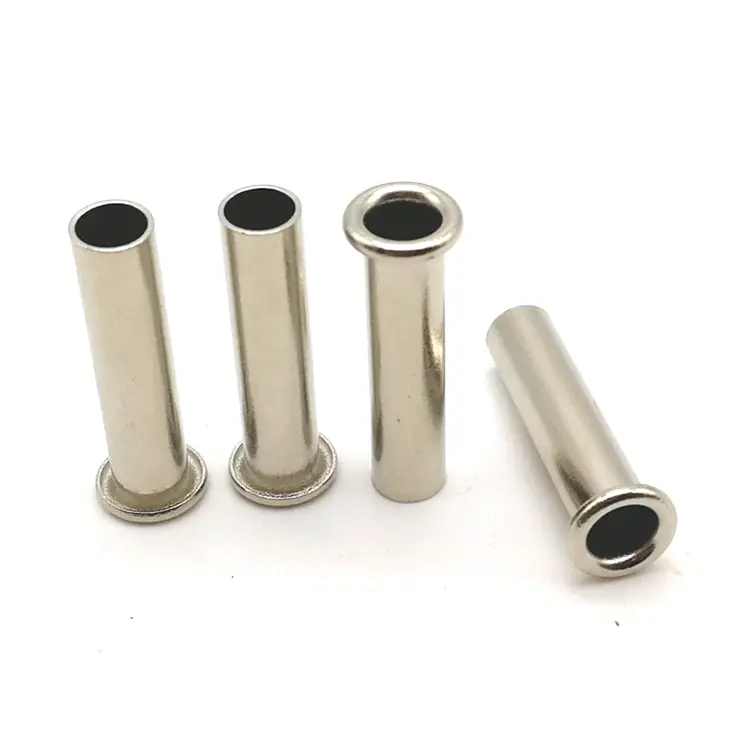
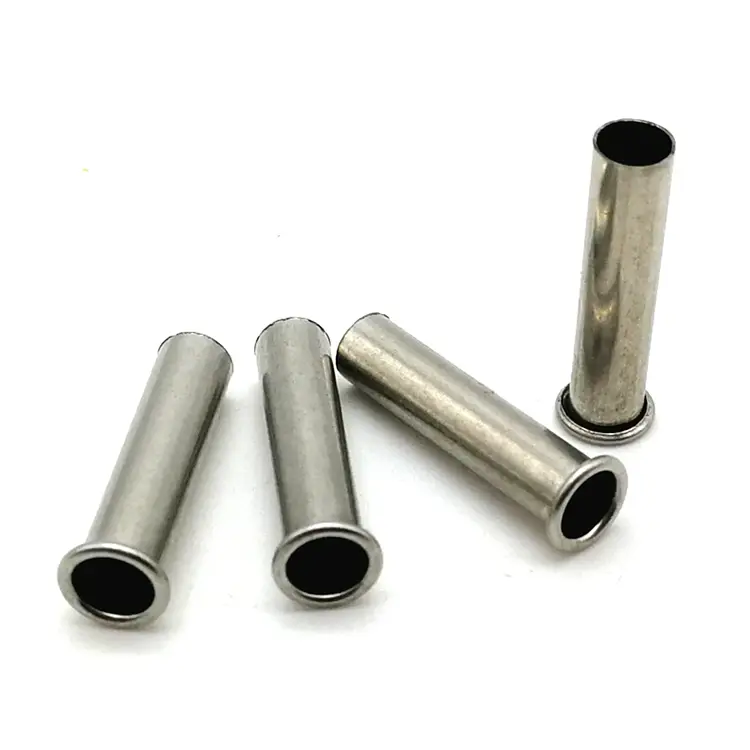
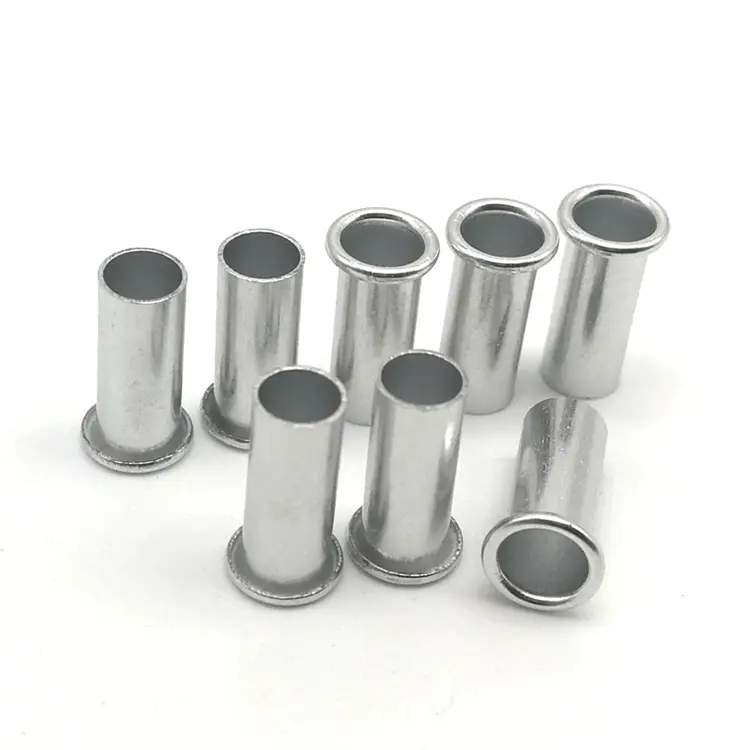
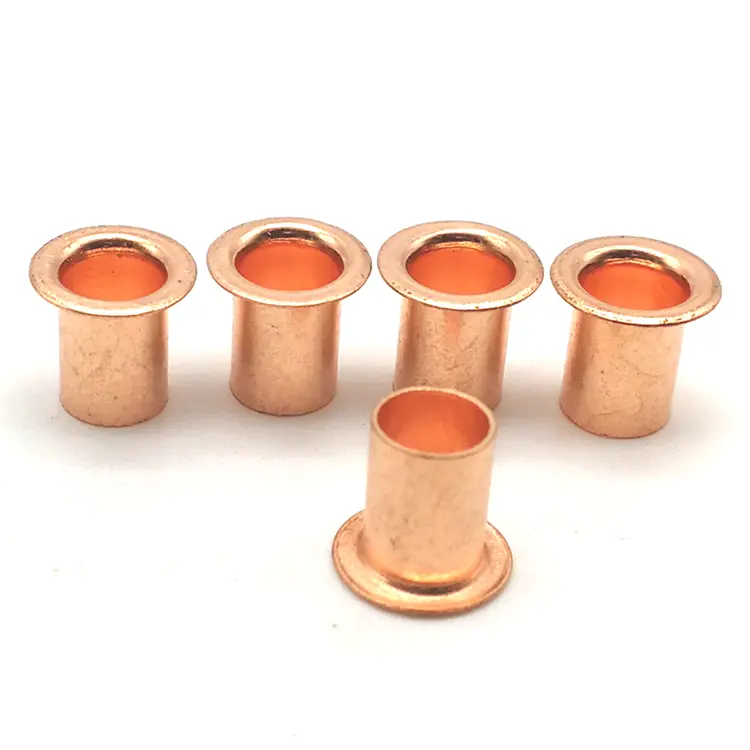
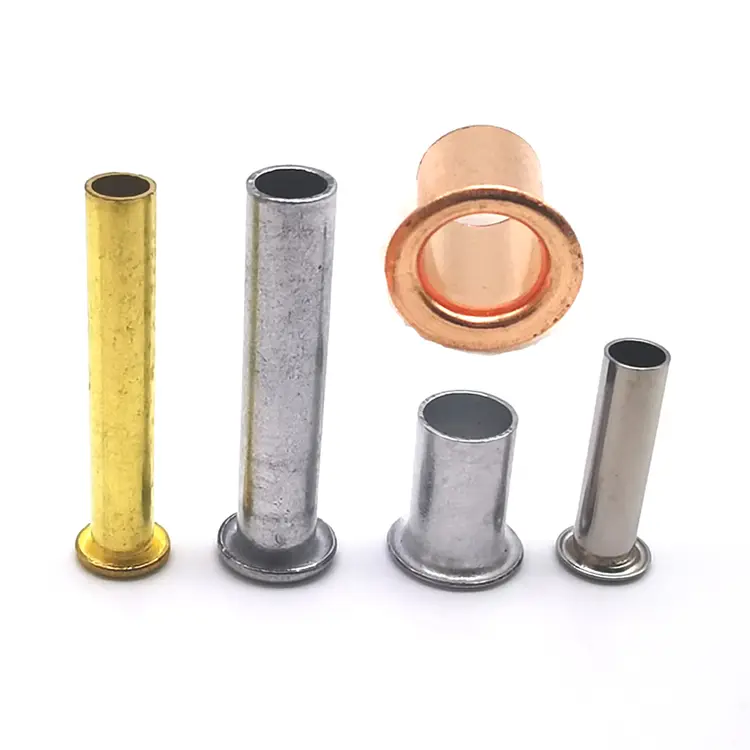
Steel Hollow Rivets
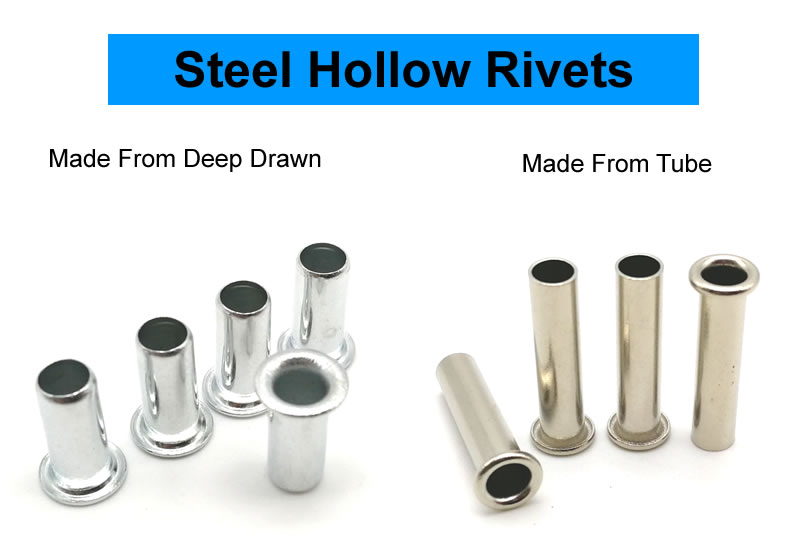
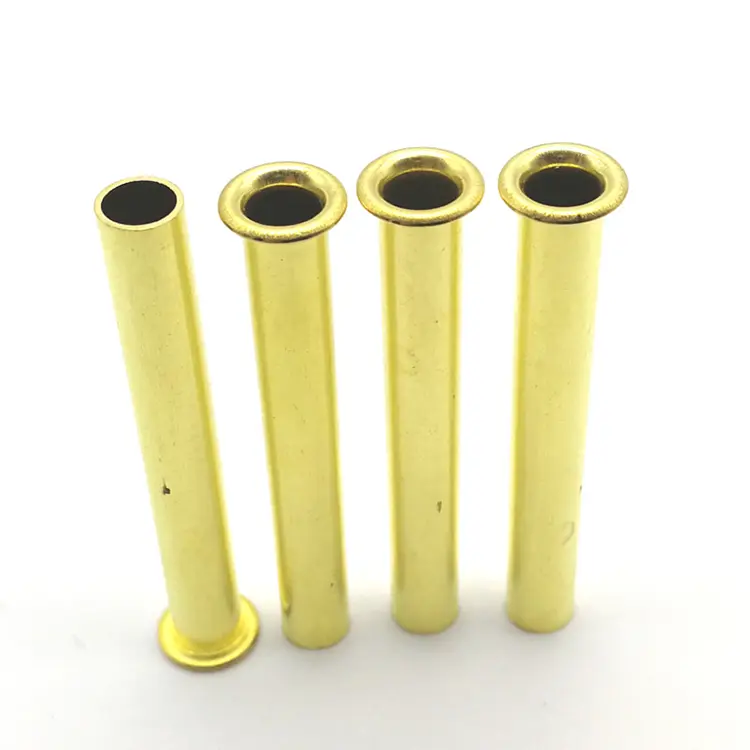
Nuote Metals specializes in the production of steel hollow rivets. We are located in Dongguan, China. There are two main technics for producing iron hollow rivets. One is to use iron pipes, which is suitable for longer rivets. The disadvantage is that the minimum order quantity requirement is relatively high. The other is to use deep drawing technics. We will give appropriate suggestions on which technics to use based on the specific circumstances of the customer.
Send Inquiry
Product Description
Steel hollow rivets are fully hollow fasteners with a central bore. Unlike solid or semi‑tubular rivets, hollow rivets have a thin wall that flares outward during installation with minimal force – typically 15–20% of what a solid rivet requires. They are the strongest and most cost‑effective option in the hollow rivet family.
We offer two manufacturing routes for them, and the choice depends on your specific requirements:
Tube‑cutting + heading – We start with steel tube stock, cut it to length, and form the head on one end. Cost‑effective for larger diameters and thicker walls, with faster tooling lead times.
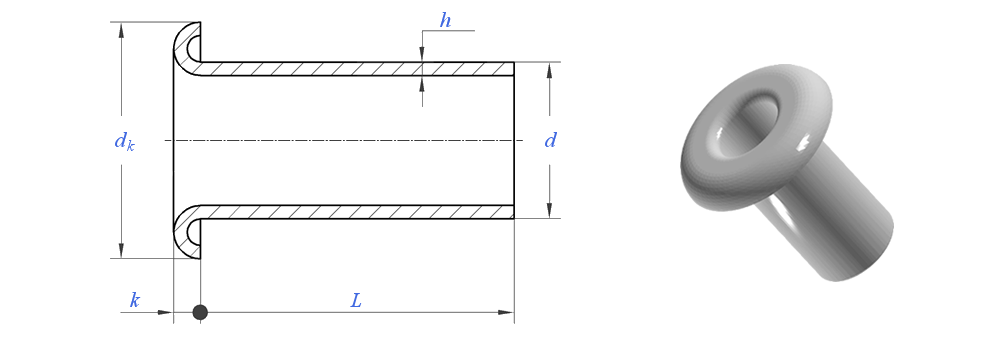
Deep drawing from sheet – We start with steel sheet and form the rivet through progressive drawing. Produces a seamless, one‑piece construction with consistent wall thickness and a smooth inside bore, ideal for thinner walls and tighter tolerances.
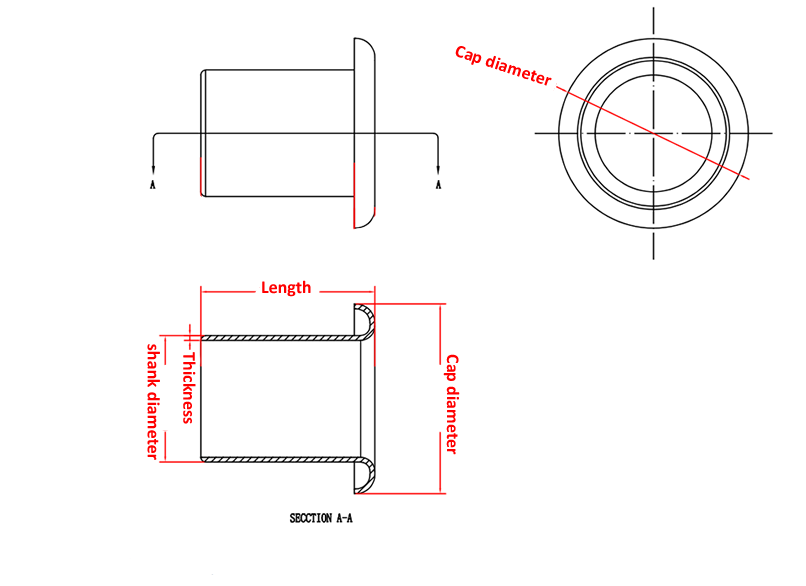
We review your drawing and recommend the optimal manufacturing route at quotation stage.
Tube‑Cutting vs. Deep‑Drawing – Which Process Is Right for You?
| Feature | Tube‑Cutting + Heading | Deep‑Drawing from Sheet |
|---|---|---|
| Starting material | Steel tube stock | Steel sheet (coil) |
| Construction | Cut tube + headed end | Seamless, one‑piece drawn |
| Wall thickness | Uniform, thicker | Uniform, can be thinner |
| Inside bore | Smooth, may have seam (if welded tube) | Smooth, seamless |
| Tooling lead time | Faster (2–3 weeks) | Longer (3–4 weeks) |
| Best for | Larger diameters, thicker walls, faster turnaround | Thin walls, tight tolerances, seamless requirement |
| Cost | Lower tooling cost | Higher tooling cost, lower piece price at volume |
If you are unsure which process is right for your application, send us your drawing. We will review and recommend the optimal method – at no charge.
Available Finishes
We offer multiple surface finishes for steel hollow rivets to match your application requirements:
| Finish | Appearance | Corrosion Protection | Best For |
|---|---|---|---|
| Zinc‑plated (clear) | Silver | 48 hrs salt spray | Indoor general use, cost‑effective |
| Zinc‑plated (yellow) | Gold tint | 96 hrs salt spray | Sheltered outdoor, industrial |
| Nickel‑plated | Bright silver | 96 hrs salt spray | Consumer products, visible hardware |
| Black oxide | Matte black | 24 hrs salt spray | Anti‑glare, industrial, automotive |
| Tin‑plated | Matte silver | Good | Solderability, corrosion resistance |
| Plain (uncoated) | Raw steel | None | Indoor, dry environments |
One Real Application – Wooden Craft Figurines
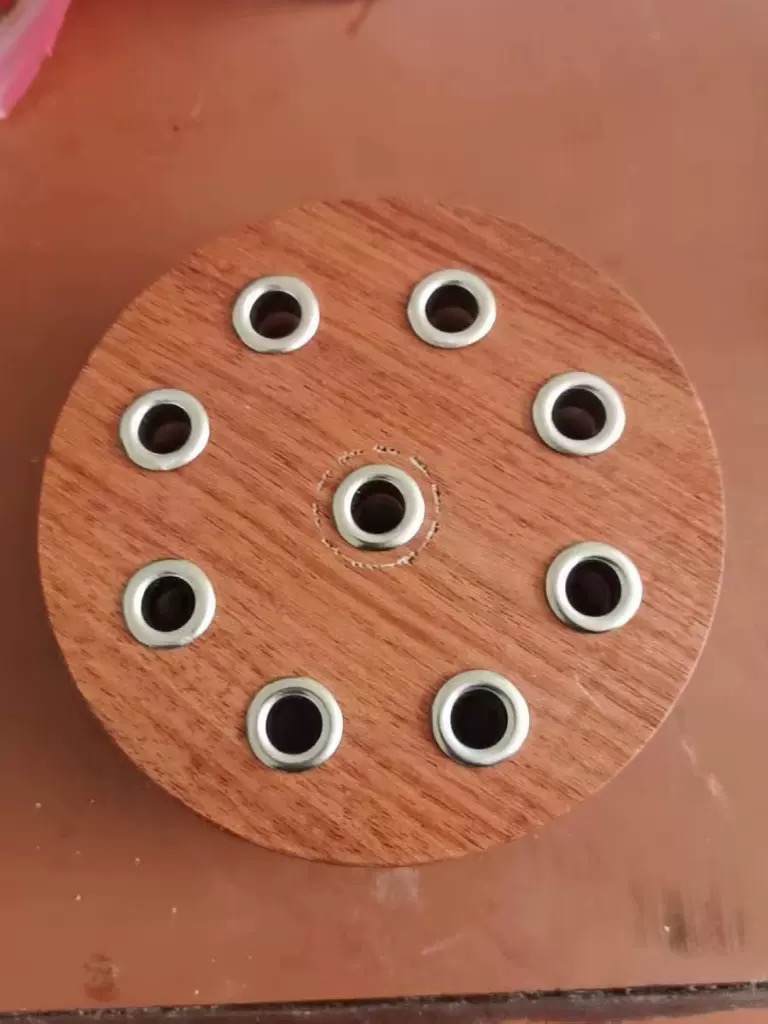
A manufacturer of handcrafted wooden figurines and decorative crafts needed a low‑force fastener to attach moving arms and accessory parts. Each figurine required 9 hollow rivets – 3 for each arm joint and 3 for decorative attachments. The previous screws loosened over time, and the customer wanted a permanent fastener that would not split the soft wood during installation.
We supplied zinc‑plated steel hollow rivets – 2.5mm shank, 5.0mm round head, 4.0mm barrel length. The hollow design flared with minimal force – no splitting of the soft wood. The zinc plating provided corrosion protection for long‑term display. The customer tested 500 figurines (4,500 rivets). After 5,000 movement cycles, zero loosening, zero splits. They now order our hollow rivets in batches of 200,000 pieces annually.
How We Manufacture Hollow Rivets – Two Routes
Route 1: Tube‑Cutting + Heading
1. Tube Stock Procurement – Certified steel tube from approved mills. Each batch comes with a mill test certificate and heat number.
2. Incoming Material Inspection – Tube stock checked for outside diameter (±0.02mm), wall thickness, and material composition.
3. Tube Cutting – The tube is cut to precise blank length.
4. Heading – The cut tube blank is placed into a heading press. A carbide die forms the head on one end.
5. Trimming – Flash around the head edge is removed.
6. Tumbling – Micro‑burrs are eliminated.
7. Plating or Coating – Zinc, nickel, black oxide, or other finishes applied as specified.
8. Final Inspection – 100% optical sorting. AQL sample manually verified.
Route 2: Deep‑Drawing from Sheet
1. Sheet Stock Procurement – Certified steel sheet from approved mills.
2. Incoming Material Inspection – Sheet stock checked for thickness and material composition.
3. Progressive Deep Drawing – The sheet feeds into a transfer press with a multi‑station progressive die. In a single continuous sequence, the die blanks a disc, draws it into a cup, deepens it to final barrel length, and pierces the bottom to create the hollow bore.
4. Flanging – The flange is coined flat and parallel.
5. Tumbling – Micro‑burrs are eliminated.
6. Plating or Coating – Applied as specified.
7. Final Inspection – 100% optical sorting. AQL sample manually verified.
Sample lead time: 5–7 days standard; custom tooling: 15–20 days.
Our Quality Control Process
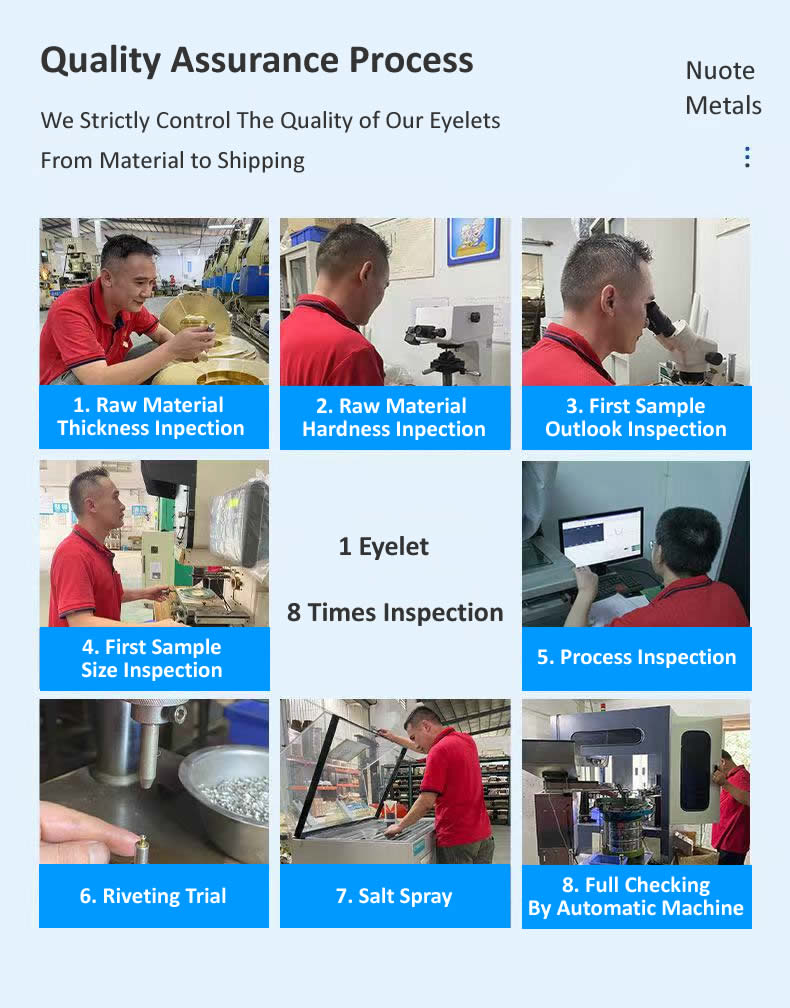
We follow a layered inspection system for every batch of steel hollow rivets – from incoming material to finished product.
Incoming material inspection – Tube or sheet stock checked for dimensions and material composition. Any material outside specification is rejected.
Setup and first‑off inspection – When tooling is installed, the first 10 rivets are examined under magnification for surface defects. Every dimension – inner diameter, outer flange, barrel length, and flange thickness – is measured on an optical comparator.
In‑process monitoring – During mass production, operators pull 5 rivets every 500 pieces. Critical dimensions are checked with digital calipers. Any drift beyond tolerance triggers an immediate press stop and tooling adjustment.
Clinch verification – Every 2,000 pieces, we set 3 rivets into a sample of your actual material. The rolled clinch is inspected for symmetry, tightness, and crack‑free formation.
Plating verification – Thickness checked by XRF (if applicable).
Final outgoing inspection – Every rivet passes through an optical sorting machine with high‑speed cameras. Rejects are automatically ejected. After sorting, a random AQL sample (Level II, 1.0) is manually verified.
All inspection records are retained for five years and included with every shipment.
Working with Customers Worldwide

We work with manufacturers across North America, Europe, and Asia – from wooden craft producers to automotive suppliers to industrial equipment builders. The images above show some of our valued partners visiting our facility, collaborating on custom projects, and sharing their experiences with steel hollow rivets.
We maintain full traceability and quality documentation for every batch:
- Material certificates – Mill test certificates traceable to original coil
- Dimensional inspection reports – Actual measurements from every batch
- Plating verification – Thickness and quality documented
- Certificate of Conformance – Signed, batch‑traceable
Three Questions We Answer Often
Q: "What is the difference between steel hollow rivets and steel semi‑tubular rivets?"
A: A steel hollow rivet is fully hollow – the entire barrel is a thin wall that flares outward during setting. A steel semi‑tubular rivet has a shallow cavity (45–55% of barrel length) with a thicker wall. Hollow rivets require the least setting force (15–20% of solid) and are ideal for soft materials, thin panels, and lightweight assemblies. Semi‑tubular rivets offer more strength (80–90% of solid) and are better for general‑purpose applications where you need a balance of strength and low setting force.
Q: "Which manufacturing process should I choose – tube‑cutting or deep‑drawing?"
A: The choice depends on your application. Tube‑cutting + heading is ideal for larger diameters, thicker walls, and faster tooling lead times. Deep‑drawing from sheet is better for thinner walls, tighter tolerances, and seamless bore requirements. If you are unsure, send us your drawing. We will review your application and recommend the optimal method – at no charge.
Q: "How can I prevent my steel hollow rivets from cracking during setting?"
A: Cracking during setting is one of the most common issues we hear about. Here are the likely causes and solutions:
Cause 1: Barrel length is too short. If the barrel does not extend 1.0–1.5mm beyond your material thickness, the hollow section bottoms out and cracks. Solution: Measure your total stack thickness – we will adjust the barrel length on your next order.
Cause 2: Setting force is too high. Hollow rivets only need 15–20% of the force required for solid rivets. If your press is set too high, the thin wall cracks rather than flaring. Solution: Reduce setting force by 30–40% and test again.
Cause 3: Hole size is too tight. If the hole is undersized, the barrel is compressed excessively. Solution: Increase hole size to shank diameter + 0.15–0.20mm.
Cause 4: Material is too hard. Steel hollow rivets work‑harden if your press speed is too high or the tooling is worn. Solution: We use polished carbide dies and controlled flaring speeds specifically for them. If you are experiencing cracking, send us a sample of your cracked rivets and your material stack. We will analyze the failure and recommend a specific fix – at no charge.
Hot Tags: Steel Hollow Rivets Supplier, Hollow Rivets manufactuer, China Hollow Rivets
Related Categories
Send Inquiry
Please feel free to fill your inquiry in the form below. We will reply you in 24 hours.



X
We use cookies to offer you a better browsing experience, analyze site traffic and personalize content. By using this site, you agree to our use of cookies.
Privacy Policy