
Why Is the Round Head Rivet Still Everywhere?
You see its shape on old bridges, leather saddles, and workshop tools. The round head rivet is the classic one. It's the first image that comes to mind for many people when you say "rivet." That domed head isn't just for looks; it's strong. The curved shape spreads stress and sits high above the material, making it a tough, reliable head for a permanent hold.
These rivets are the general-purpose workhorses. You find them where strength and a proven design matter most. But "general-purpose" doesn't mean they're all the same. The material changes everything. Steel round head rivets are the strongest common type, used in structural work, heavy machinery, and railroad cars. Stainless steel round head rivets offer that strength while fighting off rust, which is why they're on boats, chemical tanks, and outdoor structures. Aluminum round head rivets(https://www.nuotemetal.com/aluminum-round-head-rivets.html) are for when you need a solid fastening but must save weight, like in aircraft frames or truck bodies. You'll even find copper round head rivets in traditional crafts and electrical work, valued for their look and conductivity.
So, the shape is universal, but the choice of metal targets the job. That domed head is a signal of a solid, old-school connection.
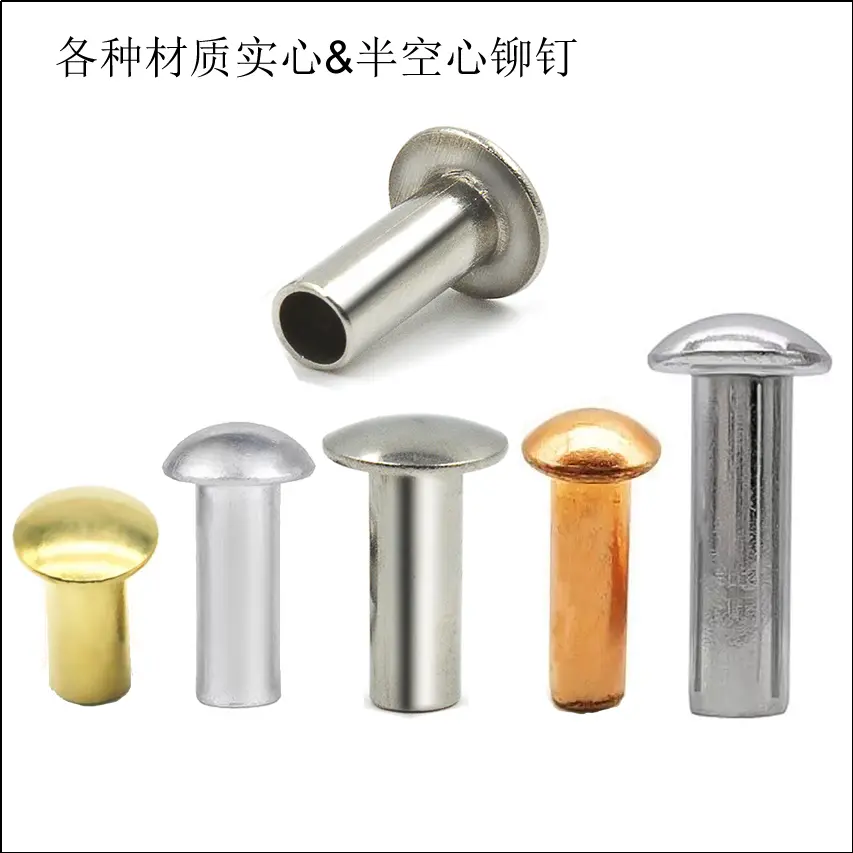
Forming the Dome: A Bench View
My job involves setting up the runs for different rivets. For me, the round head rivets are about consistency. That dome needs to be symmetrical every single time. If it's off-center or lopsided, it doesn't just look bad; it can mean the material underneath wasn't formed right, and the rivet might be weak.
We form them on cold-heading machines. The wire feeds in, gets cut to length, and then a die shapes the end into that round head. The trick is in the die itself and the pressure. Too much force and you can get a faint seam line called a flash around the head. Too little, and the head won't be fully formed. We listen for a solid, dull thump when it's running right. The first few rivets off the press get a close look. I'll roll one on the bench to see if the dome is perfectly round. I'll also put a small gauge over it to check the head height is consistent across the batch.
The finishing touch depends on the material. For steel rivets, we might just clean off any oil. For stainless or aluminum, we often tumble them to give the dome a smooth, uniform finish. That polished dome on a stainless rivet has a certain heft and shine to it.
We had a repeat order once from a company making heavy-duty industrial ladders. They used large, steel round head rivets at all the critical pivot and connection points. Their spec sheet just said: "High-shear strength. Dome must be full-formed." No fancy terms. They just needed that classic profile to be perfect, batch after batch, because lives depended on the ladder's integrity. It reminds you that this basic shape isn't old-fashioned; it's timeless for a reason. It works. And making it well, making it consistent, is what turns a simple piece of metal into a part you can trust.
Previous:Why Choose Brass Hollow Rivets?
Send Inquiry



X
We use cookies to offer you a better browsing experience, analyze site traffic and personalize content. By using this site, you agree to our use of cookies.
Privacy Policy