
Products
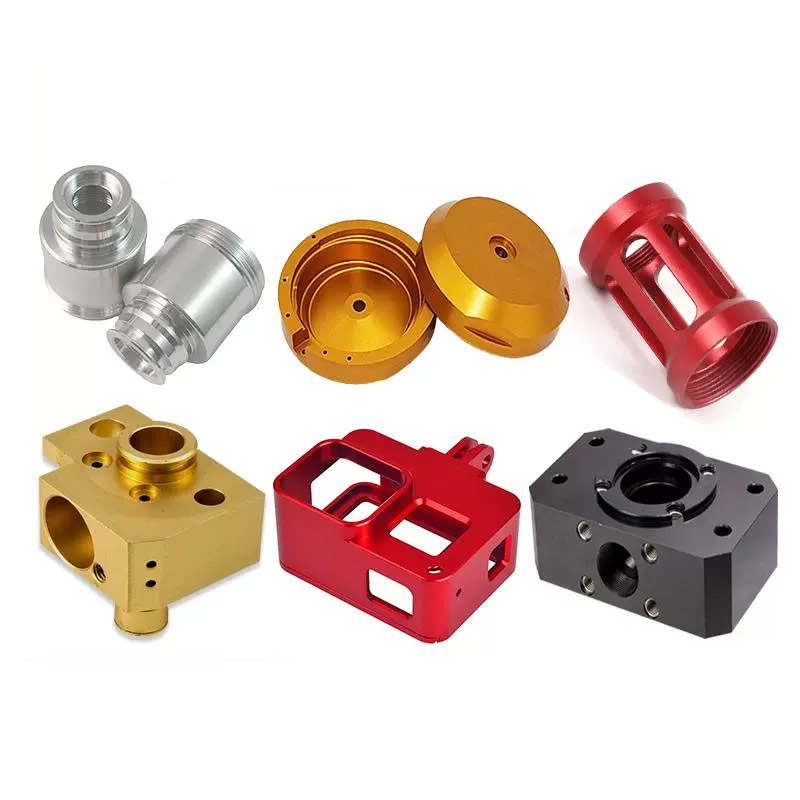
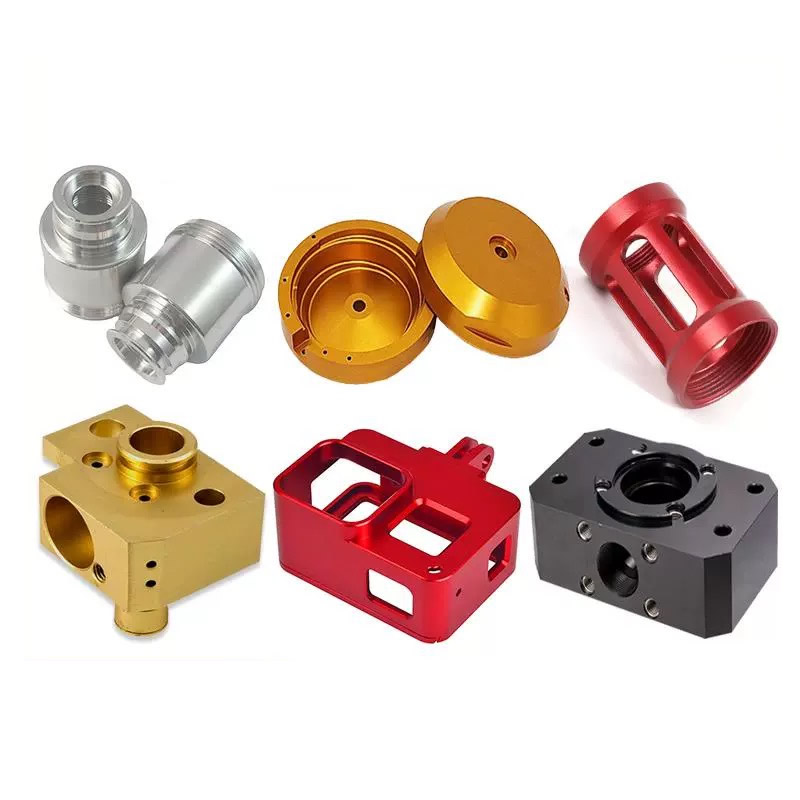
5-Axis Mill-Turn Part
A 5-axis mill-turn part is not a turned part with a few milled flats. It is a part whose geometry needs the tool to reach an angle that 3-axis turning cannot reach—an angled cross-hole, a non-radial slot, a contoured pocket that wraps around the axis. Nuote Metals produces 5-axis mill-turn parts in China with B-axis and Y-axis simultaneous motion, machining angled features in one setup without an angle fixture. ±0.005mm on critical features.
Send Inquiry
Product Description
A turned part with a cross-hole and a flat can be machined on a lathe with live tooling—the tool moves in X and Z, and the C-axis indexes the part. That is 3-axis turning. It covers most turned parts. But it cannot drill a hole that enters at 30° to the axis, mill a slot that is not radial to the centerline, or cut a pocket that wraps around the OD at a changing angle. Those geometries need the tool to tilt and rotate while the part turns—B-axis and Y-axis, moving at the same time as the C-axis.
5-axis mill-turn parts are defined by the features that require simultaneous motion—not by the machine that makes them. A part with a straight cross-hole is not a 5-axis part, even if it runs on a 5-axis machine. A part with an angled cross-hole is a 5-axis part, because no amount of indexing can reach the angle without an angle fixture and a second setup.
At Nuote Metals, we produce 5-axis mill-turn parts with B-axis and Y-axis simultaneous motion—machining angled features in one setup, without an angle fixture. This article covers the three geometries that need 5-axis, the cost boundary against 3-axis plus secondary, and what to verify before accepting a part.
Three Geometries That Need 5-Axis Simultaneous Motion
A feature needs 5-axis when the tool must approach at an angle that cannot be reached by indexing the part alone.
| Geometry | Why 3-Axis Cannot Reach It | 5-Axis Approach | Typical Part |
|---|---|---|---|
| Angled cross-hole | The hole axis is not perpendicular to the part axis—the drill would enter at an angle and walk | B-axis tilts the spindle to the hole angle; Y-axis positions the drill | Hydraulic manifold ports, fuel injector bodies |
| Non-radial slot | The slot walls are not aligned with the radial plane—the end mill would rub one wall | B-axis rotates the tool to the slot angle; C-axis interpolates the slot path | Medical instrument housings, aerospace fittings |
| Wrapped contour | The contour changes angle around the OD—a 3-axis tool would leave facets | B and C axes move simultaneously—the tool follows the contour without faceting | Cam profiles, turbine components |
Angled cross-holes are the most common 5-axis feature. A hole that enters at 30° to the axis cannot be drilled on a 3-axis lathe—the drill walks on the curved surface, and the hole position drifts. A 5-axis machine tilts the spindle to the hole angle, and the drill enters perpendicular to the surface—no walk, no drift.
Non-radial slots require the tool to rotate to the slot angle. A 3-axis machine can only cut slots that are radial or axial—a slot at 45° between the two would rub one wall and cut the other. 5-axis rotates the tool to the slot angle, and the slot walls are parallel.
Wrapped contours change angle around the OD. A 3-axis machine interpolates the contour with the C-axis, but the tool stays at one angle—the contour becomes a series of facets. 5-axis moves B and C simultaneously—the tool follows the contour continuously, without faceting.
For 5-axis mill-turn parts, the geometry—not the machine—determines whether simultaneous motion is required. A straight cross-hole does not justify a 5-axis machine, even if the machine is available.
Standard reference: Position and profile tolerances follow ASME Y14.5 and ISO 1101 unless a tighter callout is specified.
The Cost Boundary – 5-Axis vs. 3-Axis Plus Secondary
5-axis is not always cheaper. The machine hour rate is higher—typically 1.5–2× a 3-axis lathe. The question is whether the 5-axis premium is offset by the eliminated secondary operation.
When 5-axis is cheaper:
- The angled feature would require an angle fixture and a second setup on a 3-axis machine—the fixture cost and the setup time often exceed the 5-axis premium.
- The part has multiple angled features at different angles—each would need a separate fixture on a 3-axis machine.
- The tolerance between the angled feature and the bore is tight—the second setup introduces a datum shift that the 5-axis avoids.
When 3-axis plus secondary is cheaper:
- The part has one angled feature and the volume is low—the angle fixture is a one-time cost, and the 3-axis rate is lower.
- The angled feature has a loose tolerance—the datum shift from the second setup is absorbed by the tolerance.
- The part is large—the 5-axis machine may not have the chuck capacity, and the 3-axis route is the only option.
For 5-axis mill-turn parts, the cost boundary is the angle fixture—when the fixture cost and the setup time exceed the 5-axis machine-hour premium, the 5-axis route wins. We run that comparison during DFM review—before quoting, not after.
A common mistake: Quoting every turned part on a 5-axis machine because “it’s more accurate.” For a part with a straight cross-hole and a loose flat, the 3-axis lathe holds the tolerance—the 5-axis adds cost without adding value.
Equipment and Capacity
Nuote Metals operates 5-axis mill-turn centers with B-axis and Y-axis simultaneous motion.
- 5-axis mill-turn centers (DMG MORI NHX 5000, Mazak Integrex i-200) – B-axis ±120°, Y-axis ±50mm, bar feed up to 80mm, chuck up to 300mm.
- CAM programming (HyperMill, Mastercam) – simultaneous 5-axis toolpaths verified by simulation before the first cut.
- CMM with scanning probe (Zeiss Contura 7/10/6) – angled features measured from the same datum as machining.
- Tool holders – HSK-T63 for high-speed angled drilling and milling.
Certification: ISO 9001:2015 (certificate no. available on request). Annual capacity: 800,000 mill-turn parts for hydraulic, medical, and aerospace customers.
Limitation: 5-axis simultaneous motion is validated for parts up to 300mm diameter and 400mm length. Above that, the machine’s B-axis travel and the part’s rigidity limit the reachable angles—a larger machine or a different process is required.

A Real Example – Angled Cross-Hole Saved by 5-Axis, Not an Angle Fixture
A German hydraulic equipment manufacturer needed a 4140 manifold with a cross-hole entering at 30° to the axis, positioned within 0.02mm of the bore centerline. Their previous supplier used a 3-axis lathe plus an angle fixture—the drill walked on the curved surface, and 11% of holes were out of position.
What we did differently:
- Machined the angled hole on a 5-axis mill-turn center—B-axis tilted to 30°, Y-axis positioned the drill.
- Drilled with a carbide drill and a spot face—the spot face removed the curved surface, and the drill entered perpendicular.
- Verified the hole position on a Zeiss Contura CMM—fixtured on the bore datum, not the OD.
- Shipped 1,500 manifolds with zero hole position rejections.
A lesson we learned: Early in our mill-turn program, we tried to drill a 30° angled hole on a 3-axis lathe with an angle fixture—the same route the previous supplier used. The drill walked on the curved surface, and 11% of the batch was out of position. We reworked that batch and moved angled holes to 5-axis simultaneous motion. Since then, any hole entering at more than 15° to the axis is quoted on a 5-axis machine—no angle fixture route.
Limitation: The 30° angle is within the B-axis travel of ±120°. For angles beyond 120°, the part must be re-chucked—the 5-axis advantage is reduced.
This is what 5-axis mill-turn parts should deliver: not just a part with an angled hole, but a hole that enters perpendicular to the surface and holds its position—because the tool reached the angle without an angle fixture.
Frequently Asked Questions
Q1: What can a 5-axis mill-turn part do that a 3-axis lathe cannot?
A: Drill angled cross-holes, mill non-radial slots, and cut wrapped contours—features where the tool must approach at an angle that indexing alone cannot reach. A 3-axis lathe with live tooling can drill straight cross-holes and mill radial flats—but an angled hole requires an angle fixture and a second setup, and the drill walks on the curved surface. For 5-axis mill-turn parts, the value is the simultaneous motion—not the machine’s capability list.
Q2: Is 5-axis programming more expensive than 3-axis?
A: Yes—the CAM programming is more complex, and the simulation takes longer. The programming cost is typically 20–40% higher than a 3-axis program. But the programming cost is a one-time cost—it is amortized across the batch. For a part with multiple angled features, the 5-axis programming cost is often lower than the fixture cost and setup time of the 3-axis route.
Q3: Is 5-axis suitable for small batches?
A: It depends on the geometry. For a part with an angled feature that would require an angle fixture, the 5-axis route is often cheaper even at 50 pieces—the fixture cost and setup time exceed the 5-axis premium. For a part with a straight cross-hole, the 3-axis route is cheaper at any batch size. The decision is based on the feature, not the batch size alone.
Q4: Can you provide DFM feedback on whether my part needs 5-axis?
A: Yes. Send the drawing with the feature angles, tolerances, and batch size. Our engineering team reviews the geometry—confirming whether the angled features can be reached with 3-axis plus indexing, or whether they need simultaneous motion. Where the 3-axis route requires an angle fixture, we compare the fixture cost against the 5-axis premium—and recommend the route that matches the geometry and the volume.
Send Inquiry
Please feel free to fill your inquiry in the form below. We will reply you in 24 hours.



X
We use cookies to offer you a better browsing experience, analyze site traffic and personalize content. By using this site, you agree to our use of cookies.
Privacy Policy