
Why Do We at Nuote Metals Engineer Aluminum Rivets for Weight‑Sensitive and Corrosive Environments?
A steel rivet that weighs 10 grams might not seem heavy – until you multiply it by 10,000. That is 100 kg of unnecessary mass on an aircraft or an electric vehicle. Aluminum rivets solve this problem. At Nuote Metals, we produce all three types: solid, semi‑tubular, and tubular. Each has a distinct role. This guide walks you through what we have learned from supplying these fasteners to aerospace tier‑ones, boat builders, and electronics manufacturers.
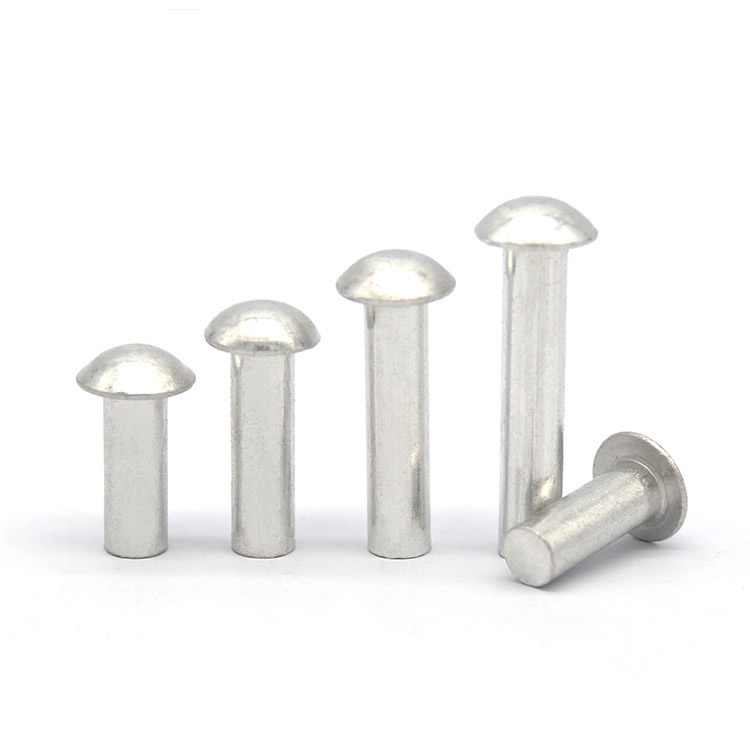
The Three Aluminum Rivet Families We Manufacture
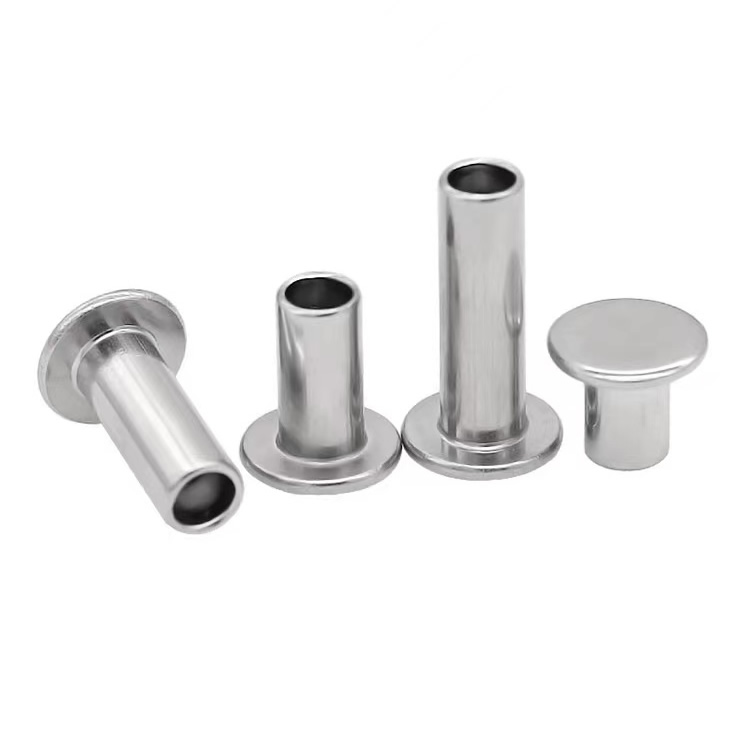
The table below summarizes the three configurations. The differences are in the hollow depth, which affects strength, setting force, and application.
| Type | Hollow Depth | Setting Force | Strength (relative to solid) | Best For |
|---|---|---|---|---|
| Solid | 0% | Highest (baseline) | 100% | Primary aircraft structure, high‑load marine hardware |
| Semi‑Tubular | 20–40% of shank | 30–40% less | 80–95% | Automotive assemblies, electronics enclosures, general industrial |
| Tubular | 100% of shank | 50–60% less | 50–70% | Lightweight decorative parts, soft materials, low‑load joints |
Our rule: For structural integrity, choose solid aluminum rivets. For high‑volume production, semi‑tubular aluminum rivet is the workhorse. For crafts or low‑load jobs, tubular aluminum rivet saves time and money.
Alloy Selection – Real Grades We Stock and Use
We carry five aluminum alloys for aluminum rivets. Each has a specific purpose.
| Alloy | Common Name | Shear Strength (MPa) | Best Application | Our Notes |
|---|---|---|---|---|
| 1100 | Commercially pure | 55–70 | Decorative rivets, soft materials, crafts | Softest, easy to set, lowest strength |
| 5056 | Marine grade | 200–220 | Boat hardware, saltwater, magnesium joints | High corrosion resistance, our top choice for outdoor |
| 6061 | Structural | 180–200 | General purpose, automotive, electronics | Balanced strength and workability |
| 2017 | Duralumin (heat‑treated) | 250–280 | Aircraft structural (needs heat treat) | High strength, limited corrosion resistance |
| 2024 | Aircraft grade | 270–310 | Primary aerospace (wings, fuselage) | Highest strength, must be clad or painted outdoors |
For 80% of our customers, 5056 or 6061 are the right choices. Tell us your environment, and we will recommend one.
Technical Specifications – The Numbers We Guarantee
Every batch of aluminum rivets leaving our factory meets these tolerances.
Dimensional Tolerances (All Types)
| Parameter | Range | Tolerance |
|---|---|---|
| Shank diameter | 1.6 mm – 10 mm | ±0.05 mm |
| Head diameter | 3 mm – 18 mm | ±0.10 mm |
| Total length (solid) | 3 mm – 60 mm | ±0.15 mm |
| Barrel length (semi‑tubular/tubular) | 2 mm – 15 mm | ±0.10 mm |
| Hollow depth (semi‑tubular) | 20–40% of shank | ±5% |
For aerospace or precision electronics, we can tighten shank diameter to ±0.02 mm.
Available Finishes
| Finish | Process | Properties |
|---|---|---|
| Mill finish | As‑headed | Matte silver, natural oxide layer |
| Clear anodized | Electrochemical oxidation | Improved corrosion resistance, maintains metallic look |
| Gold anodized | Dye + anodizing | Decorative, added wear resistance |
| Black anodized | Dye + anodizing | Non‑reflective, used in military and electronics |
| Chromate conversion (Alodine) | Chemical dip | Excellent corrosion protection for aerospace |
All finishes are RoHS compliant.
Real Cases – Where Our Aluminum Rivets Are Used
We do not just publish catalogs. Here are actual applications from our customers.
Case 1: Electric Vehicle Battery Trays (Semi‑Tubular, 6061)
A European EV manufacturer needed to assemble aluminium battery enclosures – 12,000 rivets per vehicle. Steel rivets added too much weight; welding distorted the thin walls. We supplied 6061 aluminum semi‑tubular rivets with a 4 mm shank. The semi‑tubular design reduced setting force by 35%, allowing automated riveting at 150 pieces per minute. Weight saving: over 8 kg per vehicle.
Case 2: Marine Pontoon Decks (Solid, 5056)
A boat builder in the Great Lakes region was using stainless steel rivets. Galvanic corrosion between the stainless rivets and aluminium decking caused pitting within two seasons. We switched them to 5056 aluminum solid rivets. The rivets match the deck material, eliminating galvanic couples. Five years later – no corrosion, no loosening.
Case 3: Consumer Electronics Housings (Tubular, 1100)
A laptop manufacturer needed a non‑magnetic fastener for plastic and thin aluminium housings. Loads were minimal, but cosmetic appearance mattered. We supplied 1100 aluminum tubular rivets with a clear anodized finish. The tubular design set with very low force, preventing cracking of the plastic bosses. The anodized finish matched the housing colour perfectly.
Quality Assurance and Certifications – Our Transparent Policies
ISO 9001:2015 Certified Production
Our factory operates under ISO 9001:2015. Every batch of aluminum rivets undergoes:
- 100% in‑process inspection – dimensional checks every 500 pieces
- Hardness sampling – Rockwell or Brinell per alloy specification
- Plating thickness verification – for anodized or chromate finishes
- Batch traceability – from raw coil to finished box
RoHS Compliance
All aluminum rivets from Nuote Metals are RoHS compliant. We provide compliance certificates on request.
Our Customer Policies (No Fine Print)
- Free samples – Stock sizes only. Pay express shipping. Test before ordering.
- Custom tooling within 10 days – Non‑standard head shapes, barrel lengths, or diameters.
- 100% inspection before shipment – Every carton is checked by QC.
- MOQ 20,000 pieces – Flexible for sample runs; lower volumes possible.
- Lead times – Stock: 3–5 days. Custom: 15–25 days (including tooling).
- 8‑hour response – Technical inquiries answered within one business day.
We have supplied aluminum rivets to customers in 70+ countries. Our customers stay with us because we deliver what we promise.
Installation Tips – What We Have Learned
Aluminium is soft and work‑hardens quickly. Here is what works.
For Solid Aluminum Rivets
- Use a bucking bar and rivet gun (pneumatic or manual).
- Hole diameter: 0.05–0.10 mm larger than shank.
- Use a single, firm stroke – multiple hits cause work hardening and cracking.
For Semi‑Tubular Aluminum Rivets
- Setting force: 30–40% less than solid steel of same diameter.
- Polished, hardened steel anvils prevent surface marks.
- Deburr holes thoroughly – burrs can split the thin hollow wall.
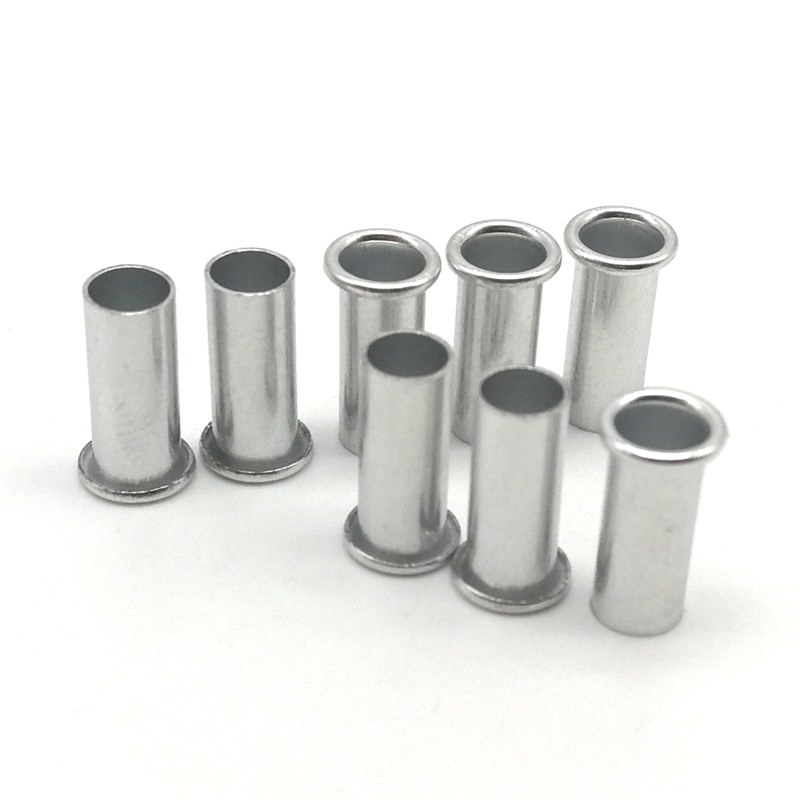
For Tubular Aluminum Rivets
- Very low force – hand press or light mallet is often enough.
- Best for materials under 3 mm total stack thickness.
- Roll curl should be uniform; if it splits, increase hole diameter by 0.05 mm.
Common Mistakes We See
| Mistake | Consequence | Our Fix |
|---|---|---|
| Too much pressure | Flattened or cracked head | Reduce force by 20–30% |
| Burred hole | Split barrel | Deburr both sides |
| Wrong alloy for saltwater | Pitting corrosion (6061 in marine) | Switch to 5056 |
| Multiple setting hits | Work hardening, cracking | Use single‑stroke press |
We include a setting guide with every sample order.
【aluminum rivets】FAQ – Three Questions We Answer Daily
Q1: What is the practical difference between solid, semi‑tubular, and tubular aluminum rivets – and how do I choose?
A: We make all three, so we can give you an honest answer. Solid aluminum rivets have no hollow section. They are the strongest – used for aircraft wing spars and structural marine joints. But they require the most setting force and need access to both sides. Aluminum semi‑tubular rivets have a hollow cavity 20–40% deep from the tail. They set with 30–40% less force than solid, yet retain 80–95% of the strength. This makes them ideal for high‑volume assembly lines – automotive battery trays, electronics enclosures, general manufacturing. Aluminum tubular rivets are fully hollow. They set with very low force but provide only 50–70% of solid rivet strength. Use them for lightweight decorative attachments, soft materials (leather, thin plastic), or low‑load applications like laptop hinge covers. Our recommendation: If your joint carries significant load, choose solid. For most production jobs, semi‑tubular is the best balance of strength and speed. For crafts or non‑structural attachments, tubular is fine.
Q2: Which aluminum alloy should I use for outdoor or marine applications – 5056 or 6061?
A: This is the most common grade question we receive. 5056 aluminum rivets contain magnesium and chromium, giving them excellent resistance to saltwater and general atmospheric corrosion. They are the standard for boat hardware, pontoon decks, and any outdoor application near coasts. 6061 aluminum rivets are stronger and more workable, but they lack the same level of corrosion resistance. In direct saltwater exposure, 6061 will pit within months. Our advice: For any product that will be regularly exposed to moisture – especially salt spray – specify 5056. For indoor or mild outdoor use (away from salt), 6061 is sufficient and more economical. We stock both and can provide side‑by‑side salt‑spray test results.
Q3: How do I calculate the correct rivet length for my material stack?
A: The formula differs by type. For solid aluminum rivets: Length = Material Stack Thickness + 1.5 × Rivet Diameter. Example: 3.0 mm stack + (1.5 × 3.0 mm) = 7.5 mm. For semi‑tubular aluminum rivets: Length = Stack Thickness + (0.8 to 1.2) × Diameter. Use the higher multiplier (1.2) for harder materials, lower (0.8) for soft ones. Example: 3.0 mm stack + (1.0 × 3.0 mm) = 6.0 mm. For tubular aluminum rivets: Length = Stack Thickness + 0.5 to 1.0 mm. Very little protrusion is needed because the hollow tube merely curls outward. Our recommendation: Order sample rivets in two adjacent lengths and test them on your actual material. Nuote Metals provides free sample kits – just tell us your stack thickness and material type.
Why Our Customers Trust Nuote Metals for Aluminum Rivets
We are a manufacturer, not a middleman. Our factory in Dongguan operates with full traceability and in‑house tooling.
- All three types – Solid, semi‑tubular, and tubular from one source.
- Alloys in stock – 1100, 5056, 6061, 2017, 2024.
- In‑house finishing – Anodizing (clear, gold, black), chromate conversion.
- ISO 9001:2015 certified – Full documentation and traceability.
- RoHS compliant – All finishes meet international standards.
- Custom tooling in 10 days – Non‑standard head styles or dimensions.
We also manufacture steel, stainless steel, brass, and copper rivets. So when aluminum is not the right answer, we have alternatives ready.
Contact Nuote Metals for Your Aluminum Rivets Requirements
From EV battery trays to boat decks to laptop hinges, aluminum rivets from Nuote Metals deliver the right balance of weight, strength, and corrosion resistance. Tell us your alloy preference, stack thickness, and production volume. We will reply with a specific recommendation, datasheets, and free samples.
Contact Nuote Metals today:
🌐 Website: www.nuotemetal.com
📧 Email: info@notinmetal.com
📞 Phone: +86 13316629095
Let us lighten your assembly – without compromising reliability.
Send Inquiry



X
We use cookies to offer you a better browsing experience, analyze site traffic and personalize content. By using this site, you agree to our use of cookies.
Privacy Policy