
Products
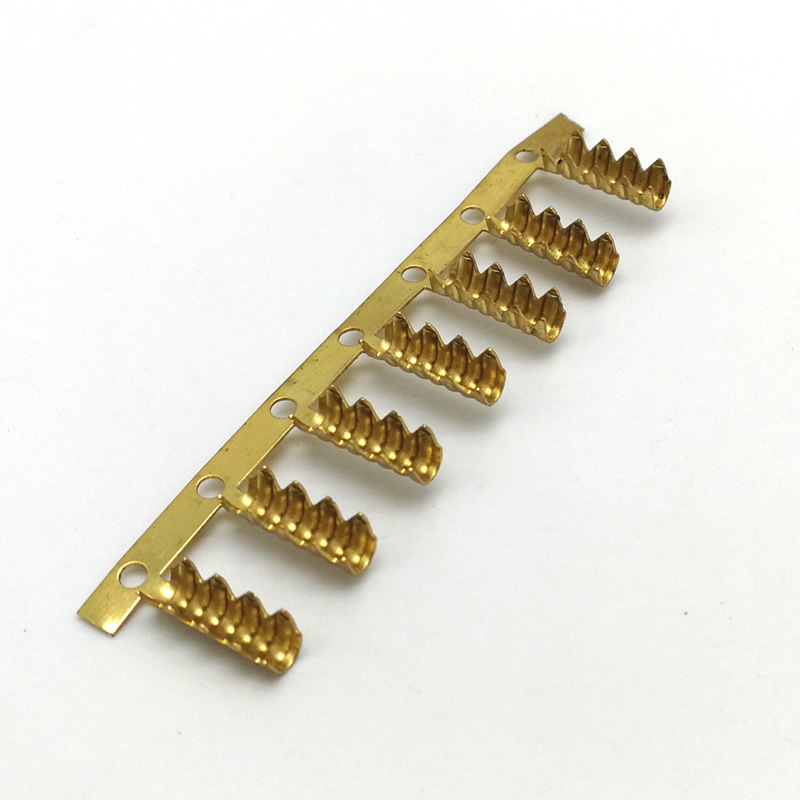
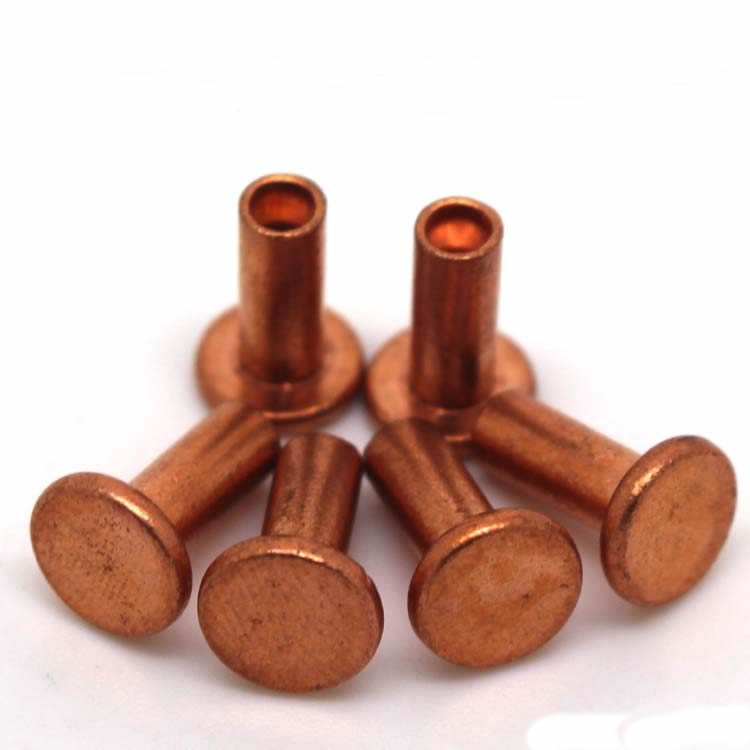
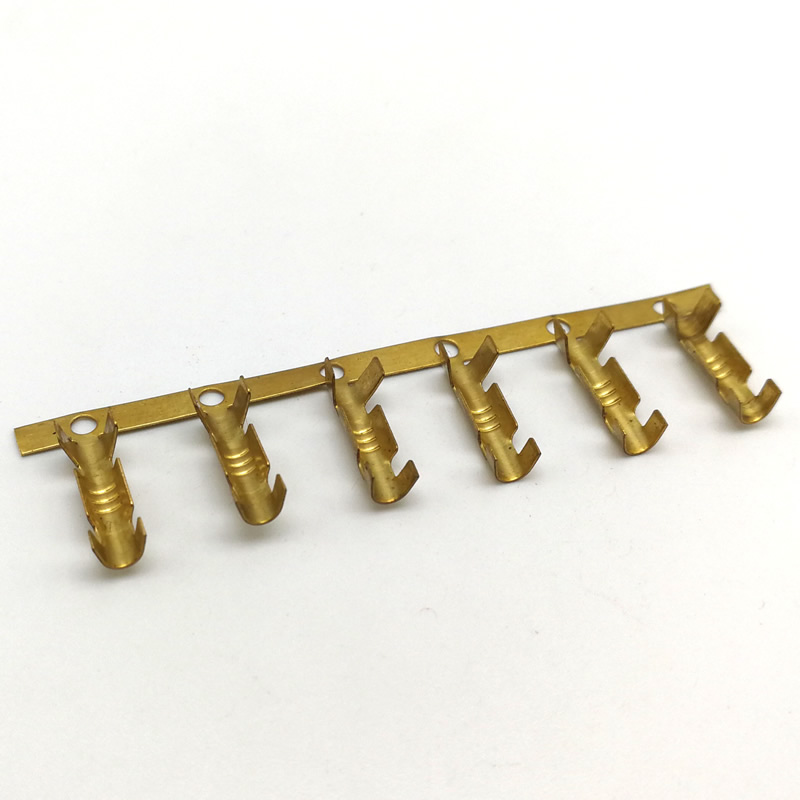
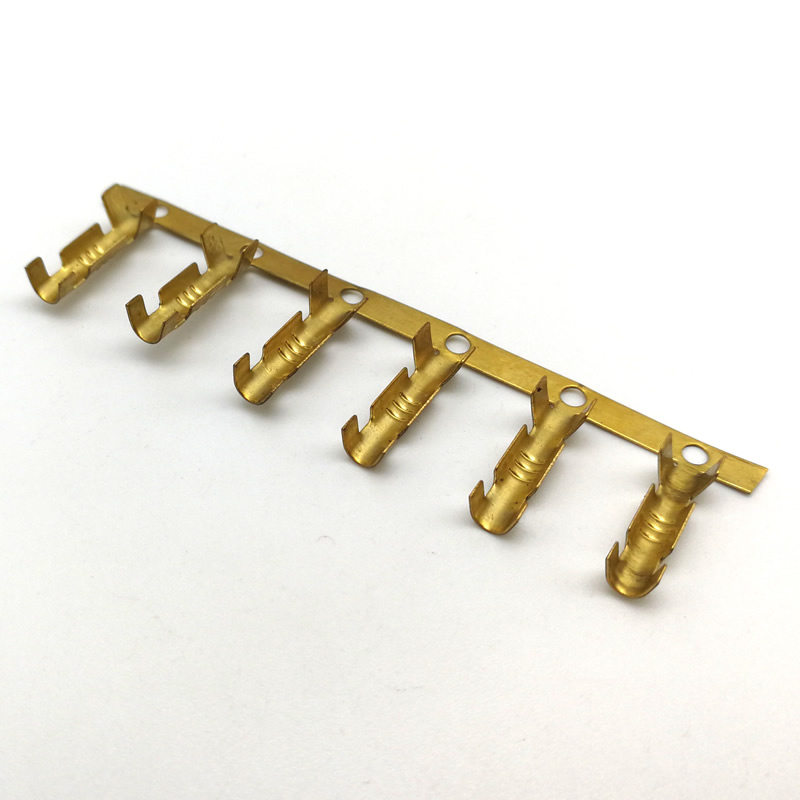
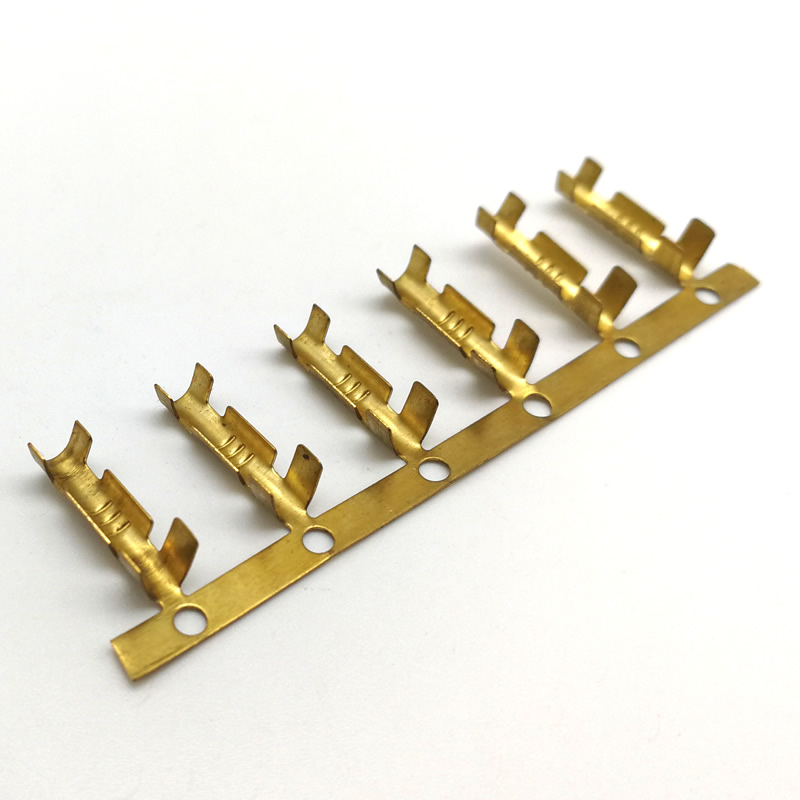
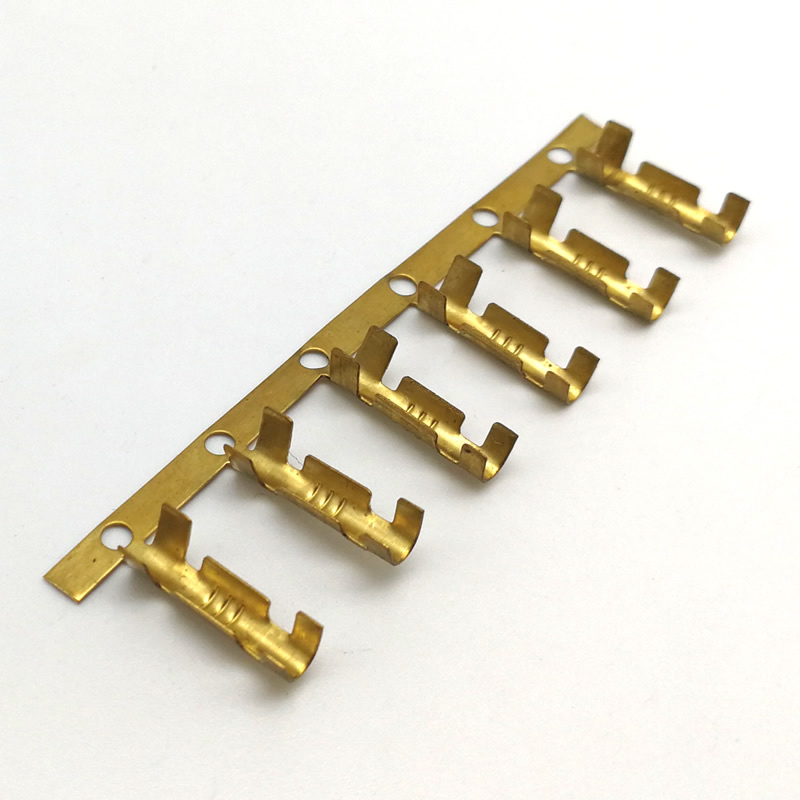
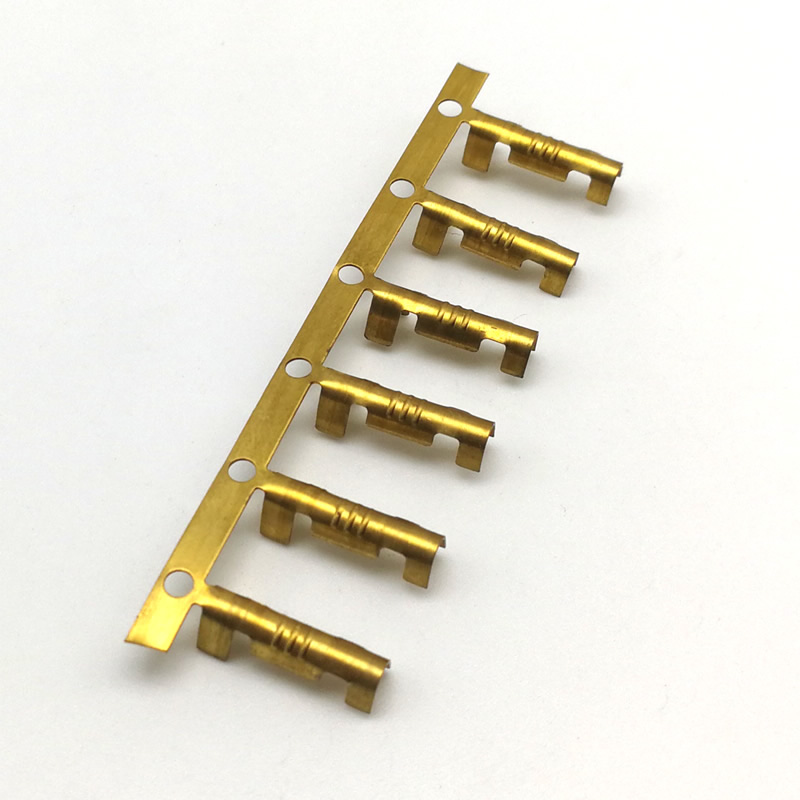
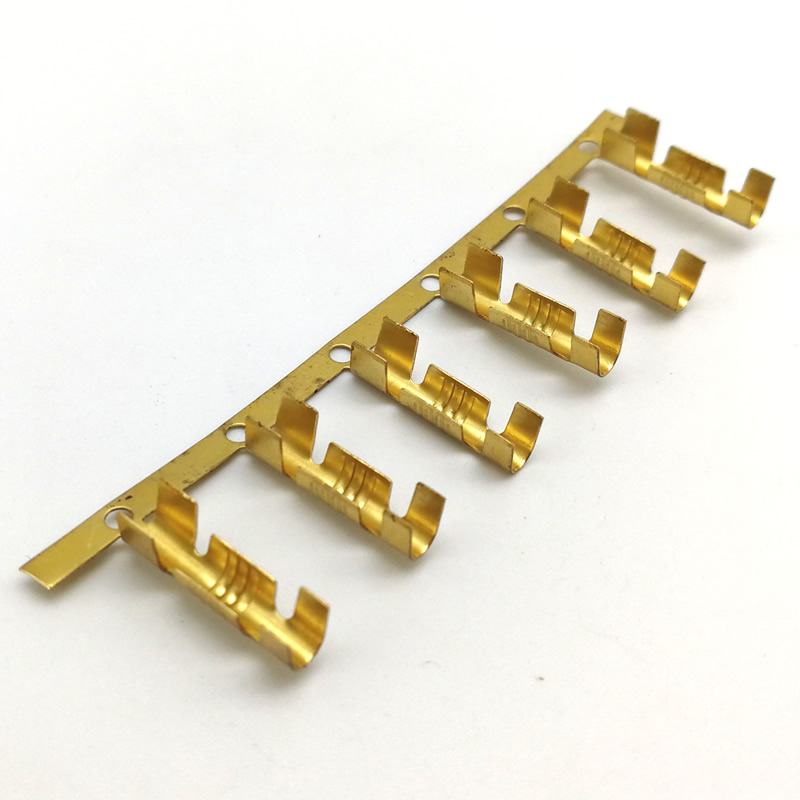
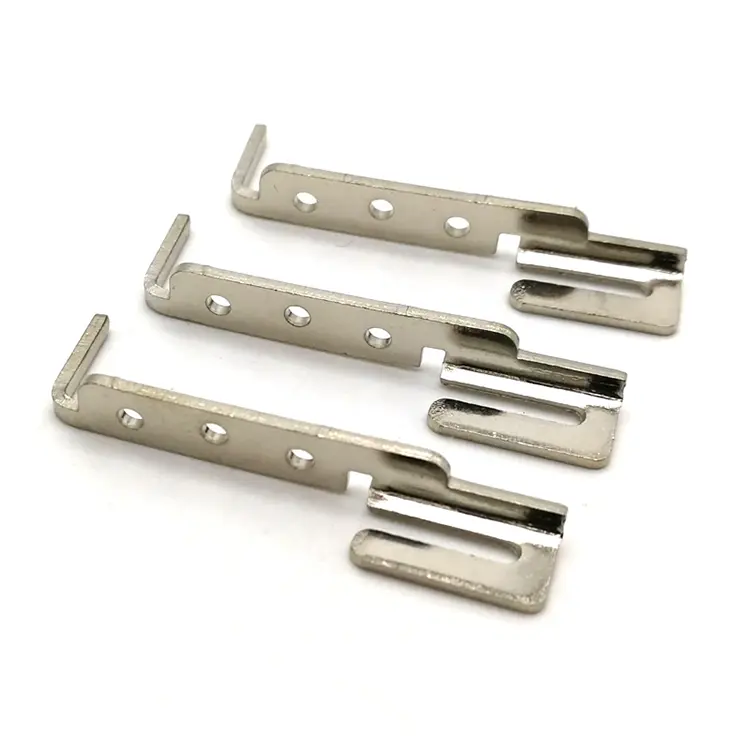
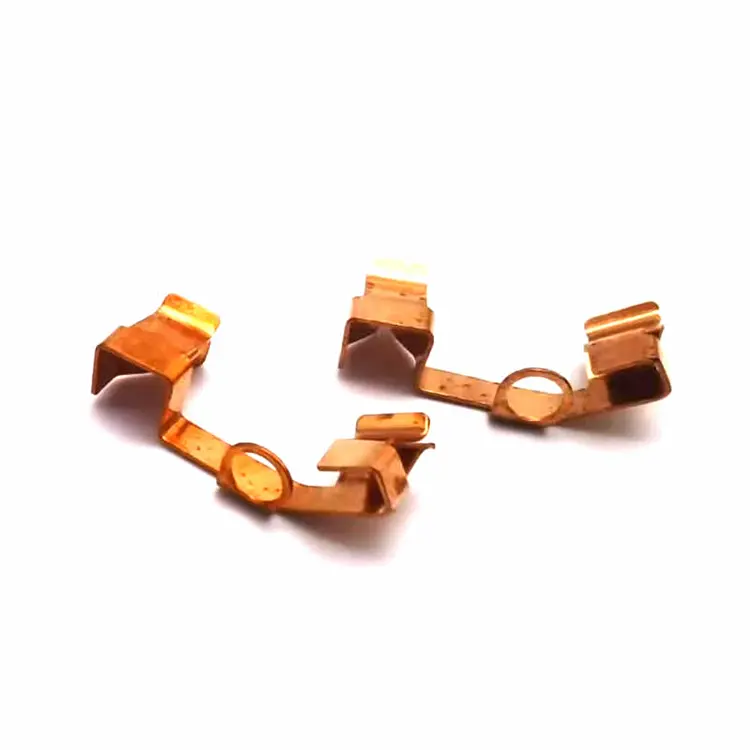
Crimp Brass Terminal
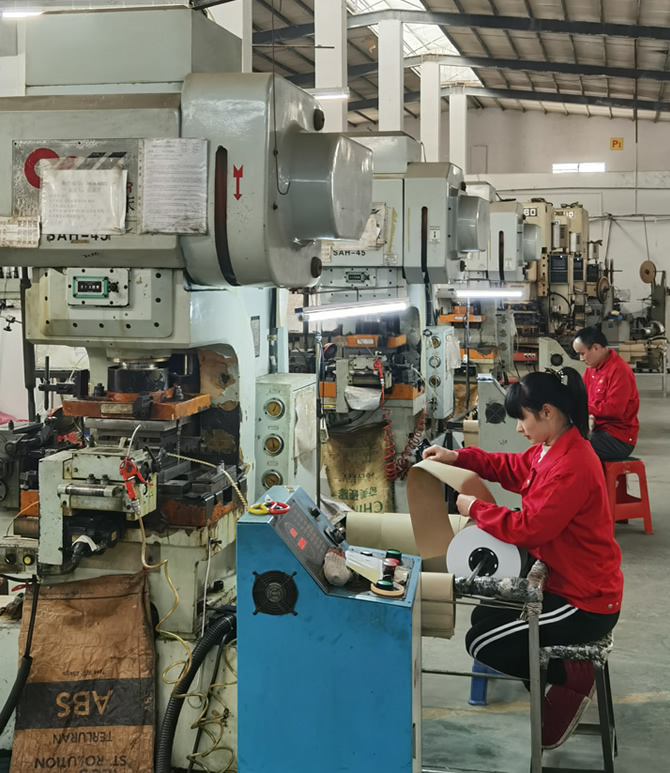
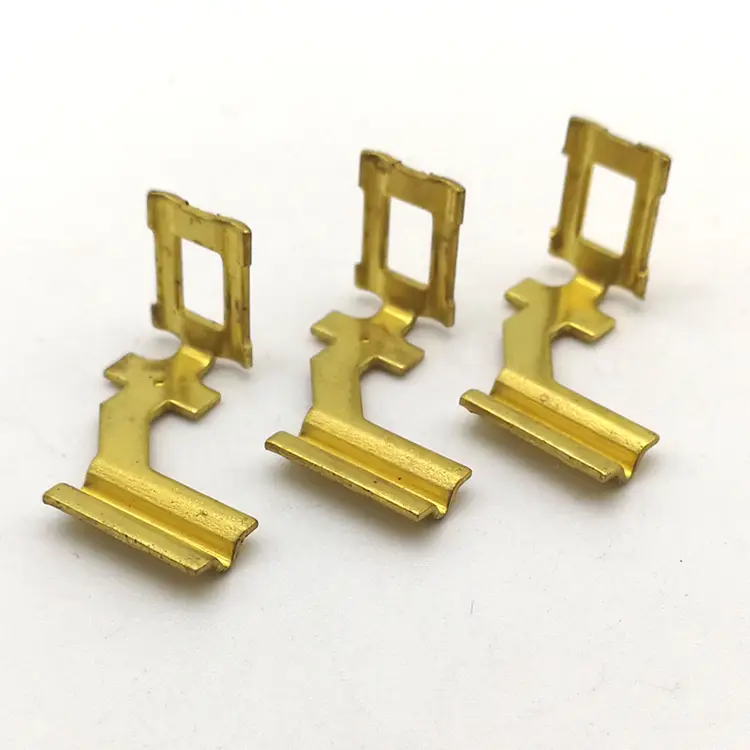
A brass crimp terminal is not judged by its shape—it is judged by the connection it makes after crimping. The crimp height, the crimp width, and the pull-force determine whether the terminal holds the wire for 20 years or fails in the first vibration cycle. Nuote Metals produces crimp brass terminals in China with crimp height and pull-force verified per IEC 60352-2—on the terminal, on the wire, and on the finished crimp. Brass C26000 and C26800.
Send Inquiry
Product Description
Crimp brass terminals are the connection between the wire and the device—in automotive harnesses, appliance wiring, and industrial control panels. They are judged by the crimp, not by the stamping. A terminal that measures correctly but crimps poorly is a field failure waiting to happen.
At Nuote Metals, we produce crimp terminals with the crimp parameters verified—not just the stamped dimensions. This article covers the three crimp parameters, the brass grade selection, the plating that affects crimpability, and what to verify before accepting a crimp terminal shipment.
The Three Crimp Parameters That Determine the Connection
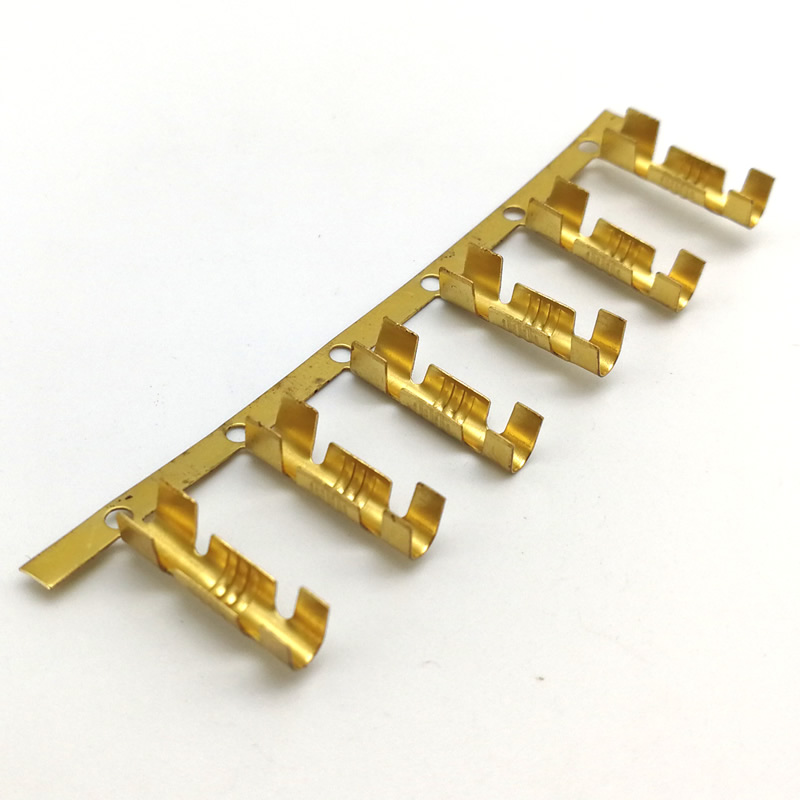
A crimp is a controlled deformation—the terminal barrel is compressed around the wire strands, and the metal flows into the gaps between the strands. The quality of the crimp depends on three parameters.
| Parameter | What It Controls | Typical Specification | Measurement Method |
|---|---|---|---|
| Crimp height | Compression ratio of the barrel | ±0.05mm of nominal | Crimp height gauge, optical comparator |
| Crimp width | Contact area between barrel and wire | ±0.1mm of nominal | Crimp width gauge |
| Pull-force | Mechanical strength of the connection | Per IEC 60352-2, based on wire gauge | Tensile tester |
Crimp height is the most critical parameter. Too high—the barrel is not compressed enough, the strands are loose, and the pull-force fails. Too low—the barrel is over-compressed, the strands are damaged, and the resistance rises. The nominal crimp height is set by the wire gauge and the terminal barrel thickness—and it must be held to ±0.05mm.
Crimp width determines the contact area. Too narrow—the contact area is small, and the resistance rises. Too wide—the barrel may crack at the bend. The width is set by the crimp tooling—not by the terminal alone.
Pull-force is the result—it is the test that confirms the crimp height and width are correct. The pull-force requirement depends on the wire gauge—for a 0.5mm² wire, the minimum is typically 60–80N; for a 2.5mm² wire, 200–250N. The test is destructive—it is performed on a sample from every batch, not on every terminal.
For crimp brass terminals, the crimp height and width are the process parameters—the pull-force is the proof. A supplier who ships terminals without a pull-force report is not verifying the connection—they are verifying the stamping.
Brass Grade Selection – Why C26000 Is Not Always the Answer
Crimp terminals are stamped from brass—but the brass grade determines how the terminal crimps, how it resists stress relaxation, and how it performs in the field.
| Grade | Copper/Zinc | Crimpability | Stress Relaxation Resistance | Typical Application |
|---|---|---|---|---|
| C26000 | 70/30 | Excellent—soft, forms easily | Moderate | General wiring, consumer |
| C26800 | 65/35 | Good—slightly harder | Moderate | Automotive, appliance |
| C22000 | 90/10 | Fair—harder, springier | Good | High-reliability, industrial |
C26000 (cartridge brass) is the standard for crimp terminals—70% copper, 30% zinc. It is soft enough to crimp without cracking, and it work-hardens during the crimp—the crimped connection is stronger than the annealed terminal. But C26000 stress-relaxes at elevated temperatures—the contact force drops over time in high-temperature applications.
C26800 (yellow brass) is slightly harder—65/35 copper-zinc. It crimps well but requires a slightly higher crimp force. It is used in automotive and appliance terminals where the temperature is moderate.
C22000 (commercial bronze) is 90/10 copper-zinc—harder and springier than C26000. It resists stress relaxation better, but it is harder to crimp—the barrel may crack if the crimp height is too low. It is used in high-reliability industrial terminals where the connection must hold for decades.
The trade-off: A softer brass (C26000) crimps easily but relaxes at temperature. A harder brass (C22000) resists relaxation but cracks if over-crimped. The grade is selected for the application—not for the stamping alone.
Standard reference: Crimp quality is verified per IEC 60352-2 (solderless connections – crimped connections). Pull-force requirements follow UL 486A for wire connectors and EIA-364-38 for tensile testing.
Plating – How Tin Thickness Affects Crimpability
The plating on a crimp terminal is not cosmetic—it determines the contact resistance, the corrosion resistance, and the crimpability. A tin plating that is too thin wears through during crimping; too thick, and the plating cracks at the crimp bend.
Tin plating is the standard for crimp brass terminals—5–10μm thickness. It is solderable, corrosion-resistant, and crimps well. But the thickness must be controlled—a 15μm tin layer is more brittle than a 5μm layer, and it cracks at the crimp bend.
How we control it:
- Plating thickness by XRF—verified on every batch, 5–10μm.
- Crimp trial before production—a sample terminal is crimped and cross-sectioned to confirm the plating does not crack at the bend.
- Reel-to-reel plating—uniform thickness, no handling damage.
For crimp brass terminals, the plating is part of the crimp process—not a post-processing step. A terminal with cracked plating at the crimp is a corrosion site—the base metal is exposed, and the connection fails.
A Real Example – Pull-Force Failure at 0.1mm Crimp Height
A German automotive tier-1 supplier needed a crimp brass terminal for a 0.75mm² wire—pull-force minimum 120N per IEC 60352-2. Their previous supplier stamped the terminal correctly but did not control the crimp height—the crimp was 0.1mm too high, and 8% of crimps failed the pull-force test.
What we did differently:
- Measured the crimp height on the terminal—the barrel thickness was 0.25mm, and the nominal crimp height was 1.15mm. The previous supplier was crimping at 1.25mm—the barrel was not compressed enough.
- Adjusted the crimp tooling—the crimp height was set to 1.15mm ±0.05mm.
- Verified the pull-force on a sample from every batch—120N minimum. The first batch passed at 135N average.
- Used C26800 brass—slightly harder than C26000, better stress relaxation resistance for the under-hood temperature.
- Shipped 2 million terminals with zero pull-force failures. The customer eliminated incoming inspection for pull-force.
This is what crimp brass terminals should deliver: not just a terminal that matches its drawing, but a terminal that holds the wire—because the crimp height and the pull-force were measured, not assumed.
Frequently Asked Questions
Q1: What is the most important parameter for a crimp brass terminal?
A: The crimp height—it determines the compression of the barrel around the wire strands. Too high, and the strands are loose—the pull-force fails. Too low, and the strands are damaged—the resistance rises. The crimp height must be held to ±0.05mm, and the pull-force must be verified on a sample from every batch per IEC 60352-2. For crimp brass terminals, the crimp height is the process parameter—the pull-force is the proof.
Q2: Why does brass grade matter for crimp terminals?
A: The brass grade determines the crimpability and the stress relaxation resistance. C26000 is softer—it crimps easily but relaxes at elevated temperatures. C22000 is harder—it resists relaxation but cracks if over-crimped. C26800 is the balance—hard enough for automotive temperatures, soft enough to crimp without cracking. For crimp terminals, the grade is selected for the application temperature and the crimp force—not for the stamping alone.
Q3: Can you provide pull-force test reports with the shipment?
A: Yes. Every batch ships with a pull-force report—the test results from a sample of crimped terminals, the crimp height and width measurements, and the wire gauge used for the test. The report is per IEC 60352-2 and UL 486A. For brass terminals in automotive or appliance applications, the pull-force report is part of the PPAP package—not an optional document.
Q4: How do you control plating thickness on crimp terminals?
A: We verify plating thickness by XRF on every batch—5–10μm tin. Before production, we crimp a sample terminal and cross-section it to confirm the plating does not crack at the crimp bend. A plating that is too thick cracks; too thin, it wears through. For crimp brass terminals, the plating is part of the crimp process—not a cosmetic finish. We also offer reel-to-reel plating for uniform thickness and no handling damage.
Send Inquiry
Please feel free to fill your inquiry in the form below. We will reply you in 24 hours.



X
We use cookies to offer you a better browsing experience, analyze site traffic and personalize content. By using this site, you agree to our use of cookies.
Privacy Policy